
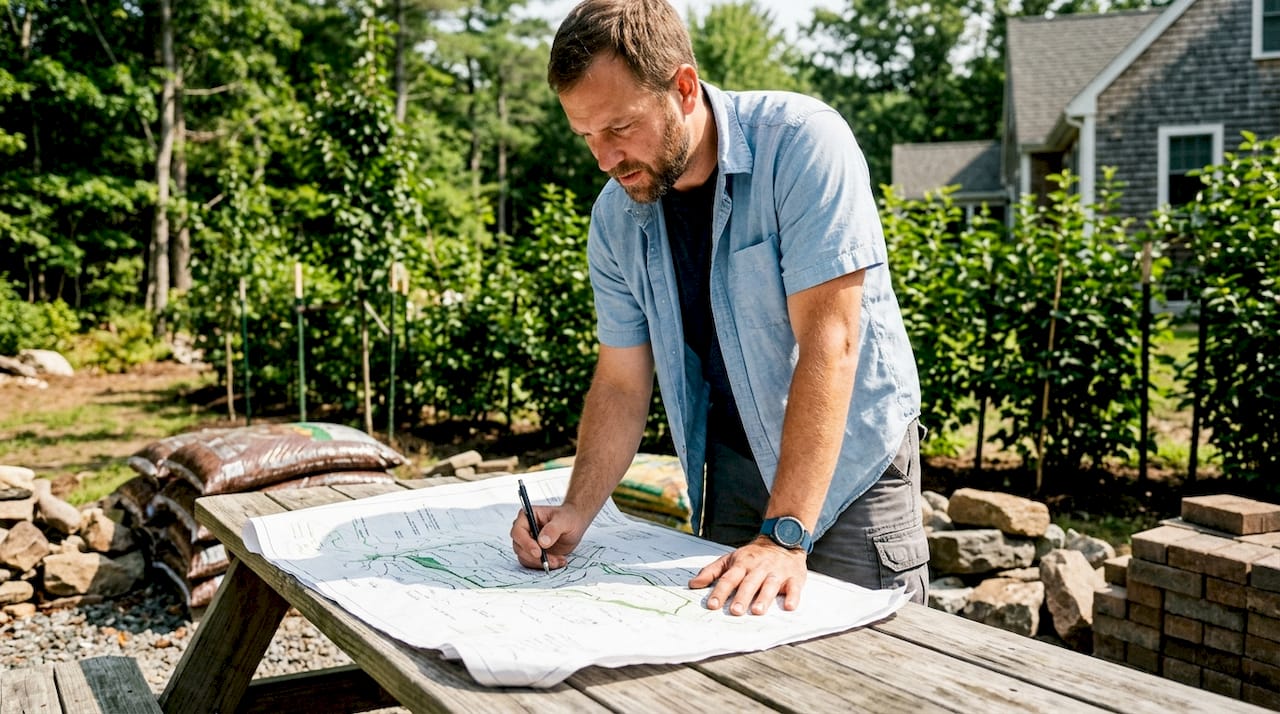
A landscape project timeline is a structured sequence of phases, from initial design through final walkthrough, that determines how your outdoor project gets built and when each stage happens. For homeowners and business owners in New Hampshire, understanding this schedule is the difference between a smooth build and a frustrating series of surprises. New England’s short construction season, local permitting requirements, and weather variability all shape how long your project takes. Knowing the phases in advance lets you plan realistically, make decisions on time, and avoid costly delays.
What is a landscape project timeline and its key phases?
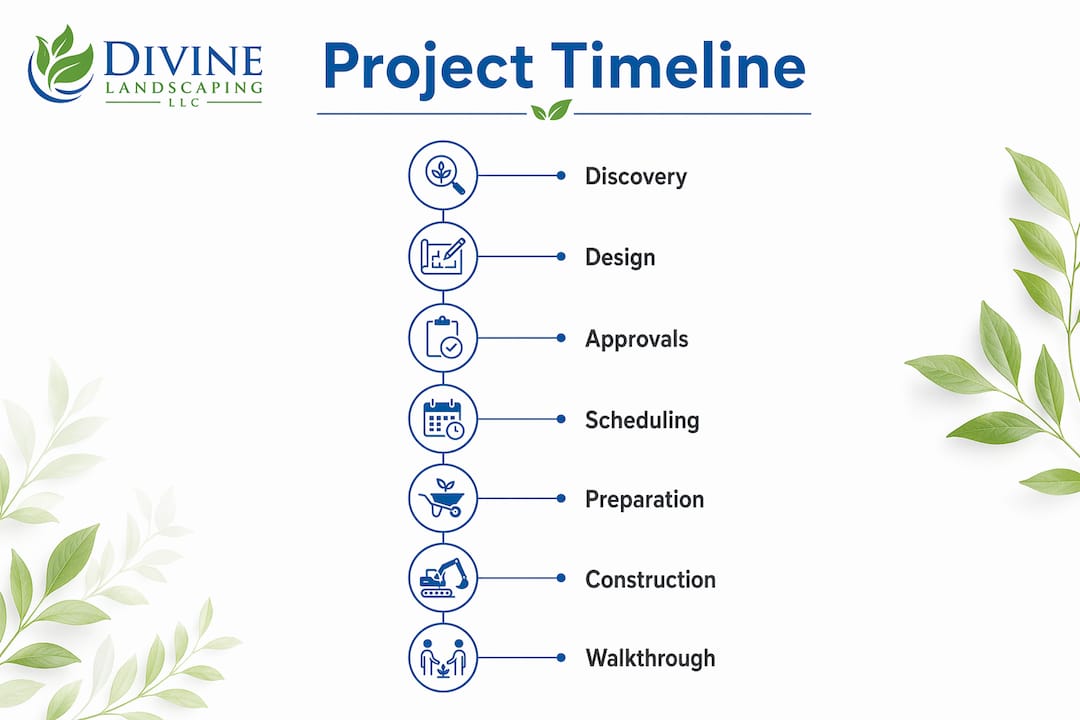
A landscape project timeline follows a consistent eight-step sequence across nearly every project, regardless of size. The steps are discovery, design, approvals, scheduling, site preparation, construction, planting, and final walkthrough. Each phase depends on the one before it, so a delay in any step pushes everything downstream.
1. Discovery and site assessment
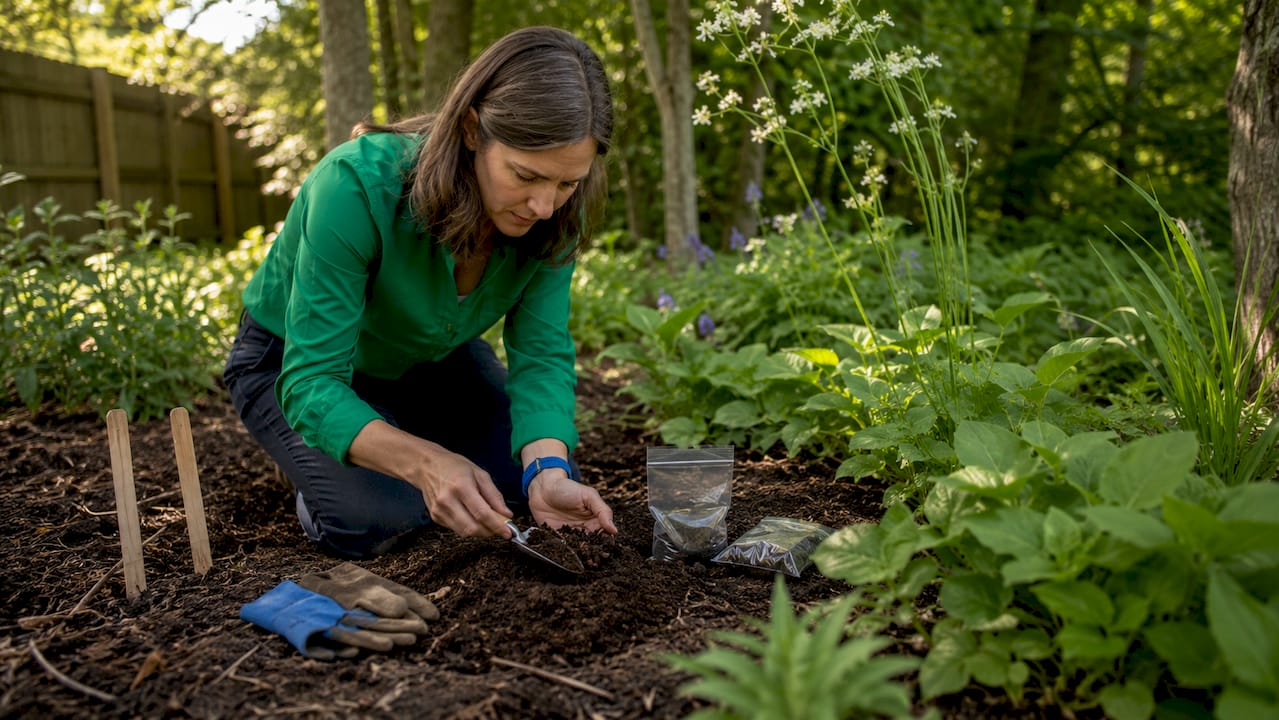
Your contractor walks the property, evaluates grades, drainage, soil conditions, and existing utilities. This step sets the foundation for every design decision that follows.
2. Design and planning
The design team produces drawings, selects materials, and maps out the full scope. Planning and design commonly take 1–3 weeks, though complex projects with multiple features run longer.
3. Selections, approvals, and permitting
You review and approve design drawings, choose materials, and submit permit applications. In New Hampshire, permitting timelines vary by municipality and depend on the completeness of your application. Projects must meet local zoning and building code requirements before any work begins.
4. Scheduling and logistics coordination
Your contractor books crews, orders materials, and coordinates subcontractors. Specialty items like custom pavers, lighting fixtures, or native plants often require lead time. Early ordering keeps this phase from stalling the entire schedule.
5. Site preparation
Crews clear the site, establish grades, and install drainage infrastructure. This phase includes trenching for irrigation and lighting conduit, which must happen before any hardscape goes in.
6. Construction and installation
Landscape construction is staged: early siteworks and rough-ins come first, followed by hardscape installation such as patios, walkways, and retaining walls, then softscape planting and finish work. This sequencing prevents damage to completed work and keeps trades from conflicting.
7. Final walkthrough and closeout
Your contractor walks the project with you, confirms all work meets specifications, and addresses any punch list items. This step typically takes 2–7 days depending on scope.
Pro Tip: Ask your contractor for a written milestone calendar before work begins. A good calendar lists approval deadlines, material ordering cutoffs, and weather-dependent activities so you always know what comes next.
How long does each landscaping phase typically take?
Phase durations vary based on project size, site conditions, and how quickly approvals move. The table below shows realistic ranges for a typical residential or small commercial project in New Hampshire.
| Phase | Typical Duration |
|---|---|
| Design and planning | 1–3 weeks |
| Permitting and approvals | 2–8+ weeks |
| Site preparation | 2 days to 3 weeks |
| Hardscape installation | 1–8+ weeks |
| Softscape and planting | 1–3 weeks |
| Final walkthrough | 2–7 days |
Permitting is the most unpredictable phase. New Hampshire municipalities add multi-week lead times before work can begin, and an incomplete application restarts the clock. Submitting a thorough, accurate application on the first attempt is the single best way to protect your schedule.
Construction duration scales with project size. Small commercial sites typically run 2–4 weeks, mid-size sites 6–10 weeks, and large sites 3–6 months. Staged installations are common on larger projects to manage site access and protect completed work from weather.
New England weather adds real pressure to every phase. Grading and concrete work are especially sensitive to rain and frost. Builders in this region build buffer days into their schedules to protect material quality and site conditions. A 10–15% time buffer beyond your initial estimate is standard practice for New Hampshire projects.
Pro Tip: If your project includes a patio, retaining wall, or irrigation system, plan to have all material selections finalized before the permit is submitted. Changing materials after approval can trigger a revision review and add weeks to your timeline.
What are the critical dependencies in a landscape project schedule?
Dependencies are the scheduling relationships that determine what must happen before something else can start. Missing one dependency does not just delay that phase. It delays every phase that follows.
The most critical dependency in any landscape project is irrigation rough-in. Irrigation lines, valve boxes, and conduit for lighting must be installed and tested before planting begins. Skipping this sequence means digging up finished beds to install pipes, which adds cost and time.
Other key dependencies include:
- Drainage before hardscape: Surface and subsurface drainage must be graded and installed before patios or walkways are set. Correcting drainage under finished hardscape is expensive.
- Hardscape before softscape: Patios, walkways, and walls must be complete before planting beds are established. Heavy equipment damages plants and compacts soil.
- Approvals before ordering: Some municipalities require approved drawings before specialty materials can be ordered. Ordering too early risks changes; ordering too late stalls construction.
- Utility locates before any digging: New Hampshire law requires utility marking before excavation. This step adds lead time but is non-negotiable.
Delays in irrigation design or approvals cascade downstream, often stalling final planting and project completion. Treat irrigation as a milestone, not background work.
Effective project managers build flexible schedules with buffers that account for weather and delivery uncertainties. A single late material delivery or a week of rain can shift your completion date by two to three weeks if no buffer exists. Coordination between trades, including excavators, masons, irrigation technicians, and planting crews, requires active management throughout construction.
How can NH homeowners keep their landscaping project on schedule?
Keeping a landscape project on schedule in New Hampshire requires proactive decisions before the first shovel hits the ground. Most delays are predictable and preventable with the right preparation.
- Request a written milestone calendar. A milestone calendar lists approval deadlines, ordering cutoffs, and weather-dependent activities. Review it at the start of the project and track it weekly.
- Submit permit applications early and completely. Incomplete applications are the leading cause of permitting delays in New Hampshire. Work with your contractor to prepare a thorough submission the first time.
- Finalize material selections before construction starts. Specialty plants, custom pavers, and lighting fixtures can have long lead times. Locking in selections early prevents mid-project waits.
- Build weather buffers into your expectations. New England spring and fall weather is unpredictable. Expect that wet weeks or early frost will affect your schedule, and plan your move-in or event dates accordingly.
- Communicate decisions quickly. Homeowners often underestimate that project start dates depend on paperwork completion and site readiness, not just the contract signing date. Slow approvals on your end delay the crew as much as any weather event.
- Ask about trade coordination. Confirm that your contractor manages the sequencing of irrigation, masonry, and planting crews directly. Gaps between trades are where schedules slip.
Understanding common questions about landscape design before your first contractor meeting puts you in a much stronger position to ask the right questions and make faster decisions.
Key takeaways
A landscape project timeline is won or lost during the design and approval phases, not during construction.
| Point | Details |
|---|---|
| Eight-phase sequence | Every project follows discovery, design, approvals, scheduling, site prep, construction, planting, and walkthrough. |
| Permitting adds weeks | New Hampshire municipalities require 2–8+ weeks for permit review before any work can start. |
| Irrigation is a critical path task | Irrigation rough-ins must be complete before planting begins to avoid costly rework. |
| Weather buffers are standard | A 10–15% time buffer beyond initial estimates protects against New England weather and delivery delays. |
| Early decisions protect your schedule | Finalizing material selections and approvals before construction starts prevents the most common delays. |
What I’ve learned about NH landscape timelines after years in the field
The biggest misconception I see from homeowners is that signing a contract means work starts next week. It almost never does. The design phase, permit review, and material lead times all have to run their course first. On a mid-size project in southern New Hampshire, that front-end process alone can take 6–10 weeks before a single piece of equipment arrives on site.
The second thing most people underestimate is how much the design phase controls everything downstream. Timelines are won or lost during design because every approval, every material order, and every crew booking flows from those early decisions. A homeowner who takes two weeks to approve drawings adds two weeks to the back end of the project, often pushing completion past the window for fall planting or spring entertaining.
New England’s climate is not forgiving. I have seen projects delayed three weeks because of a wet april that made grading impossible. Building a buffer into your schedule is not pessimism. It is the only realistic way to plan in this region. If you finish early, great. If you do not, you are not scrambling.
My honest advice: treat your contractor’s milestone calendar like a project contract. Know your decision deadlines. Respond to material approval requests within 48 hours. And if your contractor does not offer a written schedule, ask for one before you sign anything.
— Damian
How Divinelandscapingllc helps NH clients stay on schedule
Divinelandscapingllc works with homeowners and business owners across New Hampshire to plan, permit, and build custom outdoor spaces with a clear schedule from day one.
The team at Divinelandscapingllc manages the full project sequence, from landscape design and permit coordination through hardscape installation, irrigation, and final planting. Every client receives a milestone calendar that maps approval deadlines, material ordering windows, and construction phases. That structure keeps projects moving and keeps you informed at every step. If you are planning a patio, retaining wall, outdoor living area, or full property renovation in New Hampshire, request a quote to get a realistic project schedule built around your site, your goals, and the local permitting process.
FAQ
What is a landscape project timeline?
A landscape project timeline is a structured schedule that maps every phase of a landscaping project, from design and permitting through construction and final walkthrough. It defines what happens, in what order, and how long each phase takes.
How long does a landscaping project take in New Hampshire?
Total duration depends on project size, but most residential projects run 8–20 weeks from design start to final walkthrough. Permitting alone can add 2–8 weeks before construction begins.
What causes the most delays in a landscaping project schedule?
Permitting delays, slow material approvals, and late client decisions are the most common causes. Irrigation rough-in delays also cascade downstream and stall planting phases.
Do I need a permit for landscaping work in New Hampshire?
Most projects involving grading, drainage, retaining walls, or structural elements require a permit. Requirements vary by municipality, so confirm with your local building department before work begins.
When is the best time to start planning a landscaping project in New Hampshire?
Planning in late fall or winter for a spring or summer build gives you the most scheduling flexibility. It allows time for design, permitting, and material ordering before the construction season opens.