
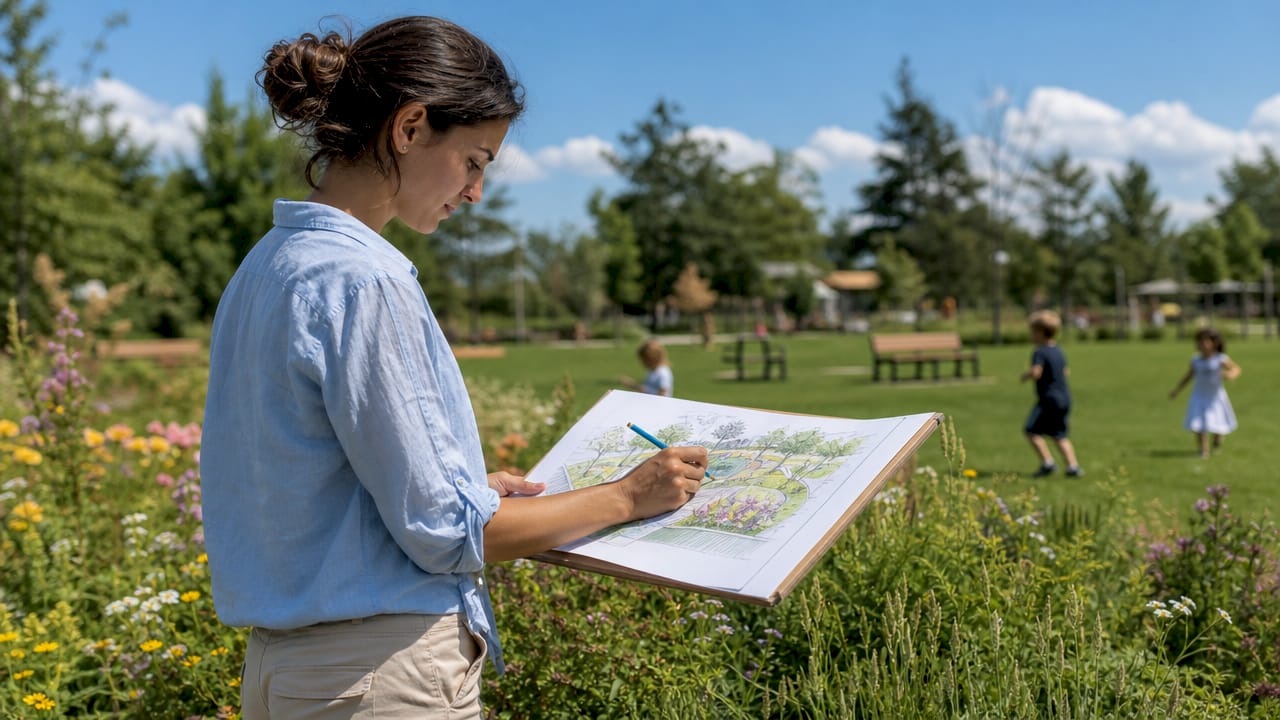
Outdoor amenity design is the strategic planning and integration of recreational and social spaces into a property’s site plan to enhance functionality, user experience, and long-term property value. Landscape architects call this discipline “amenity programming” when it includes scheduled activities alongside physical features. For homeowners, business owners, and designers alike, understanding what is outdoor amenity design means recognizing that a well-planned backyard, courtyard, or commercial plaza is not an afterthought. It is a calculated investment that drives tenant retention, curb appeal, and community connection.
What are outdoor amenities and how do they benefit property owners?
Outdoor amenities are purpose-built features that make exterior spaces usable, enjoyable, and socially engaging. Common examples include fitness zones, seating areas, community gardens, water features, fire pits, shaded pergolas, and walking paths. Each feature serves a specific user need, and the best designs layer several of these together to create a complete outdoor experience.
The health benefits of well-designed outdoor spaces are well documented. Outdoor fitness interventions lead to sustained increases in physical activity even 6 to 9 months after installation, with activity levels often exceeding the WHO recommendation of 150 minutes of moderate exercise per week. That kind of lasting behavior change is difficult to achieve with indoor amenities alone.
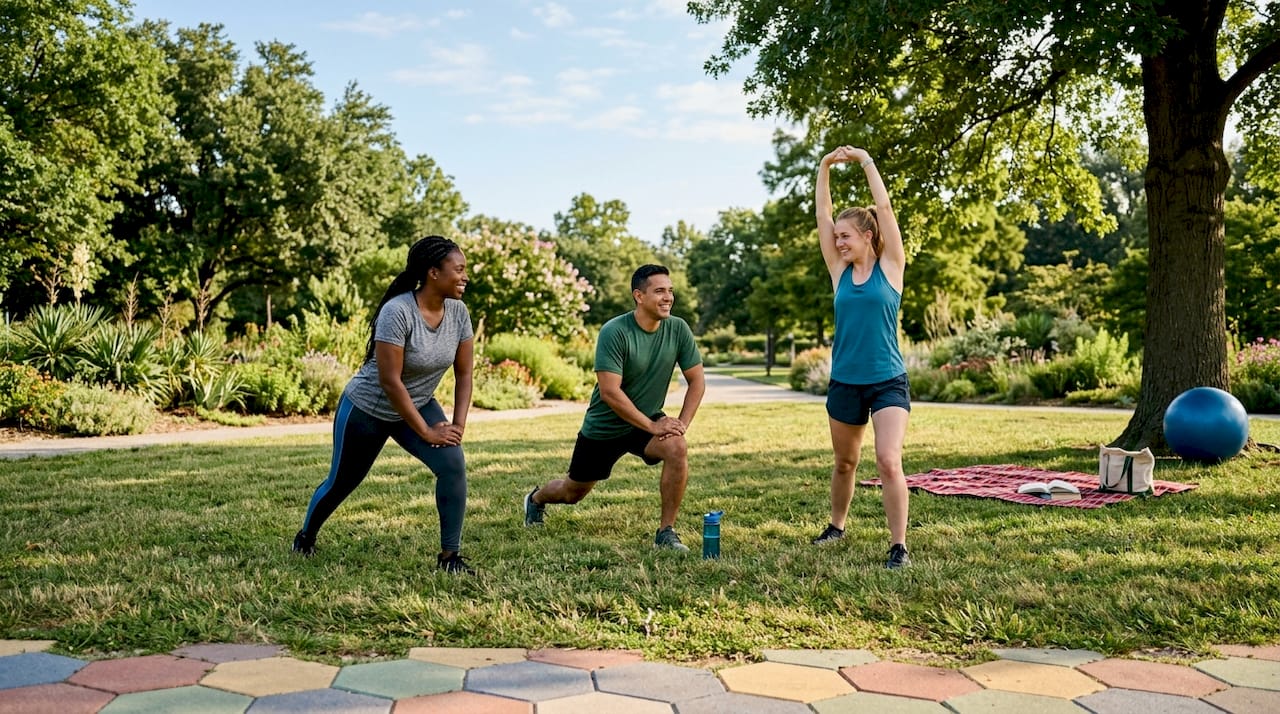
Mental health gains are equally significant. Green exercise reduces cortisol and mental fatigue through exposure to natural elements like fresh air, sunlight, and natural sounds, delivering stress relief that indoor equivalents cannot match. For property owners, this translates directly into happier residents and longer lease terms.
The broader public health case is just as strong. Greenspace exposure correlates with lower mortality rates and enhanced quality of life, making outdoor amenity investment one of the most cost-effective strategies for improving cardiovascular, mental, and metabolic health across a community. Property owners who build these spaces are not just adding curb appeal. They are contributing to measurable wellbeing outcomes.
“Outdoor amenities combining fresh air, sunlight, and natural sounds improve stress reduction beyond indoor equivalents.” — Frontiers in Psychology, 2026
The benefits of outdoor amenities extend to property marketability as well. Fitness zones attract health-conscious tenants. Community gardens build social bonds. Shaded seating areas extend usable hours into warmer evenings. Each element adds a reason for someone to choose your property over another.
What are the core design principles for effective outdoor amenity design?
Effective outdoor space planning starts with understanding how people actually move through and use a space, not with a checklist of expensive features. Most amenity spaces fail because designers focus on high-end finishes without analyzing resident behavior or use-case needs. Spaces built around real human movement and interaction consistently achieve better usage rates and satisfaction scores.
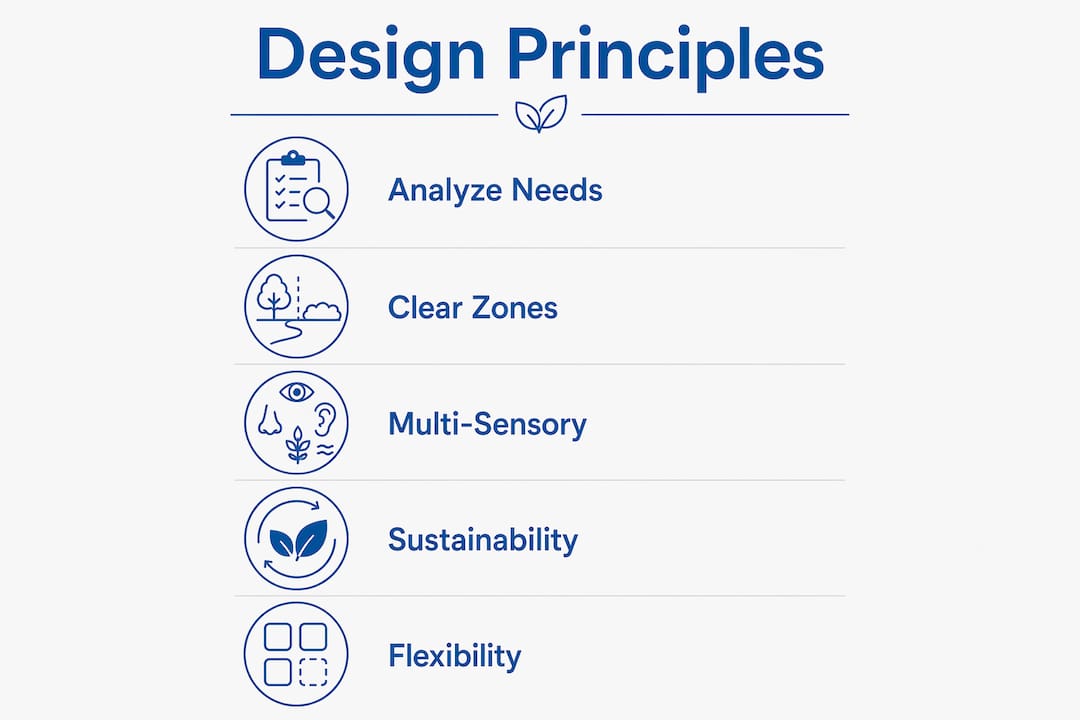
The foundational outdoor design principles follow a clear sequence:
- Conduct a use-case analysis. Identify who will use the space, when they will use it, and what activities they need to support. A property serving young families needs different features than one serving working professionals.
- Zone the space into functional areas. Separate quiet areas from active social zones to prevent spatial conflicts. A reading garden placed next to a fitness lawn creates friction. Clear zoning makes environments feel intuitive and balanced.
- Plan circulation clearance. Walkways must provide at least 36 inches of clear path to avoid crowding and discomfort. Tight circulation is one of the most common and most avoidable design mistakes.
- Integrate biophilic elements. Native plantings, water features, and natural materials connect users to the environment and amplify the mental health benefits of outdoor time.
- Align indoor and outdoor visual continuity. Clear spatial continuity between interior and exterior areas makes amenities feel like natural extensions of the building rather than disconnected add-ons.
The elements of outdoor design that most often get overlooked are multi-sensory comfort features: shade structures for heat management, wind screening for cooler months, and acoustic buffers between noisy and quiet zones. These details determine whether a space gets used year-round or sits empty after summer.
Pro Tip: Before finalizing any layout, walk the space at different times of day. Morning sun angles, afternoon heat pockets, and evening wind patterns all affect how comfortable a space feels in actual use.
A common design pitfall is treating the outdoor area as a single undifferentiated zone. Placing a dog run, a children’s play area, and a quiet seating garden in one open field without clear separation guarantees conflict and underuse. Defined zones with physical or visual boundaries solve this problem before it starts.
How do outdoor amenity designs vary by property type?
The goals, budgets, and user needs for outdoor amenity design differ significantly across residential, commercial, and multifamily properties. Understanding those differences shapes every design decision, from material selection to programming.
| Property Type | Design Priority | Popular Amenity Elements | Key User Benefit |
|---|---|---|---|
| Residential | Private comfort and lifestyle | Patios, fire pits, gardens, decks | Increased property value and personal enjoyment |
| Commercial | Tenant attraction and productivity | Meeting plazas, fitness zones, shaded seating | Reduced vacancy and stronger tenant retention |
| Multifamily | Lease-up velocity and community | Courtyards, dog parks, grilling stations, pools | Community building and longer lease terms |
Residential properties benefit most from outdoor living features that reflect the homeowner’s lifestyle. A family with young children prioritizes safe play areas and durable lawn space. Empty nesters often want low-maintenance gardens and comfortable entertaining areas. The design goal is personal enjoyment paired with long-term property value enhancement.
Commercial properties use outdoor spaces to attract and retain tenants. A well-designed courtyard with shaded meeting areas, Wi-Fi access, and food truck hookups gives office tenants a reason to stay in the building rather than leave for lunch. For retail properties, outdoor seating and landscaped entries increase foot traffic and dwell time.
Multifamily developments face the most competitive pressure. Amenity designs are now essential competitive tools for multifamily and commercial developments, directly influencing lease-up speed and renewal rates. Developers who invest in well-programmed courtyards, rooftop terraces, and community gardens see measurable gains in occupancy. Divinelandscapingllc’s multi-tenant property landscaping work addresses exactly these goals for New Hampshire property managers.
Key considerations that apply across all three property types include:
- Drainage and grade management to prevent water pooling in seating and activity areas
- Lighting design for safety and extended evening use
- Material durability suited to the local climate, especially in New England where freeze-thaw cycles stress hardscape materials
- ADA compliance for accessible pathways and seating
What are the current trends in outdoor amenity projects?
The most significant shift in how to design outdoor spaces in 2026 is the move toward multi-purpose flexible layouts. Fixed single-use spaces are giving way to areas that can host a yoga class in the morning and a community dinner in the evening. Movable furniture, modular shade structures, and open lawn areas with power access make this flexibility possible.
Sustainability is no longer optional in quality outdoor amenity design. Native planting reduces irrigation demand and supports local pollinators. Permeable paving manages stormwater without costly drainage infrastructure. Composite decking and recycled stone materials reduce long-term maintenance costs while lowering environmental impact.
Outdoor fitness integration is growing across all property types. Fitness courts, stretching stations, and walking loops are appearing in residential subdivisions, office campuses, and multifamily communities. These features directly support the physical activity gains documented in current research, and they cost significantly less to install than indoor gym equivalents.
Pro Tip: Program your amenity spaces from day one. An empty courtyard with beautiful furniture signals neglect. A scheduled weekly event in that same space signals community. Active programming is what separates vibrant amenity areas from expensive underused ones.
Active programming and community engagement are as important as the physical design for keeping amenity spaces well-used. Property managers who schedule regular events in outdoor spaces report higher resident satisfaction and stronger renewal rates than those who rely on the design alone to drive engagement.
Practical steps for a successful outdoor amenity project include:
- Engage a landscape architect and civil engineer early, before site grading begins
- Survey future residents or tenants about their actual lifestyle needs
- Budget for programming and maintenance, not just installation
- Plan for seasonal use in northern climates with covered structures and heating elements
- Review local zoning and setback requirements before finalizing layouts
For commercial clients, planning a commercial landscape renovation requires coordinating with architects, civil engineers, and community stakeholders to produce amenities that are both functional and meaningful to the people who use them daily.
Key Takeaways
Outdoor amenity design succeeds when it combines clear zoning, use-case analysis, biophilic elements, and active programming to serve the specific needs of its users and property type.
| Point | Details |
|---|---|
| Start with use-case analysis | Design around actual resident behavior, not a feature checklist, to maximize usage and satisfaction. |
| Zone spaces clearly | Separate active, quiet, and social areas to prevent conflict and make the space feel intuitive. |
| Health benefits are measurable | Greenspace exposure reduces cortisol, boosts physical activity, and correlates with lower mortality rates. |
| Property type shapes every decision | Residential, commercial, and multifamily properties each require different amenity priorities and layouts. |
| Programming drives long-term value | Scheduled events and community engagement keep amenity spaces active and justify the investment. |
What I’ve learned from designing outdoor spaces that actually get used
Most property owners come to us focused on features: they want a firepit, a pergola, a putting green. That instinct is understandable. Features are tangible and easy to picture. But the projects I’ve seen fail most often are the ones where the feature list drove the design instead of the people who would actually use the space.
The most successful outdoor amenity projects I’ve been part of started with a conversation about lifestyle, not materials. Who lives here? When do they come home? Do they entertain, or do they want privacy? Do they have dogs, kids, aging parents? Those answers shape every zone, every path, every seat. A beautiful space that doesn’t match how people actually live sits empty. An ordinary space that fits their daily rhythm gets used every day.
I’ve also learned that flow matters more than most clients expect. When you walk from the back door to the seating area, does the path feel natural? Is there enough room to pass someone without stepping off the patio? Does the grill placement force the cook to face a wall? These details sound minor until you live with them. Getting circulation right from the start is the single highest-return investment in any outdoor design.
The last thing I’d tell any property owner or designer: don’t skip the programming plan. Physical design gets people to the space once. Programming brings them back. Whether that’s a monthly neighborhood cookout, a weekly yoga session, or a community garden plot system, the activity layer is what makes an outdoor amenity feel alive rather than decorative.
— Damian
Divinelandscapingllc’s approach to outdoor amenity design in New Hampshire
Divinelandscapingllc designs and builds outdoor amenity spaces for residential and commercial properties across New Hampshire, with a focus on spaces that perform as well as they look.
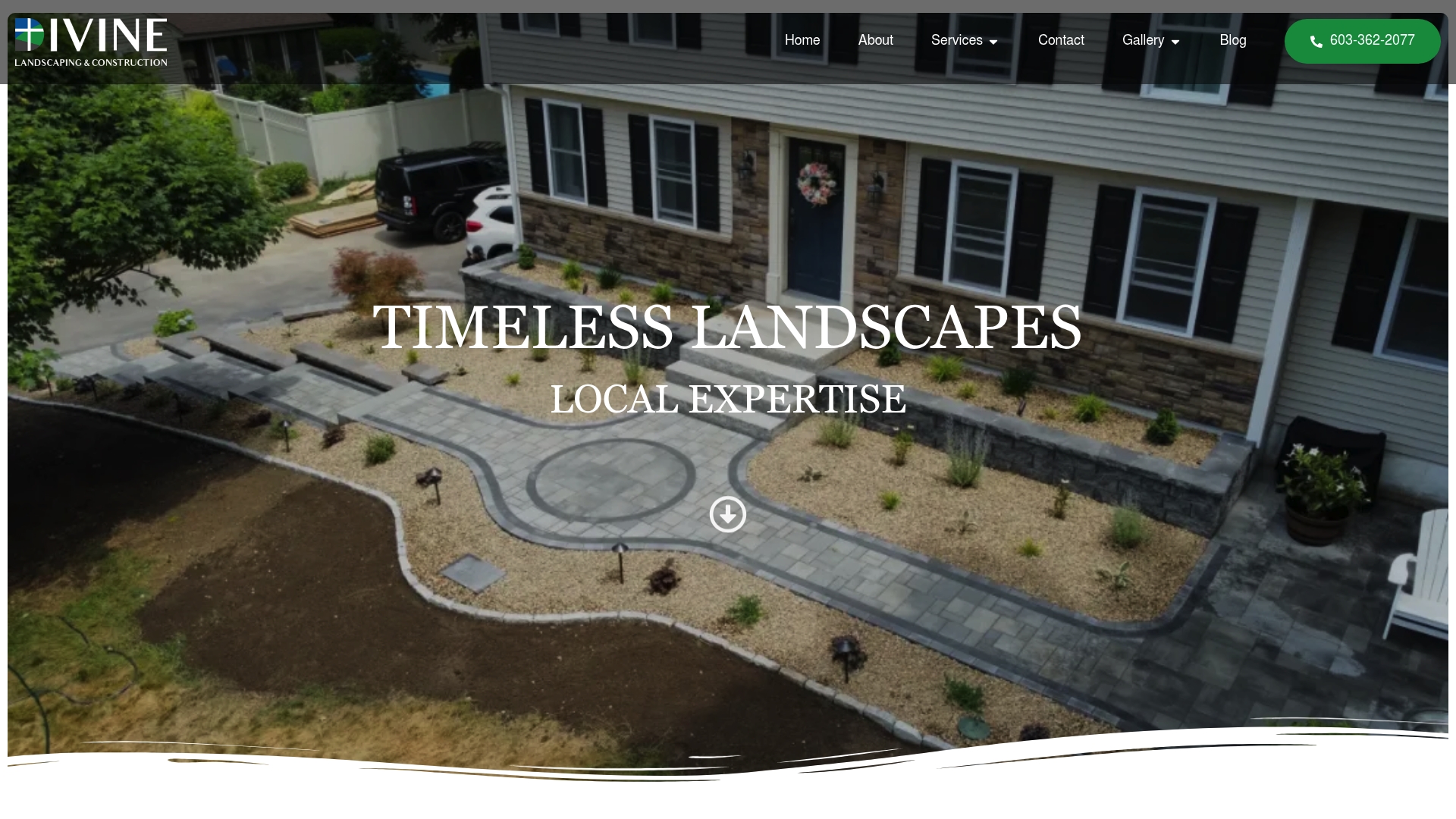
Every project starts with a site assessment and a conversation about how you actually use your property. From there, the team develops a layout that integrates hardscape elements like patios, walkways, and retaining walls with planting, lighting, and drainage to create a complete, functional outdoor environment. For property managers overseeing multiple units, Divinelandscapingllc’s multi-tenant landscaping services address the specific challenges of shared amenity spaces, from lease-up design to long-term maintenance planning. Contact Divinelandscapingllc to discuss your property’s outdoor potential.
FAQ
What is outdoor amenity design?
Outdoor amenity design is the professional planning and integration of recreational and social spaces into a property’s site plan to improve functionality, user wellbeing, and property value. It covers everything from fitness zones and seating areas to gardens and water features.
What are the most important elements of outdoor design?
The core elements include clear functional zoning, proper circulation clearance, biophilic features like native plants and water, multi-sensory comfort features, and visual continuity between indoor and outdoor spaces.
How do outdoor amenities increase property value?
Well-designed outdoor amenities attract tenants and buyers, reduce vacancy rates, and support longer lease terms. For multifamily and commercial properties, amenity quality directly influences lease-up velocity and renewal rates.
What is the biggest mistake in outdoor amenity design?
The most common mistake is designing around a checklist of expensive features rather than analyzing how residents or tenants actually behave and what they genuinely need from the space.
How do I start planning an outdoor amenity project?
Begin with a use-case analysis of your expected occupants, then engage a landscape architect and civil engineer before any grading or construction begins. Budget for programming and maintenance alongside the initial installation cost.