

A landscaping scope of work is a binding written document that specifies every task, material, timeline, and exclusion a contractor will deliver on your property. Without one, you have no legal reference point when a dispute arises. Unclear scopes are a leading cause of project disagreements in residential and commercial landscaping. For homeowners and property managers in New Hampshire, understanding what is scope of work landscaping means knowing exactly what you are paying for before a single shovel hits the ground.
What are the essential components of a landscaping scope of work?
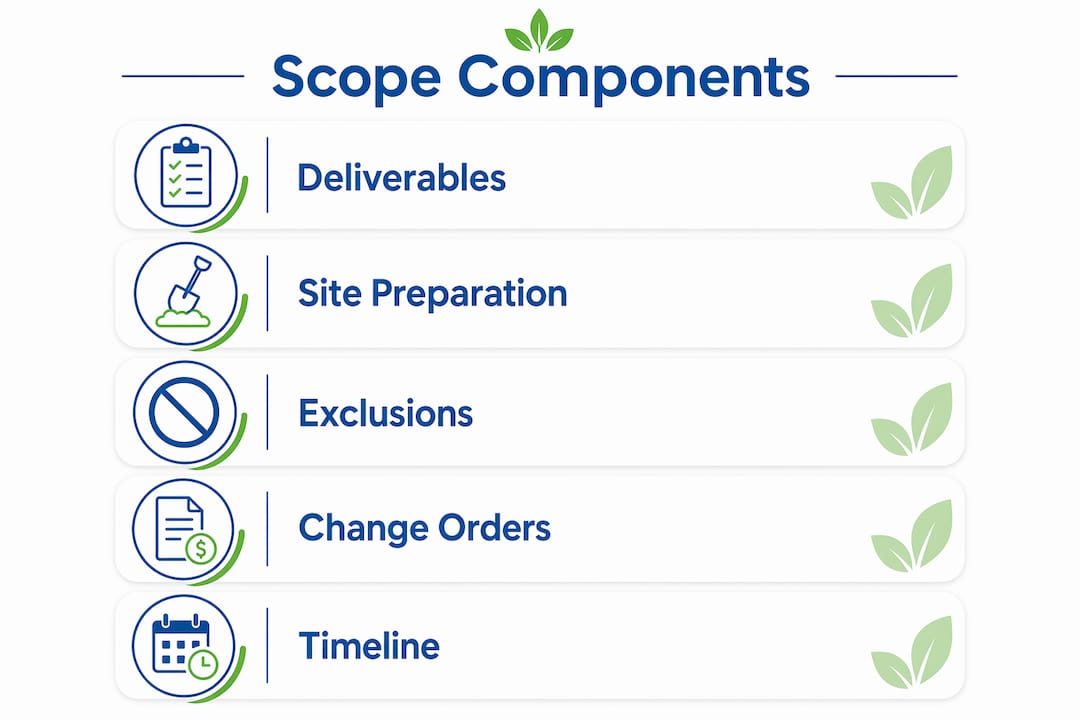
A professional landscaping scope of work must contain six core elements. Missing any one of them raises your risk of scope creep and budget overruns significantly.
Here is what every solid scope document should include:
- Itemized deliverables with quantities and specifications. List every plant, paver, and fixture by name, size, and count. Vague entries like “shrubs along the front bed” create room for disagreement.
- Site preparation details. Specify whether the work includes excavation, grading, topsoil removal, or drainage routing. Site prep is labor-intensive and costly, and vague wording leads to unexpected charges when ground work begins.
- Explicit exclusions. State clearly what the contractor will not do. Common exclusions include rock removal, stump grinding, and tree work beyond a certain diameter.
- Change-order procedures. Define how additions or modifications get requested, priced, and approved in writing.
- Timeline with start and completion dates. Include milestone dates for major phases such as hardscape installation, planting, and final cleanup.
- Material and brand specifics. Name the exact products where possible. “Composite decking” is not specific enough. “Trex Transcend in Tiki Torch” is.
Pro Tip: Ask your contractor to attach a plant schedule as a separate document. It should list botanical names, container sizes, and quantities for every plant. A “Japanese Maple” can refer to a 3-gallon starter or a 15-gallon specimen, and the price difference is substantial.
The landscape project timeline section of your scope deserves special attention. In New Hampshire, frost dates and ground conditions affect when certain phases can realistically begin. A scope that ignores local seasonality sets unrealistic expectations from day one.

How do service tiers clarify the scope of landscaping work?
Landscaping services divide into three tiers: Maintenance, Enhancement, and Construction. Each tier requires different authorization, pricing structures, and contract language. Confusing them is one of the most common reasons property managers end up with surprise invoices.
| Service tier | What it covers | Pricing model | Authorization needed |
|---|---|---|---|
| Maintenance | Mowing, pruning, fertilizing, seasonal cleanup | Recurring monthly or seasonal rate | Standard service agreement |
| Enhancement | Mulching, overseeding, bed edging, color plantings | Per-visit or seasonal add-on pricing | Written change order or separate quote |
| Construction | Patios, retaining walls, irrigation systems, outdoor kitchens | One-time capital project cost | Separate signed contract with full scope |
Defining the three service categories accurately affects budgeting, scheduling, and communication throughout a project. Maintenance preserves what exists. Enhancement changes the appearance of existing features. Construction installs something new. When these categories blur in a single contract, billing disputes follow.
Pro Tip: If your property manager handles a multi-tenant building, request a separate scope document for each service tier. This makes it far easier to track costs, approve add-ons, and audit invoices at year end.
Understanding landscape maintenance distinctions before you sign any agreement protects you from paying construction rates for what should be a routine maintenance visit.
Common pitfalls in landscaping scopes and how to avoid them
Most landscaping disputes trace back to the same handful of avoidable mistakes. Knowing what to look for before you sign protects your budget and your relationship with your contractor.
-
Ambiguous plant schedules. Most plant schedule disputes arise from unqualified common names. Always require botanical names, container sizes, and quantities. “Ornamental grass” could mean a 1-gallon Pennisetum or a 5-gallon Miscanthus. The cost difference matters.
-
Vague site preparation language. Phrases like “prepare the area” hide real costs. Require the scope to specify whether prep includes soil excavation, debris hauling, drainage routing, and how many cubic yards of material will be removed or added.
-
Undocumented verbal requests. Asking your contractor to “add a few more plants along the fence” mid-project without a written change order is how budgets balloon. Explicit exclusions prevent costly add-ons from appearing on your final invoice without prior approval.
-
No signed agreement before work starts. Both parties must sign the scope before work begins. This creates a legally binding reference for managing change requests and resolving disputes. A handshake is not a contract.
-
Missing insurance and liability language. A well-structured landscaping contract aligns with insurance policies to protect both parties. Confirm your contractor carries general liability and workers’ compensation before any crew arrives on your property.
Pro Tip: Print the scope and walk the property with your contractor before signing. Point to each area and confirm it matches the written document. Discrepancies caught before work starts cost nothing to fix. Discrepancies caught after cost plenty.
How to apply a landscaping scope for New Hampshire properties
New Hampshire properties present specific challenges that a generic scope template will not address. Local soil conditions, frost depth, and seasonal timing all belong in your scope document.
Key elements to specify for NH residential and commercial projects:
- Soil and drainage conditions. Southern New Hampshire has significant clay content in many areas. Your scope should specify whether soil amendment, drainage tile, or catch basin installation is included.
- Frost-sensitive installation windows. Hardscape work like paver patios and retaining wall installation must be completed before the ground freezes, typically by mid-november. Your scope should reflect realistic start and completion windows.
- Irrigation system winterization. Any scope covering irrigation services in NH must address fall blowout procedures. Leaving this out of the scope creates ambiguity about who is responsible when pipes freeze.
- Multi-tenant property considerations. Commercial property managers overseeing multi-tenant landscaping need scopes that specify service zones, access schedules, and tenant notification procedures.
- Outdoor living project phases. Projects that include decks, patios, or outdoor kitchens should list phases in sequence: site prep, hardscape installation, planting, lighting, and final inspection.
New Hampshire’s short growing season makes sequencing critical. A scope that does not account for local timing risks pushing planting into late fall, when establishment rates drop and plant survival becomes uncertain.
Key Takeaways
A landscaping scope of work is the single most important document in any residential or commercial landscaping project, and reviewing it carefully before signing prevents the majority of disputes and budget overruns.
| Point | Details |
|---|---|
| Define all six core components | Every scope needs deliverables, site prep, exclusions, change-order terms, timeline, and material specs. |
| Separate service tiers clearly | Maintenance, Enhancement, and Construction require distinct pricing and authorization to avoid billing confusion. |
| Require botanical plant names | Specifying botanical names, container sizes, and quantities prevents costly plant substitution disputes. |
| Sign before work starts | Both parties must sign the scope document before any work begins to create a legally binding reference. |
| Address NH-specific conditions | Soil type, frost dates, and irrigation winterization must appear in scopes for New Hampshire properties. |
Why I treat the scope as the most important conversation, not just a document
After working on landscaping projects across New Hampshire, the pattern is consistent. The projects that go smoothly are the ones where the homeowner read the scope carefully, asked questions, and pushed back on vague language before signing. The ones that end in frustration almost always trace back to a scope that was too thin or signed too fast.
Viewing the scope as a blueprint rather than a formality changes how you engage with the process. When you treat it as the foundation for every conversation with your contractor, you start asking better questions. You notice when site prep is described in one sentence. You catch when the plant list uses common names only. You realize the timeline has no milestone dates.
The exclusions section is where I see the most damage done. Homeowners assume that because a contractor is on site, everything visible is included. Rock removal, tree work, and utility marking are classic examples of work that looks obvious but is often explicitly excluded. Reading that section out loud with your contractor before signing is the single most effective thing you can do to protect your budget.
My honest advice: treat the scope review like a final walkthrough before closing on a house. You would not skip that. Do not skip this.
— Damian
Divinelandscapingllc brings clarity to every New Hampshire project
Planning a landscaping project in New Hampshire means dealing with real variables: clay soil, short growing seasons, and properties that range from single-family homes to large commercial sites. Divinelandscapingllc builds detailed, itemized scopes of work for every project, so you know exactly what is included, what is excluded, and what each phase will cost before work begins.
Whether you manage a residential property or oversee a multi-tenant commercial site, Divinelandscapingllc provides transparent proposals that align with your budget and timeline. From hardscape installation to irrigation and outdoor living spaces, every project starts with a clear written scope. Request a quote and get a scope document you can actually rely on.
FAQ
What is a scope of work in landscaping?
A landscaping scope of work is a binding written document that lists every task, material, timeline, and exclusion for a project. It serves as the legal reference point for both the homeowner and the contractor throughout the job.
What should a landscaping scope of work include?
A complete scope includes itemized deliverables, site preparation details, explicit exclusions, change-order procedures, a project timeline, and specific material names. Missing any of these elements increases the risk of disputes and unexpected costs.
Why does the scope of landscaping services matter for NH properties?
New Hampshire properties have specific conditions including clay soil, frost depth, and short planting windows that must appear in the scope. A generic scope that ignores local factors leads to scheduling conflicts and unmet expectations.
What is the difference between maintenance and construction in a landscaping scope?
Maintenance covers recurring tasks like mowing and pruning. Construction covers one-time capital work like patio installation or retaining walls. Each requires separate pricing and authorization in the scope document.
When should both parties sign the landscaping scope?
Both parties must sign the scope before any work begins. Signing after work starts removes your ability to manage change orders and dispute unexpected charges effectively.