
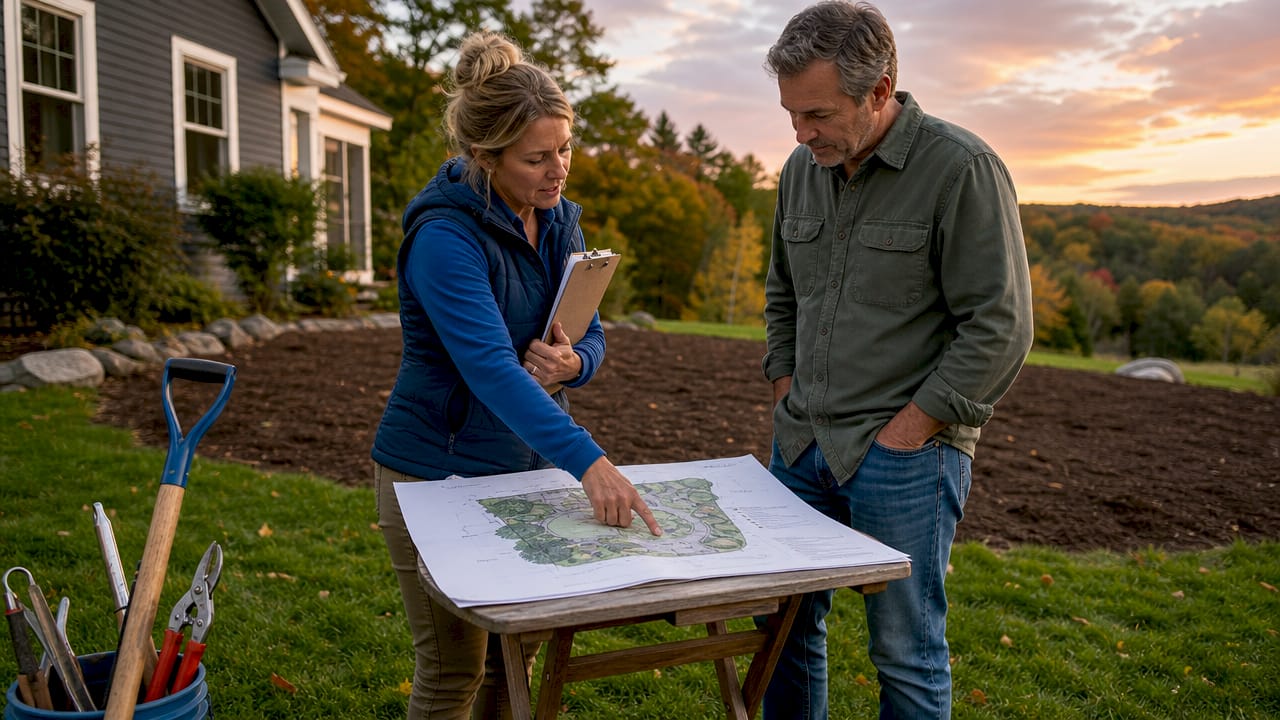
Professional landscape design is the strategic creation of outdoor spaces that increase property value, improve curb appeal, and build durable, sustainable environments for homeowners and businesses. For New Hampshire property owners, the benefits of professional landscape design go well beyond aesthetics. A well-executed design by a licensed landscape contractor can increase resale value by 10–15%, protect your home’s foundation from drainage issues, and reduce long-term maintenance costs. Divinelandscapingllc works with residential and commercial clients across New Hampshire to deliver exactly these results through custom master plans, hardscaping, and year-round care.
1. Benefits of professional landscape design on property value
A professionally designed landscape is one of the highest-return investments a property owner can make. Every $1 invested in professional landscaping returns approximately $1.35 at sale. That return outperforms many common interior renovations, including kitchen updates and bathroom remodels, on a dollar-for-dollar basis.
Mature trees play a significant role in that number. They can independently add 3–15% to a property’s appraised value. Buyers perceive mature plantings as a sign of long-term care and stability, which directly affects their offer price.
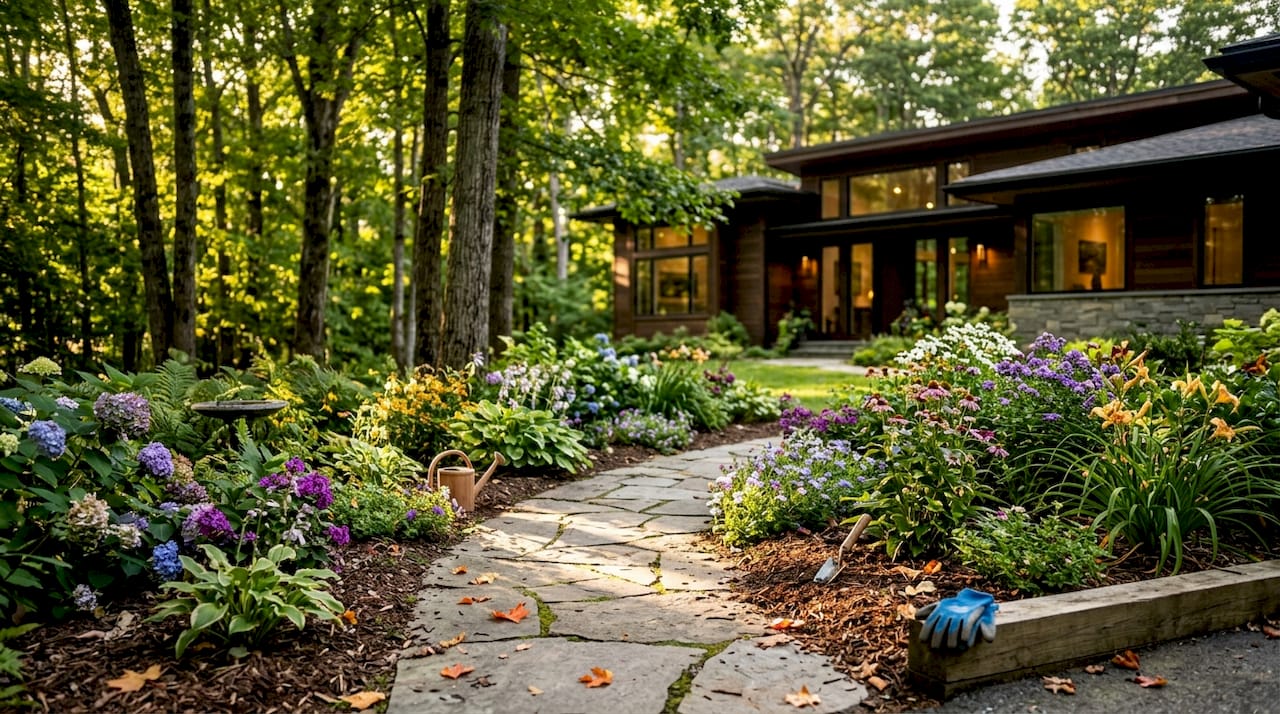
Curb appeal also shapes first impressions before a buyer ever steps inside. A cohesive front yard with defined beds, clean edging, and well-placed plantings signals that the entire property has been maintained. You can read more about this in Divinelandscapingllc’s guide to NH property value landscaping.
Key value drivers in a professionally designed landscape include:
- Mature tree placement for shade, privacy, and appraisal value
- Defined planting beds with cohesive color and texture
- Hardscaping elements like patios, walkways, and retaining walls
- Proper grading and drainage to protect the foundation
- Outdoor lighting that extends usable hours and adds security
2. Expert planning through a cohesive master plan
A master plan prevents disjointed aesthetics and costly future renovations that result from adding landscape elements one at a time. Homeowners who build their yards piecemeal often end up with incompatible materials, drainage conflicts, and plants that crowd each other out within a few seasons. A master plan solves all of that before a single shovel hits the ground.
Professional designers map utility lines, assess soil conditions, and calculate grade changes before selecting materials or plants. This upfront engineering work prevents the two most expensive landscape mistakes: poor drainage that floods basements and hardscaping that shifts or cracks because the base was not properly prepared.
A strategic blueprint for phased implementation also means you can build your outdoor space over time without sacrificing cohesion. Phase one might be a patio and retaining wall. Phase two adds planting beds. Phase three brings in lighting and irrigation. Each phase fits the original plan.
Pro Tip: Ask your designer to include a phasing schedule in your master plan. This lets you spread costs across multiple seasons without compromising the final design.
Benefits of working from a master plan include:
- Avoidance of utility conflicts and drainage errors
- Material consistency across hardscape and softscape elements
- Plant selections that suit your specific microclimate
- A clear budget roadmap for phased construction
- Long-term maintenance savings from correct plant spacing
3. Year-round visual appeal through succession planting
Succession planting and structural interest keep your landscape visually engaging through every season, not just during peak spring bloom. Most DIY landscapes look great in may and june, then fade into a flat green mass by august. A professional designer selects plants that hand off color, texture, and structure from one season to the next.
In New Hampshire, this matters more than in warmer climates. Your landscape needs to perform through mud season, summer heat, fall color, and winter dormancy. Structural plants like ornamental grasses, evergreen shrubs, and deciduous trees with interesting bark carry the yard through months when perennials are dormant.
Divinelandscapingllc incorporates these techniques into every custom landscape design it builds, selecting plants suited to New Hampshire’s hardiness zones and microclimates. The result is a yard that looks intentional and cared for in every month of the year.
4. Sustainability and environmental responsibility
Professionals implement xeriscaping, permeable paving, and rain gardens to conserve water and reduce harmful runoff. These are not just environmental gestures. They directly lower your water bill, reduce chemical use, and protect your property from erosion and flooding.
Rain gardens, for example, capture stormwater runoff from roofs and driveways and filter it through native plants and amended soil before it reaches groundwater. Permeable paving does the same for hardscaped areas. Both methods are especially relevant in New Hampshire, where spring snowmelt creates significant runoff pressure on residential lots.
“Professional landscapers act as stewards of sustainability, using advanced environmentally friendly techniques that protect local ecosystems and conserve resources. These practices reduce soil erosion, limit chemical runoff into waterways, and support native plant populations that sustain local wildlife.”
Native plant selection also reduces the need for fertilizers and pesticides. Native species are adapted to local soil and rainfall patterns, so they thrive with minimal intervention. That means less maintenance cost and less chemical load on your property over time. Divinelandscapingllc’s approach to eco-friendly landscape solutions incorporates these practices for both residential and commercial properties.
5. Efficiency and expertise of a professional landscape contractor
Professional teams complete projects in a fraction of the time that solo homeowners require. This is not just about speed. It is about avoiding the expensive corrections that follow DIY mistakes. A retaining wall built without proper drainage behind it will fail within a few seasons. A patio installed without a compacted gravel base will heave and crack after the first freeze-thaw cycle.
Professional contractors bring specialized equipment, trained crews, and established supplier relationships that reduce both cost and error. They also carry liability insurance, which protects you if something goes wrong during construction.
The comparison between professional and DIY approaches is clear:
| Factor | Professional contractor | DIY approach |
|---|---|---|
| Project timeline | Weeks, with structured scheduling | Months, with frequent delays |
| Drainage and grading | Engineered and verified | Often guessed or skipped |
| Plant selection | Matched to microclimate and soil | Based on appearance at the nursery |
| Equipment | Specialized and appropriate | Rented or improvised |
| Warranty and accountability | Typically included | None |
Pro Tip: Before hiring any contractor, ask specifically how they handle drainage design. A contractor who cannot explain their drainage plan is likely to skip it.
6. Benefits of year-round landscape maintenance
Year-round maintenance aligned with plant biology and local climate cycles produces healthier landscapes and reduces costly interventions. Reactive care, where you only address problems after they appear, costs significantly more over time than a scheduled maintenance program.
In New Hampshire, freeze-thaw cycles create specific risks. Irrigation lines that are not properly winterized crack and fail. Mulch that is not refreshed in fall allows frost heave to damage plant roots. Trees that are not pruned before heavy snow loads are vulnerable to branch failure. A year-round maintenance program addresses each of these risks at the right time.
Scheduled maintenance also prevents the springtime bottleneck that hits most homeowners. When you wait until april to address everything at once, you compete with every other property owner for contractor availability. Year-round clients get priority scheduling and consistent results. Learn more about structuring your care schedule in Divinelandscapingllc’s guide to landscape maintenance basics.
7. Professional hardscaping as a long-term investment
Professional hardscaping adds permanent structural value that softscape alone cannot provide. Patios, walkways, retaining walls, and outdoor living areas extend your usable square footage and create defined spaces for gathering, dining, and relaxing. Unlike plantings, well-built hardscape requires minimal ongoing maintenance and holds its value for decades.
In New Hampshire, retaining walls serve both aesthetic and functional purposes. Sloped lots are common across the state, and without proper grade management, soil erosion and foundation pressure become real problems. A professionally built retaining wall using concrete block, natural stone, or segmental retaining wall systems solves the grade issue while adding visual structure to the yard.
Professional hardscaping also creates the framework that makes softscape plantings look intentional. Defined bed edges, stone borders, and paved transitions between lawn and garden give the entire property a finished, cohesive appearance that DIY plantings alone rarely achieve.
Key takeaways
Professional landscape design delivers measurable financial returns, reduces long-term maintenance costs, and creates outdoor spaces that perform through every season of the New Hampshire year.
| Point | Details |
|---|---|
| Property value return | Every $1 invested in professional landscaping returns approximately $1.35 at sale. |
| Master plan prevents errors | A phased master plan avoids drainage conflicts, material mismatches, and costly rework. |
| Year-round maintenance saves money | Scheduled care aligned with plant biology costs less than reactive repairs over time. |
| Sustainability reduces ongoing costs | Native plants, rain gardens, and permeable paving lower water bills and chemical use. |
| Hardscaping adds permanent value | Patios, retaining walls, and walkways extend usable space and hold value for decades. |
What I’ve learned about landscape design in New Hampshire
After working with property owners across New Hampshire for years, the pattern I see most often is this: homeowners invest in plants and skip the plan. They buy beautiful shrubs at the nursery, plant them where they look good in the moment, and then wonder three years later why the yard feels cluttered and the drainage is getting worse.
The properties that hold their value and look better every year are the ones built from a master plan. Not because the plan is expensive, but because it forces every decision to serve the whole. Drainage, grade, plant spacing, hardscape placement, and lighting all get resolved on paper before they become problems in the ground.
New Hampshire’s climate is unforgiving to shortcuts. Freeze-thaw cycles expose every drainage mistake. Heavy snow loads reveal every poorly pruned tree. Spring mud season shows exactly where grading was ignored. The properties that survive all of that without expensive repairs are the ones where a professional thought through the site before construction began.
My honest advice: treat the design phase as the most important investment you make. The plants and hardscape are replaceable. A bad grade or a failed drainage system is not cheap to fix after the fact. Hire a professional who starts with a site assessment and a plan, not just a plant list.
— Damian
How Divinelandscapingllc serves New Hampshire property owners
Divinelandscapingllc designs and builds custom outdoor spaces for residential and commercial properties across New Hampshire, with services that cover every phase from initial site assessment to year-round maintenance.
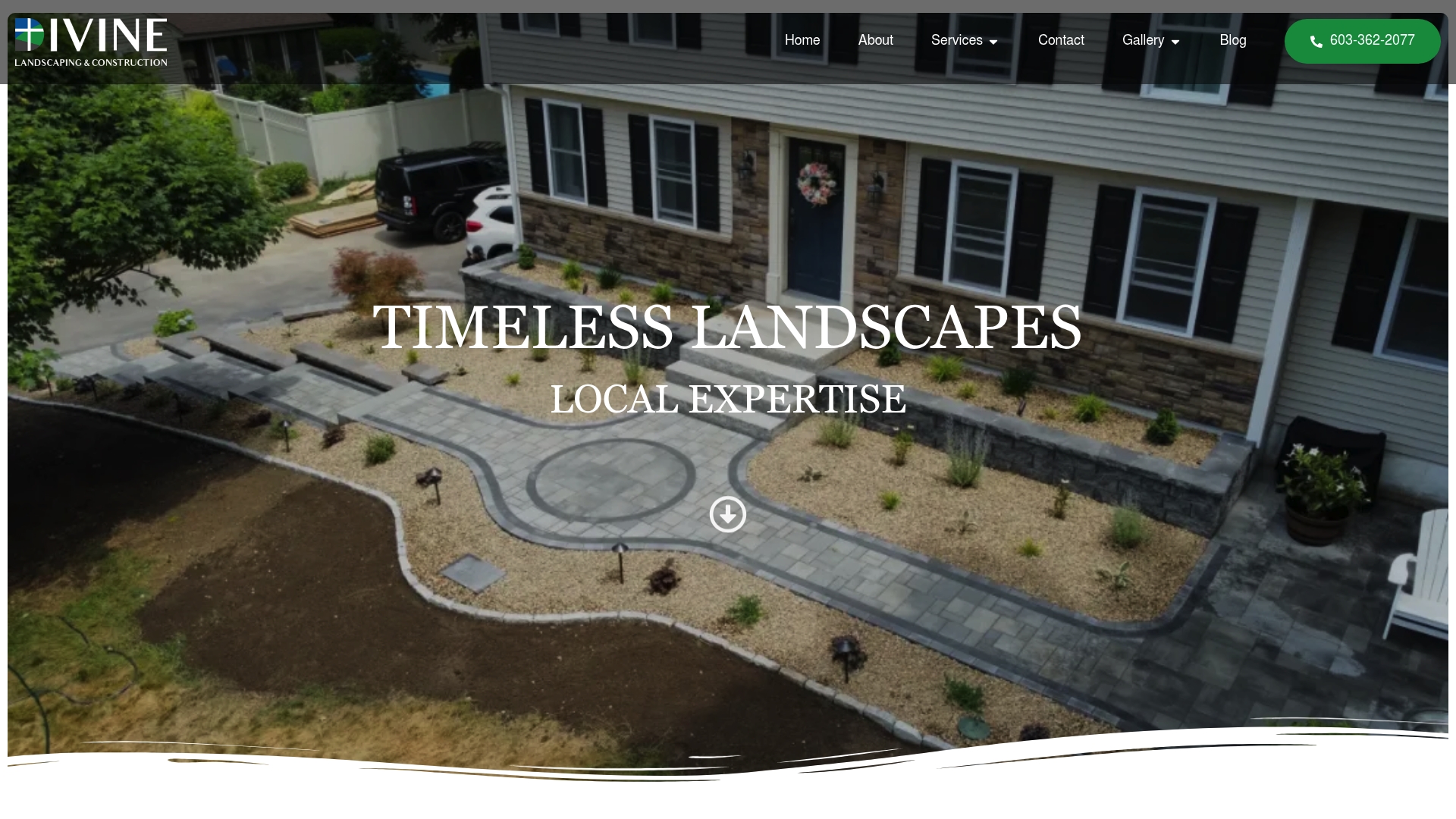
Whether you need a full landscape design master plan, a new patio and retaining wall, or a structured maintenance program that keeps your property looking sharp through every season, Divinelandscapingllc brings the planning, equipment, and expertise to get it done right. Visit Divinelandscapingllc to learn more about services available for your property, or request a quote to start with a site consultation.
FAQ
How much value does professional landscaping add to a home?
Professionally designed landscapes increase resale value by 10–15%, with mature trees independently adding 3–15%. Every $1 invested returns approximately $1.35 at sale.
Why hire a landscape designer instead of doing it yourself?
Professional designers select plants suited to local microclimates and engineer drainage solutions upfront, avoiding the costly trial-and-error common with DIY projects.
What is a landscape master plan?
A landscape master plan is a complete site blueprint that maps drainage, utility lines, grade changes, plant placement, and hardscape layout before construction begins. It prevents incompatible materials and disjointed aesthetics across phased projects.
What are the benefits of year-round landscape maintenance?
Year-round maintenance aligned with plant biology prevents freeze-thaw damage, irrigation failures, and pest issues while reducing the cost of reactive repairs over time.
Does hardscaping increase property value in New Hampshire?
Yes. Professionally built patios, walkways, and retaining walls add permanent structural value, extend usable outdoor space, and require minimal ongoing maintenance compared to softscape plantings.