
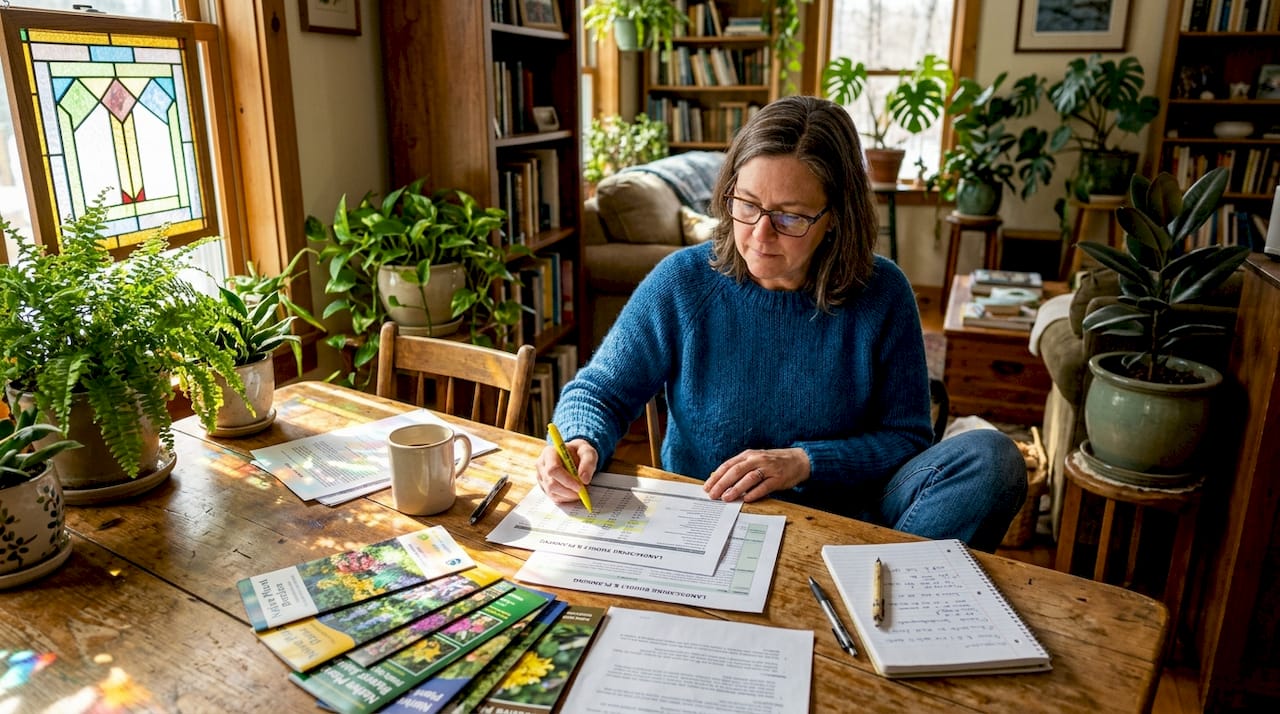
Landscape lifecycle cost is defined as the total economic cost of a landscaping asset from initial design through final disposal, covering every phase in between. The industry term for this practice is Life Cycle Cost Analysis, or LCCA, a method formalized by AACE International and applied across construction and property management. For New Hampshire property owners and managers, understanding what is landscape lifecycle cost means looking beyond the installation invoice and accounting for decades of maintenance, repairs, water usage, and eventual renovation. The gap between what you pay to install a landscape and what you pay to own it over 20 years is often far larger than most budgets anticipate.
What is landscape lifecycle cost and what does it include?
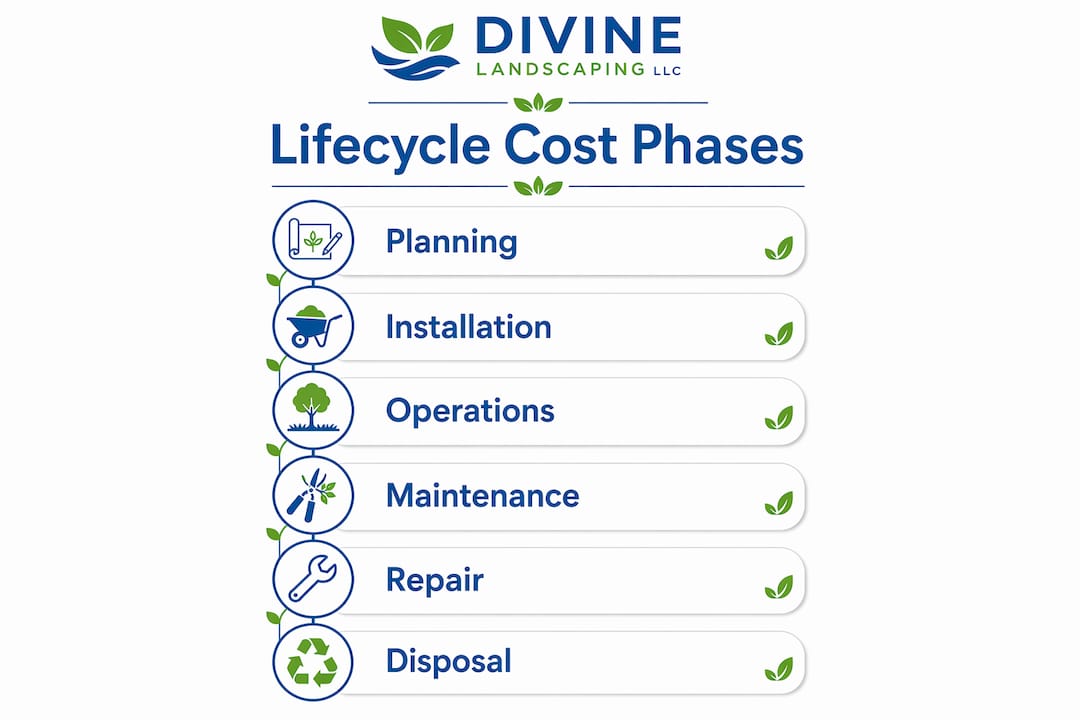
Landscape lifecycle cost covers every stage of a landscaping asset’s economic life: planning and design, installation, ongoing operations, routine maintenance, major repairs, and eventual disposal or renovation. Each stage carries its own cost structure, and skipping any one of them in your budget creates a blind spot that compounds over time. LCCA, as defined by AACE International’s Recommended Practice 138R-25, guides decision-makers toward the most cost-effective option by evaluating total ownership cost across the full asset life. That framework applies directly to patios, retaining walls, irrigation systems, turf areas, and planted beds.
The six core cost phases break down as follows:
- Planning and design: Site assessment, grading plans, drainage engineering, and professional design fees. These typically run $500–$5,000 depending on project scope.
- Installation: Labor and materials for hardscape features such as patios, walkways, and retaining walls, plus softscape elements including sod, shrubs, and trees.
- Operations: Water for irrigation, electricity for outdoor lighting, and fuel for equipment. These costs recur every year for the life of the property.
- Routine maintenance: Mowing, fertilizing, edging, pest control, seasonal cleanup, and pruning. This is the largest cumulative cost category for most properties.
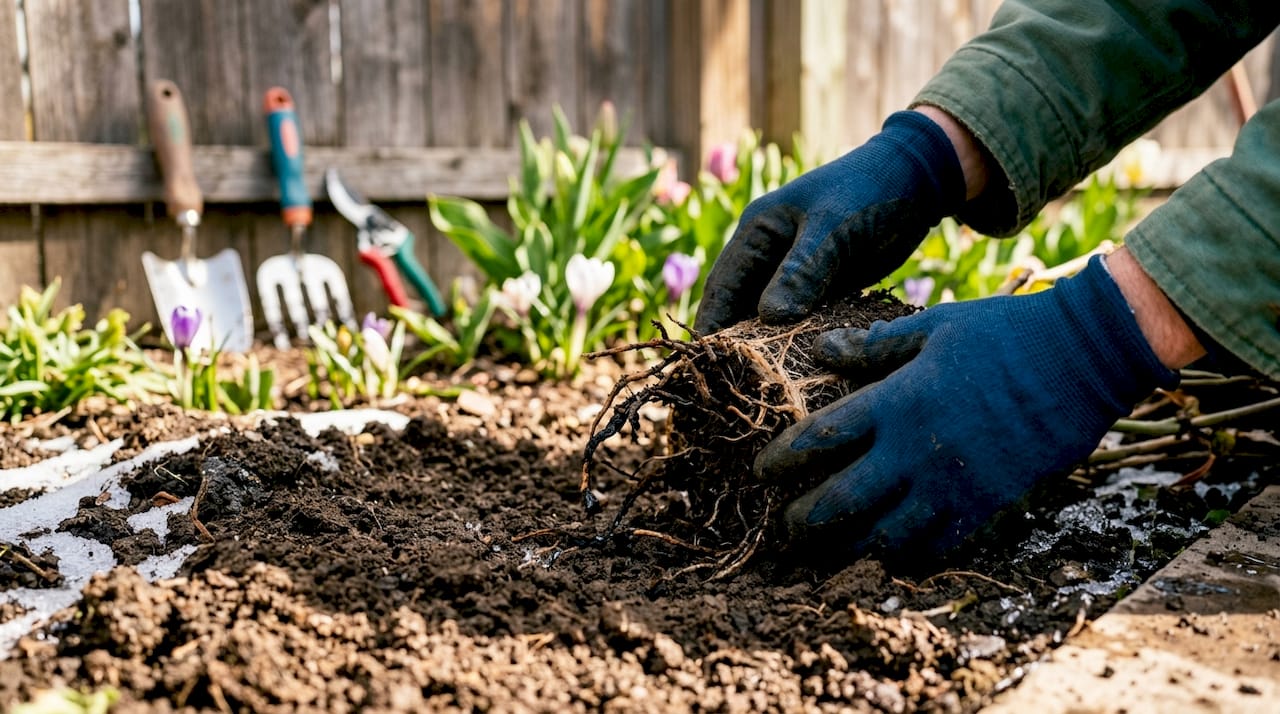
- Major repairs and replacements: Retaining wall repointing, irrigation head replacement, tree removal, and hardscape resetting after frost heave. New Hampshire’s freeze-thaw cycles accelerate this category.
- Disposal and renovation: Demolition of old features, material hauling, and site preparation for the next design cycle.
Pro Tip: Build a separate line item for freeze-thaw repairs in your New Hampshire landscape budget. Frost heave affects patios, walkways, and retaining walls every few years, and ignoring it guarantees a budget surprise.
The total cost of landscape ownership is the sum of all six phases, not just the installation invoice. A $15,000 patio installation may carry $30,000 in maintenance, repair, and operational costs over 20 years.
How does lifecycle cost analysis affect budgeting decisions in New Hampshire?
Focusing only on installation price is the most common and costly mistake New Hampshire property owners make. 75% of landscape projects exclude maintenance costs from initial budgets, which leads to premature degradation and significantly higher future expenses. That statistic means three out of four properties are set up for a budget crisis before the first growing season ends.
“Landscaping projects often appear cheaper initially when maintenance costs are ignored, which leads to greater costs and earlier asset failure in 10–20 year cycles. Properly planned investments, by contrast, can recover 100–200% of total costs at resale when well executed.”
The practical consequences for New Hampshire property owners are direct. A suburban quarter-acre lot with a full-service annual maintenance contract runs $2,000–$5,000 per year. A mowing-only contract costs $1,200–$2,500 annually. Over a 15-year ownership period, that maintenance line alone totals $18,000–$75,000, depending on service level. That figure belongs in your original investment analysis, not as a surprise in year three.
Lifecycle cost analysis changes how you compare options at the design stage. Consider two retaining wall materials: a basic concrete block wall at $15 per square foot versus a natural stone wall at $30 per square foot. The concrete option costs less upfront, but natural stone requires less repointing and resists New Hampshire’s freeze-thaw cycles more effectively. The long-term cost savings from quality materials often close that price gap within 7–10 years. LCCA makes that comparison visible before you commit.
The benefits of applying lifecycle cost analysis to your property include:
- Accurate multi-year budget forecasting instead of annual surprises
- Better material selection based on total ownership cost, not sticker price
- Reduced risk of premature asset failure from deferred maintenance
- Stronger ROI when selling, since well-planned landscaping can recover 100–200% of total costs at resale
- Clearer communication with contractors about scope and long-term expectations
What are typical landscaping cost ranges in New Hampshire in 2026?
New Hampshire’s labor market, climate, and material supply chains produce cost ranges that differ from national averages. Understanding local pricing gives you a realistic baseline for lifecycle cost assessment.
Installation costs
Initial landscaping installation costs typically range from $5,000 to $50,000 or more, with national averages landing near $8,500–$9,000. In New Hampshire, local labor rates and material transport push mid-range projects toward the higher end of national benchmarks.
| Cost category | Typical range (NH, 2026) | Notes |
|---|---|---|
| Hardscape installation | $15–$50 per sq ft | Patios, walkways, retaining walls |
| Softscape installation | $4–$8 per sq ft | Sod, shrubs, perennial beds |
| Full project (design + install) | $8,000–$50,000+ | Varies by scope and site complexity |
| Weekly maintenance visit | $50–$200 per visit | Mowing, edging, blowing |
| Annual maintenance contract | $2,000–$5,000 | Full service on quarter-acre suburban lot |
| Mowing-only annual contract | $1,200–$2,500 | No fertilizing or seasonal cleanup |
Hardscape vs. softscape cost dynamics
Hardscape features require higher initial capital but carry lower ongoing maintenance costs than softscape. Softscape, by contrast, demands seasonal labor, fertilizer, pest control, and irrigation water every year. Within 5–7 years, the cumulative maintenance cost of a planted softscape area can surpass its original installation cost. That crossover point is exactly what lifecycle cost evaluation is designed to reveal.
Premium materials cost more upfront but reduce long-term expenses. Investing 15–20% more in durable materials or an efficient irrigation system reduces total ownership costs significantly over a 10–20 year horizon. For New Hampshire properties, that means choosing permeable pavers over standard concrete, or a smart irrigation controller over a basic timer, when the lifecycle math supports it.
- Permeable pavers: higher install cost, lower drainage repair costs over time
- Smart irrigation controllers: $200–$600 upfront, measurable water savings annually
- Composite decking: higher material cost than pressure-treated wood, but lower refinishing and replacement costs over 15 years
- Native plantings: lower water and fertilizer needs than non-native species, reducing annual operational costs
How can you apply lifecycle cost analysis to your landscape investment?
Applying LCCA to your property does not require specialized software. A structured approach produces reliable results for most residential and commercial properties.
- List every landscape component. Catalog hardscape features, planted areas, irrigation zones, lighting, and drainage structures. Each component has its own cost profile.
- Assign an expected lifespan to each component. A concrete patio may last 25–30 years; a wood deck may need replacement in 15–20 years; turf areas require annual inputs indefinitely.
- Estimate annual operating and maintenance costs. Use local contractor quotes and utility estimates. For New Hampshire properties, factor in spring cleanup, fall leaf removal, and winter damage repair as separate line items.
- Project major repair and replacement costs. Identify when each component will need significant investment. A retaining wall may need repointing at year 10; an irrigation system may need head replacement at year 7.
- Total all costs across your ownership horizon. A 15-year or 20-year window is standard for residential properties. Commercial properties often use 25–30 years.
- Compare design and material options using the total, not the install price. Two options with different upfront costs may reach the same total cost by year 10, or one may prove dramatically cheaper over the full period.
Pro Tip: Get professional landscape design from the start. A designer who understands NH’s climate will specify materials and plant selections that reduce your lifecycle costs before the first shovel hits the ground.
The role of proactive maintenance in lifecycle cost management cannot be overstated. Deferred maintenance accelerates asset degradation. A retaining wall that needs $500 in repointing at year 8 will need $5,000 in reconstruction by year 12 if that work is skipped. Understanding landscape maintenance as a cost-control tool, not just an aesthetic service, is the mindset shift that separates effective property managers from reactive ones.
Integrating lifecycle cost results with your property’s ROI assumptions closes the loop. Properly planned landscaping can recover 100–200% of total costs at resale. That means a $30,000 landscape investment with $20,000 in lifecycle maintenance costs may add $50,000–$100,000 to your property’s market value if executed well. The math works, but only when the full lifecycle cost is part of the original plan.
Key Takeaways
Landscape lifecycle cost analysis is the most reliable method for avoiding budget surprises and maximizing property value over a 15–20 year ownership horizon.
| Point | Details |
|---|---|
| Lifecycle cost covers six phases | Planning, installation, operations, maintenance, repairs, and disposal all belong in your budget. |
| Most budgets miss maintenance | 75% of landscape projects exclude maintenance costs, leading to premature asset failure and higher future expenses. |
| Hardscape costs less long-term | Hardscape requires higher upfront investment but lower recurring maintenance than softscape over 5–7 years. |
| Durable materials pay off | Spending 15–20% more upfront on quality materials or efficient irrigation reduces total ownership costs significantly. |
| Landscaping delivers strong ROI | Well-planned landscaping can recover 100–200% of total costs at resale when lifecycle costs are managed properly. |
Why I think most NH property owners are solving the wrong problem
After years of working with New Hampshire property owners, the pattern is consistent. Owners focus intensely on the installation quote and almost never ask what the property will cost to maintain in year five or year ten. That is solving the wrong problem.
The New Hampshire climate makes this especially costly. Freeze-thaw cycles, heavy snowfall, and spring mud season stress every landscape component harder than properties in milder states. A material or design choice that works fine in Connecticut may fail in three years in southern New Hampshire. Lifecycle costing is not just a financial exercise here. It is a climate adaptation tool.
The other misconception I see regularly is treating softscape and hardscape as equivalent in long-term cost. They are not. A lush planted bed looks beautiful at installation and costs more every year to maintain than the patio next to it. Property managers overseeing multi-tenant properties feel this acutely, because maintenance costs hit the operating budget every season while the installation cost is long forgotten.
My honest advice: build your landscape budget backward. Start with what you can afford to spend annually on maintenance, then work forward to determine what installation scope that budget can support over 20 years. That approach produces landscapes that stay healthy, look good, and hold their value. The alternative is a beautiful installation that deteriorates in five years because the maintenance budget was never realistic.
— Damian
Divinelandscapingllc can help you plan for the full picture
Planning a landscape investment in New Hampshire means accounting for every cost from design day through the next renovation cycle. Divinelandscapingllc works with residential and commercial property owners across New Hampshire to design and build outdoor spaces that hold their value and stay within realistic long-term budgets.
Whether you own a single-family home or manage a multi-tenant property, Divinelandscapingllc brings local material knowledge, NH climate experience, and honest cost planning to every project. From hardscape services built to withstand freeze-thaw cycles to irrigation systems designed for long-term efficiency, every recommendation is grounded in lifecycle cost thinking. Contact Divinelandscapingllc to schedule a consultation and get a clear picture of your property’s total landscape investment before you commit to a single stone or plant.
FAQ
What is landscape lifecycle cost in simple terms?
Landscape lifecycle cost is the total amount you spend on a landscaping asset from design through disposal, including installation, maintenance, repairs, and operations. It gives you the true cost of ownership, not just the installation price.
Why do most landscape budgets underestimate total costs?
75% of landscape projects exclude maintenance costs from initial budgets, which means most property owners only account for installation and discover the real cost of ownership over time through annual bills and repair invoices.
How much does annual landscape maintenance cost in New Hampshire?
Full-service maintenance contracts on a suburban quarter-acre lot run $2,000–$5,000 per year in 2026. Mowing-only contracts cost $1,200–$2,500 annually, with additional costs for fertilizing, seasonal cleanup, and pest control.
Does hardscape or softscape cost more over time?
Hardscape costs more upfront but less annually. Softscape costs less to install but demands ongoing seasonal labor, water, and inputs. Within 5–7 years, softscape maintenance costs can exceed the original installation investment.
Can landscaping investment pay for itself at resale?
Well-planned landscaping can recover 100–200% of total costs at resale. That return depends on design quality, material durability, and consistent maintenance throughout the ownership period.