
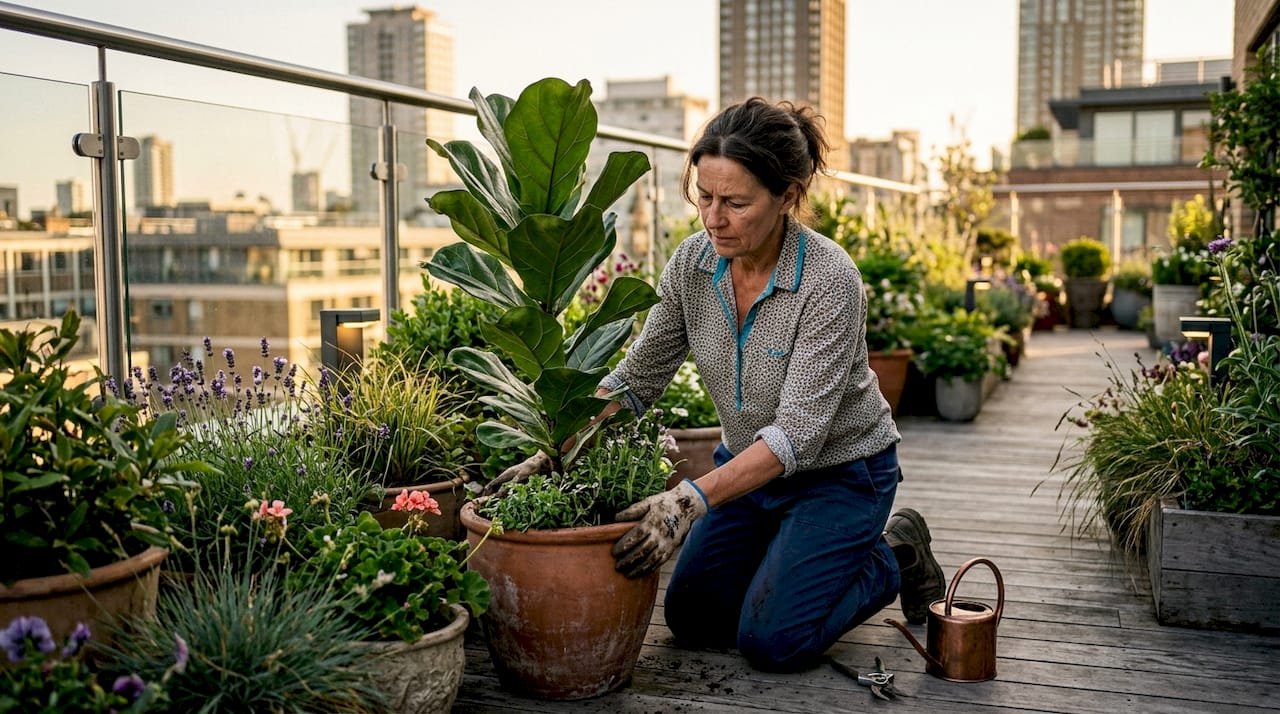
A landscape focal point is a visually dominant feature placed intentionally in your yard to draw the eye and anchor the entire outdoor space. Think of it as the organizing principle of your garden. Without one, the eye wanders from plant to plant with no clear destination, and the yard feels unresolved no matter how well each individual element is chosen. With one strong focal point, the same garden suddenly reads as designed rather than assembled at random.
The role of a focal point goes beyond aesthetics. It creates visual order, guides movement through the yard, and can even redirect attention away from things you would rather not highlight, like a utility box or an air conditioning unit. A well-placed bench, specimen tree, or garden sculpture does all of this while also expressing your personal style.
What Is a Landscape Focal Point and Why Does It Matter?
A landscape focal point is any special plant or object positioned to catch and hold your attention. Its power comes from two things equally: what it is and where it is placed. Get both right, and the rest of your yard falls into place around it.
Here is what a focal point does for your outdoor space:
- Gives the eye a destination. Human vision constantly searches a scene for its most important element. A clear focal point stops that restless scanning and lets the eye settle.
- Creates visual order and movement. Focal points connect different parts of the garden into a cohesive whole, guiding visitors naturally from one area to the next.
- Anchors the primary view. Whether you are looking out your kitchen window or sitting on the patio, a focal point gives that view a satisfying endpoint.
- Hides unattractive elements. Placing a striking feature on the sightline between you and something unsightly pulls attention exactly where you want it.
- Adds personality. A garden without a focal point can feel generic. The right feature, whether a Japanese maple, a stone birdbath, or a bold ceramic pot, tells visitors something about the people who made the space.
Common focal point examples include specimen trees, colorful shrubs, garden benches, statues, water features, and ornate containers. The key design principles that make them work are scale, placement, and contrast. Get those three right, and almost any object can become a compelling focal point.
Design considerations that make focal points work
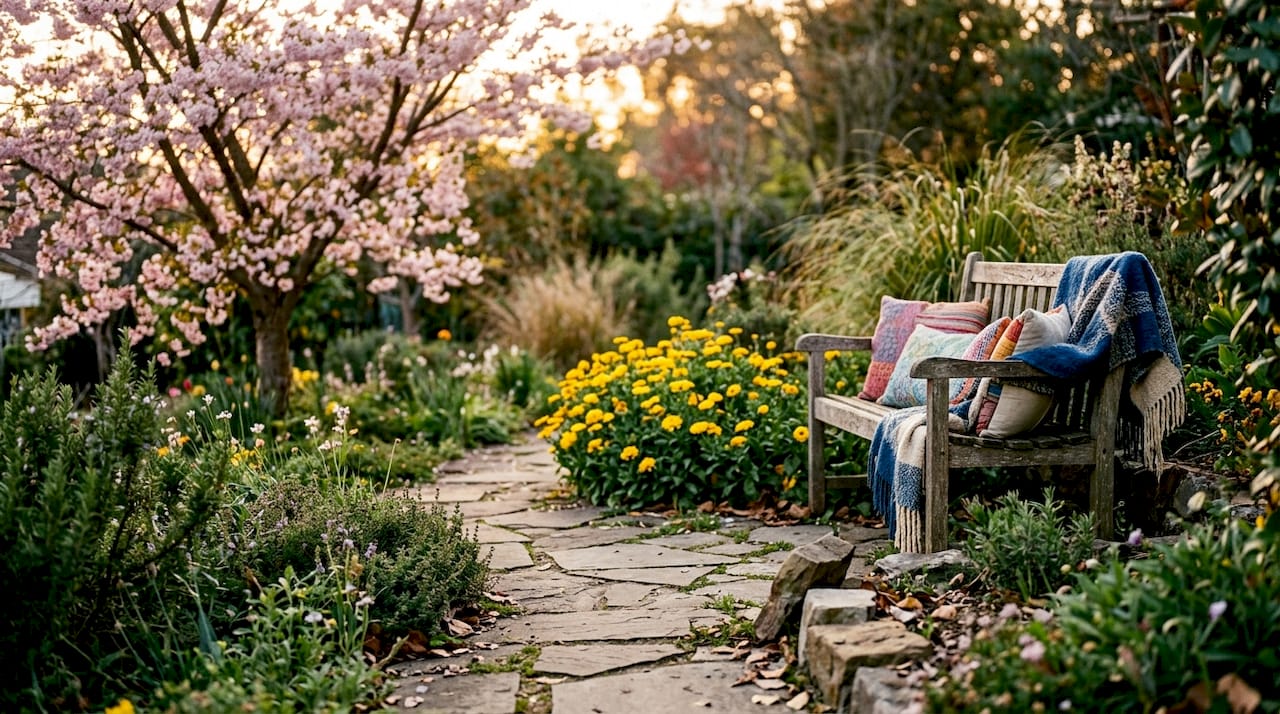
Choosing a focal point is only half the job. Placing and sizing it correctly is what separates a garden that looks designed from one that just looks busy.
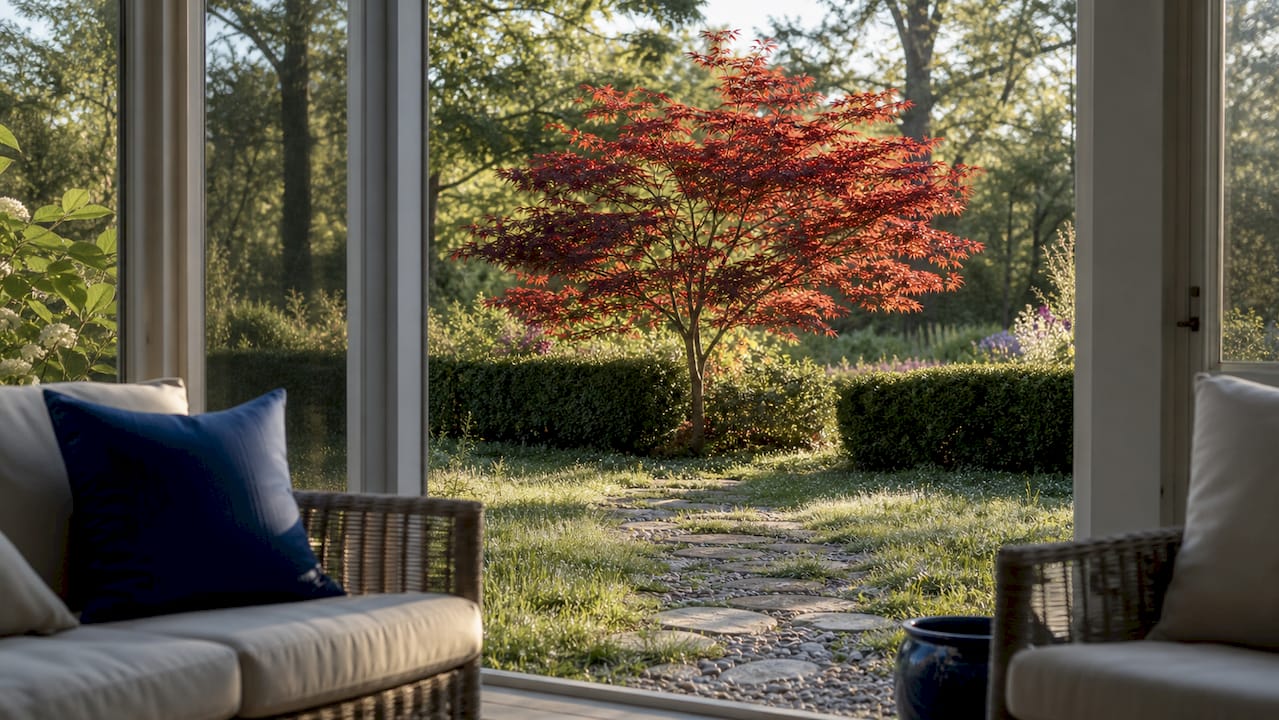
Sightlines come first. Stand at the windows and doors you look out of most, typically your kitchen window, living room, or back door, and note exactly what you see. Those are your primary sightlines, and placing a focal point directly on them gives every view an immediate, intentional focus.
Scale to the viewing distance. An object that is too small disappears; one that is too large overwhelms a modest yard. The practical guideline is to size your focal point to roughly one third of the distance between you and the feature. An object viewed from 9 meters reads best at around 1.5 to 2 meters tall. Measure the distance from your main viewpoint before you buy anything.
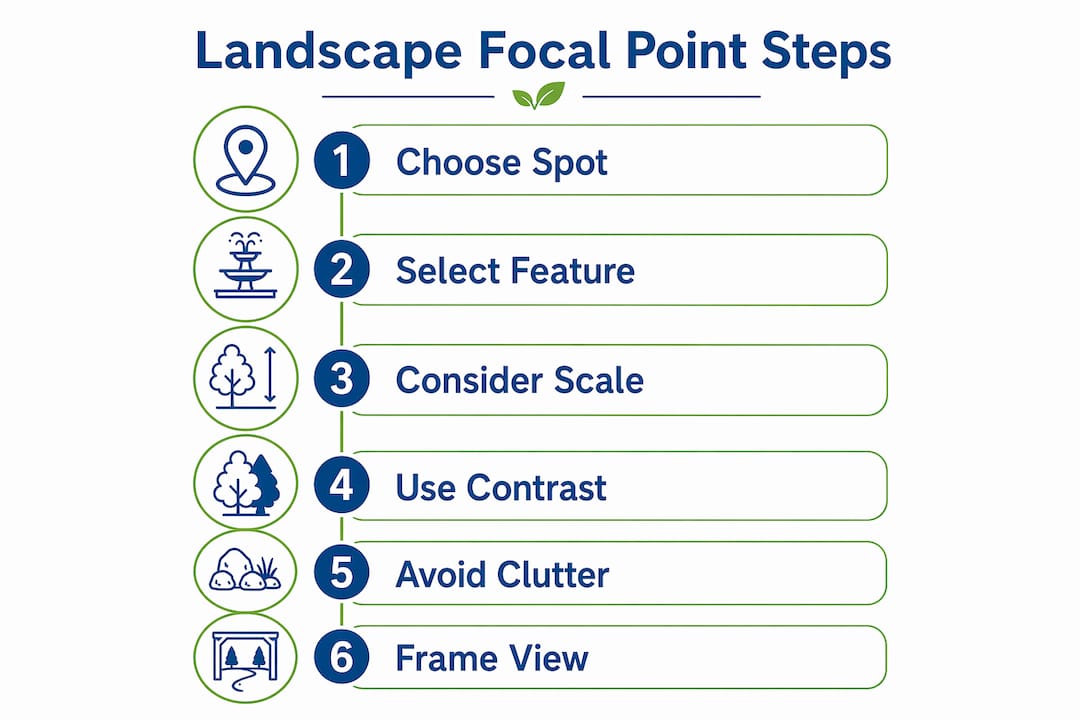
Use contrast deliberately. Emphasis is created through contrast in size, color, form, or texture. A dark-leafed Japanese maple against a light stone wall, a white urn against deep green hedging, or a tall upright conifer among low spreading shrubs all use contrast to make the focal point pop. The same principle applies to hardscape: a decorative concrete surface with a distinct color or texture can anchor a patio zone just as effectively as a planted specimen.
Avoid focal point clutter. Experts consistently advise one strong focal point per primary view. When multiple features compete for attention, the space feels chaotic and visually unresolved. Reserve secondary objects for accessories that support the main feature, not rival it.
Choose features with staying power. A plant focal point should hold visual interest across the growing season. Rely on architectural form, distinctive foliage color, or long-lasting blooms rather than short-lived flowers that leave a gap for months.
Pro Tip: Frame your focal point with clipped hedges, an arch, or a gap in planting so the eye is funneled directly toward it. Framing removes visual competition and amplifies the impact of even a modest feature.
Common types of focal points you can use in your garden
Focal points fall into two broad categories: plants and objects. Each has distinct visual characteristics, and the best choice depends on your garden’s style, size, and how much maintenance you want to commit to.
Plant focal points:
- Specimen trees. A multi-stemmed cherry, a weeping Japanese maple, or a columnar oak commands attention through form alone. Trees work especially well in small yard designs where a single well-chosen tree can do the work of several smaller plants.
- Colorful shrubs. A burning bush in fall, a golden-leafed spirea in summer, or a blue-flowering hydrangea creates seasonal color that draws the eye reliably.
- Ornamental grasses. Tall grasses like Miscanthus or Calamagrostis offer movement, texture, and winter interest when most other plants have gone dormant.
Hardscape and object focal points:
- Garden benches. A bench at the end of a path serves a dual purpose: it gives the eye a resting point and the body a place to sit. Placing one at the end of a plant-lined walkway creates an inviting destination.
- Containers and urns. A large ceramic pot or a stone urn planted with bold annuals or architectural succulents works in almost any garden style. Objects like these attract more immediate attention than plants because our eyes are drawn to man-made forms instinctively.
- Statues and sculptures. A well-chosen piece of garden art adds personality and holds interest year-round regardless of season.
- Water features. Fountains and birdbaths combine movement, sound, and visual weight. Even a modest birdbath under a Japanese maple creates a layered focal moment.
Creative and structural focal points:
- Arbors and pergolas. Structural focal points placed away from garden edges create intentional emphasis and can make narrow gardens feel wider. An arbor framing a bench or sundial transforms an ordinary corner into a destination.
- Mirrors and ornate gates. A garden mirror’s focal point is actually the reflected view, not the mirror itself. Placed at the end of a path, it extends the perceived depth of a small garden. A gate used internally, between garden zones, marks a threshold and pulls visitors onward.
- Lighting as emphasis. Uplighting a specimen tree or spotlighting a sculpture gives the garden a focal point after dark, extending the design’s impact well beyond daylight hours.
Accessories like birdbaths, watering cans, or small stepping stones are not focal points. They support and personalize the space around a focal point without competing with it.
How to incorporate a focal point into your landscape step by step
Getting a focal point right takes a bit of planning upfront, but the process is straightforward.
- Identify your primary viewpoints. Walk through your home and yard. Stand at the kitchen window, the back door, the main patio seat. Note exactly what you see from each spot. These are the sightlines your focal point needs to close.
- Map where the eye naturally wants to rest. The strongest positions are the end of a path, the far boundary on the main axis from the back door, or the point where a path turns. Mark those spots.
- Measure the viewing distance. Use a tape measure from your main viewpoint to the intended placement spot. Divide that distance by three to get your target height for the focal feature.
- Choose your feature based on style and season. Match the object or plant to your garden’s overall character. A formal garden suits clipped topiary or a classical urn; a cottage garden suits a weathered bench or a bold flowering shrub.
- Position and frame it. Place the feature on the strongest sightline, then add framing plants or hardscape on either side to direct the eye. Clipped hedges, a pair of ornamental grasses, or a simple arch all work.
Common mistakes to avoid:
- Placing multiple features of equal visual weight on the same sightline, creating competition instead of clarity.
- Choosing a plant that looks spectacular for three weeks and unremarkable for the rest of the year.
- Sizing a feature by eye rather than by measuring the viewing distance, which often results in something too small to read from the house.
- Letting accessories accumulate around the focal point until the feature itself gets lost.
Updating focal points over time: Gardens change. A shrub that was a perfect focal point at planting can grow too large or lose its form after several years. Plan to reassess your focal points every few seasons. Replacing or repositioning a feature is far less disruptive than redesigning the whole yard, and it keeps the garden feeling current. For New Hampshire homeowners, seasonal shifts are dramatic enough that choosing a focal point with four-season interest, like a sculptural conifer or a stone feature, pays off every year.
Key Takeaways
A single, well-placed focal point does more to make a yard feel designed than any other change you can make to your outdoor space.
| Point | Details |
|---|---|
| One focal point per view | Use one strong feature per primary sightline to avoid visual clutter and confusion. |
| Scale to viewing distance | Size the feature to roughly one third of the distance from your main viewpoint. |
| Sightlines drive placement | The strongest positions are path ends, garden axes, and the direct view from your back door or main window. |
| Contrast creates emphasis | Use differences in size, color, form, or texture to make the focal point stand out from its surroundings. |
| Choose for year-round interest | Select plants or objects that hold visual appeal across all seasons, not just at peak bloom. |
Ready to put these principles to work in your own yard? Divinelandscapingllc designs and builds custom outdoor spaces across New Hampshire, from professional landscape design to patios, walkways, and planting plans that give every view a clear, intentional focal point.

Contact Divinelandscapingllc to schedule a consultation and get a design that makes your yard feel exactly the way you want it to.