
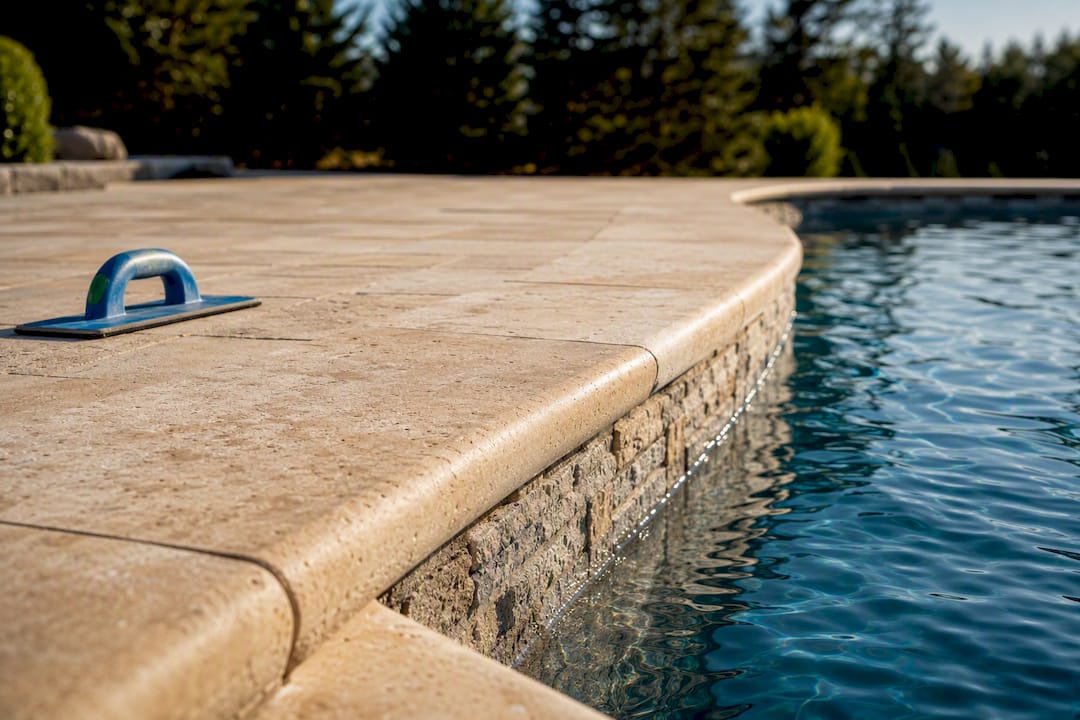
For most homeowners, travertine is the best all-around pool coping for comfort and durability, poured concrete delivers the strongest value, and porcelain offers the lowest upkeep among modern options. Climate and installer skill decide which one actually performs well on your pool, so the “best” material still depends on your region and who’s setting it.
TL;DR:
- Porcelain coping offers the lowest maintenance due to its near-zero water absorption and freeze-thaw resistance, but it requires experienced installation to avoid cracking.
- Travertine remains the most popular choice for comfort and slip resistance, especially in warmer climates, but it needs sealing every one to three years to maintain longevity.
- Poured concrete provides the best value upfront, yet it is more prone to cracking and costly repairs over time if ground movement occurs.
- Natural stone, including limestone, bluestone, and granite, can last over 30 years but varies in heat comfort and requires careful installation, including dry-laying and sorting.
- Installing coping materials like porcelain and natural stone properly is critical for durability, with skill and preparation often outweighing material choice in long-term success.
Table of Contents
- What Is Pool Coping and Why Does It Matter?
- Which Pool Coping Stone Types Perform Best?
- Which Edge Profile Fits Your Pool?
- How Do You Choose the Right Coping Material?
- What Does Pool Coping Cost by Material?
- What Should You Expect During Installation and Upkeep?
- What’s the Best Coping for Your Pool Type?
- Why Installer Skill Matters More Than Material Choice
- What’s the Real Long-Term Cost of Each Coping Material?
- Are Pool Coping Materials Environmentally Friendly?
- When to DIY and When to Call a Pro
- How Divine Landscaping LLC Handles Pool Coping Projects
- Sources
- FAQ
What Is Pool Coping and Why Does It Matter?
Pool coping is the cap that sits directly on top of the bond beam, forming the border where your pool deck meets the water. It’s not decorative trim. Coping does structural and functional work: it acts as a drip edge that pushes splashed water away from the pool wall, gives swimmers a grip point when climbing out, and shields the pool’s structural edge from water infiltration and freeze damage.
It also does visual work most homeowners underestimate. Coping is the transition line between your deck material and your waterline tile, and a mismatched pairing (say, a cool gray porcelain deck against warm beige travertine coping) reads as an afterthought rather than a finished design. When you’re choosing pool coping materials, you’re really making two decisions at once: what performs at the water’s edge, and what ties the whole pool area together visually. Get the coordination wrong, and even an expensive pool looks unplanned.
Which Pool Coping Stone Types Perform Best?
Not all coping materials behave the same way once they’re wet, hot, or exposed to a New Hampshire winter. Here’s how the major options stack up.
Travertine is the material most pool designers reach for when comfort is the priority. It’s a natural limestone with a porous, pitted surface that gives it excellent slip resistance even when soaked, and it stays up to roughly 30% cooler underfoot than concrete in direct sun, which matters if bare feet are walking that edge all summer. The tradeoff: it’s porous, so it needs sealing and doesn’t come cheap.
Other natural stone (limestone, bluestone, granite) offers similar durability with different personalities. Limestone shares travertine’s cooler surface temperature, while bluestone and dark granite absorb and hold more heat, which can make them genuinely uncomfortable underfoot in hot climates. Granite is the toughest of the group and resists scratching, but its density makes it heavier and pricier to fabricate into custom edge profiles.
Poured concrete (cantilevered) wins on price and design flexibility. A cantilever pour can create a seamless, monolithic look between deck and water since it’s formed as one continuous surface rather than pieced together. It’s also the easiest to color and texture on-site. The downside is that poured concrete is prone to cracking with ground movement or freeze-thaw cycling, and repairs are visible unless color-matched carefully.
Precast concrete and pavers split the difference. You get factory-consistent color and texture, faster installation than natural stone, and easier spot repairs, since a single damaged piece can be swapped without disturbing the whole run.
Brick brings warmth and a traditional look, especially around older or colonial-style homes, but its mortar joints need more frequent attention in freeze-thaw climates and its texture, while grippy, can be rougher on bare feet than stone.
Porcelain is the newest serious contender. It has near-zero water absorption and strong freeze-thaw resistance, meaning it rarely needs sealing and holds its color for decades. But it demands an installer who understands the material: a poorly leveled or unstable base leads to cracking that no amount of touch-up caulk fixes. If you’re considering it, our breakdown of porcelain pavers and what pros check before installation is worth reading first.
A few climate rules apply across the board:
- In freeze-thaw regions, natural stone and precast concrete tolerate seasonal movement better than poured concrete, which cracks more easily without control joints.
- In hot, sun-heavy climates, lighter stones (travertine, limestone) stay far more comfortable than dark bluestone or granite.
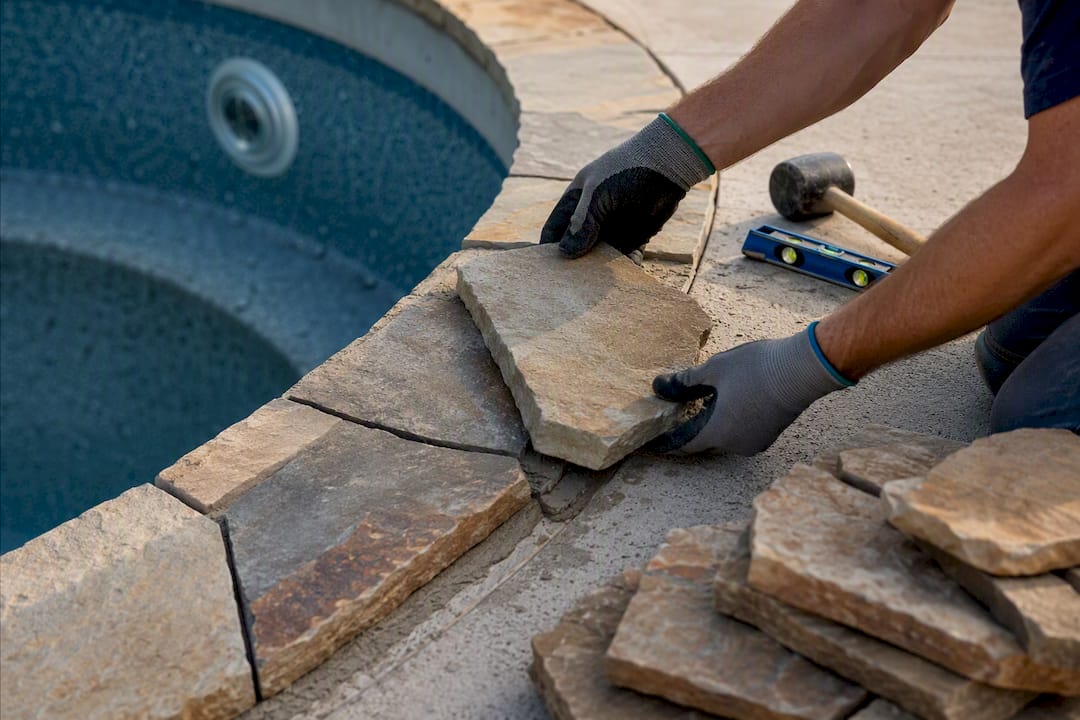
- Natural stone installation is unforgiving of shortcuts: pieces must be dry-laid and sorted by color and vein pattern before setting, or the finished edge looks patchy instead of cohesive.
Which Edge Profile Fits Your Pool?
The edge profile shapes how the coping feels underfoot and how forgiving it is for swimmers climbing out. Material and profile work together, so picking one without the other is only half the decision.
- Bullnose. A fully rounded edge, most common with travertine, limestone, and precast concrete. It’s the most forgiving profile for hands, elbows, and toes, which makes it the default recommendation for family pools with young kids. It’s also relatively easy to fabricate and repair.
- Square or flat edge. A crisp, minimal line that suits modern architectural pools. It reads clean against porcelain or precast concrete but needs eased corners to avoid being uncomfortable on bare skin. Best for adults-only or design-forward properties rather than young families.
- Cantilever. Technically a construction method as much as a profile, cantilevered concrete extends past the pool wall with a slight downward lip, creating a seamless deck-to-water look with no visible seam. It’s economical and popular for gunite pools but limited mostly to poured concrete.
- Drop-face. The coping extends down past the waterline, hiding the pool wall and tile from view outside the water. It gives a sleek, architectural appearance often paired with dark natural stone or porcelain, but it’s more labor-intensive to form and finish.
- Knife edge. A thin, sharp profile typically reserved for infinity or vanishing-edge pools, where water needs to sheet cleanly off the lip. It requires precise fabrication, usually in stone or engineered concrete, and isn’t a practical choice for standard family pools.
How Do You Choose the Right Coping Material?
Work through this in order, because each step narrows the field before you spend money on samples or bids.
- Set your budget range first. Coping typically runs $20 to $70 per linear foot installed, so know which end of that range your project needs to land in before you fall in love with a stone you can’t afford.
- Decide on the look you want. Warm and natural (travertine, limestone), clean and modern (porcelain, square precast), or traditional (brick) each point toward different materials.
- Filter by climate. Cross off dark stone if you live somewhere hot and bare feet use the deck daily. Cross off poured concrete if your region sees heavy freeze-thaw cycling without expansion joints planned in.
- Vet installer skill before material choice. Natural stone and porcelain both punish inexperienced crews. Ask specifically about that material, not just general masonry experience.
- Plan your sealing and maintenance commitment. Porous stone needs a sealing routine; porcelain and precast largely don’t.
When you’re getting bids, ask contractors these exact questions: How many pool coping installations have you completed in this specific material? Can you show photos of a project at least two years old, so you can see how it aged? What’s your substrate and base prep process, and do you dry-lay natural stone before setting it? What’s covered under warranty, specifically for joints and mortar work?
Pro Tip: If a contractor can’t produce a photo of a job that’s aged past year two, ask why. New installations always look good; the ones worth trusting are the ones still holding their color and joints three summers later.
Watch for red flags: no willingness to show sample work, stone delivered without any sorting or dry-lay process, or a base prep explanation that sounds rushed. Skipping the dry-lay step on natural stone is the single most common shortcut that leads to a blotchy, mismatched edge.
What Does Pool Coping Cost by Material?
Installed coping costs vary by material, labor complexity, and region, but the ranges below reflect typical national patterns for a standard residential pool with roughly 60 to 80 linear feet of coping.
| Material | Installed Cost per Linear Foot | Typical Lifespan | Heat Comfort | Slip Resistance | Maintenance |
|---|---|---|---|---|---|
| Poured concrete (cantilever) | $20–$35 | 15 years | Moderate to hot | Good with broom finish | Occasional crack repair |
| Precast concrete/pavers | $20 to $70 | 20–30 years | Moderate | Good | Low; spot replacement possible |
| Brick | $20 to $70 | 15 years | Moderate | Good, textured | Mortar joint checks |
| Travertine | $35–$60 | 15 years | Cool | Excellent | Sealing every 1–3 years |
| Other natural stone | $35–$70 | 30+ years | Varies by color | Excellent | Sealing every 1–3 years |
| Porcelain | $20 to $70 | 15 years | Cool to moderate | Excellent | Minimal; rarely needs sealing |
These are typical installed cost bands based on national pricing patterns; local labor rates, stone sourcing, and pool shape complexity will move your actual bid up or down.
What Should You Expect During Installation and Upkeep?
Installation method depends heavily on material. Poured concrete coping is formed and cast in place, often as a cantilever that extends over the pool wall. Precast pieces and natural stone get mortar-set or sand-set onto the bond beam, and porcelain requires an exact, stable substrate since it has almost no flex tolerance for an uneven base.
Once it’s installed, maintenance is mostly routine:
- Seal porous natural stone (travertine, limestone) every one to three years to limit staining and algae growth.
- Rinse pool chemical residue off coping regularly, since chlorine and salt systems can accelerate surface wear on softer stone.
- Inspect mortar and grout joints each spring for cracking or gaps before pool season starts.
- Watch for hollow-sounding spots when tapped, which usually signal a piece that’s come loose from its bed.
Most small issues (a chipped paver corner, a hairline crack in a mortar joint) are DIY-manageable. Once you’re looking at a cracked concrete cantilever, a shifting stone section, or repeated water infiltration behind the coping, it’s time to call a mason rather than patch it repeatedly.
What’s the Best Coping for Your Pool Type?
Gunite and concrete pools handle almost any coping material and profile, including cantilever, since the bond beam is built to match. Fiberglass pools usually pair best with precast concrete or natural stone set on a separate bond beam, since the shell itself isn’t load-bearing for coping.
Vinyl liner pools need special attention: the coping has to accommodate the liner track, which rules out certain cantilever styles and favors precast or paver systems designed with a liner bead receiver built in. Infinity and vanishing-edge pools generally call for a knife-edge profile in stone or engineered concrete, precise enough to sheet water evenly.
Above-ground pools rarely use full coping systems at all, though some semi-inground designs borrow paver or precast edging. For naturalistic, lagoon-style pools, irregular natural stone in a bullnose or rounded edge blends best with surrounding landscaping and boulders.
Why Installer Skill Matters More Than Material Choice
Divine Landscaping LLC has seen the same pattern repeat on natural stone and porcelain jobs: the material rarely fails, but the installation does. Dry-laying stone before setting it, protecting coping edges during the build, and matching coping samples against your deck and tile before signing off all separate a durable edge from a five-year redo. Our outdoor living project gallery shows how that coordination looks finished.
What’s the Real Long-Term Cost of Each Coping Material?
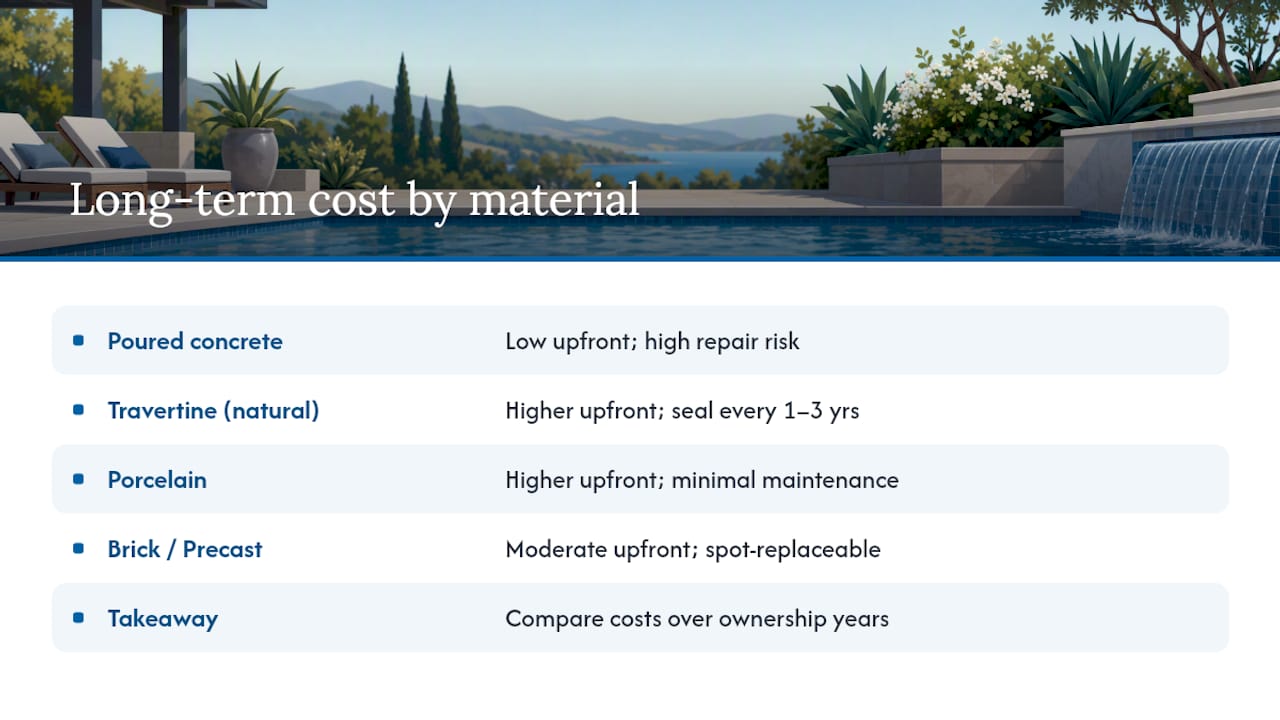
The sticker price on your bid isn’t the full cost story. A poured concrete cantilever might be your cheapest option upfront at $20 to $35 per linear foot, but factor in that it’s also the most prone to cracking from ground movement, and repairs over a 20-year ownership period add up, especially if color-matching an aging patch becomes difficult.
Travertine and other natural stone cost more initially, but sealing every one to three years is a modest recurring expense compared to a full coping replacement. Skipping that sealing schedule, however, shortens the material’s effective life and can lead to staining that’s expensive to reverse. Porcelain sits at an interesting point: higher upfront cost, but its near-zero absorption means almost no sealing budget for the life of the pool, which can make it the cheaper option over a 20 to 30-year horizon despite the higher initial bid.
Brick and precast concrete land in the middle on both fronts: moderate upfront cost, moderate maintenance, and the advantage that individual damaged pieces can often be replaced without redoing the whole run. That spot-repair flexibility is worth factoring in if your budget can’t absorb a full coping replacement down the road.
The honest math: cheap coping that needs replacing in 15 years often costs more, in total, than a pricier material that lasts 30. Run the comparison over your expected years in the home, not just the installation invoice.
Are Pool Coping Materials Environmentally Friendly?
Material sourcing and lifespan both factor into the environmental footprint of pool coping, and they often pull in opposite directions. Natural stone is quarried, which carries real extraction impact, but a well-sealed travertine or limestone installation can last 30 years or more, spreading that impact across decades of use rather than requiring replacement every decade.
Concrete, whether poured or precast, has a notable carbon footprint tied to cement production, but poured concrete’s ability to be formed on-site reduces transportation emissions compared to quarried stone shipped from a distance. Porcelain’s manufacturing process is energy-intensive, but its durability and near-zero maintenance needs mean it rarely ends up in a landfill decades before its natural lifespan is up.
The most sustainable coping choice, in practical terms, isn’t necessarily the material with the lowest production footprint. It’s the one that matches your climate and usage well enough to last its full lifespan without cracking, staining, or needing an early tear-out. A beautiful stone edge that gets ripped out in year eight because it wasn’t sealed, or a concrete cantilever that cracks apart from freeze-thaw because it wasn’t built with proper control joints, wastes more material and labor than choosing right the first time. Longevity is the sustainability lever most homeowners overlook.
When to DIY and When to Call a Pro
Porcelain and large natural stone cantilevers are hire-only jobs. The substrate precision and dry-lay sorting they demand punish inexperienced installers fast. Precast pavers or a small brick cap section are reasonable DIY territory if you’re handy. Some contractors handle coping and hardscape projects across their service areas, matching material to your pool’s structure and climate.
— Damian
How Divine Landscaping LLC Handles Pool Coping Projects
Some landscaping companies offer a coordinated setup where one team handles design, material sourcing, and installation, so the coping, deck, and waterline tile can be chosen together instead of in separate, disconnected decisions.
Our masonry and hardscape services cover coping installation alongside walls, walkways, and patio work, which matters because coping rarely gets replaced in isolation from the deck surrounding it. Typical projects may start with an on-site consultation to review pool edges, discuss climate and usage factors specific to the property, and bring material samples so clients can see how travertine, porcelain, or precast concrete looks against the existing deck. From there, you get a written estimate before any work begins. If your project also involves broader patio installation, we coordinate both scopes together rather than treating coping as an afterthought. To explore options suitable for a pool, interested parties can reach out to schedule a consultation and view samples.
Sources
Cost figures, material performance data, and edge-profile guidance in this article draw from PoolPad’s pool coping cost and material breakdown, D and G Flooring’s guide to coping styles and pricing, and WETYR Pools’ guide to coping edges and profiles. For slip-resistance treatments on concrete surfaces near pools, Action Fence and Deck’s guide to slippery concrete patios covers practical fixes worth reviewing alongside your coping decision.
- Pool Coping Ideas: Materials, Edges & Costs for 2026 | PoolPad
- Pool Coping Guide: Materials, Styles & Costs for 2026 – D and G Flooring
- Pool Coping: A Complete Guide to Edges, Profiles & Materials | WETYR Pools
FAQ
What is the best material for pool coping?
Travertine is the most commonly recommended premium choice because it stays cooler underfoot and resists slipping when wet. Porcelain is the best pick for low maintenance, and poured concrete offers the strongest value if budget is the deciding factor.
What is the cheapest pool coping?
Poured, cantilevered concrete is generally the least expensive option, typically starting around $20 per linear foot installed. It also creates a seamless look with the surrounding deck, which helps offset its lower price point visually.
What do you put between pool coping and concrete?
A flexible expansion joint, typically filled with a self-leveling polyurethane sealant, separates coping from the surrounding concrete deck. This joint allows both materials to move independently with temperature changes and ground shifts without cracking the coping or the deck.
What type of edge is best for pool coping?
Bullnose is the most forgiving and widely recommended profile because its rounded shape is comfortable for hands and feet, making it the default for family pools. Square or knife-edge profiles suit modern or infinity-edge designs but favor style over cushioning.