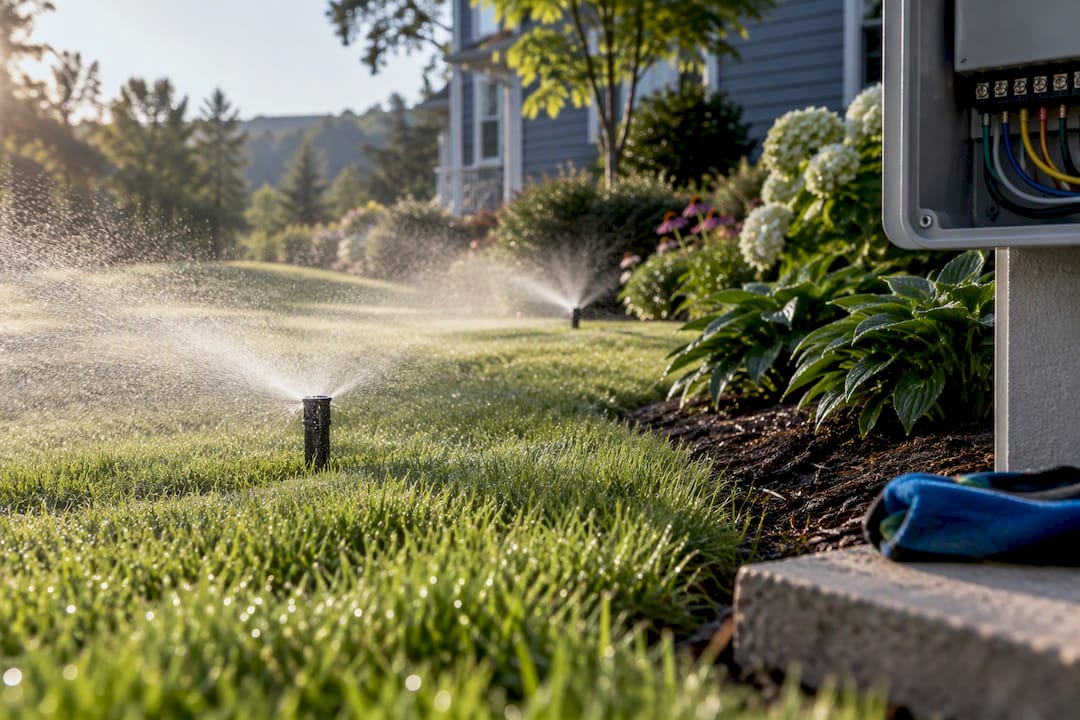
The Rachio 3 is the best smart irrigation controller for most homeowners in 2026, thanks to its balance of weather-smart scheduling, flexible zone support, and an app that does not require an engineering degree to program. The Orbit B-Hyve XR is the strongest runner-up for anyone watering exposed or oddly shaped yards, and the Rain Bird lineup remains the most reliable budget entry point, especially for homeowners already running Rain Bird valves. All three lean on WaterSense-backed logic that adjusts watering to actual weather instead of a fixed clock.
TL;DR:
- The Rachio 3 supports up to 16 zones, offers adaptive weather intelligence, and has an intuitive app, but requires a weatherproof enclosure for outdoor installation, adding cost.
- The Orbit B-Hyve XR is more durable outdoors, handles irregular yard layouts well, but has a less user-friendly app and fewer smart home integrations.
- Rain Bird controllers are the most affordable, easily compatible with existing Rain Bird components, but offer more basic app features and limited zone customization on entry-level models.
- Matching the controller to your zone count and wiring capacity, and considering outdoor mounting costs, are more critical for long-term satisfaction than app interface or feature lists.
- WaterSense certification ensures a controller meets water-saving thresholds, potentially saving nearly 7,600 gallons annually, and may qualify for utility rebates.
Table of Contents
- Best Smart Irrigation Controllers 2026: A Quick Shortlist
- Top Smart Irrigation Controller Picks for 2026
- How to Choose the Right Smart Irrigation Controller
- What EPA WaterSense Certification Actually Tests
- Installation, Enclosures, and Ongoing Maintenance
- What Divine Landscaping LLC Brings to This Conversation
- Why the “Best” Controller Debate Misses the Real Question
- Considering Professional Installation?
- Where to Verify These Standards Yourself
- Sources
- FAQ
Best Smart Irrigation Controllers 2026: A Quick Shortlist
If you just want to know where to start, here is the short version. Every controller below shows up consistently in expert reviews and lab tests, and each one earns its spot for a different kind of yard or homeowner.
- Rachio 3 — Best overall for most homeowners; strong weather intelligence, clean app, and support for up to 16 zones depending on the model.
- Orbit B-Hyve XR — Best for larger or irregular properties; extended range and flexible zone scheduling make it a favorite for sprawling lots.
- Rain Bird controllers (ESP series and Wi-Fi models) — Best budget-friendly pick, particularly if your existing valves and wiring are already Rain Bird.
- Any WaterSense labeled weather-based controller — Best if a utility rebate is part of your decision, since only certified models typically qualify.
Reviewers consistently point to the Rachio 3, the Orbit B-Hyve XR, and Rain Bird’s newer Wi-Fi models as the three names homeowners bring up most when comparing options, largely because each nails a different priority: app polish, outdoor durability, or price. That is not a coincidence. These three brands have spent years refining what a smart controller actually needs to do well, rather than just adding features nobody uses.
A quick note on rankings like “Rachio vs Hydrawise” that you will see across forums and comparison sites: Hydrawise is Hunter’s smart platform, and it competes in the same general category as Rachio and B-Hyve. We are not covering it in depth here because this roundup focuses on the three names most consistently featured in expert and lab-based reviews for 2026, but it is worth knowing the name if you are deep in the research phase.
Here is the caveat that trips up a lot of buyers: not every model on a “top smart irrigation systems 2026” list is outdoor-rated out of the box. Some indoor-only units need an add-on enclosure before you can mount them near your valve box, and that enclosure is not always included in the sticker price. We break down exactly which models need it and what it costs in the profiles below.
One more distinction worth flagging before you dig in: weather-based controllers and soil-moisture controllers solve the same problem in different ways. A weather-based controller pulls local weather data and estimates how much water your landscape needs; a soil-moisture controller measures actual moisture in the ground and waters (or does not) based on that reading. Neither one is universally better. The right choice depends on your site, your sensor placement, and how your zones are laid out, which we cover in the decision checklist further down.
Pro Tip: Before you fall in love with an app screenshot, check your existing transformer output and wire count. A gorgeous interface will not help you if your controller cannot physically talk to all your valves.
Top Smart Irrigation Controller Picks for 2026
Rachio 3: Best Overall
The Rachio 3 earns the top spot because it gets the fundamentals right without overcomplicating the setup. It supports 8, 16, or (via the Gen 3 XD) more zones depending on the model you choose, and its Flex Daily scheduling adjusts watering automatically based on local weather, soil type, and plant material.
Pros:
- Weather intelligence that actually adapts day to day, not just seasonally
- App is widely regarded as the most intuitive in the category
- Works with most existing sprinkler wiring without rewiring the whole system
Cons:
- Indoor-rated by default; outdoor installs need a weatherproof enclosure, which adds cost
- Higher zone counts push the price up quickly compared to basic timers
Installation is straightforward for anyone comfortable with a screwdriver and a labeled wire diagram, but if your existing controller is mounted outside on a wall, budget for an enclosure kit. That single add on can shift your total installed cost by a meaningful margin, which is why comparing device price alone is misleading. Buying tip: confirm your zone count before you buy. If you are at 9 zones, the 8-zone model will not cut it, and stepping up to the next tier costs more than most people expect.
Orbit B-Hyve XR: Best All-Weather Runner-Up
The B-Hyve XR is built for homeowners with bigger, less predictable yards, or properties where the controller genuinely needs to live outdoors. It ships more outdoor-friendly than many competitors, and its extended range and flexible programming make it a strong second choice, particularly for anyone comparing Orbit B-Hyve vs Rachio and leaning toward hardware ruggedness over app polish.
Pros:
- More outdoor-ready out of the box, reducing the odds you will need a separate enclosure
- Handles irregular zone layouts and larger properties well
- Seasonal adjustment features are simple to set and forget
Cons:
- App interface is a step behind Rachio’s in day-to-day usability
- Fewer smart home integrations compared to top-tier competitors
Consumer Reports’ lab testing has repeatedly found that outdoor-rated hardware and straightforward physical controls often matter more than software sophistication once a controller is actually mounted outside and exposed to real weather. That finding favors the B-Hyve XR for anyone whose controller will not be tucked safely into a garage. Buying tip: if you are replacing an existing Orbit system, this is usually the path of least resistance on wiring compatibility.
Rain Bird Controllers: Best Budget Pick
Rain Bird’s ESP series and newer Wi-Fi enabled controllers remain the most dependable entry point for homeowners who want smart features without paying for extras they will not use. If your yard already runs on Rain Bird valves and heads, sticking with the same brand also simplifies troubleshooting down the road.
Pros:
- Lower price point without sacrificing core weather-based scheduling
- Wide compatibility with existing Rain Bird components already in the ground
- Simple physical controls back up the app in case Wi-Fi drops
Cons:
- App experience is more basic than Rachio’s or B-Hyve’s
- Advanced zone customization is limited on entry-level models
Zone capacity on Rain Bird models varies widely by SKU, so match the model number to your actual zone count before ordering. Buying tip: ask your installer or retailer whether the specific Rain Bird model you are eyeing is WaterSense labeled. Not every SKU in the lineup carries the certification, and that label matters more than it looks.
How to Choose the Right Smart Irrigation Controller
Picking the right unit comes down to six practical checks, in roughly this order:
- Count your zones and check your transformer. Add up every valve you currently run, then confirm your existing transformer can supply enough power for the new controller. Undersized transformers are a common, avoidable installation headache.
- Match zone capacity to your yard, not your current setup. If you plan to add a garden bed or a new lawn section next year, buy a model with headroom rather than the exact number you need today.
- Decide between weather-based and soil-moisture control. Weather-based controllers work well for most standard lawns; soil-moisture sensors make more sense for mixed plantings or beds with inconsistent drainage, since soil sensors measure actual moisture rather than estimating it.
- Plan for outdoor mounting costs upfront. If the controller will live outside, price in an enclosure, possible conduit work, and extra wiring, not just the device.
- Check app integrations and local watering rules. Many municipalities enforce watering-day restrictions, and a good app should let you build those limits into your schedule automatically.
- Ask a pro these three questions before you buy: Will this model work with my existing wiring? Does it need an enclosure for my mounting location? Is it WaterSense labeled for potential rebate eligibility?
Pro Tip: Some utilities and municipalities offer rebates specifically for WaterSense labeled controllers. Check your utility’s website before you buy. It is a five-minute search that can knock a real chunk off your total cost.
What EPA WaterSense Certification Actually Tests
WaterSense certification is not a marketing sticker. It reflects real lab testing against published thresholds. The WaterSense specification (v1.1) and ANSI/ASABE S627 standard require a controller to hit irrigation adequacy of at least 80% per zone while keeping irrigation excess at or below 10% per zone.
Replacing a standard clock-based controller with a WaterSense labeled controller can save an average home nearly 7,600 gallons of water annually, according to EPA estimates.
That adequacy-versus-excess pairing is the real value of the label. A controller could water generously and still pass an “adequacy” test alone, so the excess ceiling is what actually forces the algorithm to be smart rather than just generous. Weather-based controllers (WBICs) are tested differently than soil-moisture controllers, since one relies on local weather data and evapotranspiration principles while the other reacts to direct soil readings.
Before buying, check the product documentation for the tested configuration. Some WaterSense listings apply to specific firmware versions or bundled sensors, not the base unit alone. The EPA’s product search tool lists which specific models currently carry the label, and it is worth five minutes before you check out.
Installation, Enclosures, and Ongoing Maintenance
Indoor-rated controllers are cheaper on paper, but if yours needs to live outside, an enclosure adds real cost, sometimes enough to erase the price advantage entirely over an outdoor-rated model. Compare installed cost, not just the box price, especially if you are also running new wiring or a transformer upgrade.
A few things worth checking before your system runs unattended for a season:
- Confirm the controller retains its programming during a power outage; most modern units do, but cheaper older stock sometimes does not.
- Place soil-moisture sensors away from downspouts, low spots, or shaded corners that will not reflect the rest of the zone.
- Inspect wiring connections for corrosion each spring, especially on outdoor-mounted units exposed to freeze-thaw cycles.
- Walk each zone at the start of the season to confirm heads are not blocked by new growth or settled mulch.
Seasonal checks take twenty minutes and catch most of the problems that otherwise show up as a dead patch of lawn in July.
What Divine Landscaping LLC Brings to This Conversation
Irrigation systems require proper installation and maintenance to ensure these controllers perform reliably once they are in the ground, not just in a showroom. If you are weighing a DIY swap against a professional installation, our guide to planning a residential irrigation system walks through zone layout basics, and our rundown of common irrigation system mistakes covers the errors we run into most often on service calls.
Why the “Best” Controller Debate Misses the Real Question
Most roundups treat this as a software competition: whose app is prettier, whose algorithm sounds smarter. That framing undersells the part that actually determines whether a system performs for years instead of months, which is the physical installation. A weatherproof unit with basic controls consistently outlasts a feature-rich model bolted into an enclosure it was never quite built for.
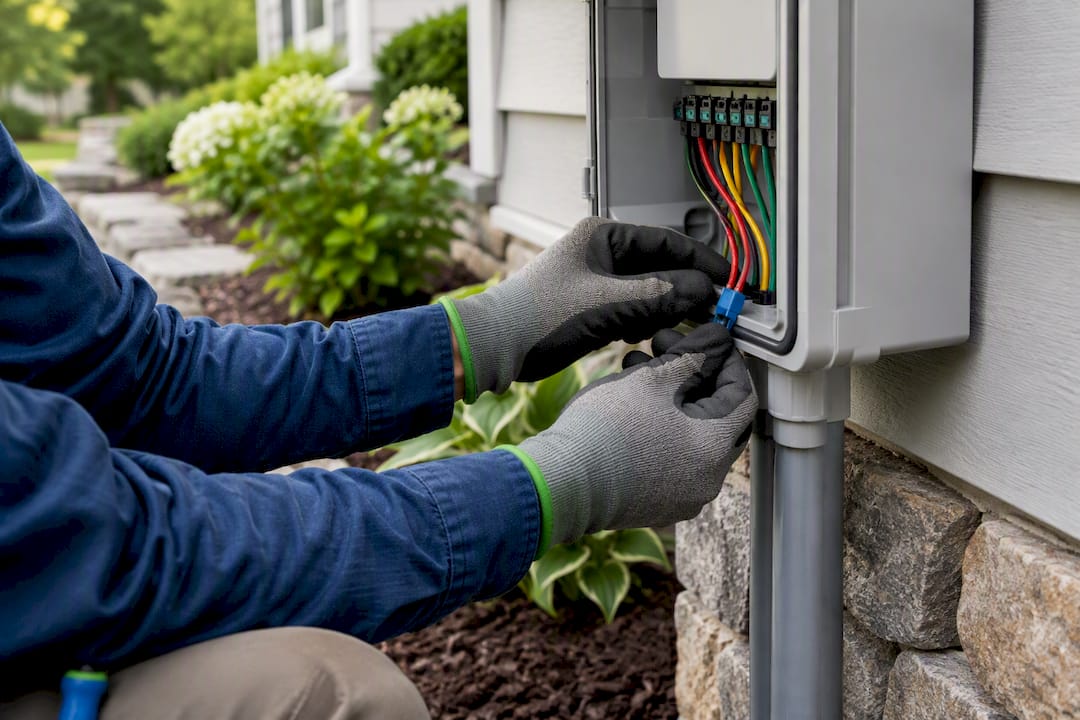
The WaterSense adequacy and excess thresholds matter more than any single review’s star rating, because they measure the outcome homeowners actually care about: is the lawn getting enough water without wasting it. Conventional advice tends to treat zone count and app design as the deciding factors. They matter, but installed cost, outdoor rating, and wiring compatibility decide whether you are happy with the system in year three, not just week one.
If you take one thing from this roundup, prioritize matching the controller to your actual site conditions and wiring before you fall for a feature list. The best spec sheet in the world does not fix an undersized transformer or a controller mounted somewhere it was never designed to survive.
— Damian
Considering Professional Installation?
A smart controller only performs as well as the system behind it, and that is where a lot of DIY installs quietly fall short: wiring mismatches, undersized transformers, or a controller mounted in a spot it was never rated for. Professional landscaping companies design and install full irrigation systems, pairing the right controller with correctly sized zones and proper wiring from the start.
Irrigation service providers handle everything from full lawn irrigation installation and replacement to plant bed irrigation and repair work, ensuring the wiring and zone layout are done correctly. Before a site visit, having your yard’s approximate square footage, a rough zone count, and photos of the current setup ready can help speed up quotes and enable better recommendations for appropriate controllers. Ready to get a plan in place? Visit our irrigation and lighting services page to request a quote.
Where to Verify These Standards Yourself
For the certification details and testing thresholds mentioned above, the EPA WaterSense specification and Consumer Reports’ lab testing summary are the two primary sources worth bookmarking. Both are updated regularly and cover far more models than any single article can.
Sources
- Soil moisture-based irrigation controllers | US EPA
- Best Smart Sprinkler Controllers, Lab-Tested and Reviewed – Consumer Reports
FAQ
What Is the Best Brand of Irrigation Controller?
There is no single brand that wins every category. The Rachio 3 leads on app usability and weather intelligence, the Orbit B-Hyve XR leads on outdoor durability for larger yards, and Rain Bird leads on affordability and compatibility with existing Rain Bird components.
Are Smart Irrigation Controllers Worth It?
For most homeowners, yes. The EPA estimates that swapping a clock-based controller for a WaterSense labeled model saves an average home nearly 7,600 gallons of water annually, and many utilities offer rebates that improve the payback further.
Which Wi-Fi Irrigation Controller Is Best?
The Rachio 3 is the strongest Wi-Fi option for most homeowners because of its scheduling flexibility and app quality, while the Orbit B-Hyve XR is a better Wi-Fi choice for larger or irregular properties that need stronger outdoor durability.
Is Rain Bird or Hunter Better?
Both brands make reliable, widely used controllers, and the better choice usually comes down to what valves and wiring you already have installed. Rain Bird tends to win on budget-friendly compatibility, while Hunter’s Hydrawise platform competes closely with Rachio on smart scheduling features.
Do I Need a Professional to Install a Smart Controller?
Many homeowners install a straightforward swap themselves if the wiring and zone count match the new unit exactly. If you are adding zones, changing your transformer, or need an outdoor enclosure, working with a professional like Divine Landscaping LLC avoids costly rework later.