
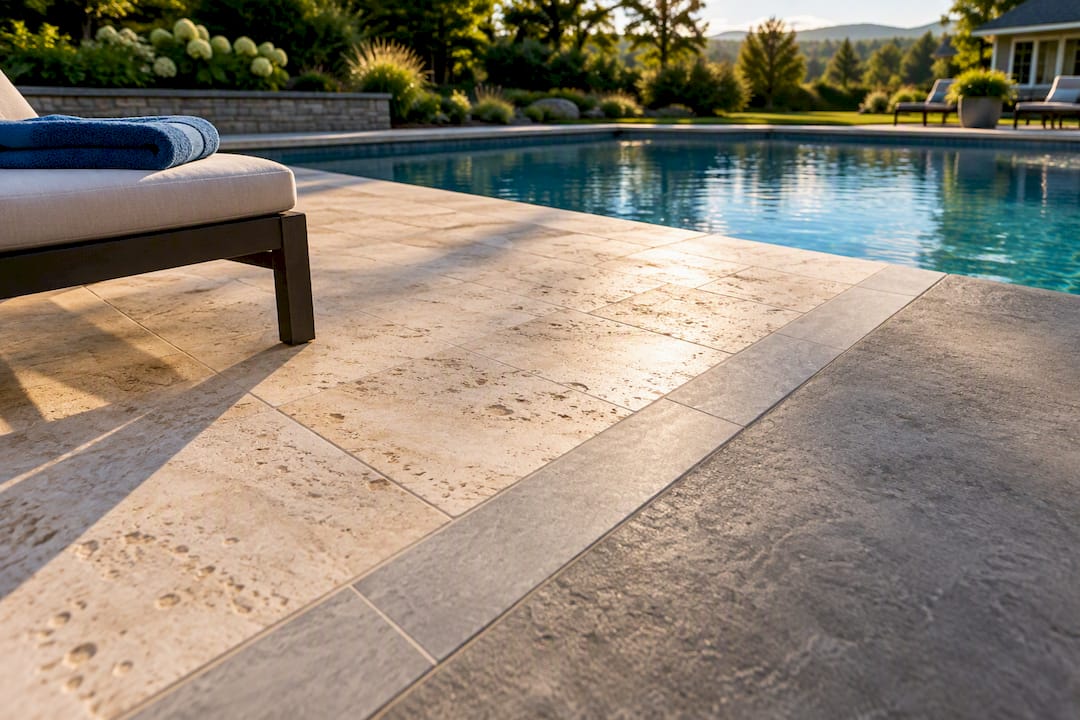
For a tight budget, light broom-finish concrete wins on cost. For low maintenance, porcelain pavers are the strongest long-term pick. For a cool, premium surface underfoot, travertine leads the pack. That said, installation quality (base, slope, and joints) often decides how any of these materials actually perform, so a proper contractor assessment matters more than the material spec sheet alone.
TL;DR:
- Porcelain pavers have less than 0.5% water absorption, making them highly resistant to chemicals and freeze-thaw damage, thus offering a near-maintenance-free option.
- Proper installation, including base depth, slope of 1/4 inch per foot, and expansion joint placement, is more critical than material choice for long-term deck durability.
- Low-cost broom-finish concrete requires regular resealing to maintain slip resistance and chemical resistance, but it remains the most affordable option upfront.
- Travertine and natural stone stay cooler underfoot by 20 to 45 degrees Fahrenheit but need regular sealing to prevent chemical staining and deterioration in harsh climates.
- When comparing materials, contractor expertise in base preparation and drainage planning ultimately influences performance and lifespan more than surface material selection.
Table of Contents
- Comparing Pool Patio Materials: Concrete, Pavers, Porcelain, and Stone
- How Do You Choose the Right Pool Patio Material?
- What Does a Pool Patio Cost, and How Long Should It Last?
- Maintaining Pool Patio Materials Against Chlorine and Salt
- What Divine Landscaping’s Contractor Checklist Covers
- What Homeowners Should Prioritize on a Pool Patio
- Get an Onsite Estimate From a Landscaping Contractor
- Sources
- FAQ
Comparing Pool Patio Materials: Concrete, Pavers, Porcelain, and Stone
Choosing among the best pavers for pool deck projects, or deciding whether pavers beat plain concrete at all, comes down to four measurable factors: cost, wet slip resistance, surface heat, and chemical resistance to chlorine or salt. Every pool deck sits in what amounts to a hostile micro-environment. Constant splashing, chlorine or saltwater exposure, and repeated freeze-thaw or heat cycling wear on a surface far faster than a regular patio does. A data-driven selection framework built for pool decking recommends matching materials to measurable properties like wet DCOF, Solar Reflectance Index, and water absorption rather than picking a surface because it looks good in a showroom.
Concrete: broom-finish, stamped, and exposed aggregate
Broom-finish concrete remains the most budget-friendly installed option among outdoor patio surfaces, and it holds up well when it is textured correctly and sealed on a regular schedule. Light colors reflect more heat, and a broom finish creates enough texture for reasonable wet traction without add-on treatments. Stamped concrete looks more upscale, mimicking flagstone or travertine patterns, but it carries a real maintenance catch. Acrylic topical sealers on stamped concrete can turn slippery when wet, which means anti-slip polymer additives need to go into the sealer at every reseal, not just the first one. Exposed aggregate splits the difference: the embedded stone gives permanent texture that does not wear away like a topical sealer does, though it is rougher on bare feet and harder to patch invisibly if it cracks.
- Broom-finish concrete: lowest cost, good if light-colored, needs texture and periodic resealing for slip safety.
- Stamped concrete: attractive pattern options, but requires anti-slip additive in every reseal cycle.
- Exposed aggregate: durable texture that will not slip-wear off, less forgiving on bare feet.
Concrete pavers
Interlocking concrete pavers offer something concrete slabs cannot: easy spot repair. Crack a paver or stain one badly, and a contractor pulls that single unit and replaces it without a patch line running across your whole deck. Performance depends heavily on base prep and joint material. Polymeric sand locks pavers in place, resists weed growth, and sheds water better than loose sand, though it needs periodic top-off as joints wear. Heat behavior sits in the middle of the pack. Concrete pavers run cooler than dark stamped concrete but warmer than light natural stone or porcelain, depending on the color blend chosen.
Porcelain pavers
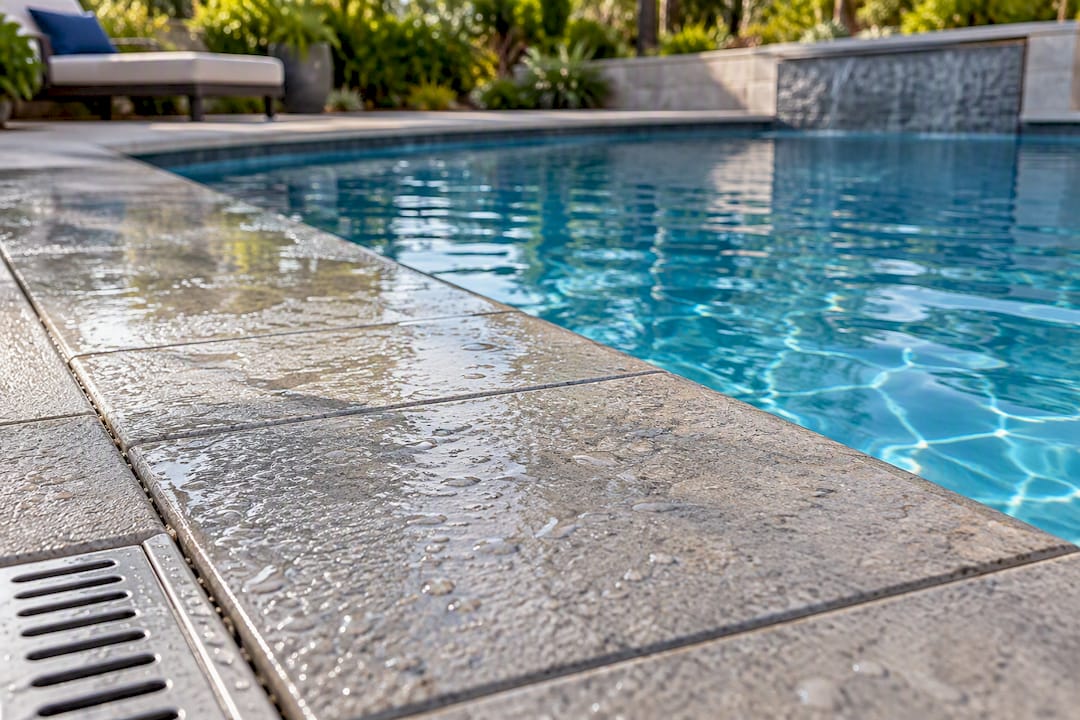
Porcelain pavers are the material most likely to earn a “install once, forget it” reputation, and the data backs that up. They test at less than 0.5% water absorption, which means chlorine, salt, and muriatic acid splashes have almost nothing to soak into. That near-zero porosity also protects against freeze-thaw cracking, a real advantage in New Hampshire winters where water trapped in a porous surface expands and fractures it. Slip-rated textured finishes give porcelain strong wet traction without the periodic reapplication that acrylic-sealed concrete requires. The tradeoff is upfront cost and installation precision. Porcelain typically installs on a pedestal system or a mortar setting bed, and either method demands a contractor who has done this specific work before. Get the substrate or slope wrong, and a $15 porcelain paver can look as bad as a $2 one.
Travertine and natural stone
Travertine has earned its reputation as the premium poolside flooring choice for one simple reason: it stays cool. Light-colored travertine and marble can run 20 to 45 degrees Fahrenheit cooler than dark concrete under direct summer sun, which matters enormously for anyone walking barefoot from the pool deck to a lounge chair. Natural porosity gives travertine slip resistance when it is left with a tumbled or honed finish rather than polished smooth. That same porosity is the catch. Untreated travertine can absorb pool chemicals and stain over time, so it needs penetrating sealer on a regular schedule, and lower-grade stone handles New England freeze-thaw cycles worse than premium grades do.
Wood, composite decking, and other alternatives
Wood and composite decking work well around above-ground pools or as a transition zone away from the immediate splash area, but they are a harder sell right at the water’s edge. Composite boards can heat up significantly in direct sun, and smooth-finish boards get dangerously slippery when wet. If you want decking near a pool, choose a raised-grain or grooved composite profile rated for wet traction, and keep it back from the zone that takes direct splashing. Brick and permeable grass-paver systems show up occasionally in casual, low-traffic backyard designs, but neither handles constant moisture and chemical exposure as well as concrete, porcelain, or stone. They tend to work best as accent borders rather than the primary surface.
How Do You Choose the Right Pool Patio Material?
Start with your site conditions, not a catalog. Climate, pool chemistry, and how your family actually uses the space should drive the decision before aesthetics enter the conversation.
- Climate first. New Hampshire’s freeze-thaw cycles punish porous, poorly sealed stone. Porcelain and dense concrete pavers handle winter better than budget-grade travertine.
- Chlorine vs. saltwater. Saltwater pools are harder on metal fixtures and can accelerate efflorescence on some concrete products. Confirm your material’s chemical resistance rating matches your pool type.
- Usage pattern. A family with young kids running barefoot needs a higher wet-slip rating than a household that mainly uses the deck for furniture and entertaining.
- Budget across the full lifecycle. A cheaper material with frequent resealing can cost more over 15 years than a pricier, near-maintenance-free surface.
When you’re collecting bids, ask every contractor for the numbers, not just a sample tile. Request the wet DCOF or R rating for the specific finish they’re proposing, since industry guidance points to wet DCOF values around 0.60 or higher for exterior pool zones, well above the 0.42 minimum set for interior floors. Ask about SRI or request a simple heat test on a sample in direct sun. For stone or porcelain, ask for the water-absorption rate in writing.
Pro Tip: If a contractor cannot tell you the base depth, compaction method, and expansion joint plan without checking their notes, get another bid. Those three details predict deck failure more reliably than the material itself.
Watch for red flags in a proposal: no mention of slope or drainage, a warranty that is vague about what it covers, a base depth that sounds thin for your soil type, or an unwillingness to share wet-slip data on the exact product they are quoting.
What Does a Pool Patio Cost, and How Long Should It Last?
Installed pricing varies by region, but the relative order between materials tends to hold. Broom-finish concrete sits at the low end. Concrete pavers and exposed aggregate land in the middle. Porcelain and premium travertine command the highest per-square-foot price, largely because of material cost and the installation precision porcelain requires.
Lifespan tells a similar story once you factor in maintenance. A well-installed broom-finish deck can last decades, but it needs resealing on a regular cycle to keep chemical resistance and slip safety intact. Concrete pavers last a long time structurally, with individual units replaceable if damaged, though polymeric joint sand needs periodic renewal. Porcelain’s near-zero absorption means it often skips sealing altogether and resists freeze-thaw damage that shortens the life of more porous surfaces. Travertine can last generations when premium-grade stone is sealed on schedule, but budget grades in a harsh climate age faster.
Most deck failures trace back to installation, not material choice:
- Insufficient base compaction lets the surface settle unevenly, cracking pavers or slabs within a few seasons.
- Missing or incorrect slope allows water to pool instead of draining away from the house and pool structure.
- Skipped expansion or isolation joints at the coping lets thermal movement crack concrete or pop pavers loose.
A properly built patio base prevents most of these outright, regardless of which surface material sits on top of it.
Maintaining Pool Patio Materials Against Chlorine and Salt
Material choice determines how much upkeep you’re signing up for, and the differences are bigger than most homeowners expect. Porcelain, dense concrete, and vitrified surfaces resist chlorine and salt best because their low porosity gives chemicals almost nothing to penetrate. Natural stone and topically sealed concrete need more attention because their surfaces absorb moisture and whatever is dissolved in it.
Sealing strategy matters as much as sealing frequency. Penetrating sealers soak into porous stone like travertine and block moisture from within, typically needing reapplication every one to three years depending on sun exposure and pool chemistry. Surface (topical) sealers sit on top of concrete and need anti-slip additive mixed in at every application, since a slick topical coat on wet concrete is a genuine fall hazard. Porcelain frequently skips sealing altogether thanks to its water absorption rating of under 0.5%, one of the lowest of any common deck material.
A simple homeowner maintenance routine covers most of the risk:
- Rinse the deck weekly during swim season to clear chlorine or salt residue before it dries and concentrates.
- Inspect sealed surfaces each spring for wear spots before the sealant fully fails.
- Reseal porous stone or topical concrete coatings on the schedule your contractor recommends, not just when it looks worn.
- Top off polymeric joint sand on pavers as it settles, usually every couple of seasons.
What Divine Landscaping’s Contractor Checklist Covers
Every proposal we write for a pool patio spells out the same non-negotiables in the contract, not just in a sales conversation. Base depth and compaction specs are listed by the numbers, not described as “standard.” Drainage slope runs at 1/4 inch per foot away from the house and pool coping, every time. Expansion joint material and placement get called out at the coping line, and coping itself gets isolated from the deck slab so thermal movement in one doesn’t crack the other.
- Base depth and compaction method specified in writing, not verbally.
- Drainage slope confirmed at 1/4 inch per foot, checked before pour or paver-setting.
- Expansion joint locations marked on the plan, especially around coping and structural penetrations.
- Wet-slip ratings for the specified finish, provided before you sign.
On frost-prone New Hampshire sites, we evaluate whether an existing deck can take an overlay or needs a full tear-out. A deck with a cracked or heaving base has to come out. One that’s structurally sound but cosmetically dated can sometimes host a porcelain overlay instead. We also coordinate the patio plan with irrigation and lighting placement upfront, since running a new sleeve under a finished pool deck later is far more disruptive than planning for it during the build.
Pro Tip: Ask any contractor bidding your pool deck to walk the site with you and point to where water will actually go once it leaves the surface. If they can’t answer on the spot, the drainage plan probably doesn’t exist yet.
What Homeowners Should Prioritize on a Pool Patio
If I had to rank priorities for a family pool deck, safety comes first, cool surface temperature second, chemical resistance third, and looks fourth. Get those in the wrong order and you end up with a beautiful deck that’s either too hot to cross barefoot in July or slick enough to cause a fall.
DIY makes sense for small cosmetic touch-ups like resealing a section of concrete you already have. Full installs, especially anything involving porcelain, travertine, or drainage work near a pool shell, belong with a professional who does this regularly. A durable, well-installed deck also tends to pay back at resale, since buyers notice a cracked, slick, or stained pool surface immediately during a walkthrough.
— Damian
Get an Onsite Estimate From a Landscaping Contractor
A professional landscaping contractor can provide a site-specific plan that accounts for your soil, pool chemistry, and local climate conditions before installation begins.
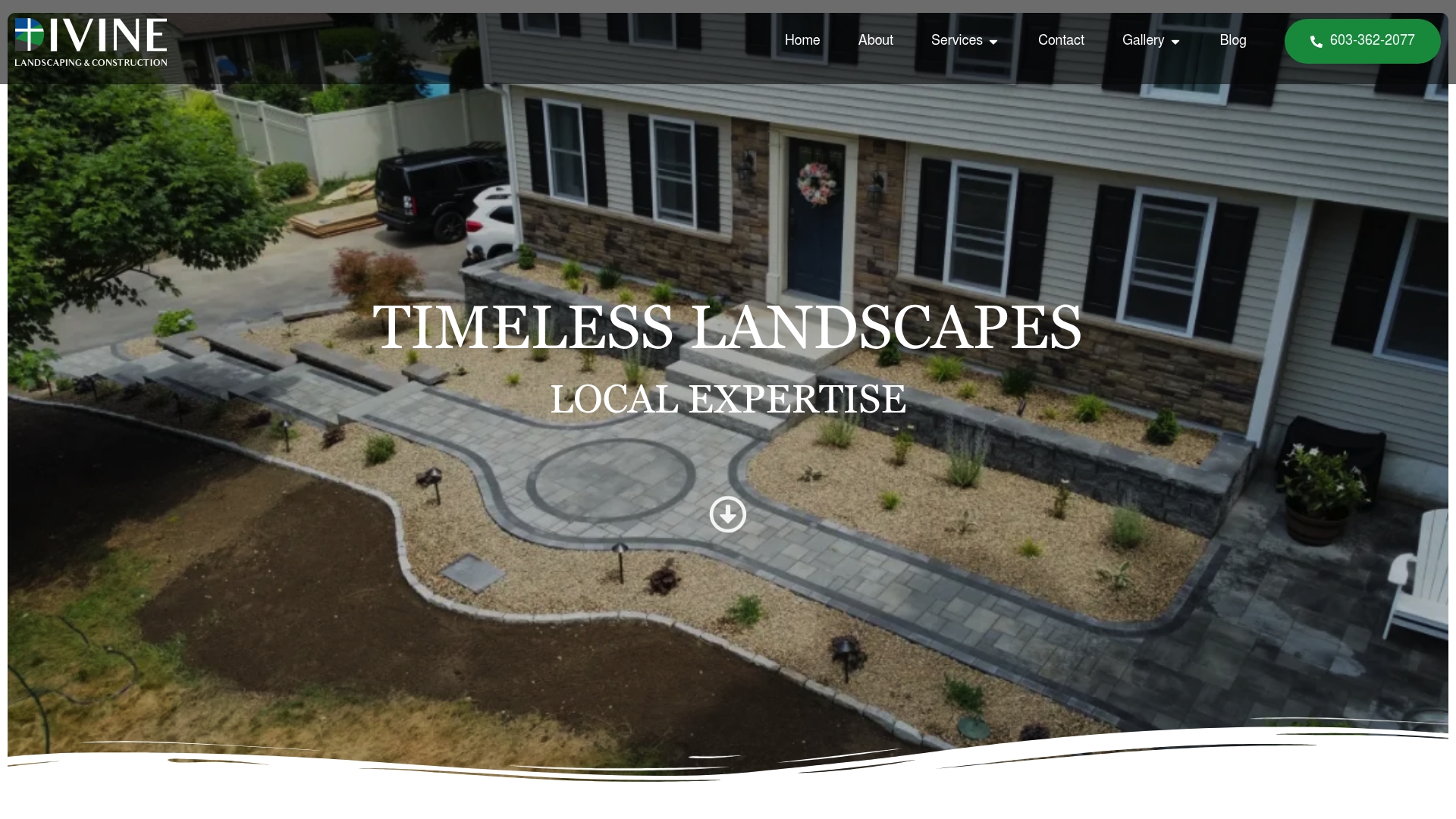
Our patio installation team handles everything from base excavation through final joint work, and our masonry and hardscape crews manage coping, walls, and any stone detailing your design calls for. If your project needs more than a resurfacing, our landscape design service can integrate the new deck with plantings, lighting, and grading in one plan instead of three separate contractors.
When requesting an estimate, ask for the base depth specification, drainage slope, and wet-slip rating for your chosen material in writing before signing any contract. Contact a local landscaping contractor to schedule an onsite estimate and obtain those specifics for your yard.
Sources
- Pool Decking Materials: A Data-Driven Selection Framework | BuildMat Insight
- Pool Deck Ideas: Best Materials, Colors & Layouts for 2026 | PoolPad
- Pool Deck Pavers Jacksonville: Best Materials for FL Pools
FAQ
What is the best material for a pool patio?
There’s no single best material for every yard. Porcelain pavers win on low maintenance and chemical resistance, travertine wins on staying cool underfoot, and light broom-finish concrete wins on cost, so the right pick depends on your budget and priorities.
How much does a 20×40 concrete pool deck cost?
Exact pricing depends heavily on your region, base conditions, and finish, so it’s best to request a written quote from a local contractor rather than rely on a national average. Broom-finish concrete sits at the lower end of deck material costs compared to pavers, porcelain, or natural stone.
What is the least expensive pool deck material?
Broom-finish concrete is generally the most cost-effective pool-deck option, and it can be made slip-resistant and cooler with light coloring, added texture, and cool-deck coatings. It does need periodic resealing to maintain both looks and slip safety over time.
Which is better for pool decks, pavers or concrete?
Concrete pavers offer easier spot repair since a single damaged unit can be pulled and replaced without patching the whole surface, something a poured concrete slab can’t do. Concrete costs less upfront and performs well when properly finished and sealed, so the better choice depends on whether you value lower initial cost or easier long-term repairs.