
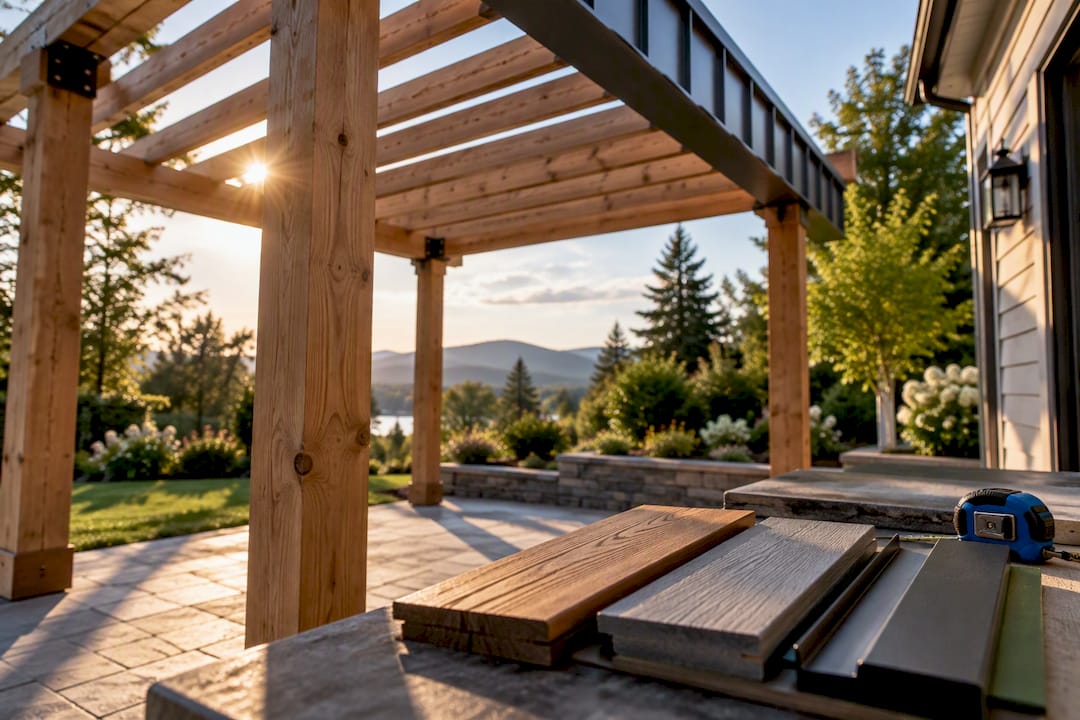
If you want the classic pergola look and don’t mind seasonal upkeep, heavy timber like cedar or Douglas fir wins on appearance and repairability. If low maintenance matters more than anything else, aluminum or fiberglass pulls ahead, especially with engineered louver systems. Vinyl and CPVC sit in between as budget-friendly, low-maintenance picks with real climate limits. Cost and lifespan trade off differently depending on which one you choose, so keep reading before you commit to a material.
TL;DR:
- Aluminum and fiberglass pergolas offer lower long-term costs due to minimal maintenance needs, despite higher initial prices compared to wood.
- 4×4 posts are typically insufficient for spans over 10 feet or heavy roofs, and larger spans require 6×6 posts or engineered beams for stability.
- Coastal, snowy, or freeze-thaw environments significantly influence material choice, with aluminum and fiberglass performing better in extreme climates.
- Vinyl pergolas are budget-friendly but may warp or crack in intense heat or cold, and warranties often exclude damage from heat sources.
- Proper footing and drainage planning, often best handled by professionals, are critical for extending pergola lifespan above ground-level material advantages.
Table of Contents
- What Pergola Materials Are Available, and Why Does It Matter?
- Is Wood Still a Good Choice for a Pergola?
- Why Do Homeowners Choose Aluminum Pergolas?
- How Do Vinyl, Fiberglass, and Composite Pergolas Compare?
- What Does a Pergola Cost by Material, and How Long Does It Last?
- How Do You Choose the Right Pergola Material for Your Yard?
- What Should You Know About Pergola Posts and Footings?
- What Divine Landscaping LLC Has Learned Building Pergolas in New Hampshire
- A Contractor’s Take on Choosing Pergola Materials
- Consider having a professional landscaping company design and build your pergola
- Sources
- FAQ
What Pergola Materials Are Available, and Why Does It Matter?
Five material families dominate the pergola market, and each one answers a different homeowner priority.
- Wood (cedar, Douglas fir, pressure treated pine, redwood): warm look, DIY friendly, requires maintenance such as periodic refinishing.
- Aluminum: powder coated, rot proof, ideal for motorized louvers and clean modern lines.
- Vinyl/CPVC: budget conscious, low maintenance, but sensitive to extreme heat and cold.
- Fiberglass/composite: engineered strength, minimal upkeep, higher upfront cost.
- Steel: rare in residential builds, mostly reserved for heavy-load commercial structures.
The choice comes down to five evaluation axes: durability, maintenance load, thermal behavior (how hot the surface gets and how it handles cold snaps), repairability, and cost. A material that scores well on one axis often gives something up on another. Modern pergola materials generally require less annual painting or staining than wood, which is exactly why so many homeowners now shop outside the lumber aisle. Climate and function matter just as much as looks: a coastal property with salt air behaves nothing like a snowy New England yard, and a pergola meant purely for dappled shade has different demands than one expected to shed rain.
Is Wood Still a Good Choice for a Pergola?
Wood remains the top pick for homeowners who want a natural look, hands-on repair options, and a lower entry price. Western red cedar resists rot and insects naturally, thanks to its oils, and it holds a warm color that many buyers consider the gold standard. Douglas fir offers excellent strength for longer spans at a lower cost than cedar. Pressure treated pine is the most affordable route but shows its chemical treatment more visibly and needs closer attention to sealing. Redwood competes with cedar on durability but can be harder to source outside the West Coast.
Timber pergolas typically need a first re-stain around 12 to 18 months after installation, then refinishing every one to five years depending on sun and moisture exposure. Wood also stays noticeably cooler to the touch than metal on a hot afternoon, and a cracked board or loose joint is something most homeowners can fix themselves with a saw and a drill.
- Best for: homeowners who value appearance, plan to DIY repairs, or want a structure they can modify later.
- Watch for: soil moisture near post bases, which accelerates rot faster than species choice alone.
Pro Tip: Seal the cut ends of any post before it goes in the ground or footing. Manufacturers pretreat the surface, but a fresh cut exposes untreated wood that soaks up moisture first.
Why Do Homeowners Choose Aluminum Pergolas?
Aluminum wins the low-maintenance argument outright. It doesn’t rot, doesn’t attract termites, and a powder-coated finish holds its color for years without repainting. Manufacturers can extrude aluminum into precise channels and pivots, which is why aluminum performs especially well in motorized louver systems that need built-in drainage and moving parts. Aluminum structures resist the elements well but can dent from impact and get uncomfortably hot to the touch under direct summer sun, a real consideration if you’re planning to lean against a post in July.
- Best for: coastal properties, modern architectural styles, motorized or adjustable louver roofs.
- Routine care: rinse dirt and pollen off twice a year, check fastener tightness, inspect gasket seals on louvered units.
- Trade-off: dents and scratches are harder to blend back in than a sanded and restained wood repair.
How Do Vinyl, Fiberglass, and Composite Pergolas Compare?
Vinyl and fiberglass both promise low maintenance, but they land at very different price points and durability levels. Vinyl (PVC) costs less upfront and never needs staining, yet it can warp in intense heat and crack in a hard freeze. Many vinyl manufacturer warranties exclude damage from heat sources like nearby grills or fire pits, a detail buyers often miss until it’s too late.
Fiberglass and thermoset composites sit at the premium end of the low-maintenance category. Fiberglass pergolas are marketed as pound-for-pound stronger than steel while staying lightweight and requiring almost no upkeep beyond occasional washing.
- Ask about UV stabilizer content before buying vinyl for a sun-heavy yard.
- Check impact resistance specs if hail or falling branches are a regular risk.
- Read warranty exclusions closely, especially around heat sources and extreme cold.
What Does a Pergola Cost by Material, and How Long Does It Last?
Upfront price and lifetime cost tell two different stories, and that gap is where a lot of budgets go wrong.
For a typical 12×12 footprint, DIY wood kits run $1,500 to $3,500, while a professionally installed wood pergola runs $4,000 to $10,000. Vinyl and aluminum 12×12 builds land between $5,000 and $14,000, and custom engineered louvered systems can exceed $25,000.
The lifetime-cost flip: A higher upfront price for aluminum or fiberglass can actually produce lower spending over 20 years than a wood pergola once repeated staining and sealing labor gets added up.
- Wood: generally lower initial cost, but recurring staining/sealing over the years adds real long-term expense.
- Aluminum/fiberglass: higher entry cost, minimal recurring maintenance spend over 10 to 20 years.
- Vinyl: moderate initial cost, low maintenance but may have shorter effective lifespan in some extreme climates.
Full pricing breakdowns by size and feature set are available in our pergola cost guide.
How Do You Choose the Right Pergola Material for Your Yard?
Work through these priorities in order before you shop:
- Set a real budget, including a rough maintenance estimate over 10 years, not just the install invoice.
- Rate your maintenance tolerance honestly. If restaining every couple of years sounds like a chore you’ll skip, aluminum or fiberglass fits better than wood.
- Assess your exposure. Coastal salt air, heavy snow load, and freeze/thaw cycles all push the decision toward different materials.
- Decide on features. Motorized louvers and integrated drainage favor aluminum’s extrusion advantages.
- Be honest about DIY skill. Wood forgives mistakes and welcomes future modification; engineered aluminum systems usually don’t.
Before buying, ask any seller about warranty exclusions for heat and cold, the finish type and its expected lifespan, structural span ratings, and recommended post sizing for your dimensions.
Pro Tip: A warranty that doesn’t mention drainage on a louvered roof is a red flag. Standing water on a closed louver system is one of the most common failure points homeowners report.
What Should You Know About Pergola Posts and Footings?
Post size matters more than most DIY guides admit. A common shortcut in DIY build guides is a 4×4 post, but that size is often marginal once a pergola exceeds roughly 10 feet per side or carries a heavy roof structure. Most contractors move up to 6×6 posts or engineered beams for larger spans.
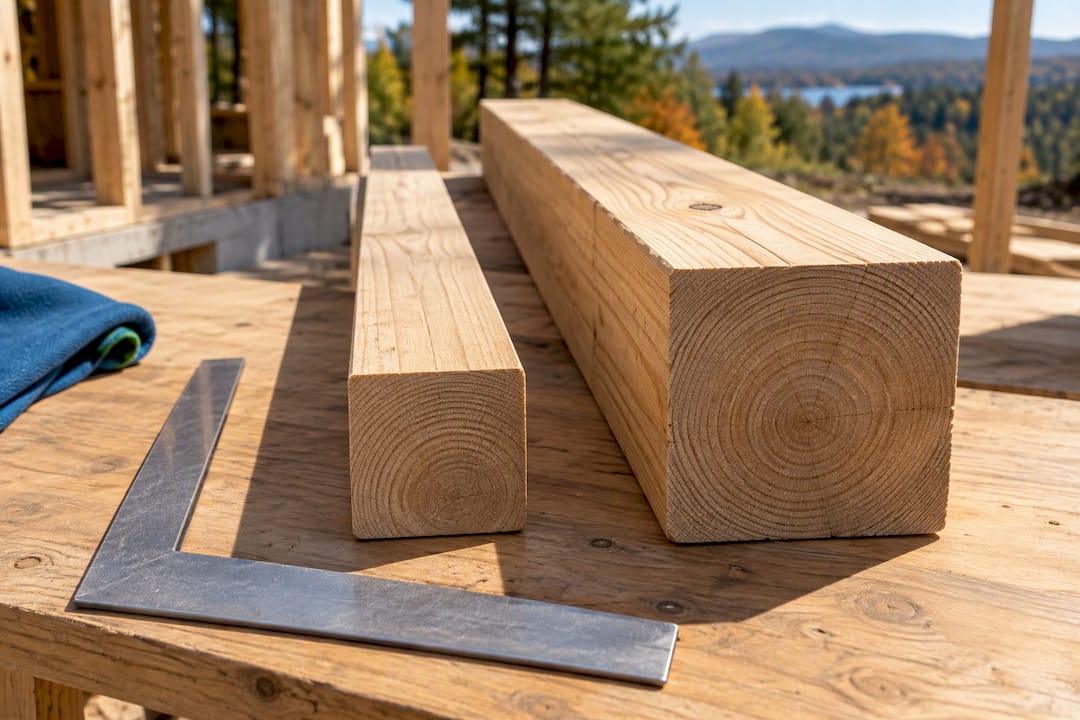
Footings matter just as much as post size. Wind exposure categories affect structural design for exterior components, and in freeze/thaw regions, footings need to sit below the frost line or the whole structure can heave. Larger spans, high snow load, or strong wind exposure are the usual triggers for pulling a permit or bringing in an engineer.
What Divine Landscaping LLC Has Learned Building Pergolas in New Hampshire
Grading and drainage decisions matter more than material choice for post longevity in our experience. Kit builds typically finish in days; custom designs with footings and integrated lighting take longer. DIY works for simple spans, but shallow bedrock, clay soil, or larger structures usually call for professional grading and footing work.
A Contractor’s Take on Choosing Pergola Materials
Most homeowners fixate on upfront price and skip the maintenance math entirely. Weigh 10 year cost, not just the invoice: a cheaper wood pergola that needs restaining every other year can cost more by year fifteen than the aluminum option you passed over.
— Damian
Consider having a professional landscaping company design and build your pergola
You’ve seen how much the right footings, drainage plan, and post sizing affect whether a pergola lasts ten years or thirty. Experienced landscaping professionals bring lifecycle thinking to every custom pergola design and construction, so clients aren’t guessing at post sizes or discovering drainage problems after installation.
Our decks and outdoor living team handles pergolas and gazebos alongside the footings, lighting, and hardscape integration that determine how well a structure holds up. If your site has drainage challenges, ledge, or a larger span that needs engineered support, that’s exactly when hiring a pro protects your investment instead of a DIY approach. For a straightforward, well-supported wood pergola, our landscape design team can walk you through material options suited to your yard. Browse our project gallery to see completed pergolas across different materials and styles, then schedule a consultation to talk through your site and budget.
Sources
- ICC sample material document (excerpt) — ICC
- Pergola & Arbor Cost Guide 2026: Materials, Sizes & Install — Hammerio
- Pergola — Wikipedia
FAQ
What is the best material for a pergola?
There’s no single best material. Cedar and Douglas fir suit homeowners who want classic looks and easy repairs, while aluminum and fiberglass suit those who want the lowest possible maintenance. Vinyl works well as a budget middle ground outside extreme climates.
Is it cheaper to build a pergola yourself or buy one pre-made?
DIY kits are usually cheaper upfront. A 12×12 DIY wood kit runs $1,500 to $3,500, while a professionally installed wood pergola of the same size runs $4,000 to $10,000. Factor in your own labor, tools, and the risk of undersized posts before deciding.
Are 4×4 posts strong enough for a pergola?
4×4 posts work for smaller structures but may be insufficient once spans exceed about 10 feet or the roof carries extra weight. Many DIY guides suggest 4×4, but larger projects generally require 6×6 posts or engineered beams.
How much does it cost to build a 12×12 pergola?
A 12×12 pergola typically costs $1,500 to $3,500 for a DIY wood kit, $4,000 to $10,000 for a professionally installed wood pergola, and $5,000 to $14,000 for vinyl or aluminum. Custom louvered aluminum systems can run $10,000 to $25,000 or more depending on automation and drainage features. Divine Landscaping LLC’s exact pricing for a custom pergola is available by consultation through our decks and outdoor living page.