
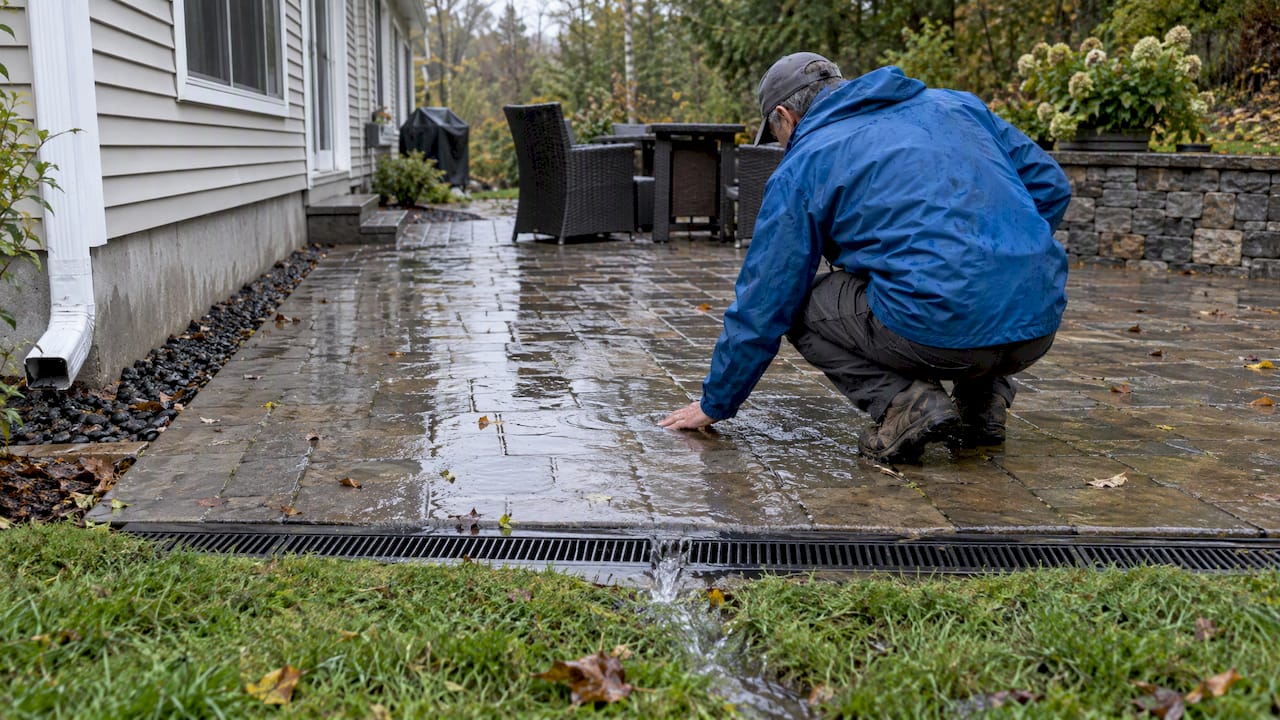
Most patio water problems need one of three fixes: regrading with surface drains for runoff crossing the slab, French or perimeter drains for water rising from below, and permeable paving for yards that need to soak water in rather than move it along. Outlet planning and correcting the grade come before any drain goes in the ground, since a drain with nowhere to send water just relocates the puddle.
TL;DR:
- Proper grading away from the house is crucial, as water must naturally flow toward designated outlets to prevent pooling or foundation issues.
- Surface drains handle runoff from roof and landscape water spillover, while French drains are effective for saturated soil or high water tables beneath the surface.
- Permeable paving reduces runoff by allowing water to infiltrate the ground, but it requires proper site conditions and ongoing maintenance to stay effective.
- Installing cleanouts and testing water flow during installation helps prevent future clogs, and grading or base corrections are often more effective than additional drains.
- Consulting with professionals ensures accurate outlet placement and grading adjustments, which are more important than the drain type chosen.
Table of Contents
- Common patio drainage options and what each one solves
- How to choose the right drainage option for your patio
- Installation basics: steps, slope, base, and outlet planning
- Permeable paving: what the EPA research shows
- Maintenance, testing, and troubleshooting your drainage system
- Divine Landscaping’s contractor checklist for patio drainage
- What matters more than the drain you pick
- Get professional help with patio drainage and installation
- Sources
- FAQ
Common patio drainage options and what each one solves
Before choosing a fix, it helps to know what each tool is actually built to handle. A properly sloped base, often called positive fall, is the foundation of every other option: patios should pitch away from the house at about 1/8 inch to 1/4 inch per foot so rain sheets off rather than collecting against the foundation.
Channel and trench drains sit on the surface and intercept water as it crosses the patio, typically placed along the house edge, at low points, or where a patio meets a driveway or walkway. Modular plastic kits make this approachable for homeowners, with interlocking sections, grates, and outlet knockouts that connect to standard drain pipe, though the base preparation and outlet still have to be right. French drains work below the surface, collecting water that saturates the soil rather than running across it, and they’re the right call when a yard has a high water table or dense, slow-draining soil. Permeable paving, including porous asphalt, pervious concrete, and permeable interlocking pavers, lets water pass through the surface itself and infiltrate into the ground below, cutting down on runoff before it ever becomes a drainage problem.
For isolated low spots, a few smaller tools round out the list:
- Point or catch basins collect water at a single low point and feed it into a pipe.
- Dry wells store collected water underground and let it percolate slowly into surrounding soil.
- Gravel drains fill a trench or low area with aggregate to encourage infiltration without a formal pipe system.
Channel drains handle visible surface pooling, while French drains deal with subsurface water; many professional installations combine both for reliability.
How to choose the right drainage option for your patio
A short site assessment tells you almost everything you need to know before picking a fix. Work through these checks in order:
- Check the finished grade next to the house: water should move away from the foundation, not toward it.
- Watch where water actually sits during or after rain to tell surface runoff from subsurface saturation that lingers after the storm passes.
- Test how fast your soil drains and note whether the water table sits close to the surface, since both affect whether French drains or dry wells will work.
- Trace your downspouts and confirm roof runoff isn’t dumping directly onto the patio before you add any new drain.
- Decide where the water will go once it’s collected, whether that’s a lower part of the lawn, a dry well, or a tie in to a municipal storm system, and confirm what your local code allows before digging.
Most straightforward surface issues, like a patio shedding roof runoff toward the back door, can be solved with regrading and a channel drain. Subsurface saturation, heaving pavers, or water that reappears days after a storm are signs to bring in a professional, since misreading the water table or soil type is the easiest way to install the wrong system. A diagnostic walk-through of your yard before you buy materials can save a full day of digging in the wrong spot.
Installation basics: steps, slope, base, and outlet planning
A patio drainage project follows a fairly predictable sequence, whether it’s a weekend project or a contractor job.
- Confirm or correct the finished grade first. Nothing downstream works if the slope sends water the wrong way.
- Excavate and prepare a compacted aggregate base, since channel drains and concrete surrounds both need a stable, well-drained foundation rather than loose or wet soil.
- Set channel or trench drains into the base, connect them to outlet piping, and build in a cleanout so the line can be cleared later without tearing anything up.
- For French drains, dig a trench with enough depth and slope to carry water, line it with landscape fabric, fill with gravel, and run perforated pipe with the holes oriented down, before discharging to a dry well or other appropriate outlet.
- For permeable paving, build a deeper aggregate sub-base than a standard patio needs, and test infiltration before committing to a final layout.
Pro Tip: Choose a grate load-class rated for foot traffic versus vehicle traffic before you order, since swapping grates later means pulling up finished hardscape.
A few mistakes show up again and again: drains with no outlet at all, slope that’s too shallow to move water, and base material that traps water underneath pavers and heaves in freeze-thaw climates. Fixing the grading and base is usually the right long-term answer, not simply adding another drain on top of a problem that regrading would have solved outright. Concrete-specific diagnostics can help you figure out whether a slab needs full tear-out or just a grading correction before you commit to either.
Permeable paving: what the EPA research shows
Porous asphalt, pervious concrete, and permeable interlocking pavers all work the same basic way: water passes through the surface instead of running off it, which reduces the volume reaching storm drains and can filter pollutants along the way, according to EPA guidance on permeable pavement. The agency’s own research backs this up with real-world monitoring.
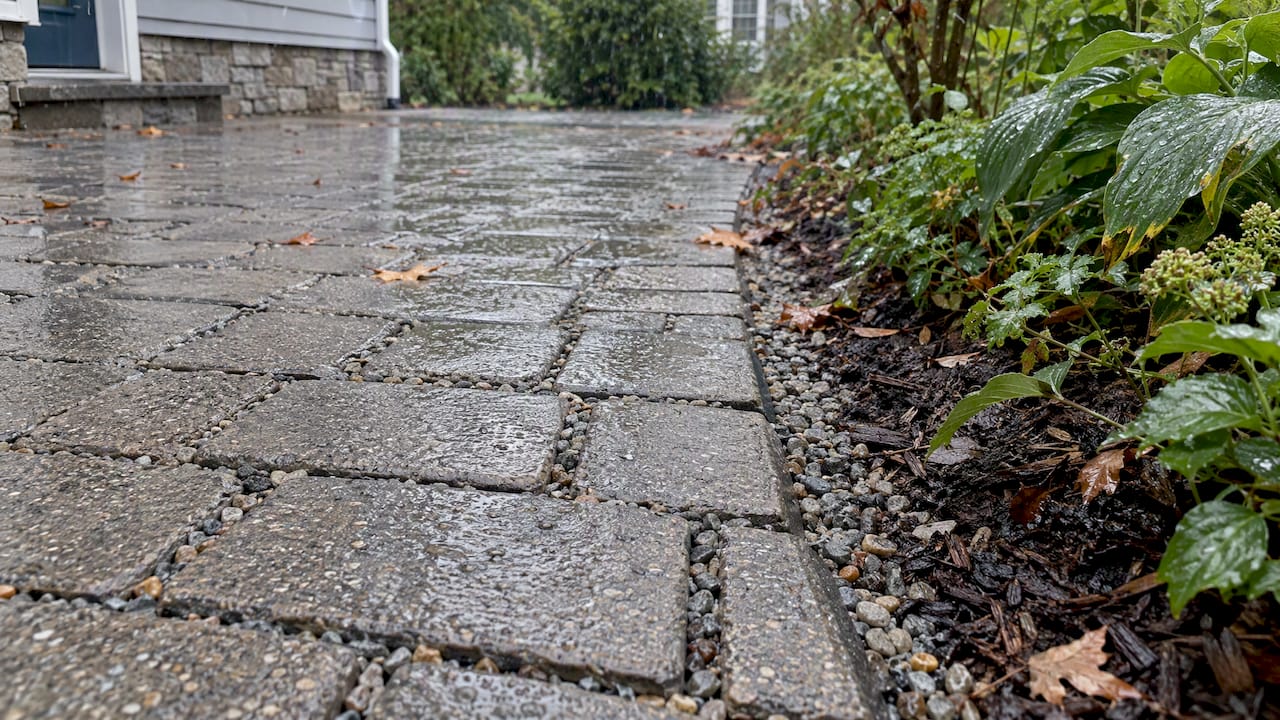
EPA’s experimental permeable pavement project tracked porous asphalt, pervious concrete, and permeable interlocking pavers alongside rain gardens in a full-scale parking lot, and found reduced runoff volume across pavement types, though pollutant removal varied depending on the site and how well the system was maintained. That caveat matters for homeowners: permeable paving is not a maintenance-free upgrade, and clogged pores lose their infiltration benefit over time.
A few site conditions limit where permeable paving makes sense:
- Contaminated soils can make infiltration undesirable, since you’d be sending pollutants into the ground instead of a storm system.
- Dense subsoil or a high water table can slow infiltration enough that the system backs up during heavy rain.
- Ongoing maintenance, including vacuuming debris from the surface, is needed to keep pores open and performance reliable.
Homeowners who want the look and function of permeable paving without guessing at the sub-base depth can lean on a professional permeable paver installation guide that walks through the steps a contractor actually checks on site.
Maintenance, testing, and troubleshooting your drainage system
A drainage system that worked on installation day can still fail a year later if nobody checks it. A short annual routine catches most problems early:
- Clear grates and channel drains of leaves and debris, especially after fall storms.
- Inspect cleanouts and any pop-up emitters to confirm they’re free of sediment and functioning.
- Run a hose over the patio surface to simulate rainfall and watch where water collects or slows down, which is the fastest way to spot a developing low spot or blockage.
Pro Tip: Run the hose test before the final backfill on a new install, not just as annual maintenance. Catching a dead spot while the trench is still open saves a reopened excavation later.
Standing water that reappears in the same spot usually means the grade has settled or the base has trapped water underneath, both signs that regrading is the fix rather than another drain. In freeze-thaw climates, trapped water in the base is often what causes pavers to heave each winter, so a fall inspection before the ground freezes is worth the half hour it takes.
Divine Landscaping’s contractor checklist for patio drainage
A proper site survey covers slope direction, soil type, downspout locations, and where the water ultimately needs to go before any shovel hits the ground. Our crews verify the outlet first, confirm cleanout locations are accessible once the patio is finished, and select grate load classes based on whether the area sees foot traffic or vehicles.
Three details from real installs tend to separate a lasting patio from one that needs revisiting:
- Simulate water flow with a hose mid-install, before the base is covered, to confirm the system actually drains as designed.
- Specify paver-slot grates where a seamless look matters, since decorative grate options exist that don’t compromise capacity.
- Always build in accessible cleanouts, since skipping them means tearing up finished hardscape for a future clog.
Homeowners who want a second opinion on an existing patio can request documentation of the base depth, outlet location, and grade readings from any contractor before signing off on a project.
What matters more than the drain you pick
The drain type matters less than getting the grade right first. A trench drain or dry well installed over a patio that still slopes toward the house just moves the puddle a few feet and calls it fixed. Durable results usually mean regrading or changing the base material, even when that costs more upfront than snapping in a channel drain.
Start with grade and outlet planning, add surface or subsurface drains only where the site still needs them, and call in a professional once you suspect a high water table or soil that won’t infiltrate on its own.
— Damian
Get professional help with patio drainage and installation
Professional contractors design and build patios with grading, drainage, and permeable paving options like those covered in this guide, so you don’t have to guess at base depth or outlet placement on your property.

- Patio design and installation that accounts for slope, soil, and outlet planning from the start.
- Permeable paver installation for yards that need to infiltrate water rather than channel it.
- Hardscape drainage integration, including channel drains and perimeter systems, built into the project rather than added after the fact.
If standing water keeps coming back no matter what you try, request a patio installation consultation and we’ll assess your site before recommending a fix.
Sources
- Soak Up the Rain: Permeable Pavement | US EPA
- How to provide drainage for patios | Better Homes & Gardens
- 3 in. Pro Series™ Channel Drain Kit | NDS
FAQ
What is the best drainage option for a patio that floods?
It depends on whether the water is surface runoff or rising from below. Surface flooding usually responds to regrading plus a channel or trench drain, while water that keeps rising after the rain stops points to a French drain or professional grading correction.
What slope should a patio have for proper drainage?
Patios should pitch away from the house at a slight slope to ensure proper drainage and prevent pooling, while avoiding slopes that feel uncomfortable or affect furniture placement.
Is permeable paving a good alternative to a drainage system?
Permeable paving, including porous asphalt, pervious concrete, and permeable interlocking pavers, lets water infiltrate through the surface and reduce runoff, according to EPA research on permeable pavement. It works best on sites without a high water table or contaminated soil, and it still needs periodic maintenance to keep pores clear.
How do I know if my patio needs a French drain or a surface drain?
Watch where water collects: if it runs across the patio during rain and clears quickly afterward, a surface channel drain usually solves it. If water lingers or the ground stays saturated well after the storm passes, that’s a sign of subsurface water that a French drain is built to handle.
How much does patio drainage installation typically cost?
Published pricing for drainage installation varies by scope and isn’t listed publicly by every contractor, including the per-project cost for a custom patio drainage fix. Requesting a quote for your specific site is the most reliable way to get an accurate figure.