
Define the work you want done, get three written bids from candidates with proof of insurance and licensing, and sign a detailed contract before any deposit changes hands. That sequence protects your budget and your yard from expensive surprises. It works because it forces clarity at every stage where homeowners typically lose control, and it’s backed by Extension service guidance as well as contractor-side hiring standards used across the industry.
TL;DR:
- Obtain at least three written, itemized bids with clear scope, plant sizes, and material details before approving any work to ensure accurate comparison.
- Verify a landscaper’s credentials by calling their insurance provider and checking licensing or certifications for legality and coverage adequacy.
- Check references and drive by previous projects, focusing on how plants age and how water slopes away from the house for lasting results.
- Use staged payments with a final walkthrough to prevent disputes, and ensure the scope, timeline, and warranties are all in the written contract.
- Focus on clear communication, transparent scope, and verification of credentials to avoid common red flags like demands for large upfront payments or vague scope descriptions.
Table of Contents
- Clarify Your Project Before You Contact Anyone
- Where to Find a Reliable Landscaper Near You
- How Do You Check a Landscaper’s Credentials?
- What Should You Look for in a Landscaper’s Portfolio?
- Requesting and Comparing Written Estimates
- Red Flags and the Questions Every Landscaper Should Answer
- Contracts, Timelines, and the Final Walkthrough
- What I’ve Learned Watching Landscaping Projects Succeed or Fail
- How Divine Landscaping Approaches Design-Build Projects
- Verify Before You Sign
- Sources
Clarify Your Project Before You Contact Anyone
Before you dial a single phone number, decide what kind of work you actually need by reviewing these tips for healthy lawns. Landscaping splits into four rough categories: routine maintenance (mowing, pruning, seasonal cleanup), softscape (planting, soil work, lawn renovation), hardscape (patios, walkways, retaining walls), and full design-build projects that combine several of these under one plan. Calling a mowing crew about a paver patio wastes everyone’s time.
If your project runs above roughly $10,000, commission a design first, then bid the installation separately. This single decision prevents most of the scope creep and change-order disputes that sour big projects.
For budgeting, walk your property and note square footage for hardscape areas and bed sizes for planting. Local costs vary widely by region and material, so treat any online price chart as a rough starting point, not gospel.
- Maintenance: recurring weekly or seasonal service
- Softscape: plantings, mulch, sod, garden beds
- Hardscape: patios, walls, walkways, structures
- Design-build: concept through construction, one contract
Pro Tip: Write your scope in one paragraph before you call anyone. If you can’t describe the project in five sentences, you’re not ready to get accurate quotes yet.
Where to Find a Reliable Landscaper Near You
Referrals from neighbors with similar properties still beat cold internet searches, because you can walk over and look at the finished work yourself. Local nurseries and garden centers are underrated sources too. They know which crews buy quality plant stock and which ones cut corners, since they see the purchase orders.
Build your candidate list this way:
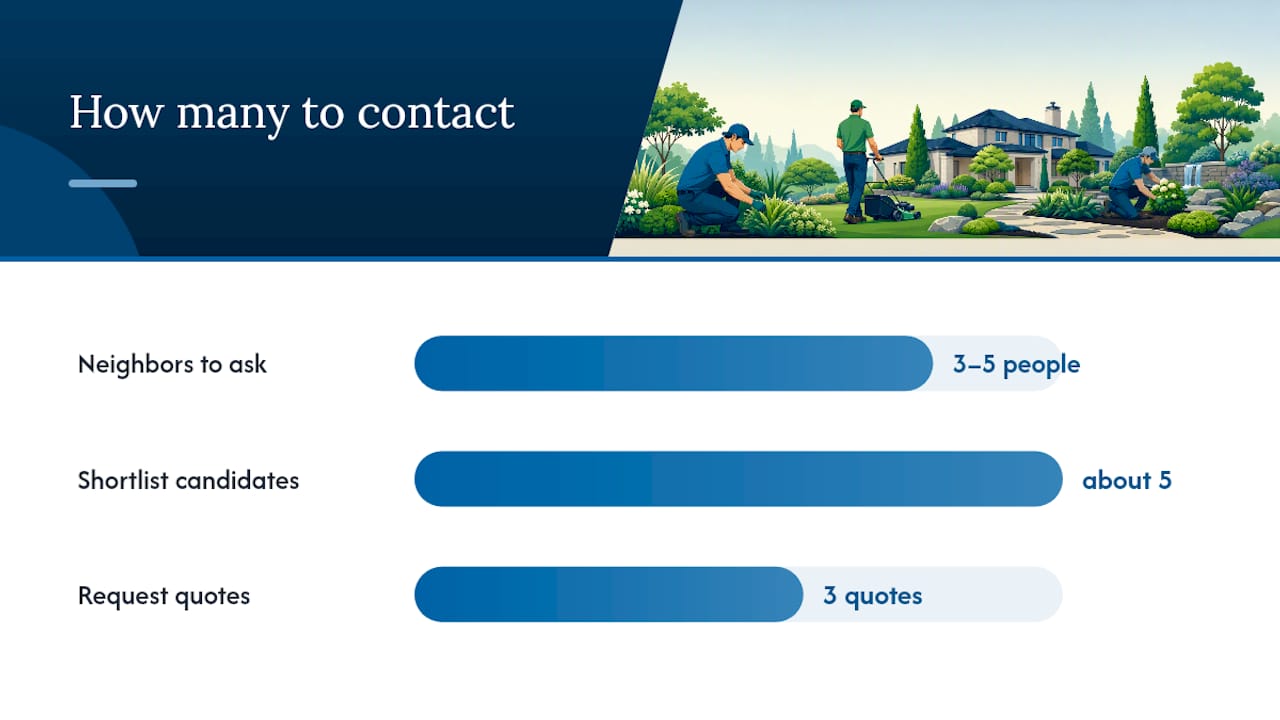
- Ask three to five neighbors or friends with comparable yards for names.
- Check a local nursery or garden center for contractor recommendations.
- Search trade organization directories and consult Extension service resources for region-specific hiring guidance.
- Cross-check candidates on review platforms, looking for a real business address, consistent photos, and review dates spread over time rather than a suspicious cluster posted in one week.
- Narrow your list to about five candidates, then request quotes from three after a first conversation.
A landscaper with no photographed portfolio, no verifiable address, or reviews that all read like they were written by the same person is worth skipping. Genuine businesses accumulate a messy, realistic review history, not a perfect five-star wall posted overnight.
How Do You Check a Landscaper’s Credentials?
Ask every candidate for a Certificate of Insurance covering general liability and workers’ compensation, then call the insurer directly to confirm the policy is active and the coverage limits are adequate. This single call catches more problems than any online review ever will.
Licensing requirements vary by state and by scope of work. Some states require a contractor license for hardscape construction, and pesticide or fertilizer application almost always requires a state-issued applicator credential when a company applies chemicals on your property. Check your state’s contractor licensing board or department of agriculture website rather than taking a company’s word for it.
Certifications add a layer of confidence, but they’re a supplement to verification, not a substitute for it:
- ISA Certified Arborist for tree work
- FNGLA or state nursery association certification for plant expertise
- GI-BMP training for fertilizer and pesticide best practices
Continuing education credentials show a contractor stays current, but a Certificate of Insurance you’ve personally verified matters more than any badge on a website.
What Should You Look for in a Landscaper’s Portfolio?
Photos tell you more than most homeowners realize, once you know what to look for. Check whether plants are appropriately sized for the space rather than dramatically oversized for the photo. Look at grading, since water should visibly slope away from the house, and scan for clean, straight bed edges as a sign of careful crew work.
- Call two or three references and ask directly: “Would you hire this company again?”
- Ask how the crew handled a problem or unexpected issue during the job.
- Request an address of a completed project from a year or two ago and drive by.
- Note any hesitation or vague answers. That’s often a bigger warning than a bad answer.
An older project you can see in person tells you how the work ages, not just how it photographed on installation day.
Requesting and Comparing Written Estimates
Get at least three written quotes, and never accept a verbal number over the phone. Itemized estimates let you compare like-for-like, which matters because two bids that look far apart in price sometimes reflect two very different scopes.
A complete estimate should include:
- A material list with specific brands, grades, or sizes, not vague terms like “quality pavers”
- Plant sizes by container or caliper, since a “3 gallon” shrub and a “7 gallon” shrub aren’t the same investment
- Labor broken out separately from materials
- A written timeline with a start date and an estimated completion window
- A statement of who pulls permits and who’s responsible for permit fees
- Warranty terms on both plant material and hardscape workmanship
- A payment schedule, including deposit percentage and final holdback
Compare the plant sizes and material grades line by line across bids before you compare the bottom-line total. A lower bid using smaller plants or thinner pavers isn’t actually cheaper. It’s a different project wearing the same price tag.
Pro Tip: Ask each bidder the same follow-up question: “What’s excluded from this estimate?” The answer reveals more about a contractor’s honesty than the price itself.
Deposits in the 10 to 30 percent range are standard. Anything demanding half or more upfront, especially in cash, deserves a hard second look.
Red Flags and the Questions Every Landscaper Should Answer
Watch for these warning signs during sourcing and quoting:
- No Certificate of Insurance, or reluctance to provide one
- Demands for large upfront payment before any work starts
- A scope described only verbally, never in writing
- Pressure to sign the same day, or discounts tied to an immediate decision
During your consultation, ask who will actually supervise the crew on-site, whether the company uses subcontractors or employees, who handles permits, how change orders get priced and approved, and what happens to job-site debris and cleanup. Also ask about warranty response time if a plant dies or a paver settles.
How a contractor communicates while quoting your job tends to predict how they’ll communicate once problems come up mid-project. A company that’s slow, vague, or evasive before you’ve signed anything rarely improves once they have your deposit.
Contracts, Timelines, and the Final Walkthrough
A solid landscaping contract spells out the full scope of work, exact start and completion dates, a defined change-order process with pricing, warranty terms for plants and hardscape separately, and who’s responsible for cleanup and debris removal. It should also state clearly who pulls any required permits.
Payment staging typically follows this pattern:
- Deposit of 10 to 30 percent at signing
- Progress payment at a defined milestone (materials delivered, hardscape base complete)
- A 5 to 10 percent holdback withheld until final walkthrough approval
Before releasing that final payment, walk the property with the crew lead. Check that plant counts and sizes match the contract, hardscape surfaces are clean and stable underfoot, drainage grading looks correct, and all debris is gone. Get any punch-list items in writing with a completion date before you release the holdback.
What I’ve Learned Watching Landscaping Projects Succeed or Fail
The projects that go smoothly almost always share one trait: the homeowner and contractor agreed on scope in writing before anyone touched a shovel. The ones that turn into disputes usually trace back to a verbal understanding that two people remembered differently.
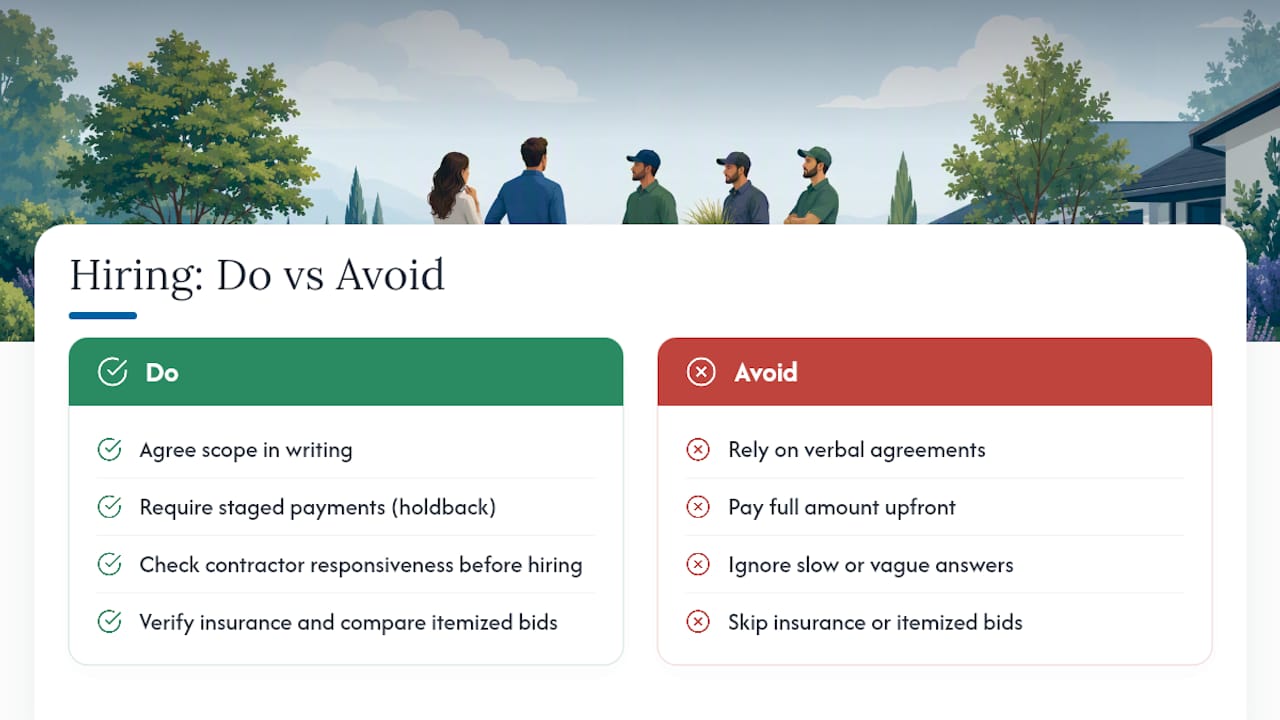
Staged payments matter more than most homeowners expect going in. A holdback isn’t about distrust. It’s leverage that keeps a crew motivated to finish the punch list instead of moving on to the next job. And communication during the bidding process really is diagnostic. A contractor who returns calls promptly and answers questions specifically before you’ve paid a dollar tends to behave the same way at week three of a six-week build.
Treat your hiring process as a filter, not a formality. Define scope, verify insurance, compare itemized bids, and put everything in writing. That workflow works whether you’re hiring for a small planting bed or a full backyard renovation.
— Damian
How Divine Landscaping Approaches Design-Build Projects
Divine Landscaping LLC is the option homeowners in New Hampshire and Massachusetts turn to when a project is too complex for a single trade to handle alone. Custom patios, retaining walls, outdoor kitchens, pergolas, irrigation, and lighting all come under one design and one contract, which sidesteps the coordination headaches of hiring separate specialists for each piece.
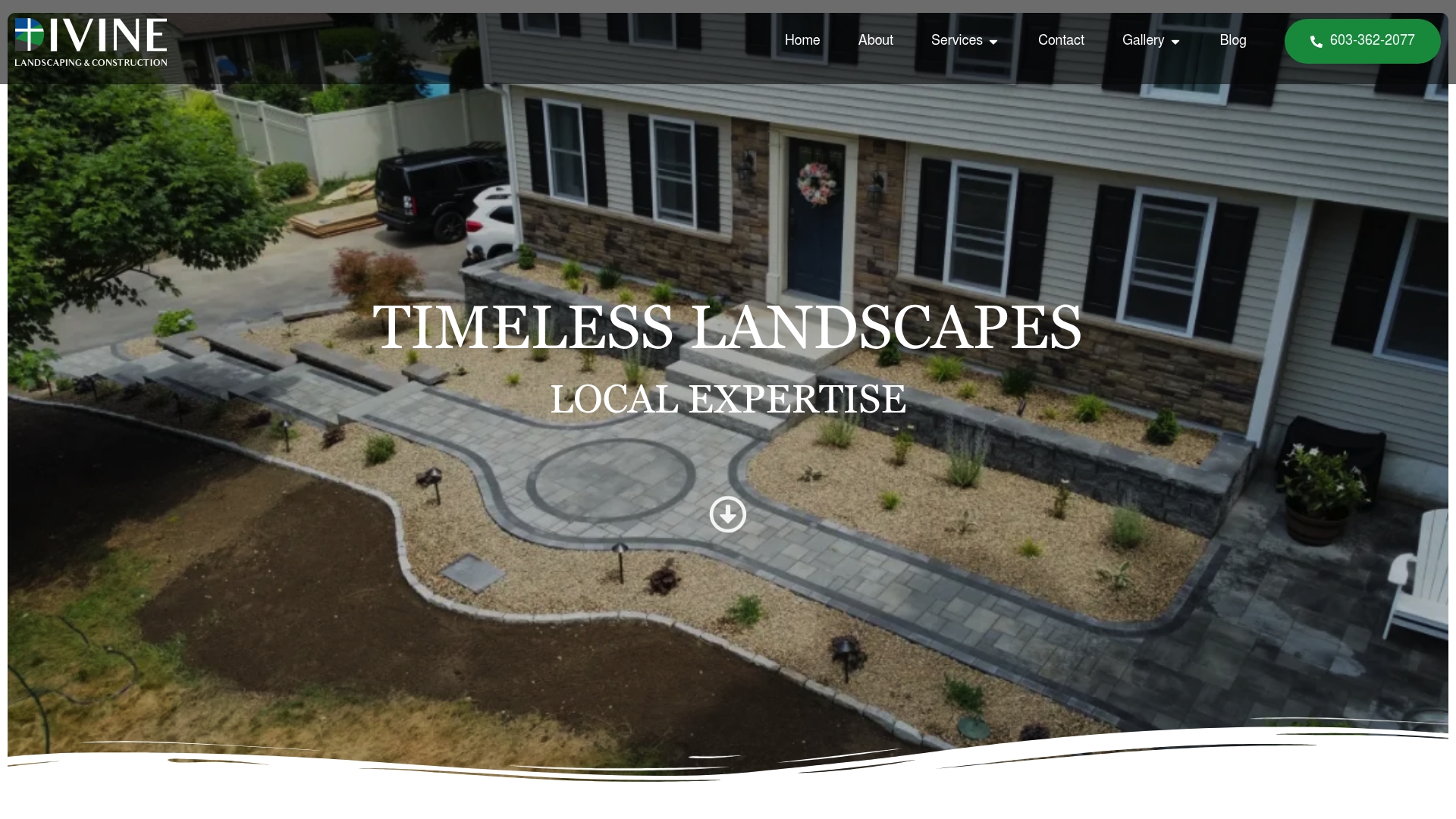
Design-build fits best for projects that combine hardscape and softscape, need grading or drainage work, or involve structures like retaining walls and decks where sequencing matters. If your project is smaller in scope, routine care is handled through a separate maintenance service instead.
Browse the project gallery to see completed work up close, then request a consultation through Divinelandscapingllc to get a written scope and estimate for your property.
Verify Before You Sign
Check your state’s contractor licensing board directly rather than relying on a company’s claim. For land-care specific guidance, UF/IFAS and NC State Extension publish free, unbiased hiring resources. The Better Business Bureau is worth a quick search for complaint history before you sign anything.
Sources
- Choosing a Landscape Contractor – Extension Gardener
- How to Choose the Right Green Industry Professional for Your Lawn and Landscape – UF/IFAS
- The Complete Guide to Hiring a Landscaper | Operator
- How to Hire a Landscaper: The Complete 2026 Guide — Yardcast Blog