
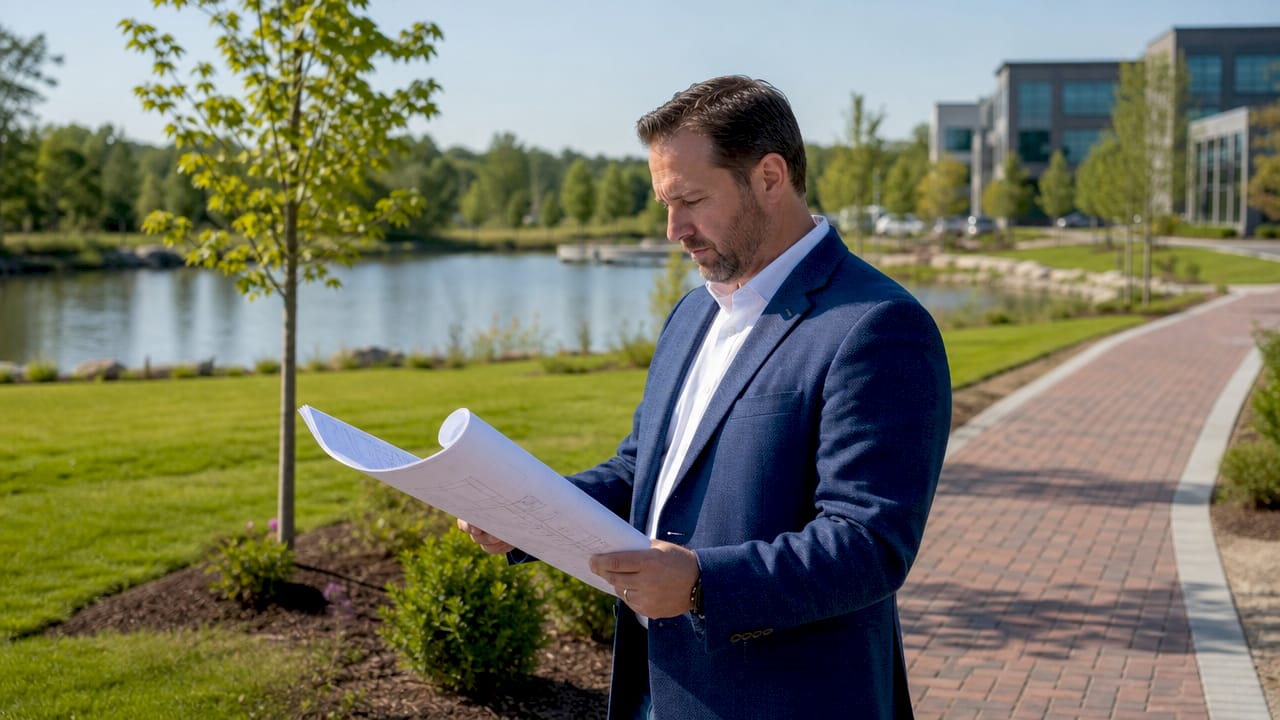
Commercial landscaping is defined as the professional design, installation, and ongoing maintenance of outdoor spaces for non-residential properties, including office parks, retail centers, industrial sites, and multi-tenant buildings. It covers everything from site grading and drainage to hardscaping, planting, irrigation, and lighting. For property owners and managers in New Hampshire, commercial landscaping explained in full means understanding how these systems work together to protect your investment, meet safety codes, and create outdoor environments that attract tenants and customers. This guide breaks down every major component, the real costs involved, and the best practices that separate a well-executed project from a costly mistake.
What are the essential components of commercial landscaping?
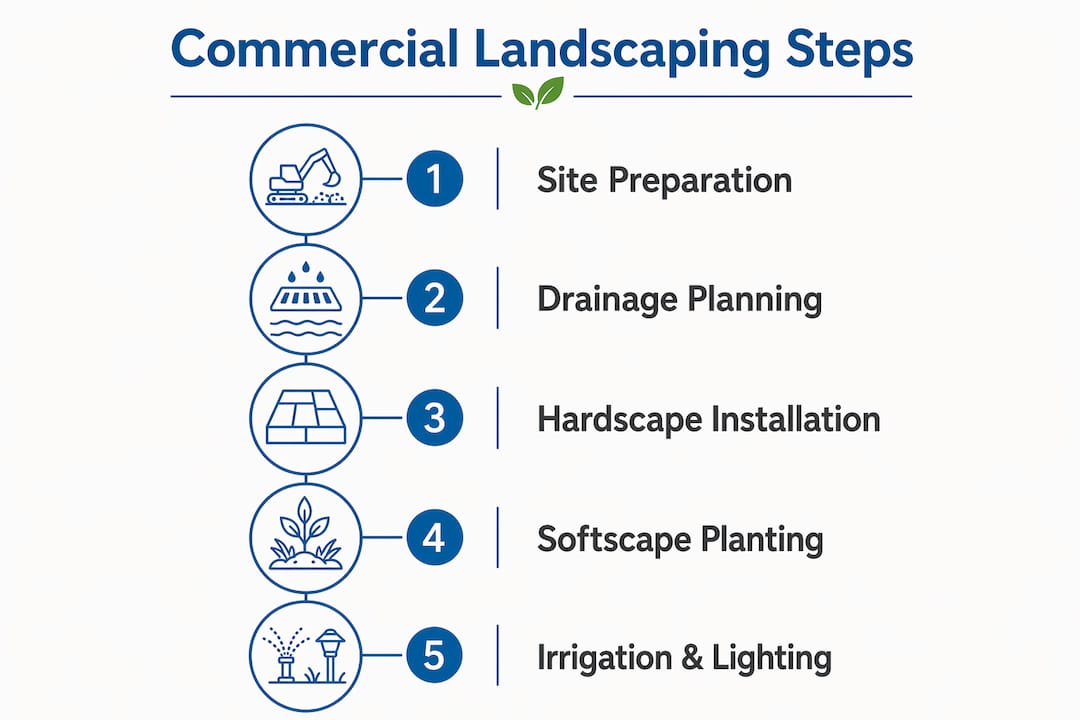
Commercial landscape construction integrates infrastructure and aesthetics to meet both business and regulatory needs. Understanding each component helps you ask better questions and make smarter decisions before any work begins.
Site grading and drainage
Proper site grading and subsurface drainage are the most critical yet most overlooked aspects of any commercial project. In New Hampshire, freeze-thaw cycles put enormous stress on improperly graded surfaces. Water that pools near foundations in october will expand as ice in january, cracking concrete and undermining structural integrity. Getting the grade right from the start prevents foundation damage, slip hazards, and costly repairs down the road.
Hardscaping and softscaping
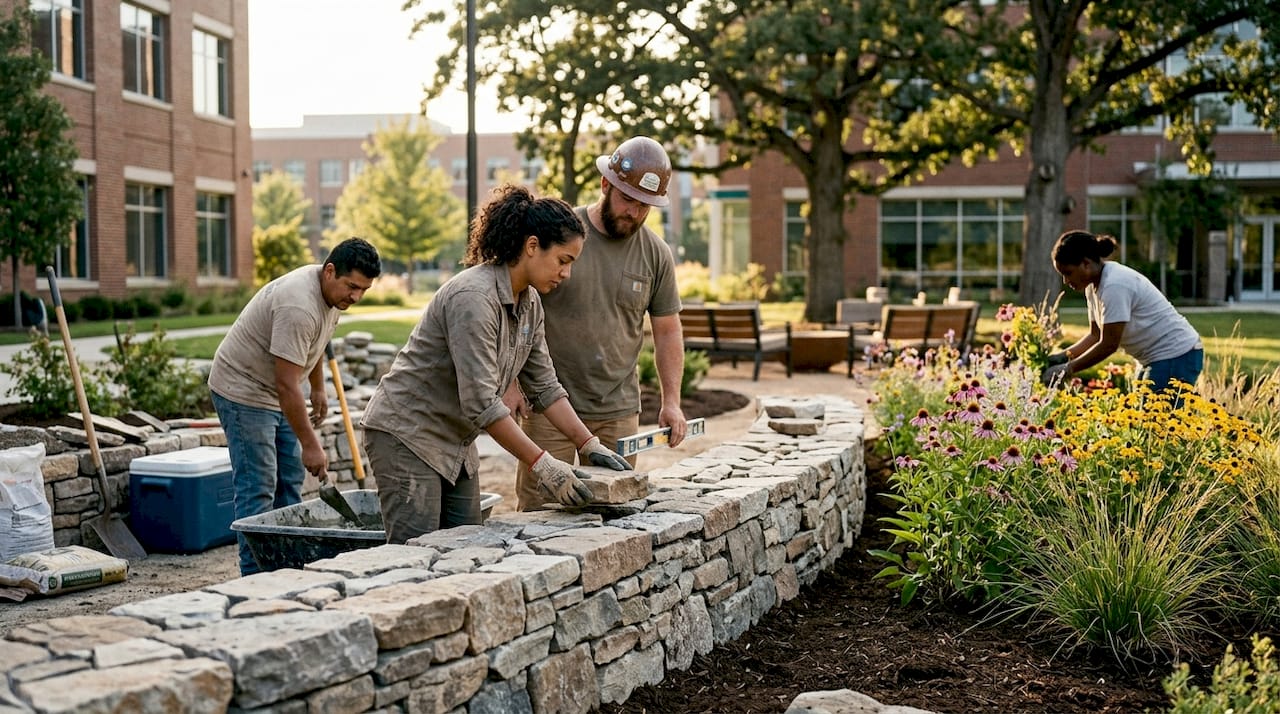
Hardscape elements include patios, walkways, retaining walls, parking lot curbing, and signage bases. These features define circulation, manage grade changes, and give your property a finished, professional appearance. Softscaping covers turf, trees, shrubs, and perennial plantings selected for commercial durability and seasonal interest. In New Hampshire, plant selection must account for USDA Hardiness Zones 4b through 6a, which rules out many ornamentals that thrive in warmer states.
Irrigation, lighting, and amenities
Irrigation infrastructure, including drip lines and zone-controlled sprinkler systems, reduces water waste and keeps plantings healthy through dry summers. Exterior lighting improves safety after dark and extends the usable hours of outdoor areas. Amenities such as benches, bike racks, and trash enclosures complete the functional picture and signal to tenants that the property is well managed.
- Site grading and drainage: Prevents freeze-thaw damage and foundation issues specific to northern climates.
- Hardscaping: Patios, walkways, retaining walls, and curbing define circulation and manage grade changes.
- Softscaping: Climate-appropriate trees, shrubs, and turf selected for durability and seasonal appeal.
- Irrigation systems: Zone-controlled drip and sprinkler systems reduce water use and protect plantings.
- Exterior lighting: Improves safety, extends usable hours, and enhances curb appeal after dark.
- Amenities: Benches, signage bases, and bike racks signal professional property management.
Pro Tip: Request a drainage plan from your contractor before any hardscape installation begins. In New Hampshire, skipping this step is the single most common cause of premature pavement failure.
How does commercial landscaping benefit businesses and property managers?
Well-designed commercial landscapes serve functional purposes well beyond aesthetics. They support business goals, protect assets, and directly influence how tenants, customers, and employees experience your property.
-
Stronger curb appeal and brand image. First impressions form within seconds. A clean, well-planted entrance signals professionalism and builds confidence in your brand before anyone walks through the door.
-
Improved safety and regulatory compliance. Properly graded walkways, adequate lighting, and clear sight lines reduce slip-and-fall liability. Many New Hampshire municipalities require specific drainage and accessibility standards for commercial properties.
-
Increased property value and asset protection. Landscaping that manages water correctly protects foundations, paving, and structural elements. Properties with maintained grounds consistently command higher lease rates and sale prices than comparable neglected sites.
-
Higher tenant and customer satisfaction. Effective commercial landscaping enhances the user experience and contributes directly to tenant and customer retention. Tenants who enjoy their outdoor environment renew leases at higher rates.
-
Lower long-term maintenance costs. Sustainable planning, including native plant selection and efficient irrigation, reduces the labor and water costs associated with ongoing grounds maintenance. A well-designed system costs less to maintain every year than a poorly planned one.
What costs are associated with commercial landscaping projects?
Cost is the question every property manager asks first, and the honest answer is that scope and materials drive the number more than anything else. Commercial hardscaping costs typically range from $10 to $50 per square foot, with premium designs and materials pushing toward the higher end. That range reflects real differences in site complexity, drainage requirements, and material quality.
| Project type | Typical cost range | Key cost drivers |
|---|---|---|
| Standard hardscape (concrete, basic stone) | $10–$20 per sq ft | Simple grade, standard drainage |
| Mid-range hardscape (pavers, mixed materials) | $20–$35 per sq ft | Moderate grading, drainage systems |
| Premium hardscape (natural stone, complex design) | $35–$50 per sq ft | Complex drainage, premium materials |
| Softscape installation (planting, turf) | Varies by plant selection | Species, bed size, irrigation needs |
Material selection directly affects both durability and long-term maintenance costs. Choosing the wrong stone or concrete mix for New Hampshire winters leads to premature cracking and replacement expenses that far exceed the initial savings. Natural stone and high-density concrete pavers cost more upfront but hold up significantly better through repeated freeze-thaw cycles.
Design complexity also drives cost. A flat parking lot entry with standard concrete is straightforward. A sloped site requiring retaining walls, subsurface drainage, and custom stone work involves engineering, additional labor, and more expensive materials at every step.
Pro Tip: Get itemized bids that separate grading, drainage, hardscape, and planting costs. This lets you phase the project if needed and prevents budget surprises mid-construction.
What are best practices in designing and maintaining commercial landscapes?
The difference between a commercial landscape that holds up for 20 years and one that needs major repairs in five comes down to planning and material choices made before the first shovel hits the ground.
Prioritize sustainable and native plant selection
Sustainable commercial landscaping uses native plants, water-efficient irrigation, and biodiversity initiatives to reduce maintenance costs and environmental impact. Native New Hampshire species like inkberry, native grasses, and serviceberry require less water, resist local pests, and survive harsh winters without replacement. This is not just an environmental preference. It is a direct cost reduction strategy.
Plan for New Hampshire’s seasonal demands
Your landscape must perform across four distinct seasons. Spring brings heavy snowmelt and saturated soils that test drainage systems. Summer requires consistent irrigation management. Fall means leaf cleanup and preparation for frost. Winter demands that all hardscape surfaces drain completely to prevent ice formation. Scheduling regular maintenance tied to seasonal transitions keeps the property safe and attractive year-round.
Choose materials built for freeze-thaw conditions
Not all hardscape materials perform equally in northern climates. Concrete pavers with a minimum compressive strength of 8,000 PSI handle freeze-thaw stress far better than standard poured concrete. Natural stone like bluestone and granite is a proven performer in New Hampshire. Avoid wood decking in high-traffic commercial areas unless you specify composite or pressure-treated lumber rated for commercial use.
Understand local regulatory requirements
New Hampshire commercial properties must comply with state stormwater regulations, ADA accessibility standards for walkways and ramps, and local zoning requirements for impervious surface coverage. A contractor who understands these requirements builds compliance into the design from day one, saving you from costly retrofits later.
- Select native and climate-adapted plants to reduce water use and replacement costs.
- Design drainage systems before finalizing any hardscape layout.
- Use freeze-thaw-rated materials: high-density pavers, granite, or composite decking for commercial applications.
- Schedule seasonal maintenance visits in spring, summer, fall, and pre-winter.
- Verify ADA compliance and stormwater requirements with your contractor before breaking ground.
- Consider a phased renovation plan if budget requires spreading work across multiple seasons.
Select a contractor with commercial experience
Residential landscaping experience does not automatically translate to commercial competence. Commercial projects involve larger drainage volumes, heavier foot traffic, stricter code compliance, and more complex project management. Ask contractors for references from commercial properties specifically, and verify that they carry the appropriate licensing and insurance for New Hampshire commercial work.
Key takeaways
Commercial landscaping succeeds when site grading, drainage, material selection, and sustainable planting are planned together from the start, not treated as separate decisions.
| Point | Details |
|---|---|
| Drainage comes first | Proper grading and subsurface drainage prevent freeze-thaw damage and foundation failures in New Hampshire. |
| Hardscape costs vary widely | Expect $10–$50 per square foot depending on materials, site complexity, and drainage requirements. |
| Native plants reduce costs | Selecting climate-adapted species cuts long-term water use, pest management, and replacement expenses. |
| Compliance is non-negotiable | ADA standards and NH stormwater regulations must be built into the design, not added as an afterthought. |
| Maintenance drives long-term value | Seasonal maintenance schedules protect your investment and keep the property safe and attractive year-round. |
What I’ve learned working on commercial properties in New Hampshire
The biggest mistake I see property managers make is treating landscaping as a cosmetic line item rather than a structural investment. They approve a planting budget but cut the drainage scope to save money. Two winters later, they are paying twice as much to fix heaved pavers and eroded beds.
Northern climates punish shortcuts in ways that warmer states simply do not. A drainage detail that is “good enough” in Virginia will fail in Nashua. The freeze-thaw cycle is relentless, and water always finds the path of least resistance. When that path runs under your walkway or toward your foundation, the repair bill is never small.
The other pattern I see is under-investment in plant selection. Property managers often default to the cheapest available nursery stock without checking cold hardiness or maintenance requirements. Three years later, half the planting beds need replacement. Spending a bit more on proven native species at the start saves real money over a five-year horizon.
The trend I find genuinely encouraging is the shift toward sustainable design in commercial projects. More property managers are asking about native plants, permeable paving, and irrigation efficiency. These are not just environmental choices. They are financial ones. A well-designed sustainable landscape costs less to maintain every year, and that matters when you are managing a property budget.
— Damian
How Divinelandscapingllc serves New Hampshire commercial property owners
Divinelandscapingllc works with commercial property owners and managers across New Hampshire on projects that range from full-site landscape design to hardscape installation, drainage correction, and ongoing grounds maintenance.
Whether you are planning a new installation or renovating an existing commercial property, the multi-tenant property landscaping guide is a practical starting point for understanding your options. Divinelandscapingllc brings local knowledge of New Hampshire’s climate, soils, and regulatory requirements to every project. You can also request a quote directly to discuss your property’s specific needs with the team.
FAQ
What is commercial landscaping?
Commercial landscaping is the professional design, installation, and maintenance of outdoor spaces for non-residential properties such as office parks, retail centers, and multi-tenant buildings. It includes site grading, drainage, hardscaping, planting, irrigation, and lighting.
How much does commercial landscaping cost in New Hampshire?
Hardscaping costs range from $10 to $50 per square foot depending on materials, site complexity, and drainage requirements. Premium natural stone and complex drainage systems push costs toward the higher end of that range.
Why is drainage so important for commercial landscaping in New Hampshire?
New Hampshire’s freeze-thaw cycles cause water trapped under paving or near foundations to expand and contract repeatedly, cracking surfaces and undermining structural integrity. Proper grading and drainage prevent these failures before they start.
What plants work best for commercial landscapes in New Hampshire?
Native species such as inkberry, serviceberry, and native ornamental grasses perform best because they are adapted to local winters, require less water, and resist regional pests. They also reduce long-term replacement and maintenance costs compared to non-native ornamentals.
How often should commercial landscapes be maintained?
Maintenance frequency depends on property type, landscape size, and seasonal demands. Most New Hampshire commercial properties require at minimum four seasonal service visits, with additional visits during peak growing season and pre-winter preparation.