
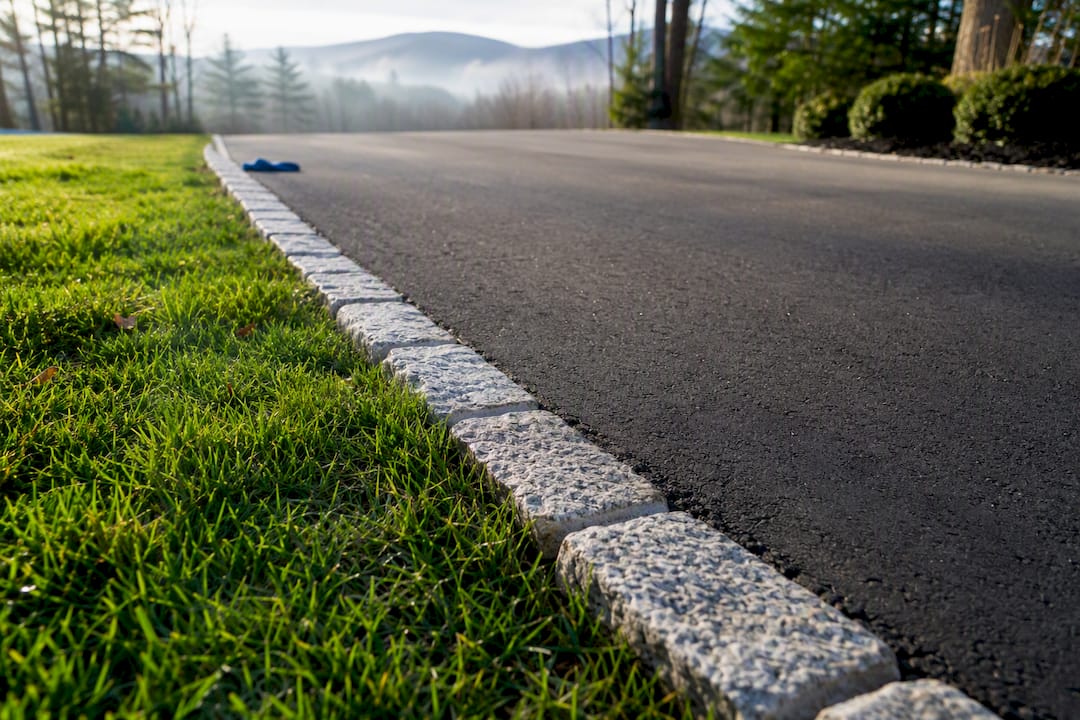
Choose your edging by driveway surface and vehicle load, not by looks alone. Rigid curbs, mortared stone, or haunched Belgian block belong on driveways with daily car traffic; aluminum or steel systems suit paver drives that need durability without the mortar work; plastic edging is fine only for low-load borders along walkways or planting beds beside the drive, never against fresh asphalt or under a tire’s full weight.
TL;DR:
- Rigid materials like poured concrete or haunched stone are best for driveways with frequent vehicle traffic, especially in cold climates, despite higher costs.
- Plastic edging is suitable only for low-load borders along walkways or flower beds, not against asphalt or under vehicle weight, due to its short lifespan.
- Proper anchoring in a stable, compacted base and correct drainage grading are critical to prevent future erosion, cracking, and costly repairs.
- Salt exposure from winter deicing accelerates deterioration of concrete and mortar, significantly reducing edging lifespan in northern climates.
- Professional installation is recommended for curved, sloped, or complex driveways to ensure correct base compaction, drainage, and material anchoring.
Table of Contents
- Why Driveway Edging Options Matter More Than You Think
- Driveway Edging Materials: Strengths, Weaknesses, and Where They Fit
- How to Choose the Right Edging for Your Driveway
- Installing Driveway Edging: Steps and Anchoring Basics
- Maintenance, Lifespan, and What Things Actually Cost Over Time
- What We’ve Learned Installing Driveway Edging Across New England
- Getting Driveway Edging Installed Right the First Time
- The Real Tradeoff Behind Every Edging Decision
- Sources
Why Driveway Edging Options Matter More Than You Think
Edging does real structural work, not just decorative trim. Without it, gravel migrates onto the lawn, asphalt edges crumble under tire pressure, and paver joints spread until the whole surface starts to wave.
A well-anchored edge restraint keeps base material where a contractor put it, which protects the investment underneath. It also affects drainage: water that sheets off a driveway needs somewhere to go, and edging that’s set too high or too tight against the grade can trap runoff instead of directing it. Homeowners planning permeable or gravel surfaces should think about this early, since porous pavement design depends on water moving through and away from the surface rather than pooling against a rigid border.
Here’s what solid edging actually protects against:
- Erosion and gravel or mulch migration onto lawns and sidewalks
- Cracking at pavement edges from repeated tire pressure and mower contact
- Slope failure where a driveway meets a lawn on uneven ground
- Costly repaving or paver resets caused by years of unchecked shifting
Skipping edging rarely saves money long term. It just moves the cost from installation day to a future repair bill.
Driveway Edging Materials: Strengths, Weaknesses, and Where They Fit
Every material on this list can look great in photos. The difference shows up after two winters, when some options are still solid and others are heaving out of the ground.
Concrete. Poured concrete curbs and trowel-formed edges are the workhorse choice for asphalt and concrete driveways. They resist vehicle weight well and hold their line for decades when installed over a compacted base. The tradeoff is cracking risk in freeze-thaw regions, especially if the concrete wasn’t reinforced or if the base wasn’t compacted properly before the pour. Deicing salt is also a real threat here: University of Minnesota Extension research documents how deicing salts accelerate deterioration in concrete and brick mortar, which matters a lot if you’re in a state that salts every storm.
Metal (aluminum and steel). Aluminum and steel edging systems have become popular for paver driveways because they hold a clean, nearly invisible line and don’t crack the way concrete can. Industry sources describe aluminum restraint systems as more resistant to freeze-thaw cycling and salt exposure than plastic or standard concrete, which is why they’ve become a durable middle-to-high-end choice for homeowners who want low maintenance and a modern look. Installation requires stakes driven through the edging into a compacted aggregate base, not loose soil, so the restraint doesn’t heave.
Brick and stone. This is the aesthetic premium option, and for good reason: nothing else gives a driveway the same finished, custom look. Brick or stone edging can be dry-set for lighter applications or mortared for permanence, but for driveways carrying vehicle loads, Belgian block haunched in concrete is the standard. Comparative guidance from paver manufacturers describes poured curb and haunched block as the gold standard for containing vehicular traffic, because the concrete backing keeps the stone from rocking or drifting under wheel pressure.
Plastic and composite. Plastic edging is the cheapest option to buy and the fastest to install, which is exactly why it shows up so often around flower beds and walkways instead of driveways. It performs fine for lightweight borders but tends to uplift or migrate in freeze-thaw climates unless it’s carefully staked into a compacted base. There’s one hard rule worth remembering here: never place standard plastic edging directly against freshly laid asphalt, since installation heat can deform HDPE edging before it ever gets a chance to cure properly.
Decorative aggregate. Loose gravel, crushed stone, or decorative aggregate borders look natural next to a driveway, but they need a restraint of their own, whether that’s a metal edge, a paver soldier course, or a low concrete curb. Aggregate without containment simply spreads.
Cost and lifespan reality check: Plastic edging carries the lowest upfront cost but often needs replacing every 5 to 15 years, while heavier systems like concrete, metal, and mortared stone cost more to install but rarely need full replacement within that same window. Judge the price tag against total years of service, not just the invoice.
| Material | Best for | Lifespan | Approx. installed cost | Maintenance |
|---|---|---|---|---|
| Poured concrete | Asphalt/concrete driveways, heavy vehicle loads | 20 years | $$$ | Occasional crack sealing |
| Aluminum/steel | Paver driveways, modern aesthetic | 20+ years | $$$ | Very low |
| Brick/stone (mortared) | Premium curb appeal, moderate loads | 15 years | $$$$ | Periodic repointing |
| Plastic/composite | Low-load borders, garden beds | 5 to 15 years | $ | Frequent inspection, resets |
| Decorative aggregate | Softscape transitions with a restraint | Varies by restraint used | $ to $$ | Regular topping and raking |
How to Choose the Right Edging for Your Driveway
Work through this order and you’ll land on a material that fits your driveway, not just your Pinterest board.
- Start with your driveway surface. Asphalt and concrete driveways carrying daily car traffic need rigid materials, poured concrete, metal, or haunched stone. Gravel and paver drives have more flexibility, including plastic or aluminum restraints.
- Weigh your climate. If you’re in a state that salts roads and driveways every winter, factor that into material choice. Salt exposure shortens the life of standard concrete and untreated mortar joints.
- Set a real budget against lifespan, not just sticker price. A plastic edge that needs replacing three times over 20 years may cost more than one aluminum installation done right the first time.
- Be honest about your DIY skill level. Straight-run plastic or metal edging along a flat border is a reasonable weekend project. Poured curbs, mortared stone, and anything on a slope usually calls for a contractor.
- Account for site quirks. Curves, drainage slopes, and tight setbacks near a garage door all complicate installation and often push a project toward professional hands.
Pro Tip: If your driveway has any curve at all, test-fit your chosen edging material with a garden hose first. Metal and rigid stone don’t bend easily, and finding that out after delivery costs you both time and a return trip to the supplier.
Installing Driveway Edging: Steps and Anchoring Basics
Whether you’re doing the work yourself or reviewing a contractor’s quote, the same fundamentals apply.
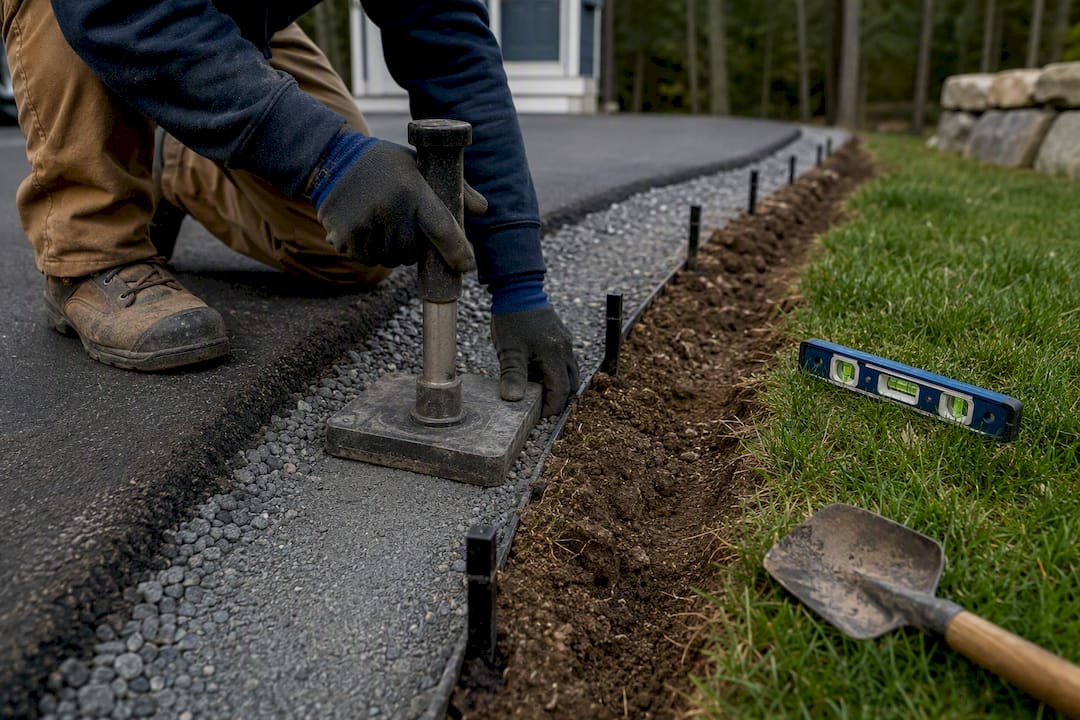
- Excavate a trench along the driveway line, typically 4 to 6 inches deep depending on material, then compact the soil below it.
- Add a compacted aggregate base, usually 2 to 4 inches, to give the edging a stable footing that resists frost heave.
- Anchor the material correctly. Metal and plastic systems need spikes driven through the edging and into that compacted base, not just soft soil, since proper anchoring depth is what actually resists frost heave. Stone and Belgian block get haunched with concrete along the back side for the same reason.
- Set the height and finish the edge. Most vehicle-zone restraints sit 1 to 2 inches above the paved surface, enough to contain lateral movement without becoming a tripping hazard.
- Backfill and grade the outer edge so water sheets away from the driveway instead of pooling against the new border.
Watch for shortcuts when reviewing a contractor’s plan: skipped base compaction, spikes driven into loose fill instead of compacted material, and mortar joints laid without any drainage consideration are the three mistakes that show up as complaints two years later. If your yard has standing water near the drive already, it’s worth diagnosing drainage issues before any edging goes in, since fixing grade problems after installation means tearing out work you just paid for.
Maintenance, Lifespan, and What Things Actually Cost Over Time
Every edging material ages differently, and salt is the great equalizer that shortens almost all of them.
- Concrete and mortared stone: inspect annually for cracking, expect repointing every 8 to 12 years in salt-heavy climates.
- Metal systems: check for loosened stakes after frost heave season, otherwise close to maintenance-free.
- Plastic/composite: reset uplifted sections yearly, budget for full replacement inside a 5 to 15 year window.
- Aggregate borders: rake and top off material seasonally as it settles or scatters.
Deicing salt is worth repeating on its own: it doesn’t just affect the pavement, it works on the edging beside it. Extension research on deicing salt’s effects on landscapes confirms accelerated wear on both concrete and mortar joints, which explains why the same material lasts longer in mild climates than in ones with harsh winters.
Small cracks or a few inches of drifted plastic edging are a repair job, usually a few hundred dollars. Widespread heaving, structural cracking across multiple curb sections, or a restraint that’s pulled away from the base entirely is a replacement job, and it’s almost always cheaper to redo it right than to keep patching a failing system.
What We’ve Learned Installing Driveway Edging Across New England
Professional installation is generally recommended for poured curbs, haunched Belgian block, and any edging on a sloped or curved driveway. The margin for error on base compaction and drainage grading is small, and a mistake there shows up as a bigger repair bill later, not a minor cosmetic flaw.
After installation, our crews walk the full edge line checking for consistent height, solid anchoring, and correct drainage slope away from the house. That inspection catches problems while they’re still cheap to fix.
Freeze-thaw cycling and road salt are the two biggest factors that separate edging that lasts 20 years from edging that fails in five, regardless of which material you started with.
Pro Tip: DIY plastic or metal edging along a flat, straight section of driveway can save real money. But if you’re weighing DIY against a pro on anything involving a poured curb or a slope, the labor savings usually get eaten up by a redo within a few years.
Getting Driveway Edging Installed Right the First Time
If your driveway needs a curve, a slope correction, drainage work, or a poured curb, that’s a job better suited to a contractor than a weekend and a rented compactor. A contractor can handle the full scope, grading, base compaction, drainage fixes, and the masonry or paver restraint work itself, so the edge you get is anchored correctly the first time.
A typical site visit covers your driveway’s grade, existing drainage patterns, and which edging material actually fits your surface and vehicle load, not just your budget. From there you get a written estimate before any excavation starts, so there are no surprise costs once the trench is open. Homeowners dealing with standing water near the driveway often bundle that fix into the same visit rather than paying for two separate trips.
If you’re ready to see what your driveway needs, visit our hardscape services page to review the scope of work we handle, then request a site visit and estimate to get a plan specific to your property.
The Real Tradeoff Behind Every Edging Decision
Most driveway edging advice online treats material choice as a style question. It isn’t. It’s a load and climate question first, and style comes second. The mistake I see homeowners make most often isn’t picking an ugly material, it’s picking a pretty one that was never rated for the job it’s doing.
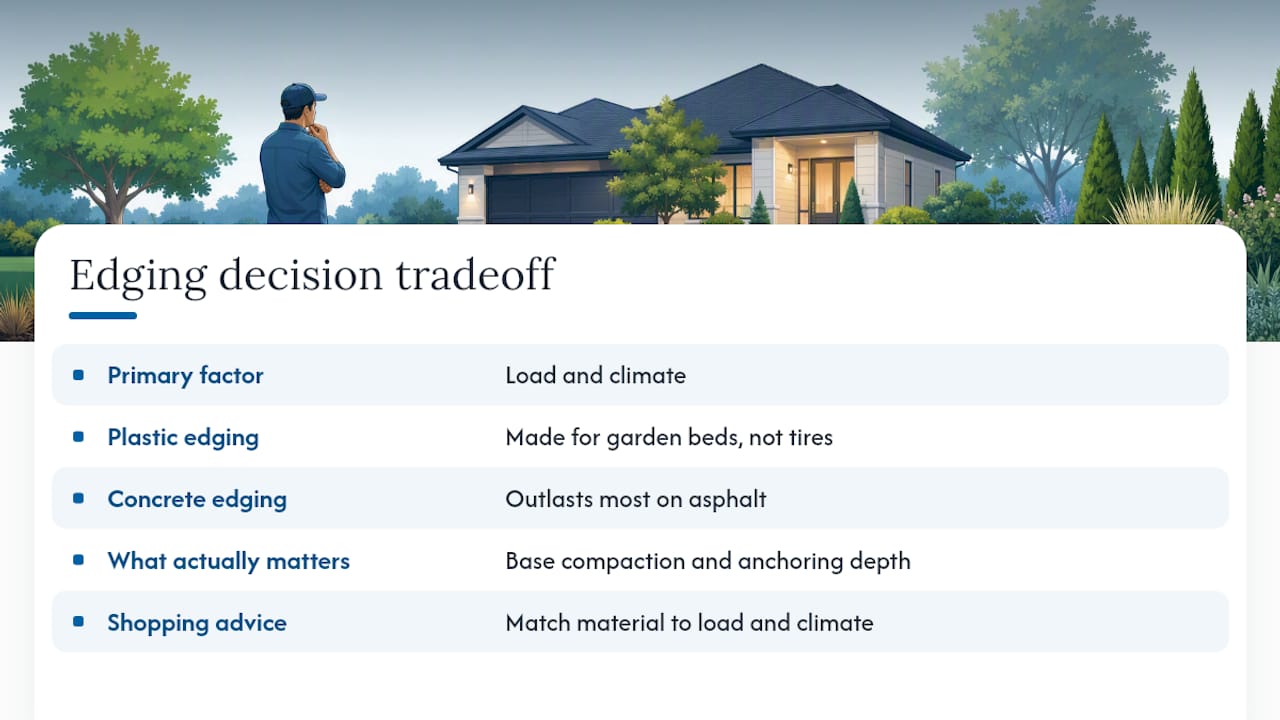
Plastic edging gets recommended constantly because it’s cheap and easy to find at a home improvement store, but nobody mentions that it’s built for garden beds, not tire pressure. Concrete gets dismissed as boring, yet it outlasts almost everything else on an asphalt driveway if the base underneath was compacted properly. The conventional wisdom skips straight to aesthetics because that’s what sells clicks and edging kits. It skips the boring part, base prep and anchoring depth, that actually determines whether the material survives its first hard winter.
If you take one thing from this guide, prioritize matching material to load and climate before you shop by color or finish. Everything else is negotiable. That isn’t.
— Damian
Sources
For homeowners who want to go deeper on the technical side, Oregon State Extension’s porous pavement fact sheet covers how permeable surfaces handle runoff, which matters if you’re considering gravel or permeable pavers. University of Minnesota Extension’s research on deicing salts explains why cold-climate homeowners should weigh salt exposure heavily in material choice. The Masonry & Hardscapes Association’s technical guidance on edge restraints is the industry standard reference for anchoring depth and base compaction.
- Porous pavement: low‑impact development fact sheet — Oregon State Extension
- Effects of deicing salts on landscapes — University of Minnesota Extension
- Paver installation and edge restraint guidance — Masonry & Hardscapes Association resource