
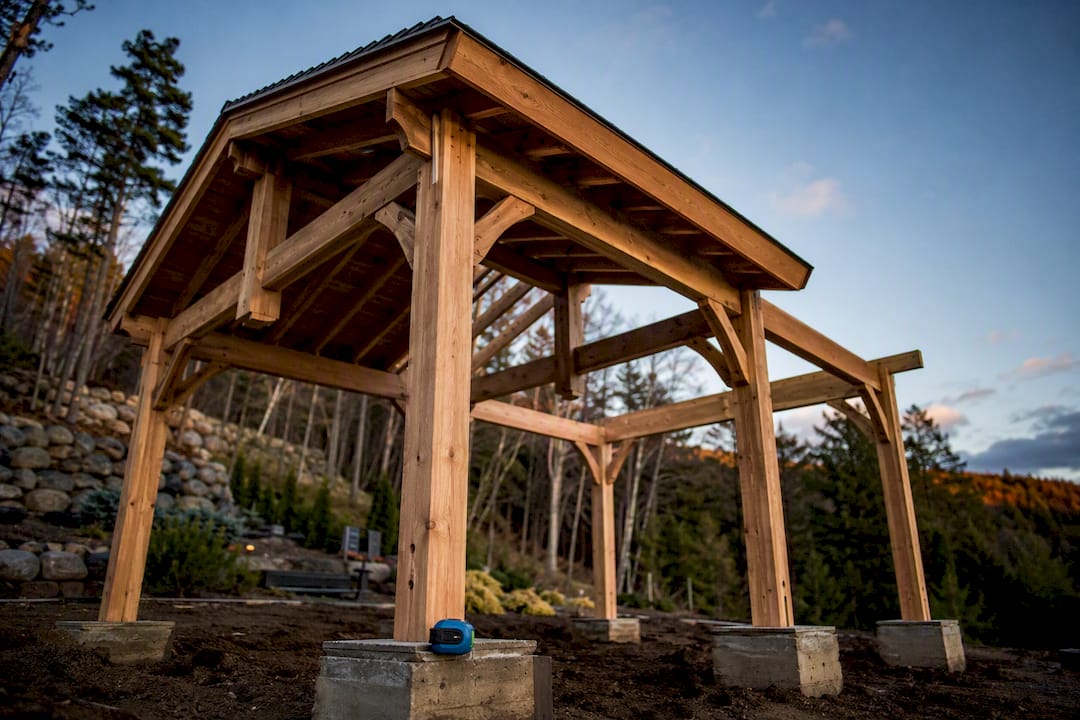
A fully installed gazebo typically costs $5,365 to $9,025, with a national average near $7,590. Size, material, and whether you buy a kit or go custom swing that number the most. Budget an extra $500 to $4,000 beyond the sticker price for footings, permits, and electrical work most homeowners forget to plan for.
TL;DR:
- The total installed cost for a gazebo ranges from $5,365 to $9,025, with size, material, and customization significantly affecting the final price.
- Material choices like cedar or vinyl can double or triple long-term durability and maintenance costs, making upfront expenses vary widely.
- Prefab kits typically cost $2,500 to $10,000 and are suitable for flat lots, while custom builds, costing $10,000 to $30,000, better fit complex or sloped sites.
- Hidden costs such as footings, permits, site prep, and electrical work often add $1,000 to $6,000 beyond initial estimates.
- Location impacts pricing, with labor and permits being 20-25% higher in the Northeast and West Coast, and achievable quotes depend on careful site evaluation and regional factors.
Table of Contents
- What Does a Gazebo Cost on Average?
- How Do Materials and Roofing Affect Gazebo Pricing?
- Prefab Kit or Custom Build: Which Costs Less Long Term?
- What Hidden Costs Come With Gazebo Installation?
- How Do You Get an Accurate Gazebo Quote?
- How Long Does a Gazebo Project Take, and Does Location Change the Price?
- What Do New England Contractors See on Real Gazebo Jobs?
- Your Pre-Call Checklist
- Ready for a Local, Itemized Gazebo Quote?
- Sources
What Does a Gazebo Cost on Average?
Most homeowners land somewhere between $5,365 and $9,025 for a fully installed gazebo, according to HomeGuide’s national pricing data. That range covers everything from a modest kit on a gravel base to a mid-size wood structure with a proper foundation. The extremes stretch much wider. On the low end, a bare-bones DIY kit can run as little as $325, while a custom, high-end build with premium roofing and electrical can top $27,000.
Per-square-foot pricing tells a clearer story once you know your footprint. Installed costs for wood gazebos commonly run $60.29 to $89.50 per square foot once labor, footings, and job supplies are factored in. Here’s how that translates across common sizes:
- 8×8 (64 sq. ft.): roughly $3,800 to $5,700 installed
- 10×10 (100 sq. ft.): roughly $6,000 to $9,000 installed
- 12×12 (144 sq. ft.): roughly $8,700 to $12,900 installed
- 14×14 (196 sq. ft.): roughly $11,800 to $17,500 installed
- 20×20 (400 sq. ft.): roughly $24,000 to $35,800 installed, typically custom-built
These are estimates, not quotes. A contractor still needs to see your yard, your grade, and your access before pricing anything with confidence.
How Do Materials and Roofing Affect Gazebo Pricing?
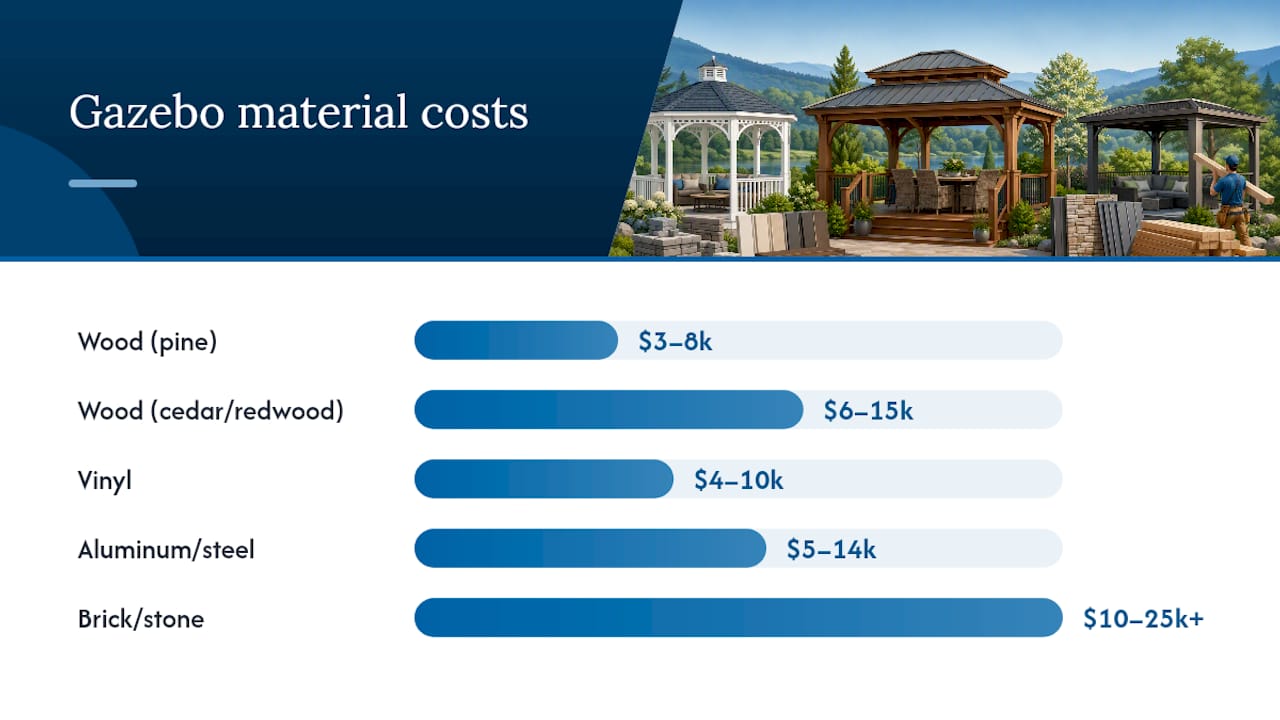
Material choice moves your budget more than almost any other decision, and it also decides how much upkeep you’re signing up for. Pressure-treated pine runs cheapest, cedar and redwood cost more upfront but resist rot and insects far better, vinyl trades a higher sticker price for near-zero maintenance, and aluminum or steel holds up best in coastal or high-wind areas. Brick and stone gazebos sit at the top of the price ladder and rarely make sense unless the structure is meant to be a permanent architectural feature.
- Wood (pressure-treated pine): $3,000 to $8,000, needs restaining every 2 to 3 years
- Wood (cedar or redwood): $6,000 to $15,000, naturally rot-resistant, ages well
- Vinyl: $4,000 to $10,000, minimal upkeep, doesn’t warp or peel
- Aluminum or steel: $5,000 to $14,000, best wind resistance, some rust risk near salt water
- Brick or stone: $10,000 to $25,000+, essentially permanent, highest cost
Roofing follows a similar pattern. Asphalt shingles are the budget default and match most house roofs, metal roofing costs more but can outlast the structure itself, cedar shake looks striking but demands regular sealing, and polycarbonate panels let in light while cutting weight and cost on smaller kits.
Pro Tip: In New Hampshire’s freeze-thaw cycles, untreated or budget pine often warps or cracks within five to seven years. Spending a few hundred dollars more upfront for cedar or pressure-treated lumber usually saves you a full rebuild down the road.
Prefab Kit or Custom Build: Which Costs Less Long Term?
The gap between a kit and a custom build isn’t just about upfront dollars. It’s about how long the structure lasts and how well it actually fits your property.
- Prefab kits (10×10 to 12×12): installed cost typically runs $2,500 to $10,000, with most 12×12 wood kits landing between $4,200 and $9,800. Installation takes days, not weeks, and the design is fixed to whatever the manufacturer offers.
- Custom builds: installed cost typically runs $10,000 to $30,000 or more, depending on footprint and finishes. You get full control over roofline, footprint, screening, and materials, but the process takes weeks to months and carries higher labor and design markup.
Kits make sense on flat, accessible lots where you want a straightforward upgrade fast. Custom builds earn their price on sloped yards, oddly shaped lots, or when the gazebo needs to match an existing deck or patio’s architecture. Homeguide’s cost data notes that custom structures tend to hold resale value better because they’re built to match the house rather than dropped in as an afterthought.
What Hidden Costs Come With Gazebo Installation?
The kit price on the box almost never reflects what you’ll actually pay. Foundation work is the biggest wildcard, especially in northern climates where footings need to reach frost depth to avoid heaving. That single line item is the most common source of budget overruns in states like New Hampshire.
- Footings: $100 to $400 each, with most gazebos needing four to six
- Foundation and permit costs combined: typically $500 to $2,500, more in areas with deep frost lines
- Site prep: grading, root removal, or improving access can add several hundred to a couple thousand dollars depending on lot conditions
- Electrical wiring and inspection: often $500 to $1,500 if you’re adding lighting, fans, or outlets
Sticker-price kits routinely leave out concrete footings, permit fees, delivery, and any electrical scope, which can add $1,000 to $6,000 once a contractor accounts for real site conditions. Skipping permits to save money is a real risk. It can trigger fines, complicate a future home sale, or force a teardown if the structure violates setback rules. If you’re also regrading the area around the footprint, our land grading cost guide breaks down what that work typically runs.
How Do You Get an Accurate Gazebo Quote?
Getting quotes that actually compare apples to apples takes a little prep work on your end.
- Take photos of the intended site from multiple angles, including any slope or drainage issues.
- Measure the footprint and note distance to property lines, since setback rules vary by town.
- Decide on material and roofing preferences before calling, so every contractor is pricing the same structure.
- Ask each contractor to specify footing depth and whether electrical work is included in the bid.
Most homeowners can handle painting, staining, and minor landscaping around the finished structure themselves. Leave footings, structural framing, and any electrical work to licensed pros. It’s not worth the liability.
Pro Tip: Choosing pressure-treated or cedar lumber over the cheapest available wood adds maybe 10 to 15 percent to material cost but can double the structure’s usable life before repairs are needed.
How Long Does a Gazebo Project Take, and Does Location Change the Price?
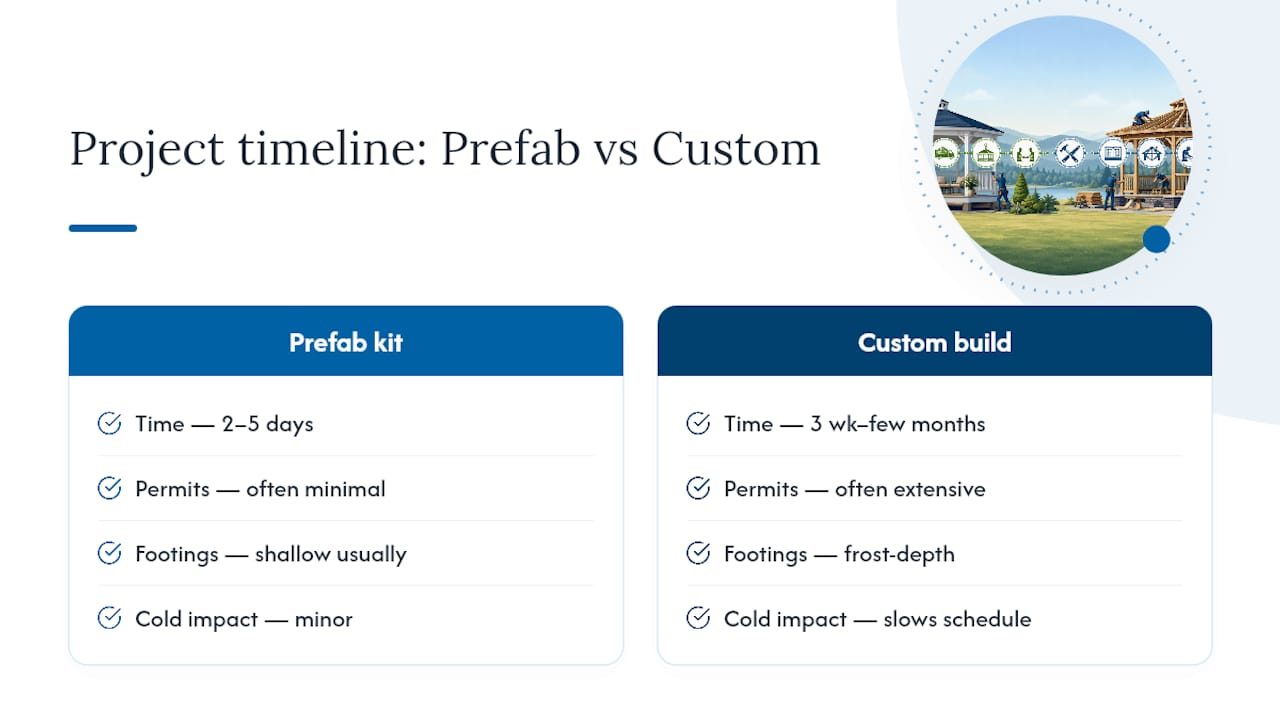
A prefab kit install usually wraps in two to five days once the crew is on site. A custom build runs anywhere from three weeks to a few months, depending on design complexity and permit turnaround. Frost-depth footing requirements and local permitting offices are the two biggest schedule variables, and both tend to move slower in colder states.
Location also shifts your final number more than most homeowners expect. Labor and permitting costs in the Northeast and West Coast run roughly 20 to 25 percent above the national baseline, while the Southeast often prices below it. If you’re comparing quotes from contractors in different states, normalize for that gap before assuming one bid is unreasonably high.
What Do New England Contractors See on Real Gazebo Jobs?
On real New Hampshire and Massachusetts properties, the surprises are predictable: unexpected ledge rock, poor drainage that needs correcting before footings go in, or a buried utility line nobody flagged. A properly itemized quote breaks out foundation work, materials, labor, and permit fees separately, so you know exactly what you’re paying for and where the hardscape and footing work fits into the total. You can browse finished projects in our outdoor living gallery, and our NH outdoor living cost guide covers regional pricing in more depth.
Your Pre-Call Checklist
Before contacting any installer: measure your footprint, photograph the site, and check your town’s setback rules. Ask about footing depth, permit responsibility, and total timeline. Add a 15 to 20 percent buffer to whatever number you land on.
— Damian
Ready for a Local, Itemized Gazebo Quote?
Divine Landscaping LLC gives New Hampshire and Massachusetts homeowners something a national kit price can’t: a quote built around your actual soil, grade, and setback rules, not a generic average. That’s the real gap between an online calculator and a contractor who’s dug footings through New England frost lines for years. Our team handles site evaluation, permit paperwork, footing and foundation work, and finish carpentry as one coordinated project, so nothing gets discovered halfway through the build.
If you’re also weighing patios, decks, or retaining walls alongside a gazebo, our hardscape services page covers how those projects can be bundled to save on site prep. For a broader look at how contractor pricing works in this region, the general construction cost factors that drive labor and material bids apply here too. Ready to get real numbers for your yard? Request a project quote and we’ll walk your site before we ever write a price.
Sources
- How Much Does a Gazebo Cost? | HomeGuide
- How much does a gazebo cost? | Lawn Love
- Cost to Install Wood Gazebo – Homewyse
- Gazebo Install Cost Calculator — UseCalcPro