
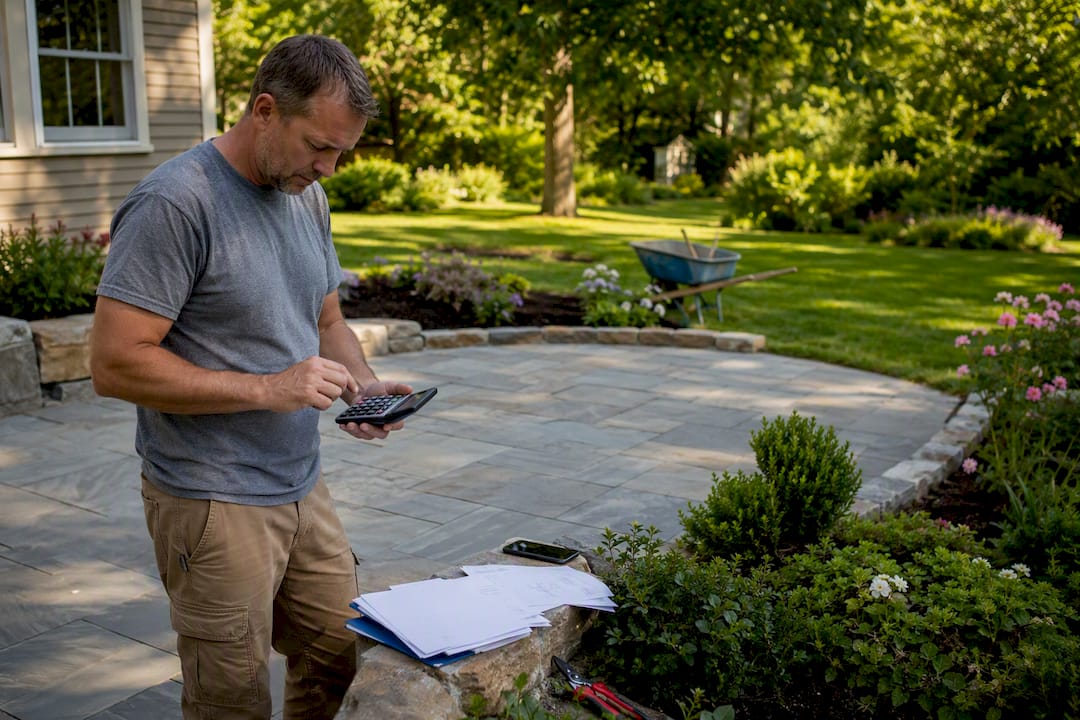
For a $5,000 to $50,000 patio or hardscape project, a personal loan is usually your best route: it’s fast, unsecured, and gives you a fixed payment you can plan around. For anything above $50,000, especially a multi-phase outdoor living build, a HELOC or home equity loan almost always beats an unsecured loan on rate and term length.
Contractor or vendor financing deserves a look at any project size, but treat it as one quote to compare, not the automatic winner. Personal loan APRs for landscaping commonly run 6% to 36%. Funding can land same day to a few days, and most reputable lenders let you prequalify with a soft credit check that won’t ding your score.
- Small (<$5,000): store card 0% promo or short personal loan
- Medium ($5,000 to $50,000): personal loan for speed and predictability
- Large (>$50,000): HELOC or home equity loan for lower rates over longer terms
- Contractor financing: compare it against these, don’t default to it
Key Takeaways
Match financing to project size: cards or short personal loans under $5,000, personal loans for $5,000 to $50,000, and HELOCs or home equity loans above $50,000.
| Point | Details |
|---|---|
| Personal loans dominate mid-range | APRs run 6% to 36% with funding in one to three days for most $5k to $50k projects. |
| Equity financing wins on large builds | HELOCs and home equity loans offer lower rates but take several weeks to close. |
| Store cards carry deferred-interest risk | 0% promos often run 12 to 24 months but can charge retroactive interest if unpaid. |
| Prequalify before applying | Soft credit checks with two or three lenders reveal real rates without hurting your score. |
| Align financing to contractor milestones | Divine Landscaping LLC structures deposits and staged draws to match your financing disbursement schedule. |
This article is general information, not a substitute for advice from a qualified financial advisor. Consult a qualified financial professional about your own circumstances before acting on anything here.
Table of Contents
- Comparing Your Landscaping Financing Options
- Personal Loans: The Default for Mid-Size Projects
- Home Equity Loan vs. HELOC for Larger Builds
- Contractor Financing and Store Cards: Read the Fine Print
- Your Financing Decision Checklist
- Real-World Examples by Project Size
- Field Notes on Contractor Payment Schedules
- How Financing Affects Your Credit and Future Borrowing
- Tax Considerations Homeowners Should Know
- Eligibility and Credit Requirements Across Financing Options
- Why Project Size Should Drive Your Financing Choice
- Let Divine Landscaping LLC Help You Plan the Budget Side, Too
- Sources
Comparing Your Landscaping Financing Options
Every financing route trades speed for cost differently, and seeing them side by side makes that trade-off obvious fast.
| Financing Route | Best For | Collateral Required | Typical APR Range | Funding Speed | Pros / Cons |
|---|---|---|---|---|---|
| Personal loan | Mid-size projects ($5k–$50k) | None | 6%–36% | Same day to a few days | Fast, predictable; rate depends heavily on credit |
| HELOC | Phased or large builds | Home equity | Generally lower than unsecured loans | Several weeks | Revolving, flexible draws; appraisal and closing costs |
| Home equity loan | Large, single-phase builds | Home equity | Generally lower than unsecured loans | Several weeks | Fixed lump sum, predictable; home is on the line |
| Contractor/vendor financing | Convenience, staged jobs | Varies by program | Varies widely | Same day to days | Easy signup; terms vary, get them in writing |
| Store 0% promo card | Materials-only small buys | None | 0% intro, then standard card APR | Instant | Cheap if paid off; deferred-interest risk |
| Credit union loan | Members seeking lower fees | None (unsecured) | Often competitive with bank personal loans | Days | Member-focused service and lower fees, but membership required |
Unsecured options win on speed and simplicity for jobs under $50,000. Secured options win on cost once your project size justifies the appraisal wait and closing fees. Every APR here depends on your credit profile and the specific lender, so treat these ranges as a starting point for comparison, not a quote.
Personal Loans: The Default for Mid-Size Projects
A personal loan is an unsecured lump sum with a fixed rate and a fixed monthly payment, and it’s why so many homeowners use it to fund a new patio or retaining wall. National lenders including LightStream, Upgrade, Happen Bank (formerly LendingClub), Best Egg, Rocket Loans, and Prosper all serve this space, with APRs typically landing between 6% and 36% depending on credit and terms stretching two to seven years.
Homeowners choose personal loans because there’s no appraisal, no lien on the house, and funding often arrives in one to three business days once approved. They make less sense once your project climbs past $50,000, where a lower-rate secured option can save thousands over the loan term.
- No collateral, no home equity required
- Fixed payment makes budgeting simple
- Best matched to $5,000 to $50,000 projects
Pro Tip: Prequalify with two or three lenders using their soft-pull tools before applying formally. You’ll see real rate estimates without any hit to your credit score.
Home Equity Loan vs. HELOC for Larger Builds
A home equity loan hands you a fixed lump sum at a fixed rate. A HELOC works more like a credit line you draw against as costs come in, which fits a phased outdoor living build better than a one-time disbursement. Both typically require an appraisal and several weeks to close, a real trade-off against the days it takes to fund a personal loan.
The payoff is rate. Tapping equity generally beats unsecured borrowing on cost once a project passes roughly $50,000, especially for a full backyard renovation with a phased installation schedule.
- Home equity loan: fixed lump sum, single draw, predictable payment
- HELOC: revolving credit, draw as each phase begins
- Both use your home as collateral, so budget conservatively
Contractor Financing and Store Cards: Read the Fine Print
Contractor financing comes in two flavors: in-house payment plans the landscaper manages directly, or a third-party lender program the contractor simply connects you to. The second is more common, and it’s worth asking which one you’re being offered.
Store cards from major home improvement retailers often run 0% promotional periods of 12 to 24 months, but most are deferred-interest offers. Miss the payoff date and you can owe interest retroactive to the purchase date.
- Ask who the lender actually is and who gets paid directly.
- Confirm whether the promo covers materials only or labor too.
- Get prepayment terms and portability in writing before signing.
- Walk away from balloon payments or any APR that isn’t disclosed after the promo ends.
Pro Tip: Contractor financing terms vary widely between programs, so ask for the written agreement and compare its total cost against a personal loan quote before you sign anything.
Credit Cards: Fine for Small Buys, Risky for Big Ones
Financial analysts warn that credit cards are rarely cost-effective for large landscaping projects once the standard APR, often 20% or higher, kicks back in.
- Use cards only for purchases you can clear before the promo ends
- Rewards cards can offset small costs, not replace real financing
Your Financing Decision Checklist
Comparing offers fairly means asking the same questions of every lender and contractor, in the same order, every time.
- Define your project scope and get a written estimate.
- Set your budget, including a buffer for change orders.
- Prequalify with two or three lenders using soft credit checks.
- Compare APR, fees, term length, and funding speed side by side.
- Get final terms in writing before signing anything.
Ask lenders directly: Is this a soft or hard credit pull? What’s the origination fee? Is there a prepayment penalty? How fast can funds actually reach my account?
Ask your contractor: Who does the financing company pay, me or you? What does the staged-payment schedule look like? How are change orders billed against my financing?
- Never skip the “written terms” step, even for a trusted local contractor
- A renovation financing guide can help you understand standard borrower protections before you sign
Real-World Examples by Project Size
Seeing sample numbers next to each project size makes the trade-offs concrete rather than theoretical.
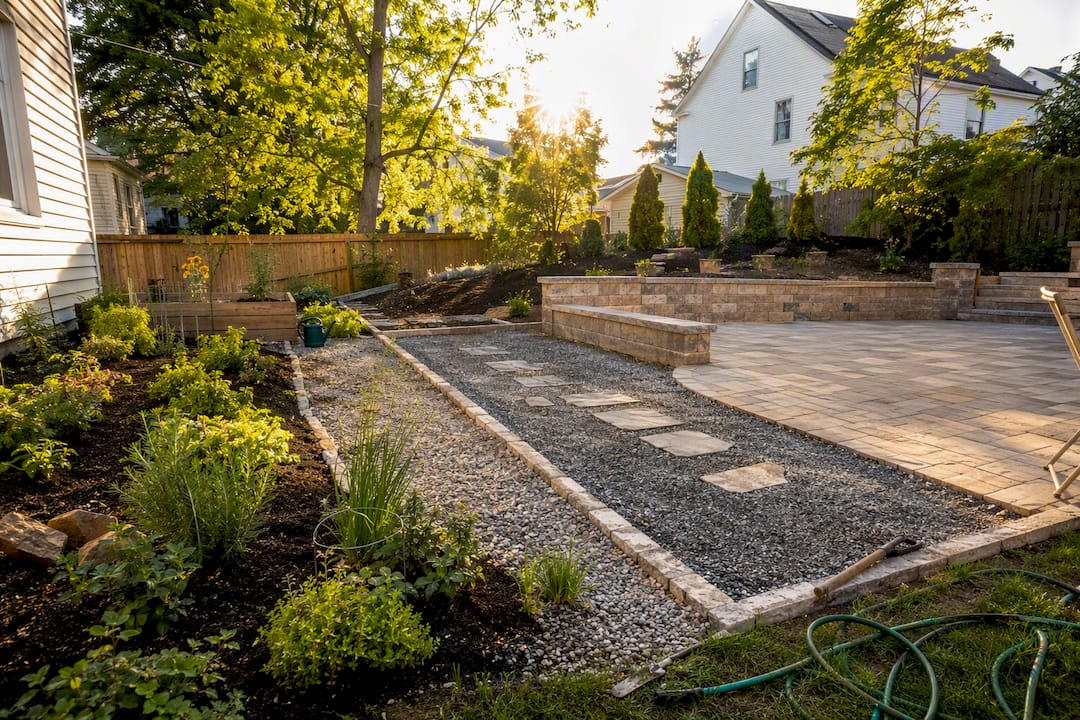
Average landscaping project costs hover around $3,517, according to Angi data cited in industry lender resources, though full installs can run well past that depending on scope. Interest on financing tied to home improvements may carry tax implications specific to your situation, so confirm details with a tax advisor before you file.
Field Notes on Contractor Payment Schedules
Most landscaping contractors, Divine Landscaping LLC included, work off a deposit of roughly 10% to 30%, with the remaining balance released in staged draws tied to milestones like grading completion, hardscape install, and final walkthrough.
Aligning your financing disbursement schedule to those same milestones avoids the cash-flow crunch that hits homeowners who draw a lump sum too early or too late relative to the work completed.
Divine Landscaping LLC typically requests a signed estimate and a phased-payment agreement upfront, which also happens to be exactly what a HELOC lender wants to see before releasing a draw.
- Deposits: usually 10% to 30% of total project cost
- Staged draws: tied to completed phases, not calendar dates
- Documentation: signed estimate and payment schedule requested upfront
How Financing Affects Your Credit and Future Borrowing
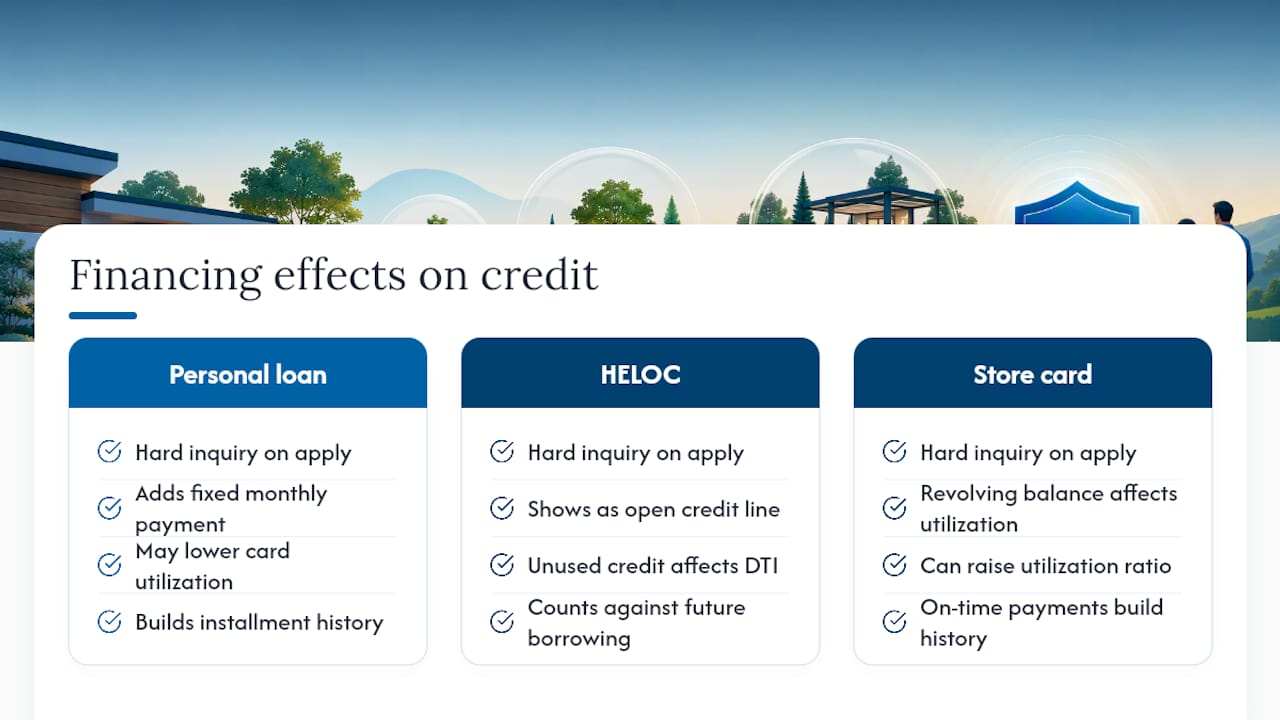
Any new loan or card shows up on your credit report and can move your score in both directions. A hard inquiry from a formal loan application typically dings your score by a few points temporarily, which is exactly why prequalifying with soft credit checks first matters before you commit to a full application.
Opening a personal loan adds to your total debt and can lower your credit utilization ratio in a good way if it replaces revolving card balances, but it also adds a fixed monthly obligation lenders will weigh against your income on future applications. A HELOC works differently: it sits on your credit report as an open line, and even unused available credit affects your debt-to-income calculation when you apply for a mortgage refinance or another loan down the road.
Missing payments on any landscaping financing, whether it’s a personal loan, a HELOC, or a store card, reports to the credit bureaus the same way a missed car payment would. That’s a real risk if a project runs over budget and you stretch to cover monthly payments you didn’t fully plan for.
The upside: consistent on-time payments on an installment loan build payment history, the single largest factor in most credit scoring models. Homeowners who finance a landscaping project responsibly, and pay it off on schedule, often see it help their credit mix and history rather than hurt it. The key is borrowing an amount your monthly budget can absorb without strain, not the maximum amount a lender approves you for.
Tax Considerations Homeowners Should Know
Interest on a HELOC or home equity loan can potentially be tax deductible if the funds are used to “buy, build, or substantially improve” the home securing the loan, a standard the IRS applies to home equity debt. A landscaping project like a new patio, retaining wall, or drainage system can often qualify under that standard, but the deduction depends on your total mortgage debt, whether you itemize, and current IRS limits.
Personal loan interest, by contrast, generally isn’t deductible regardless of what you spend it on, since it isn’t secured by the home. That’s one more reason a HELOC or home equity loan can be the more attractive option for a large project, beyond just the lower rate.
None of this is a substitute for professional tax advice specific to your return. Rules around home equity debt deductibility have shifted in recent years, and your itemizing status, mortgage balance, and state tax treatment all factor into whether a deduction applies to you. Talk to a tax professional before assuming any landscaping financing interest is deductible, and keep your contractor invoices and loan documents organized in case you need to substantiate the improvement.
Eligibility and Credit Requirements Across Financing Options
Lenders differ meaningfully in what they’ll approve and at what rate. Personal loan approval generally hinges on credit score, income, and debt-to-income ratio; most online lenders want a score in the mid-600s or better for competitive rates, though some approve lower scores at higher APRs.
Store cards and contractor financing tend to have the lowest bar for approval, sometimes issued instantly with a basic credit check, which is part of why the promotional terms often carry more risk if you don’t pay attention to the fine print. Credit unions, meanwhile, frequently extend more flexible underwriting to members with an existing relationship, even when a credit score alone might not clear a big bank’s cutoff.
Whichever route you’re considering, prequalifying with soft credit checks across two or three lenders lets you see real approval odds and rate estimates before a hard inquiry touches your file. That single step separates homeowners who get a fair rate from homeowners who accept the first offer they see.
Why Project Size Should Drive Your Financing Choice
Most financing advice online treats these products as interchangeable, ranked by APR alone. That’s backward. The right question isn’t “what’s the cheapest loan,” it’s “what’s the cheapest loan for a project this size, funded on this timeline.” A $3,000 mulch-and-planting refresh doesn’t need a HELOC’s six-week closing process, and a $75,000 outdoor living build shouldn’t lean on a personal loan’s higher rate ceiling when equity financing sits right there.
The overlooked variable is contractor logistics. Homeowners fixate on APR comparisons and forget that a mismatched funding timeline, a HELOC that takes five weeks to close against a contractor who needs a deposit next week, creates real friction. Matching your financing timeline to your contractor’s staged-payment schedule matters as much as the rate itself.
My take: prequalify before you fall in love with a design. Get real rate estimates on two or three products, then bring that number to your contractor conversation. Homeowners who finance first and design second make better decisions than those who do it the other way around.
— Damian
Let Divine Landscaping LLC Help You Plan the Budget Side, Too
Financing only works if it’s matched to a realistic project estimate, and that’s where Divine Landscaping LLC comes in before you ever sign a loan agreement. We provide detailed project estimates, plan phased installations around your budget, and coordinate invoicing so your financing draws land exactly when each phase of work is billed, not before, not after.
Homeowners across New Hampshire and neighboring Massachusetts communities work with us to scope a project first, whether that’s a new patio, a retaining wall, or a full outdoor living space, so you walk into a lender conversation with real numbers instead of a guess. If you’re ready to size your project and see what a phased payment plan could look like, request a quote and we’ll help you map the budget before you commit to any financing.