
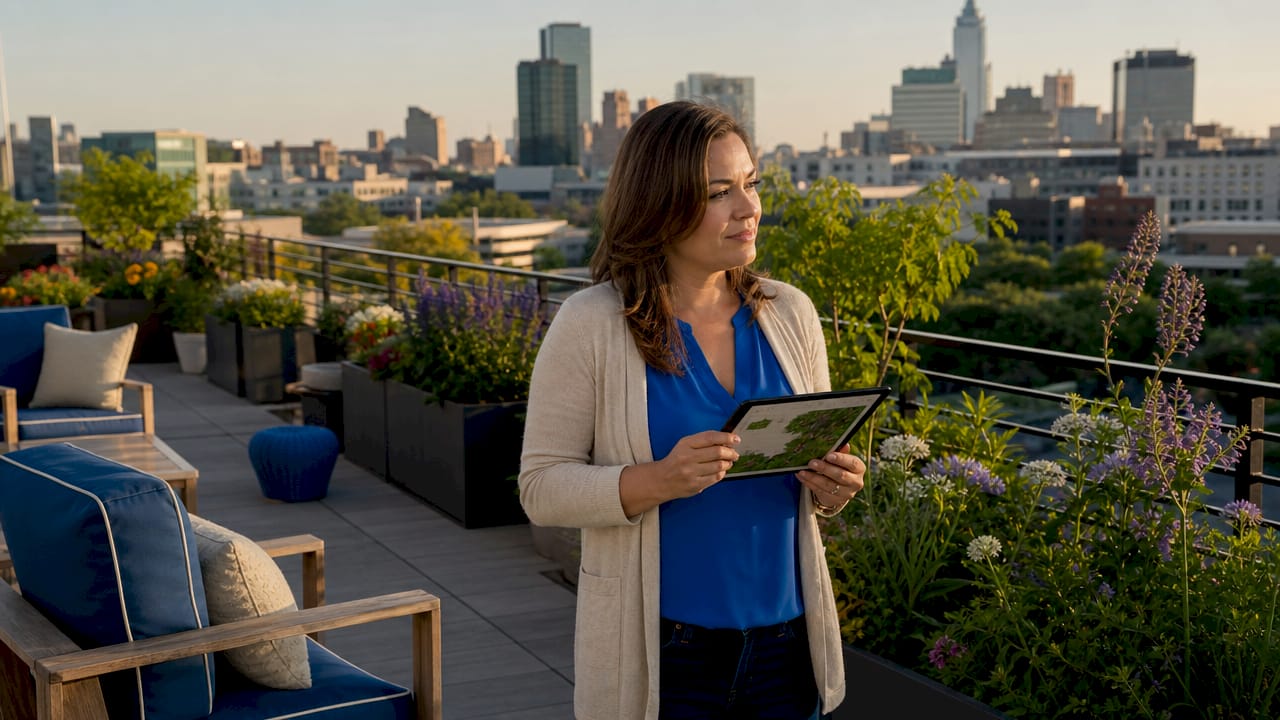
Multi-tenant property landscaping design is the practice of planning, building, and maintaining shared outdoor spaces across apartment complexes and commercial properties to serve multiple residents simultaneously. Done well, it raises curb appeal, supports tenant retention, and protects long-term property value. Done poorly, it creates liability, resident complaints, and reactive maintenance costs that compound quickly. Apartment landscape renovations typically range from $50,000 to $300,000 or more, which means every design decision carries real financial weight. This guide gives property managers a clear framework for planning, executing, and sustaining shared outdoor spaces that tenants actually use.
How to design multi-tenant property landscaping that works
Multi-tenant landscaping design, known in the industry as multifamily landscape architecture, differs from residential work in one critical way: every decision must serve dozens of people with different habits, schedules, and preferences. A single homeowner can tolerate a muddy path for a week. Your tenants will file complaints by day two.
The scope of a well-designed shared property covers turf areas, planting beds, walkways, lighting, irrigation, hardscape gathering spaces, and tree canopy. Each element connects to the others. Poor drainage under a patio causes turf failure nearby. Overgrown trees block lighting and create safety gaps. Treating these systems as separate line items is the most common and costly mistake property managers make.
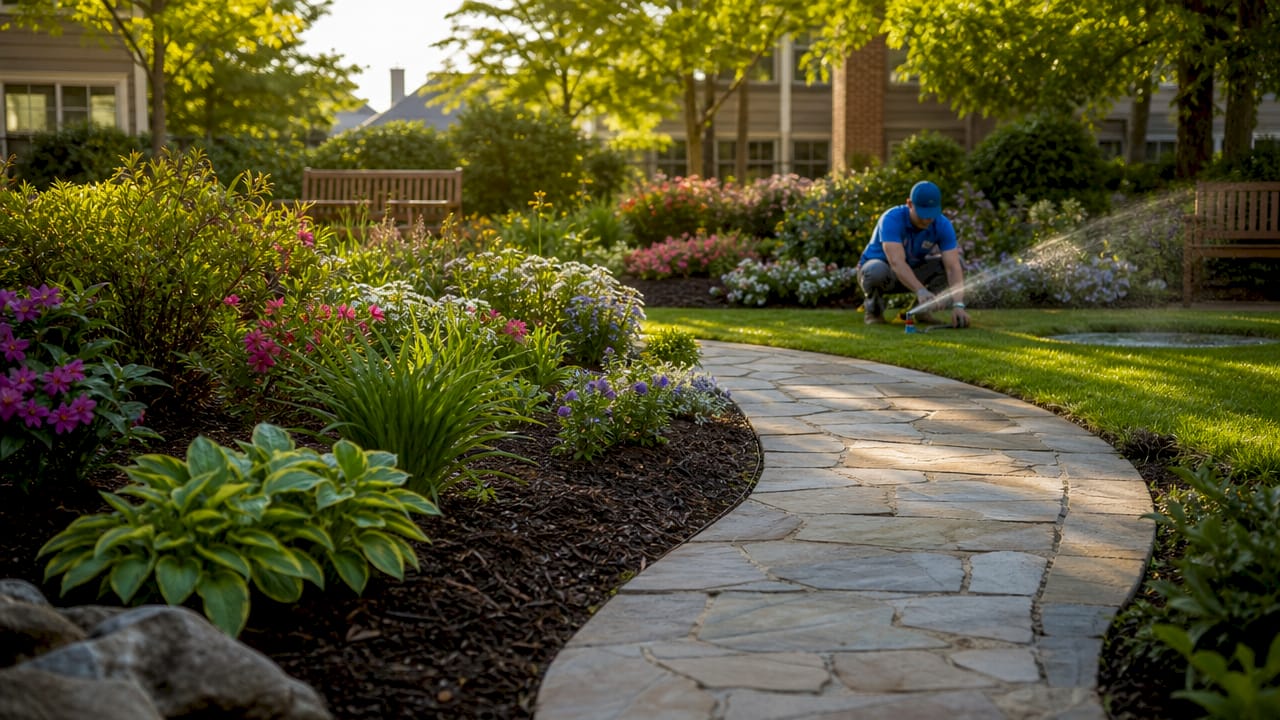
Successful property landscaping designs also reinforce property identity. A cohesive outdoor environment signals to prospective tenants that management cares about the community. That perception directly affects leasing velocity and the rent premium a property can command.
What should you assess before starting a landscaping project?
Start with a full site audit before spending a dollar on design. Walk every zone of the property and document existing soil conditions, drainage patterns, irrigation coverage, and hardscape integrity. Identify which areas tenants already use and which they avoid. Avoidance patterns reveal problems: poor lighting, no shade, uncomfortable surfaces, or lack of seating.
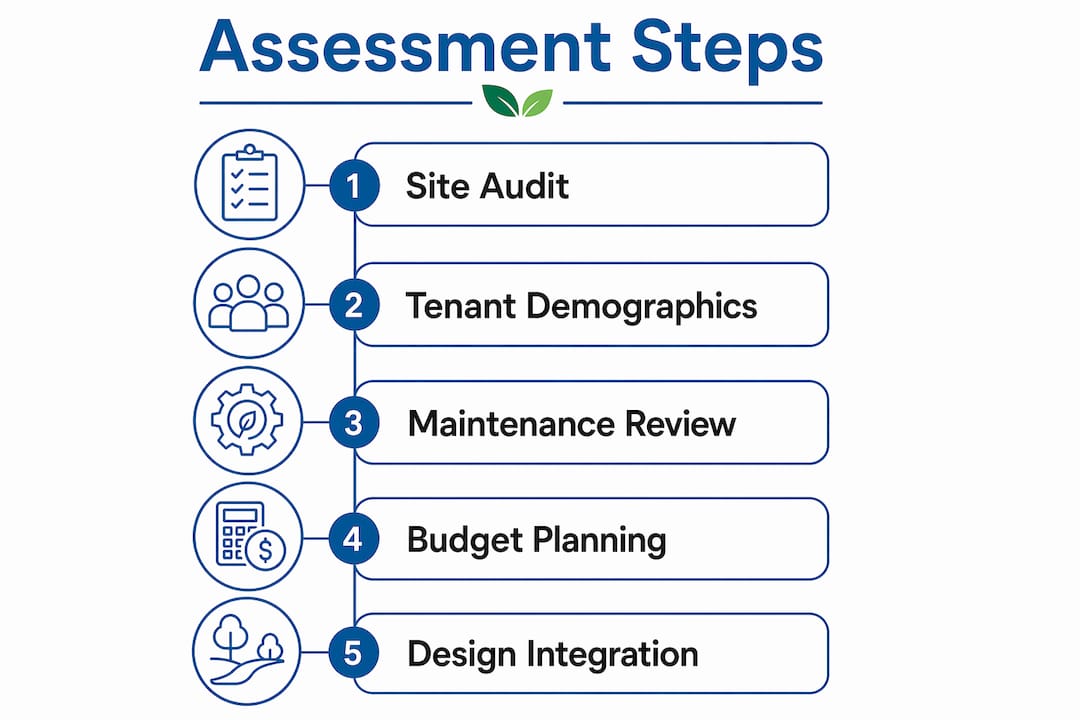
Tenant demographics shape design priorities. A property with young families needs safe turf play areas and clear sightlines. A workforce housing complex benefits more from shaded seating and covered walkways. Skipping this step produces beautiful spaces that nobody uses.
Budgeting for multifamily landscaping works best when costs are treated as capital improvements rather than operating expenses. That classification allows you to spread costs across multiple fiscal years and justify larger upfront investments. Entry and leasing office renovations typically cost $20,000–$60,000. Walkway and lighting replacements run $30,000–$80,000 per cluster. Turf conversions in common areas cost $6–$12 per square foot.
| Service category | Recommended frequency |
|---|---|
| Turf maintenance | Weekly or biweekly |
| Planting bed care | Monthly or bimonthly |
| Irrigation checks | As needed, plus seasonal startup/shutdown |
| Tree care | Annually |
| Seasonal cleanups | Biannual |
| Hardscape maintenance | Aligned with mowing schedule |
- Audit soil drainage before selecting plant species
- Map existing irrigation zones to identify dead spots
- Document all hardscape cracks, trip hazards, and lighting gaps
- Survey tenants or review maintenance request logs for recurring complaints
- Confirm utility line locations before any excavation
Pro Tip: Request three years of maintenance invoices before finalizing your budget. Reactive repair patterns in those records will show you exactly where the design is failing.
How do you design outdoor spaces that are safe, usable, and attractive?
The best tenant-friendly outdoor spaces balance three things: comfort, safety, and visual coherence. Comfort drives usage. Safety reduces liability. Visual coherence builds property identity.
Shade is the single most underinvested element in multifamily outdoor design. Layered shade using trees, trellises, and cabanas promotes tenant outdoor space usage and improves return on investment. In New Hampshire and New England climates, this means selecting deciduous trees that provide summer canopy and allow winter sun. Pair tree canopy with pergolas or shade sails over seating areas to create usable space even on the hottest days.
Landscape architects emphasize choreographing the transition from indoor to outdoor amenities to build a unified tenant experience. This means your lobby entrance, leasing office exterior, and first outdoor gathering space should feel like one continuous environment. Use consistent paving materials, coordinated plant palettes, and matching lighting fixtures to carry the design language from inside to outside.
Safety features belong in the design plan from day one, not as afterthoughts. Proactive tree pruning and 24/7 monitoring reduce slip-and-fall liability and tenant complaints. Lighting placement should eliminate dark corridors between buildings. Camera-friendly sight lines, open sightlines near parking areas, and well-lit pet zones all reduce incidents before they happen.
- Design quiet zones with seating away from high-traffic paths
- Create social zones near amenity buildings with tables, grills, and shade
- Include active zones with open turf or fitness equipment for physical activity
- Use native or climate-adapted plants to lower water and labor costs
- Layer plantings at varying heights to add depth and year-round visual interest
“A successful landscape design creates a cohesive story with integrated hardscape and softscape that reinforces property brand.” — HCM Design
Pro Tip: Choose lighter-colored hardscape materials in sun-exposed areas. They absorb less heat, stay cooler underfoot, and keep outdoor spaces usable through summer afternoons.
What are the recommended phases for executing a landscaping renovation?
Renovations spanning 8–16 weeks in phases protect occupancy and keep the leasing office accessible throughout the project. Rushing all work into a single construction window disrupts residents and creates a poor first impression for prospective tenants touring the property.
- Phase 1: Entry and leasing office (weeks 1–2). Start here because it delivers immediate visual impact and sets the tone for the full renovation. Replace worn plantings, repair walkways, add lighting, and refresh mulch beds. This phase costs $20,000–$60,000 and produces results visible to every person who visits the property.
- Phase 2: Walkways and lighting (weeks 3–10). Work building by building or by zone to avoid blocking resident access. Replace cracked concrete or asphalt paths with pavers or brushed concrete. Upgrade pathway lighting to LED fixtures with consistent color temperature. Budget $30,000–$80,000 per cluster depending on scope.
- Phase 3: Common areas, pet zones, and amenity spaces (weeks 11–16). This is the highest-impact phase for tenant satisfaction. Install or renovate turf areas, add shade structures, build out seating nodes, and complete pet relief stations with proper drainage. Turf conversion runs $6–$12 per square foot.
| Phase | Scope | Typical timeline |
|---|---|---|
| Entry and leasing office | Plantings, walkways, lighting, mulch | 1–2 weeks |
| Walkways and lighting | Path replacement, LED upgrades | 4–8 weeks |
| Common areas and amenities | Turf, shade, seating, pet zones | 4–6 weeks |
Communicate with tenants before each phase begins. Post notices at building entrances, send email updates, and mark construction zones clearly. Residents who feel informed tolerate disruption far better than those who are surprised by it.
What maintenance strategies keep shared landscaping looking sharp?
Effective multifamily landscaping requires six service categories to prevent costly reactive repairs. Skipping any one of them creates a gap that compounds over time. Turf that goes unmowed for three weeks requires double the labor to restore. Irrigation systems that miss seasonal startup checks fail mid-summer when demand peaks.
Vendor consolidation and scheduled maintenance contracts reduce costs and improve service quality. On-call landscaping produces reactive costs and more resident complaints. A single vendor managing turf, beds, irrigation, and seasonal cleanups can coordinate schedules, spot cross-system problems early, and respond faster when issues arise.
Proactive maintenance also reduces insurance exposure. Safety-focused maintenance practices like scheduled tree inspections and prompt ice removal lower slip-and-fall risk. That risk reduction translates directly to lower insurance premiums and fewer legal claims over time.
- Schedule turf cuts weekly during peak growing season, biweekly in slower months
- Inspect and adjust irrigation heads monthly during the active season
- Book annual tree assessments every fall before winter storm season
- Complete biannual cleanups in spring and late fall to reset planting beds
- Align hardscape inspections with mowing visits to catch cracks and trip hazards early
Pro Tip: Build a simple tenant reporting system, a QR code posted near common areas that links to a maintenance request form. Residents who can report issues easily do so faster, and early reports prevent small problems from becoming expensive ones.
Regional climate discipline matters. In New Hampshire, irrigation systems need a full winterization shutdown before the first hard freeze. Planting selections must tolerate cold winters and hot, humid summers. Choosing plants outside that tolerance range means replacing them every two to three years, which is one of the most avoidable budget drains in multifamily landscaping.
Key takeaways
Successful multi-tenant landscaping requires phased execution, six core maintenance categories, and a design plan that connects safety, comfort, and property identity from day one.
| Point | Details |
|---|---|
| Treat costs as capital improvements | Budget landscaping renovations as capital projects to spread costs and justify larger investments. |
| Phase work to protect occupancy | Execute renovations in three phases over 8–16 weeks to avoid disrupting residents or leasing activity. |
| Design for comfort and safety together | Layer shade, use lighter hardscape, and plan lighting to make outdoor spaces usable and liability-free. |
| Use native plants to cut long-term costs | Climate-adapted species lower water use, reduce replacements, and maintain year-round visual appeal. |
| Consolidate vendors and schedule contracts | A single maintenance vendor covering all six service categories reduces reactive costs and complaints. |
What I’ve learned designing shared outdoor spaces
After working on multifamily and shared-property projects, the pattern I see most often is this: property managers invest in the design and skip the maintenance plan. The result is a beautiful property at ribbon-cutting that looks tired within 18 months.
The design and the maintenance plan have to be built together. Every plant species you select has a maintenance cost attached to it. Every hardscape material has a cleaning and repair schedule. If your maintenance budget cannot support the design you chose, the design is wrong for your property.
The other lesson is about tenant usage patterns. Tenants do not use outdoor spaces because they exist. They use them because those spaces are comfortable, feel safe, and are easy to reach from their unit. A seating area tucked behind a building with no shade and no lighting will sit empty regardless of how much it cost to build. Design for the path of least resistance. Put amenities where people already walk, add shade, add light, and watch the space come alive.
The phased approach is not just a construction convenience. It is a communication tool. When tenants see Phase 1 completed and looking sharp, they trust that Phase 2 will follow. That trust reduces complaints during active construction and builds goodwill that carries into lease renewals.
Finally, the indoor-to-outdoor transition is the most underused design opportunity in multifamily properties. The moment a prospective tenant walks from your leasing office to the first outdoor space is a leasing moment. Make it count.
— Damian
Divinelandscapingllc can design your shared outdoor spaces
Property managers across New Hampshire trust Divinelandscapingllc to plan and build shared outdoor spaces that hold up through heavy use and New England weather. From landscape design and planting plans to hardscape services like walkways, patios, and retaining walls, the team handles every phase of a multifamily renovation.
Divinelandscapingllc also installs and maintains irrigation and lighting systems built for the demands of shared properties. Whether you are planning a full phased renovation or need a maintenance program that covers all six service categories, the team can build a plan around your property’s specific conditions and budget. Request a quote to get a site assessment and a clear scope for your next project.
FAQ
What does multi-tenant landscaping design typically cost?
Apartment landscape renovations range from $50,000 to $300,000 or more depending on property size and scope. Entry renovations start around $20,000, while full common area conversions can exceed $80,000 per zone.
How long does a multifamily landscaping renovation take?
Most renovations run 8–16 weeks when executed in phases. Phasing by zone or building keeps the leasing office accessible and minimizes disruption to current residents.
What plants work best for shared property landscaping?
Native and climate-adapted species are the best choice for shared properties. They require less water, tolerate local weather extremes, and need replacement far less often than non-native ornamentals.
Should landscaping maintenance be handled by one vendor or multiple?
One consolidated vendor covering turf, beds, irrigation, tree care, and seasonal cleanups produces better results than multiple on-call contractors. Consolidated contracts reduce reactive costs and improve response times when problems arise.
How do you make outdoor spaces safer for tenants?
Proactive tree pruning, consistent LED pathway lighting, and scheduled ice and snow monitoring are the three most effective safety measures. These practices reduce slip-and-fall liability and lower insurance risk over time.
Recommended