
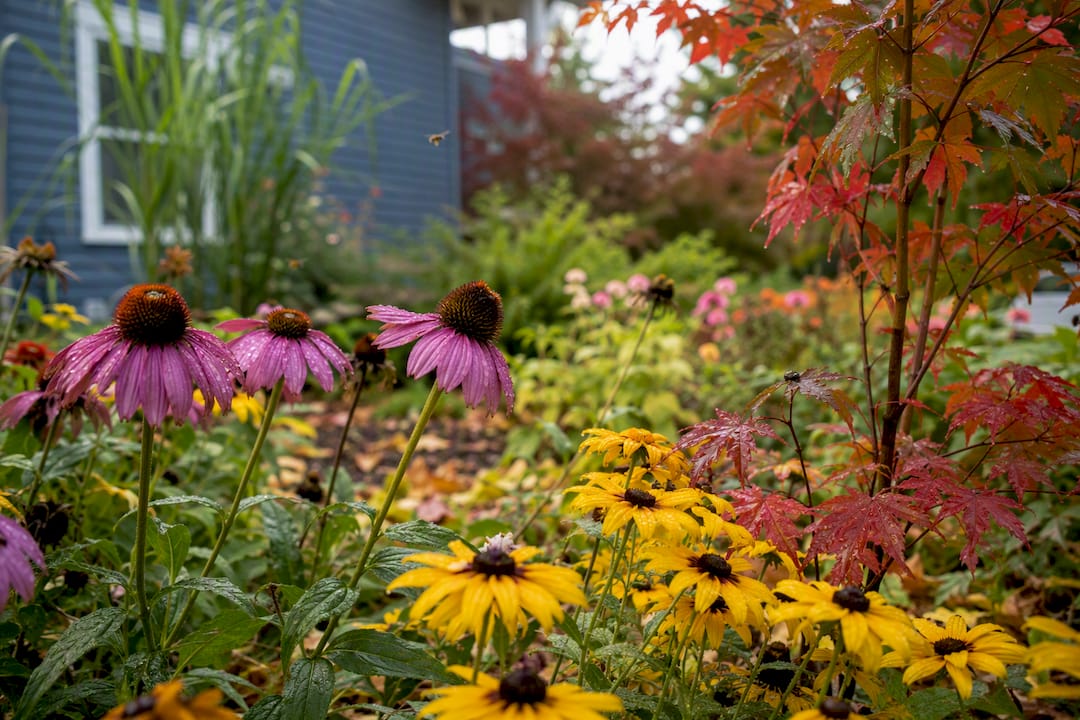
If you want a native New Hampshire plants list you can act on this weekend, start here: red maple, black-eyed Susan, purple coneflower, little bluestem, yarrow, winterberry, and chokeberry cover most yards in the Granite State, from full-sun slopes to damp low spots.
For the complete, official rundown, the NH Division of Forests and Lands native plants page and UNH Extension’s native shrub resource are the two downloads worth bookmarking before you buy a single plant.
Here’s a quick starter set to scan before you dig deeper:
- Red maple (Acer rubrum): Sun to partial shade, tolerates wet soil.
- Black-eyed Susan (Rudbeckia fulgida): Full sun, average to dry soil.
- Purple coneflower (Echinacea purpurea): Full sun, drought tolerant once established.
- Little bluestem (Schizachyrium scoparium): Full sun, sandy or lean soil.
- Common yarrow (Achillea millefolium): Full sun, thrives in poor soil.
- Winterberry holly: Sun to shade, wet to moist soil.
- New England aster: Sun, average moisture.
New Hampshire spans USDA Plant Hardiness Zones 3b to 6b, so a plant that thrives in Portsmouth may struggle in Berlin. Divine Landscaping LLC works with these zone differences daily, and drainage, not just cold tolerance, decides whether a native plant actually survives its first New Hampshire winter.
Key Takeaways
Matching native species to your site’s zone, sun, and drainage matters more than any single plant choice on this list.
| Point | Details |
|---|---|
| Start with 3 to 5 species | Choose keystone natives like red maple, black-eyed Susan, and little bluestem before expanding further. |
| Zone down by one | Pick plants rated for one zone colder than your site’s minimum to cover microclimates. |
| Drainage beats hardiness | Even drought-tolerant natives fail in poorly drained spots that stay wet in spring. |
| Buy from specialists | Local native nurseries and sellers like Izel Native Plants offer regionally propagated stock. |
| Water through establishment | New plantings need consistent moisture for weeks after planting, regardless of species. |
Table of Contents
- Curated Starter List: 12 Native Plants for New Hampshire Yards
- Where Can You Find Complete New Hampshire Plant Lists?
- How Do You Choose Plants for Your Specific Site?
- Where to Buy Native New Hampshire Plants
- Why Native Plants Matter, and How to Get Them Established
- Frequently Asked Questions
- Sources
Curated Starter List: 12 Native Plants for New Hampshire Yards
Every plant on this list earns its spot because it solves a real problem homeowners bring to us: a soggy corner, a hot dry slope, a lawn that needs less mowing. This isn’t a botanical survey. It’s a working list built for the sites you actually have.
Trees
- Red maple (Acer rubrum): Handles wet feet better than almost any shade tree in the state; brilliant fall color and strong wildlife value for birds and pollinators.
- Eastern white pine (Pinus strobus): Fast-growing screen tree for sun; tolerates a wide range of soils across the state’s varied terrain.
- Serviceberry (Amelanchier canadensis): Small understory tree, part sun; early spring flowers feed pollinators before most other plants wake up.
Shrubs
- Winterberry holly (Ilex verticillata): Sun to shade, thrives in wet soil where other shrubs rot; bright red berries persist into winter for birds.
- Chokeberry (Aronia melanocarpa): Adapts to sun or shade and wet or dry soil; a genuine problem-solver for tricky transitional spots.
- New Jersey tea (Ceanothus americanus): Full sun, drought tolerant, fixes nitrogen in lean soil.
- Sweet pepperbush (Clethra alnifolia): Part shade, moist soil, intensely fragrant summer bloom that pollinators swarm.
Perennials and Forbs
- Purple coneflower (Echinacea purpurea): Full sun, drought tolerant once rooted; seed heads feed goldfinches all winter.
- Black-eyed Susan (Rudbeckia fulgida): Full sun, tolerates average to dry soil, blooms for months.
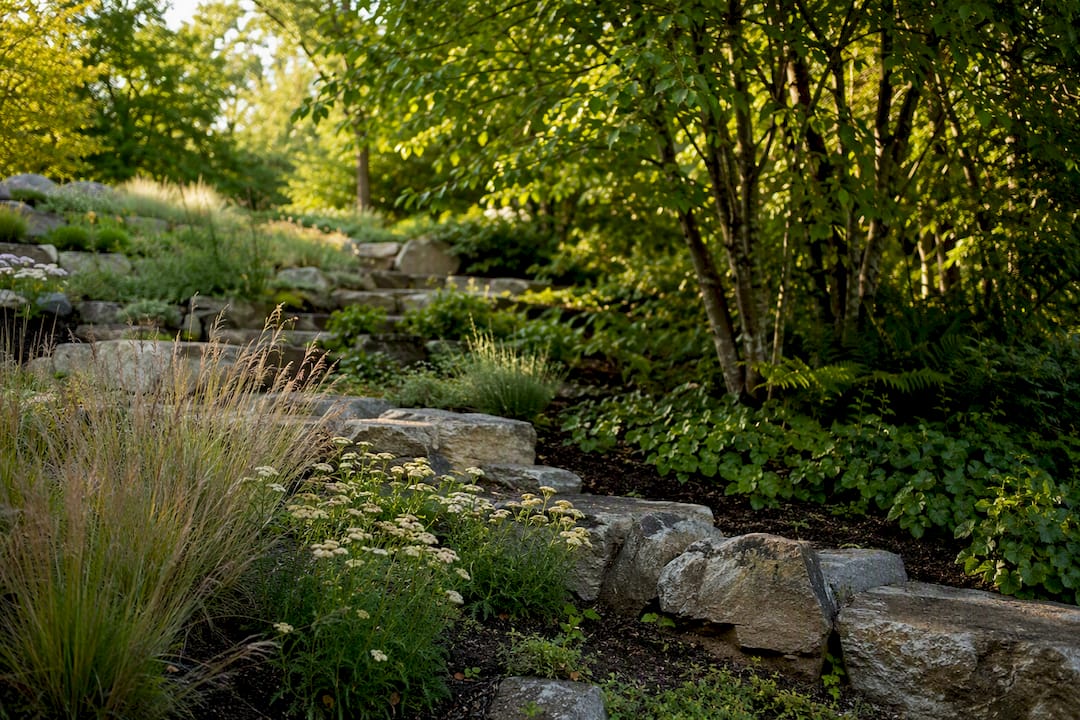
- Common yarrow (Achillea millefolium): Full sun, thrives in poor or sandy soil where fussier perennials fail.
- New England aster (Symphyotrichum novae-angliae): Sun, average moisture, critical late-season nectar source for migrating monarchs.
Grasses and Groundcovers
- Little bluestem (Schizachyrium scoparium): Full sun, lean or sandy soil, holds slopes and adds copper-red fall color.
- Wild ginger (Asarum canadense): Full shade groundcover for moist woodland edges where turf grass won’t grow.
Pro Tip: Don’t plant all twelve at once. UNH Extension’s approach is to pick 3 to 5 keystone species that match your site’s sun and moisture first, get them established, then expand. Red maple, black-eyed Susan, and little bluestem cover the widest range of NH conditions and make a smart first wave.
Where Can You Find Complete New Hampshire Plant Lists?
The starter list above is a launchpad, not the whole picture. When you need the full species roster for a restoration project, a large property, or a genuinely rare site condition, three resources cover nearly everything:
- NH Division of Forests and Lands: The state’s native plants page explains what counts as native in New Hampshire and links to broader natural heritage data.
- UNH Extension: Its native shrub, subshrub, and liana resource catalogs 235 species with a downloadable PDF, plus a separate wildlife-value chart ranking species by how much they feed birds and pollinators.
- PlantNative: Its regional list for New Hampshire, Maine, and Vermont organizes species into printable tables by plant type, with light and moisture columns you can scan in seconds.
Look for the PDF or “printable list” link on each page. Those are the versions worth saving to your phone before a nursery run.
How Do You Choose Plants for Your Specific Site?
Zone maps only tell you part of the story. New Hampshire’s hardiness zones run from 3b in the northern counties to 6b along the coast and southern border, and the safe move is choosing species rated for at least one zone colder than your area’s minimum. That buffer covers the cold pockets that show up in valleys, north-facing slopes, and anywhere wind cuts across open ground.
Beyond the zone map, walk your site and check these factors before you buy anything:
- Sun exposure: Full sun, part shade, or full shade, tracked across a whole day, not a single glance.
- Soil texture and drainage: Sandy, loamy, or clay, and whether water pools after rain.
- pH: Most NH natives tolerate slightly acidic soil, but a few, like New Jersey tea, prefer neutral ground.
- Slope and exposure: South-facing slopes dry out faster; low spots stay wet longer.
- Salt and plow exposure: Anywhere near a driveway or road needs salt-tolerant species like little bluestem or bayberry.
- Deer pressure: Yarrow and ferns tend to get browsed less than tender perennials.
UNH Extension is direct about this: soil drainage causes more plant failures in New Hampshire than cold ever does. A drought-tolerant native planted in a low spot that stays soggy through April will rot regardless of its hardiness rating.
Here’s a fast way to match zone, sun, and moisture to real species: a sunny, dry slope in Zone 5 favors little bluestem and yarrow; a shady, moist backyard in Zone 4 favors red maple and wild ginger; a windswept coastal yard in Zone 6b favors bayberry and New England aster. And no matter how drought-tolerant the label says a plant is, it still needs consistent watering for the first several weeks after planting while roots establish.
Where to Buy Native New Hampshire Plants
Big-box garden centers stock plenty of ornamentals, but true New Hampshire natives usually come from more specialized sources. Local native plant nurseries and county extension plant sales are your first stop, since these growers propagate stock adapted to regional conditions rather than shipping generic nursery-grown material from out of state. Mail-order specialists fill in the gaps; Izel Native Plants (Izelplants.com) is worth checking for availability, since it lists native species by region with clear in-stock indicators.
Before you buy from anyone, ask a few pointed questions:
- Is the stock nursery-propagated, not wild-collected from natural areas?
- Was it grown from a local or regional seed source?
- What container size are you getting, and does it match your planting timeline?
- Does the seller ship bare-root, potted, or both, and does that match the season?
Pro Tip: Spring works once soil has warmed and dried out enough to work, typically late April into May in southern New Hampshire. Fall, from September through early October, often gives better root establishment because the soil stays warm while air temperatures cool, reducing transplant stress.
Why Native Plants Matter, and How to Get Them Established
Native plants earn their keep beyond looking good. They support the pollinators and birds that evolved alongside them, need less irrigation and fertilizer once rooted, cut down on routine maintenance, and hold soil against erosion far better than shallow-rooted turf.
Getting them into the ground correctly determines whether they deliver on any of that:
- Prepare the site by clearing turf and weeds, but skip heavy soil amendment unless a test shows a real deficiency.
- Dig the hole only as deep as the root ball and twice as wide.
- Water deeply right after planting, then keep soil consistently moist for the first several weeks.
- Add two to three inches of mulch, kept back from the stem.
- Check monthly for pest pressure.
Watch for emerald ash borer, hemlock woolly adelgid, and spongy moth, three of the most damaging pests in New Hampshire forests. UNH Extension’s monitoring resources and simple cultural controls, like removing infested branches and avoiding stressed monoculture plantings, go a long way toward keeping a young native planting healthy.
A Note From Divine Landscaping LLC
We’ve matched plant palettes to New Hampshire’s zones, soils, and microclimates across dozens of projects. If your site has a tricky slope or drainage question, our design team can help you get it right the first time.
Frequently Asked Questions
What does “native” actually mean for a New Hampshire plant?
A native New Hampshire plant has existed in the region for thousands of years, adapting to local climate conditions and co-evolving with wildlife, rather than being introduced from another continent or region.
Is lavender a native New Hampshire plant?
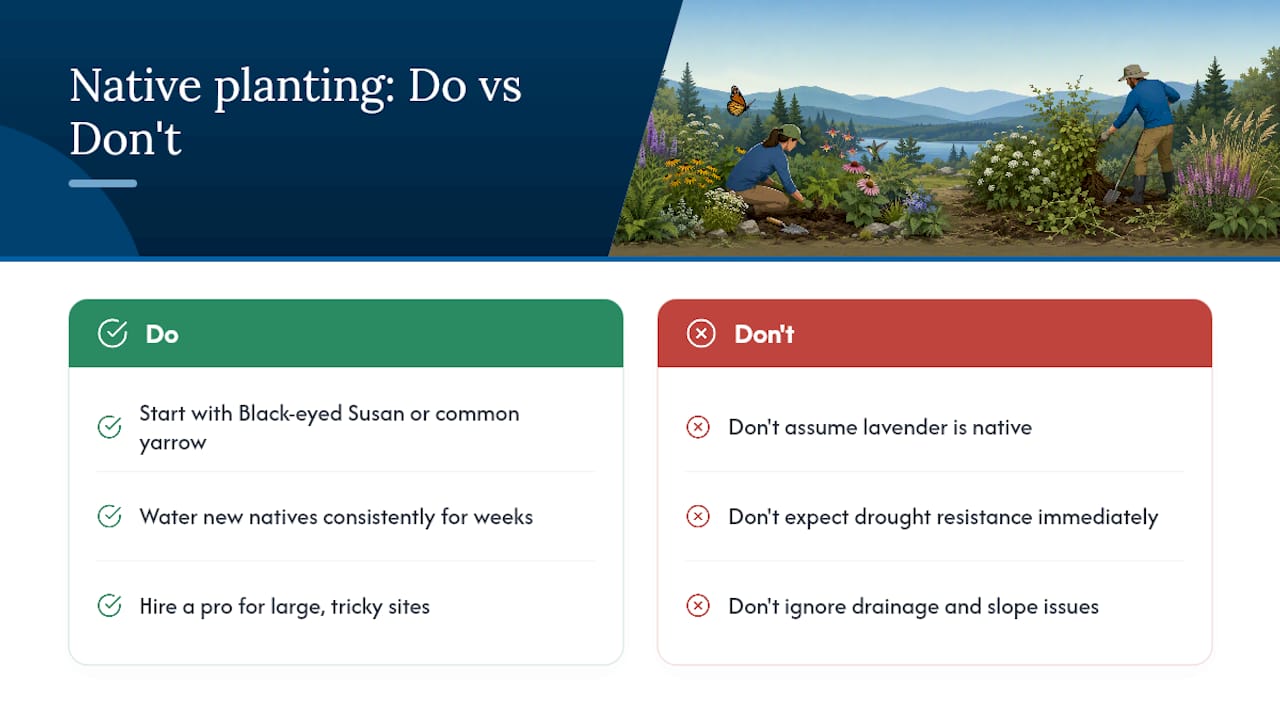
No. Lavender is not native to New Hampshire; it grows fine in managed garden beds but doesn’t offer the ecological benefits or climate resilience of true regional natives.
What’s the easiest native plant to start with in New Hampshire?
Black-eyed Susan and common yarrow tolerate a wide range of sun and soil conditions, making them forgiving choices for a first native planting.
Do native plants need less watering than ornamentals?
Only after establishment. Newly planted natives, even drought-tolerant species, need consistent watering for the first several weeks to build strong roots.
Should I hire a professional for a native plant design?
For larger properties or tricky drainage and slope issues, a professional landscape design helps match the right species to your exact site conditions and avoids costly replanting.
Sources
- Native Plants – NH Division of Forests and Lands
- Lavandula angustifolia (GoBotany / Native Plant Trust)
- Native shrubs, subshrubs & lianas of New Hampshire (UNH Extension)
- Native Plant List for New Hampshire, Maine and Vermont (PlantNative)