
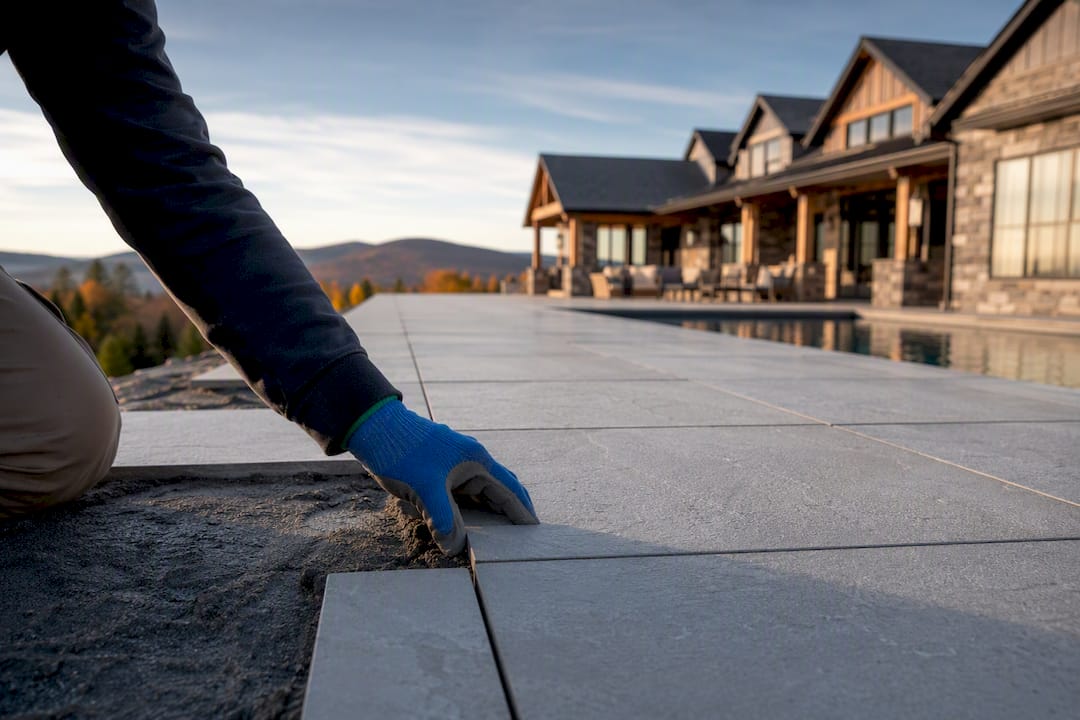
Yes, porcelain pavers are a high-performance choice for patios, pool decks, walkways, and rooftop terraces when installed on the right substrate. They resist water absorption, hold their color under UV exposure, and come in dozens of stone, wood, and concrete looks. The one catch: their long-term performance depends entirely on correct base prep and professional installation, not just the tile itself.
TL;DR:
- Proper base preparation and professional installation are essential to prevent cracking and ensure long-term performance of porcelain pavers.
- The ideal thickness for outdoor porcelain pavers is 20mm, with a slip resistance rating above 0.42 DCOF for wet areas, to handle foot traffic and freeze-thaw cycles effectively.
- Pedestal, aggregate base, or bonded mortar systems are suitable foundations, depending on the location, with each requiring careful site assessment and slope control to prevent water pooling.
- Average material costs range from $4.50 to $15.50 per square foot, with installation fees adding $5.50 to $20.00 per square foot, depending on complexity and pattern.
- Regular cleaning with a hose and mild soap, optional joint sealing, and storing spare tiles for repairs extend the lifespan of porcelain pavers, which typically last decades.
Table of Contents
- Where Porcelain Pavers Outdoors Perform Best
- What Are the Pros and Cons of Porcelain Pavers?
- How Do You Choose the Right Porcelain Pavers?
- What Do You Put Under Porcelain Pavers?
- How Much Do Porcelain Pavers Cost?
- Are Porcelain Pavers High Maintenance?
- Is Porcelain Paving Environmentally Friendly?
- Porcelain vs. Concrete Pavers vs. Natural Stone vs. Wood
- Do Porcelain Pavers Get Hot in the Sun?
- Can You Install Radiant Heating Under Porcelain Pavers?
- How Long Do Porcelain Pavers Last, and What’s the Warranty?
- Divine Landscaping’s Contractor Checklist for Porcelain Paver Projects
- Ready to Plan Your Porcelain Paver Project?
- Sources
- FAQ
Where Porcelain Pavers Outdoors Perform Best
Porcelain pavers earn their reputation on patios and pool decks first. Their near-zero water absorption means they won’t soak up pool splash-out or stain from wine glasses left on the table, and manufacturers like Belgard engineer slip-resistant finishes specifically for wet, bare-footed areas around pools.
Rooftop terraces are where porcelain pavers really separate from other outdoor flooring. Because many products install on adjustable pedestal systems, contractors can level tiles over an uneven roof deck while leaving space underneath for drainage and ventilation, which matters for structural longevity.
Where you should pause: standard outdoor porcelain, even at 20mm thickness, isn’t rated for daily vehicle traffic. Driveways and areas that see cars or heavy equipment need a different product class or a reinforced base system entirely.
- Patios: uniform color, high stain resistance, wide format options
- Pool decks: slip-rated finishes that won’t bleach or pit from chlorine
- Walkways: consistent slab sizes simplify accessible, level paths
- Rooftop terraces: pedestal systems allow drainage without structural bonding
What Are the Pros and Cons of Porcelain Pavers?
Porcelain’s biggest strength is how little it asks of you once it’s installed. No sealing schedule, no staining touch-ups, no annual refinishing. That low-maintenance profile, paired with resistance to frost and fading, is why Belgard markets porcelain as suitable for patios, pool surrounds, and rooftops without special seasonal upkeep.
The trade-offs are real, though, and they cluster around cost and craftsmanship rather than the material itself.
- Higher upfront cost. Porcelain typically runs above basic concrete pavers per square foot, though it usually saves money over a decade of resealing and repair.
- Installation-quality sensitivity. A poorly compacted base or wrong-size joints can cause cracking that has nothing to do with the tile’s inherent strength.
- Cutting requires the right tools. Edge cuts and curves demand diamond blades and experience; DIY cuts often chip the glazed surface.
- Grout and joint gaps need attention. Sand-filled or polymeric joints can erode faster than the pavers themselves if not maintained.
Contractors generally frame this trade-off as an investment: pay more at installation, spend less over the paver’s lifespan.
How Do You Choose the Right Porcelain Pavers?
Thickness is the first spec to check. Most outdoor-rated porcelain pavers come in 20mm (¾ inch), roughly double the thickness of interior porcelain tile, and that extra mass is what gives them the flexural strength to handle foot traffic, furniture, and freeze-thaw cycling without hairline cracks.
Slip resistance is the second number worth demanding in writing, not just a marketing label. Look for a Dynamic Coefficient of Friction (DCOF) above 0.42 under ANSI A137.1 for wet areas, or an R11 rating under the DIN barefoot standard for pool surrounds.
Size and format shape both the look and the install timeline. Large-format slabs (24×24 inches and up) create a clean, minimal look with fewer joints, while plank formats mimic wood decking. Bigger formats are heavier and less forgiving of an uneven base, so they demand tighter substrate tolerances.
- Request water absorption rate (look for under 0.5%)
- Ask for flexural/breaking strength test results
- Confirm frost-resistance certification for your climate
- Get a physical sample tile, not just a photo
Pro Tip: Ask your supplier for the exact DCOF and water absorption figures on a spec sheet, not just the words “anti-slip” or “weatherproof” on the box. Marketing terms have no enforceable standard behind them.
What Do You Put Under Porcelain Pavers?
The base you choose determines whether your porcelain patio lasts decades or develops problems in year two. Three approaches dominate residential outdoor projects, and each fits a different situation.
- Pedestal systems. Adjustable pedestals raise pavers above a rooftop membrane or existing concrete slab, letting water drain freely underneath while keeping the surface level even if the substrate isn’t. They also allow easy access to plumbing or electrical runs below.
- Compacted aggregate base. For ground-level patios and walkways, a properly compacted gravel and sand base (typically 4 to 6 inches deep) provides drainage and load support. This is the traditional approach and generally the most economical for large ground-level areas.
- Bonded mortar over concrete. When porcelain goes directly over an existing concrete slab, a flexible mortar bed anchors the tile while allowing for slight substrate movement without cracking the surface.
Edge restraints and proper slope, generally a 1 to 2 percent grade away from structures, prevent standing water from finding its way under the tiles. Improper compaction is the single most common cause of the cracking homeworks blame on “bad tile.”
Cutting and edge finishing around drains, steps, and curves is where most DIY projects run into trouble, and it’s usually the point where homeowners call in a professional. Hardscape services that include site prep and precision cutting protect the paver’s structural integrity in ways a rented tile saw can’t guarantee.
How Much Do Porcelain Pavers Cost?
Material costs for porcelain pavers typically fall between $4.50 and $15.50 per square foot, depending on thickness, finish, and format size. Labor adds another $5.50 to $20.00 per square foot, with the top of that range reflecting intricate patterns, pedestal installations, or extensive cutting around curves and drains.
A few scenarios illustrate typical project types: a small patio with a simple layout and standard format; a pool deck requiring slip-rated finishes and extra drainage labor, as seen in this Pool re-design in Pasadena; and a walkway featuring more edge cutting per square foot installed.
You can trim costs without sacrificing performance by sticking to standard modular sizes instead of custom cuts, choosing a simpler running-bond pattern over a herringbone layout, and scheduling installation in shoulder seasons when contractor crews have more availability. For a sense of what local patio projects run, see this breakdown of paver patio costs in NH.
Are Porcelain Pavers High Maintenance?
Not really, and that’s the whole appeal. A garden hose and mild soap handle most routine cleaning. If you pressure wash, keep the nozzle wide and the pressure moderate. Blasting directly into the joints at close range can erode sand or polymeric joint material over time.
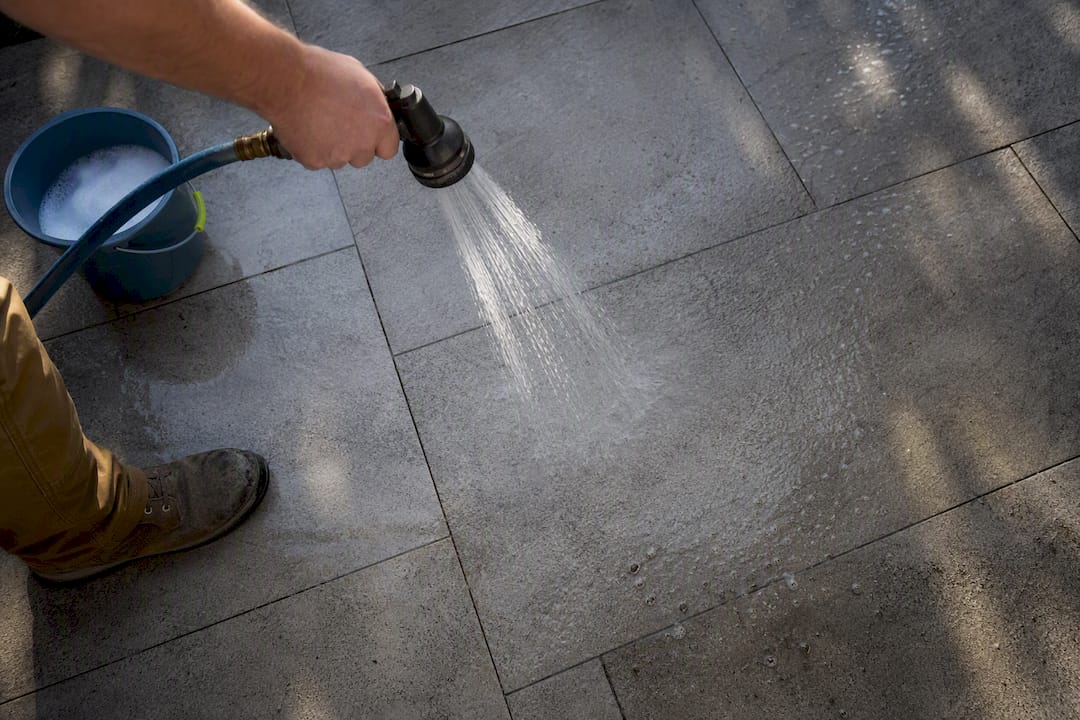
Sealing is optional for the tile itself, since porcelain’s low absorption rate makes it largely stain-proof without a coating. Some homeowners seal the joints for added stability, but the pavers don’t need it. Chipped or cracked tiles are typically repaired by replacing the individual unit rather than patching, which is one advantage of a well-installed modular system.
Freeze-thaw cycling and deicing salts, common concerns in northern climates, generally don’t damage porcelain the way they can pit concrete, since the material’s density resists the water penetration that causes freeze cracking. Manufacturer pages often list frost-resistance ranges and cleaning guidance worth confirming with your supplier in writing.
Pro Tip: Keep a few spare tiles from your original order in storage. Dye lots vary, and having matched spares on hand makes any future repair invisible instead of a mismatched patch.
Is Porcelain Paving Environmentally Friendly?
Porcelain pavers are made primarily from natural clay, feldspar, and sand, fired at extremely high temperatures to achieve their density. That firing process is energy-intensive, but it also produces a material that lasts far longer than many alternatives, which spreads the environmental cost of manufacturing over a much longer service life.
Because porcelain doesn’t absorb water, stain, or degrade under UV exposure, it rarely needs replacing due to weathering, unlike wood decking that rots or concrete that spalls and needs resurfacing. Fewer replacement cycles mean less material extraction and less landfill waste over a property’s lifetime.
Some manufacturers now incorporate recycled content, including reclaimed glass or post-industrial ceramic waste, into their porcelain paver lines, though the percentage varies by product line and isn’t universal across the category. If sustainability is a priority, ask suppliers directly whether their specific product includes recycled content and request documentation rather than assuming based on general industry trends.
Porcelain’s biggest sustainability edge might be the simplest one: it doesn’t require sealants, stains, or chemical treatments to maintain its appearance. Wood decking often needs periodic staining or sealing products that carry their own environmental footprint, and natural stone sometimes needs sealers to resist staining. Porcelain skips that entire maintenance chain, which reduces the chemical runoff into your yard and, eventually, the local watershed.
None of this makes porcelain a zero-impact material. Quarrying clay and firing tile both consume resources. But measured against its outdoor durability and multi-decade lifespan, porcelain tends to compare favorably to materials that need more frequent replacement or chemical upkeep.
Porcelain vs. Concrete Pavers vs. Natural Stone vs. Wood
Every outdoor paving material trades off cost, durability, and look differently, and porcelain sits in a specific spot on that spectrum.
Concrete pavers cost less upfront and offer plenty of color and texture options, but they’re more porous than porcelain. That porosity makes concrete more prone to staining, efflorescence (a white mineral haze), and gradual surface wear. Concrete is a reasonable choice for budget-driven projects where perfect color consistency over 20 years isn’t the priority.
Natural stone (bluestone, travertine, granite) delivers a look porcelain manufacturers spend considerable effort trying to replicate. Real stone has genuine variation and texture that some homeowners prefer over a manufactured surface. But natural stone is often more expensive than porcelain, requires periodic sealing to resist staining, and can vary in slip resistance depending on the finish and how worn the surface gets over time.
Wood decking wins on warmth underfoot and a classic look for elevated platforms, but it’s the highest-maintenance option of the group. Wood needs regular staining or sealing, is vulnerable to rot and insect damage, and has a shorter practical lifespan in wet climates compared to porcelain or stone.
Porcelain pavers land in the middle to upper range on cost, but at the top for stain resistance, color consistency, and low maintenance. For homeowners comparing options for a new patio installation, the choice usually comes down to whether you value the lower upfront cost and organic texture of concrete or stone, or the long-term consistency and low upkeep porcelain provides.
Do Porcelain Pavers Get Hot in the Sun?
Any hard outdoor surface absorbs heat in direct sun, and porcelain is no exception. Darker porcelain finishes, like charcoal or deep gray stone-look tiles, will get noticeably warmer underfoot on a sunny July afternoon than lighter tones like beige or cream.
The good news is that porcelain’s dense, non-porous structure means it releases heat faster once the sun moves off it compared to some natural stones with higher thermal mass. It won’t stay hot into the evening the way a dark asphalt driveway does.
For pool decks and areas where bare feet are a constant, choosing a lighter-toned porcelain finish is the simplest way to manage heat retention. Textured, matte finishes also tend to feel slightly cooler underfoot than polished, glossy surfaces because they reflect light differently and often run a shade lighter in practice. If your patio faces full southern exposure most of the day, factor color choice into your selection alongside slip rating and style, not just aesthetics.
Shade structures, whether a pergola, umbrella, or nearby tree canopy, make a bigger practical difference in surface temperature than tile color alone. If heat is a real concern for a pool deck or rooftop terrace, pairing your paver choice with some planned shade coverage solves the problem more completely than color selection by itself.
Can You Install Radiant Heating Under Porcelain Pavers?
Porcelain pavers are generally compatible with radiant heating and snow-melting systems, and their dense, non-porous composition actually makes them a favorable surface for this kind of installation. Because porcelain doesn’t absorb water the way concrete or natural stone can, there’s less risk of moisture-related damage to embedded heating elements from freeze-thaw expansion within the paver itself.
For ground-level patios, hydronic (fluid-filled tubing) or electric radiant heating mats typically get installed in the base layer beneath the pavers, with the porcelain surface conducting heat upward. On pedestal systems over rooftops or elevated decks, snow-melting cables can sometimes be integrated into the substrate below the pedestal layer, though this requires careful planning around drainage and pedestal height adjustments.
The key consideration isn’t whether porcelain can handle the heat cycling. It’s whether the specific installation method accounts for the heating system during base prep, not after. Retrofitting radiant heat under an already-installed paver patio is far more disruptive and expensive than planning for it during initial construction. If a heated walkway or snow-melting driveway apron is even a possibility down the road, that’s a conversation to have with your contractor before the base goes in, not after the pavers are set.
Homeowners in colder climates often find that a heated walkway or entry patio pays for itself in reduced ice-related slip risk and less manual shoveling and salting over the years, which also reduces the deicing salt exposure that can affect surrounding landscaping.
How Long Do Porcelain Pavers Last, and What’s the Warranty?
Porcelain pavers, properly installed, are built to perform for decades rather than years. Their resistance to fading, staining, and frost damage means the surface you install today should look essentially the same in 15 or 20 years, barring physical damage from impact or improper substrate movement.
Warranty terms vary meaningfully by manufacturer, and this is where homeowners need to read the fine print rather than assume all porcelain products carry equal coverage. Some manufacturers offer warranties covering material defects like cracking or color fading for a defined number of years, while others limit coverage to manufacturing defects discovered shortly after installation. Warranty terms typically do not cover damage caused by improper installation, which is exactly why base prep and substrate quality matter as much as the tile you choose.
Get the specific warranty document from your supplier before purchase, and confirm in writing whether it covers the material only or extends to installation-related issues if you’re hiring the same company for both supply and install. A reputable contractor will stand behind their installation work separately from the manufacturer’s product warranty, and you want clarity on where one coverage ends and the other begins.
The realistic long-term performance story for porcelain outdoors is straightforward: the material itself rarely fails on its own. When porcelain pavers develop problems years down the line, the root cause is almost always traceable back to base preparation, drainage, or joint maintenance rather than the tile’s inherent durability.
Divine Landscaping’s Contractor Checklist for Porcelain Paver Projects
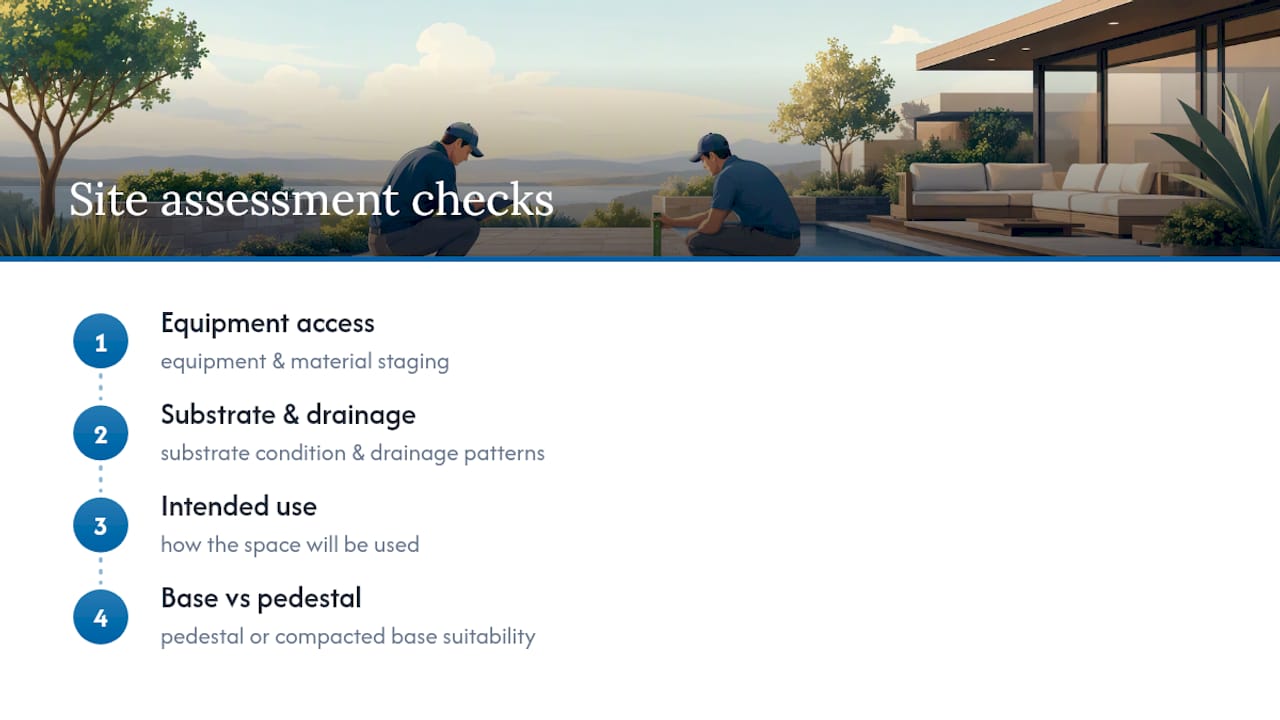
Before we ever recommend porcelain for your project, we walk the site and check four things: access for equipment and material staging, the condition of the existing substrate and drainage patterns, how you intend to use the space, and whether a pedestal system or compacted base makes more sense given your grade and access.
A written bid should spell out base prep depth and material, warranty terms from both the manufacturer and the installer, cleanup expectations, and a realistic start date. If a bid skips any of those details, ask why before you sign.
We’ve found homeowners get the best results when they browse a project gallery for design inspiration first, then bring those references to the consultation. Porcelain tends to make the most sense for pool decks and modern patio styles; natural stone or concrete sometimes fits a more traditional New England exterior better.
— Damian
Ready to Plan Your Porcelain Paver Project?
Some homeowners prefer to vet one contractor-grade bid rather than manage material orders, sub-contracted labor, and warranty questions themselves. We handle site assessment, base preparation, and installation as one coordinated process, which is exactly the part of a porcelain paver project where DIY and mixed-crew jobs tend to run into trouble.
Our hardscape services cover everything from initial grading and drainage planning through final paver installation and joint finishing for patios, pool surrounds, and walkways across New Hampshire and Massachusetts. When you come in for a consultation, bringing rough measurements of the space and any product spec sheets you’re considering can help evaluate whether the thickness and slip rating fit your site’s grade and use.
If you already have a look in mind, browse our outdoor living project gallery for patio styles, then reach out through our patio installation page to schedule a site visit and get a written bid.
Sources
Technical specs referenced above come from manufacturer product pages at Belgard, Daltile, and NT Pavers, with cost ranges drawn from LatestCost’s project breakdown.
- Porcelain Pavers Cost: Price Ranges, Install Fees, and Budget Tips 2026 – LatestCost
FAQ
Are Porcelain Pavers Good for Outside?
Yes, porcelain pavers rated for exterior use handle frost, UV exposure, and moisture well, which is why manufacturers like Belgard market them specifically for patios, pool decks, and rooftops.
What Are the Downsides of Porcelain Pavers?
The main downsides are a higher upfront cost than concrete and a strong dependence on installation quality. Poor substrate prep or improper cutting can cause cracking that has nothing to do with the tile itself.
What Do You Put Under Porcelain Pavers?
Depending on the application, installers use adjustable pedestal systems for rooftops, a compacted aggregate base for ground-level patios and walkways, or bonded mortar when installing directly over existing concrete.
Do Porcelain Pavers Crack Easily?
The tile itself is highly resistant to cracking thanks to its flexural strength and low water absorption. Cracking almost always traces back to an improperly compacted base, inadequate joint spacing, or a hard impact rather than a defect in the porcelain.