
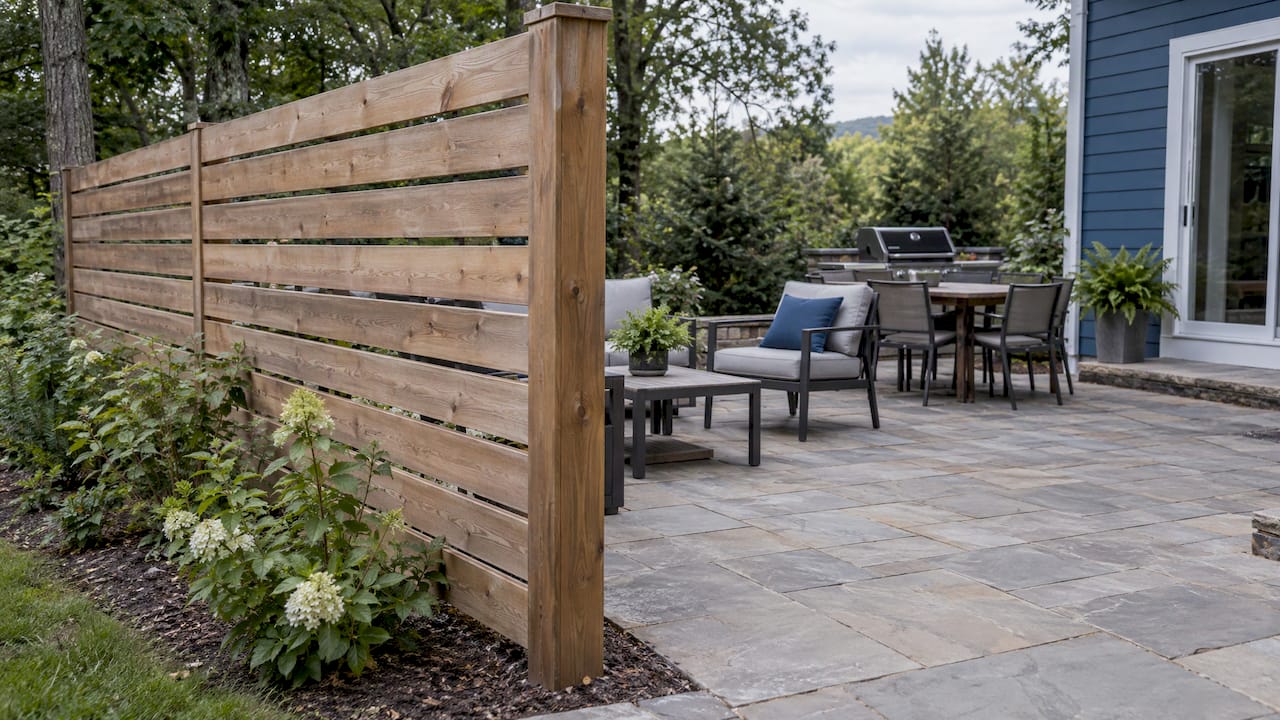
The best privacy screen for a patio is one that blocks the specific sight line bothering you, suits your climate, and is anchored for New England wind and snow. For most New Hampshire homes that means a permanent screen of wood, metal or composite, a planted screen, or a combination. Roll-up shades and curtains work for seasonal use. Below we cover the main options, how to choose among them, the rules to check before you build, and how to keep a screen standing through winter.
TL;DR
- Start by locating the sight line you want to block (a neighbor’s window, a street, a driveway), then size and place the screen for that spot only.
- Metal, wood and planter-style screens suit long-term use. Roller shades and curtains suit short-term, seasonal use, according to HGTV’s 2026 roundup.
- In New Hampshire, posts need footings below the frost line and a design that handles wind and drifting snow.
- Most towns regulate fence and screen height locally, and HOAs may add their own rules, so check before you build.
- A screen that is designed with the patio or deck, not added afterward, looks better and lasts longer.
Table of Contents
- Start with the sight line, not the product
- Privacy screen options for patios and decks
- Comparing materials at a glance
- Designing a privacy wall or screen that looks like it belongs
- Building for New Hampshire wind, snow and frost
- Rules to check before you build
- Caring for your screen
- Plan your screen with Divine Landscaping
- FAQ
- Sources
Start with the sight line, not the product
Most people shop for panels first and think about the problem second. Reverse that. Garden Design’s privacy planning guide suggests evaluating your space and what you need to solve: a neighbor’s second-story window overlooking the patio, separation between yards, an unattractive view, or privacy between zones such as a patio, deck and hot tub.
Walk out to your patio with a chair and sit where you normally sit. Then ask:
- Where are the eyes? Note whether the view comes from the side, from the front, or from above. A second-story window needs something overhead or very close to you, because a tall fence far away will not block a downward angle.
- When do you use the space? Evening dinners and weekend mornings have different sun angles, which affects whether you want a solid wall or a slatted screen that lets light through.
- What else does the screen need to do? A screen can also add shade and block prevailing wind, as Fine Homebuilding notes, which makes it more than a visual barrier.
- How permanent do you want it? Seasonal curtains and shades are easy to change. A masonry or timber wall is a long-term decision.
A small, well-placed screen near the seating area often beats a long wall around the whole yard. It costs less, blocks less light, and feels less closed in. For more on how screening fits into a whole yard plan, see our guide to backyard privacy landscaping ideas.
Privacy screen options for patios and decks
There is a wide range of ideas, and the right one depends on your sight line, your budget and how much upkeep you want. The Spruce lists outdoor curtains, an overhead tarp or canopy, a high fence, hedges, and a trellis or pergola with climbing vines among the ways to add patio privacy. Here is how those ideas break down in practice.
Solid and slatted wood screens
Wood is the classic choice. Cedar is the usual pick in this region, and Permits Guide notes that cedar is preferred for fencing in New Hampshire because it naturally resists moisture and decay. Wood screens can be stained to match an existing deck, and a horizontal slat pattern gives a modern look. Spacing the slats slightly lets wind pass through, which reduces the load on the posts.
Metal screens
Metal screens are usually laser-cut. HGTV describes durable versions as galvanized steel finished with a powder coating that includes UV inhibitors to limit fading. Cutout patterns create privacy while still letting in light and air. Weathering steel, aluminum and powder-coated steel all give a clean, contemporary edge that pairs well with natural stone or bluestone.
Composite and vinyl screens
Composite and vinyl panels appeal to homeowners who want a consistent look with minimal staining or sealing. They are often chosen to match composite decking so the deck and screen read as one design.
Planted screens
Living screens soften a space and can be very effective. HGTV’s DIY guide mentions arborvitae, cherry laurel and boxwood for natural privacy. Houzz suggests dense evergreens for maximum privacy and sound reduction, and it lists arborvitae as suited to USDA zones 3 to 7. Plants need time to fill in, so many homeowners pair a young hedge with a structure that gives privacy on day one.
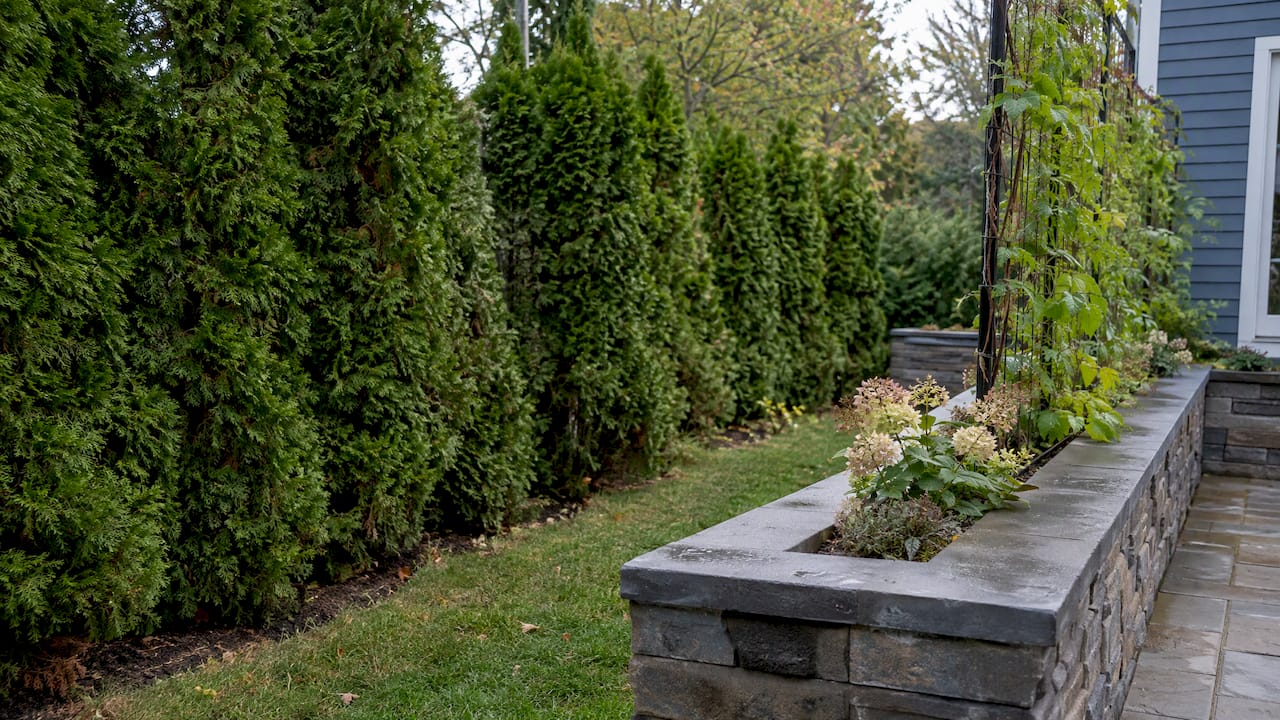
Planters are another route: a long raised planter with climbing plants gives height without a full fence. Raised beds built from stone or timber can anchor that kind of screen. Our guide to privacy screening landscaping goes deeper on plant choices and layouts.
Pergolas, trellises and overhead cover
When the view comes from above, you need something overhead. A pergola with slatted or fabric cover, or a trellis planted with climbers, handles that and also adds shade. We cover the options in our article on covered patio options for NH homes.
Curtains and roll-up shades
Outdoor curtains and roll-up shades are the quickest fix. They suit seasonal use, they come down before winter, and they are a good way to test how much enclosure you want before committing to something permanent.
Comparing materials at a glance
Use this as a starting point for conversation with your designer. The ratings are general, and your site conditions can change them.
| Option | Best for | Upkeep | Light and wind |
|---|---|---|---|
| Cedar or other wood | Warm, natural look; matching a wood deck | Periodic staining or sealing | Slatted designs pass some wind |
| Powder-coated metal | Modern look, patterned light | Low, with occasional rinsing | Cutouts reduce wind load |
| Composite or vinyl | Matching composite decking | Low | Solid panels catch more wind |
| Evergreen hedge or planter | Soft, natural enclosure | Pruning, watering | Filters wind well once established |
| Pergola with cover | Blocking views from above | Depends on materials | Adds shade |
| Curtains or roll-up shades | Seasonal, flexible privacy | Cleaning, winter storage | Need tie-downs in wind |
Designing a privacy wall or screen that looks like it belongs
A screen can look bolted on or look intentional. A few design decisions make the difference.
Match scale to the space. Garden Design points out that hardscape barriers should be planned around scale, style, cost, and the light and shadow they create, including whether you shade your own yard or a neighbor’s. A 6-foot solid wall on a small patio can feel like a box.
Mix solid and open sections. Put solid panels where you need full coverage, and slatted or patterned panels where you want light and air. Many good designs use a solid section at seat height and a more open section above it.
Tie it to existing materials. If your patio is natural stone, a stone pier with a wood or metal infill panel ties the screen to the ground plane. Our article on natural stone patios explains the material, and our modern outdoor living ideas for New England homes shows how screens fit into a complete layout.
Think about lighting. Low-voltage fixtures that wash a screen at night make it a feature and improve safety on the patio edge.
Don’t forget drainage. A wall at the edge of a patio can trap water if the grade is wrong. If your patio already holds water, read our piece on patio drainage fixes before building anything along the edge.
Building for New Hampshire wind, snow and frost
This is where many screens fail. A panel that looks fine in a catalog has to cope with winter wind, snow drifts and frost heave.
Footings and posts
Fine Homebuilding recommends that a screen’s posts, and any pergola-style topping, run to their own piers at grade instead of being attached only to the deck’s rim joist. That keeps the screen firm and keeps wind loads off the deck frame.
Frost depth matters for those piers. Permits Guide reports frost lines of roughly 48 inches in northern New Hampshire and 36 to 42 inches in the south near the Massachusetts border. Your town’s building department can confirm the figure that applies to your lot. Footings above the frost line can heave and tilt a screen over a few winters.
Wind load
A solid panel acts like a sail. A contractor, not a one-size-fits-all kit, should decide post locations and mounting on a deck. For exposed sites, slatted or perforated designs, shorter panels, and closer post spacing all reduce risk. Use stainless steel or hot-dip galvanized fasteners outdoors so hardware does not corrode.
Snow
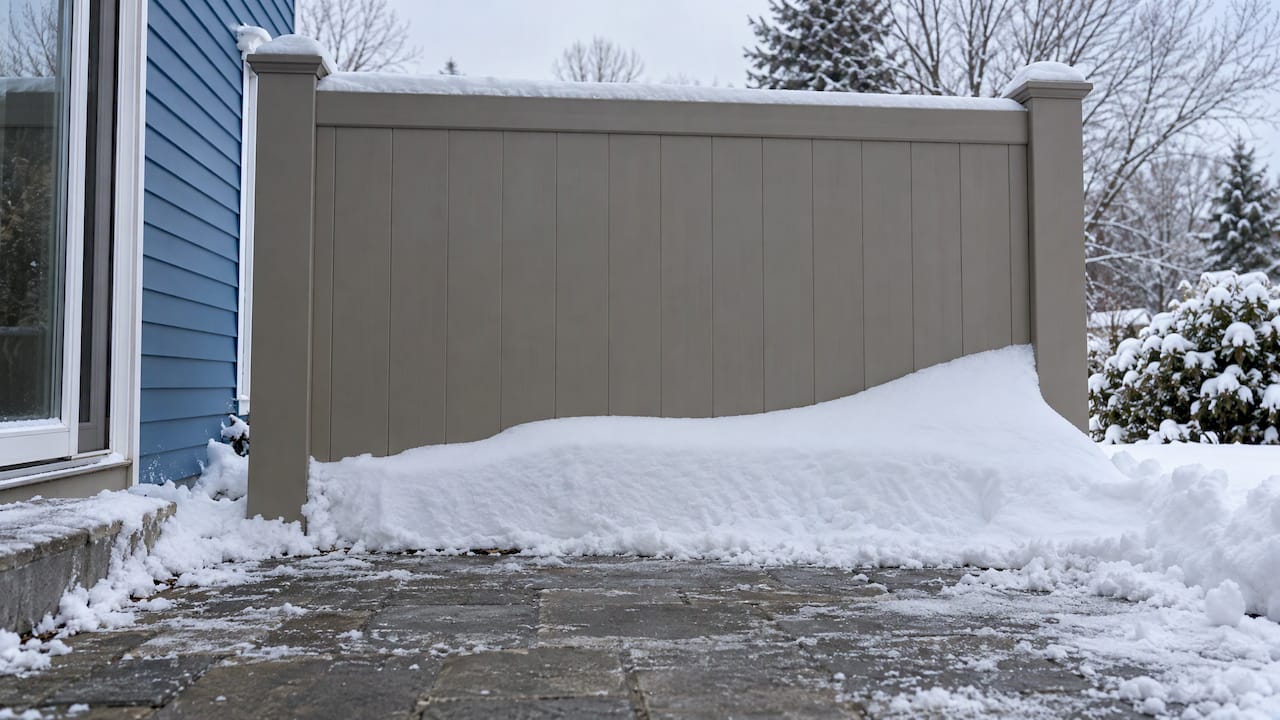
Snow drifts pile up against solid panels, and the load builds over a winter. Permits Guide cites snow loads from 40 pounds per square foot to over 100 in mountainous parts of the state. Leave a gap at the bottom where drainage and snow clearing allow, and avoid placing a solid screen where you will shovel or plow snow against it.
Decks and railings
On an elevated deck, plan the screen together with the railing. A privacy panel should not replace a required guard section. The same source says panels cannot be the only guard on decks 31 inches or more off the ground, so confirm guard requirements with your local building department. Our decks and outdoor living team builds screens as part of the deck design so the structure is sorted out from the start.
Rules to check before you build
New Hampshire does not set one statewide fence rule. Permits Guide explains that each of the state’s 234 cities and towns controls fences through local zoning and building codes. The same guide says most towns do not require a building permit for residential fences under 6 feet, that taller fences are typically treated as structures with setback requirements, and that front-yard fences are usually limited to 4 feet.
Local examples show the variation. The Town of Windham’s fence permit application limits fences in the minimum required front yard to 4 feet and side and rear yards to a maximum of 6 feet, and it says fences must not obstruct the view at the intersection of a driveway and a public way. Other towns differ, so call yours.
Before you build:
- Call the town building or zoning office and ask whether a freestanding screen counts as a fence or a structure.
- Read your HOA covenants if you have them. They commonly regulate height, colors, materials and placement, and sometimes require written approval.
- Call 811 before digging. Permits Guide notes that Dig Safe marks underground utilities before you dig post holes.
- Check property lines and setbacks. If you are unsure where your line sits, confirm it before setting footings.
If you own a commercial property, such as a restaurant patio or a multi-tenant building, the same local review applies and use-specific rules can add to it. Our restaurant patio design guide covers how screening fits operations.
Caring for your screen
Most screens need little, but a routine extends their life. Cleaning guidance from shade and screen makers focuses on gentle methods: rinse, use mild soap and a soft brush, and skip the pressure washer. Keep tracks, bottom bars and alignment parts free of debris.
A simple yearly rhythm works well in New England:
- Spring: Wash off winter grime, check posts for lean or heaving, and tighten loose hardware.
- Summer: Trim plants growing against the panels so they do not trap moisture.
- Fall: Remove fabric shades and curtains, clear leaves from the base, and check that water drains away from the footings.
- Winter: Knock heavy snow off solid sections when it is safe to do so, and keep plowed or shoveled snow from piling on them.
Wood screens will need restaining on a schedule that depends on the finish. Metal and composite usually need only washing.
Our view on patio privacy
We think a privacy screen works best when it is designed together with the patio, not added after the fact. When we plan an outdoor space, we look at grade, drainage, sight lines and the way your family uses the area, then choose a screen that handles all of that.
Our approach is custom design for each property, with premium materials and clear project management from consultation to installation. In New Hampshire, that matters most below ground: footings, posts and drainage decide whether a screen is still straight after several winters.
We also like screens that do more than block a view. A stone pier wall that doubles as seating, a pergola that shades and screens, or a raised planter with evergreens can give you privacy and a better place to spend time.
Damian
Plan your screen with Divine Landscaping
If you want a screen that suits your yard and holds up through New Hampshire winters, we can design and build it as part of your patio, deck or outdoor living area. Our services include landscape design, patio installation, masonry and hardscape work such as walls and raised beds, and pergolas and gazebos. We work with homeowners and business owners in New Hampshire and neighboring Massachusetts, and we back our work with a satisfaction guarantee.
Tell us where the sight line is and how you use the space, and we will propose options. You can see finished work in our project gallery or reach us through our website.
FAQ
What is the cheapest way to add privacy to a patio?
Outdoor curtains, roll-up shades and potted plants are the lowest-commitment options, and they work for seasonal use. If you want something permanent, a short screen placed only where the sight line is a problem usually costs less than enclosing the whole patio. A designer can help you find the smallest screen that solves the problem.
How tall should a patio privacy screen be?
It depends on where the view comes from and what your town allows. Many towns allow side and rear fences up to 6 feet without a permit, but limits vary, and Windham, for example, caps front-yard fences at 4 feet. Check with your building department, and with your HOA if you have one, before choosing a height.
Can I attach a privacy screen to my deck railing?
Sometimes, but the connection has to be designed for wind load. Freestanding posts set on their own footings are often a stronger approach than relying on the deck’s rim joist. The screen should also not replace a required guard section, so plan it with the railing and confirm requirements locally.
Do I need a permit for a privacy screen in New Hampshire?
It depends on the town. Most towns do not require a permit for residential fences under 6 feet, but taller ones are often treated as structures with setback rules. Call your town’s building department before you start, and call 811 before digging.
Which privacy screen material lasts longest in New England?
Powder-coated metal, composite and well-maintained cedar are all common choices in the region. What matters most is the installation: footings below the frost line, corrosion-resistant fasteners and a design that handles wind and snow. We can recommend a material once we see your site.
Sources
- 50 Patio Privacy Ideas, The Spruce
- DIY Privacy Screens, HGTV
- 35 Best Outdoor Privacy Screens, HGTV
- Building a Privacy Screen, Fine Homebuilding
- Ideas for Outdoor Screens, Houzz
- Privacy Landscaping, Garden Design
- New Hampshire Permit Requirements for Homeowners, Permits Guide
- Fence Permits in New Hampshire, Permits Guide
- Fence Permit Application, Town of Windham
- Deck Privacy Screen Height, Permits and HOA
- Maintenance Guide for Outdoor Shades and Screens