
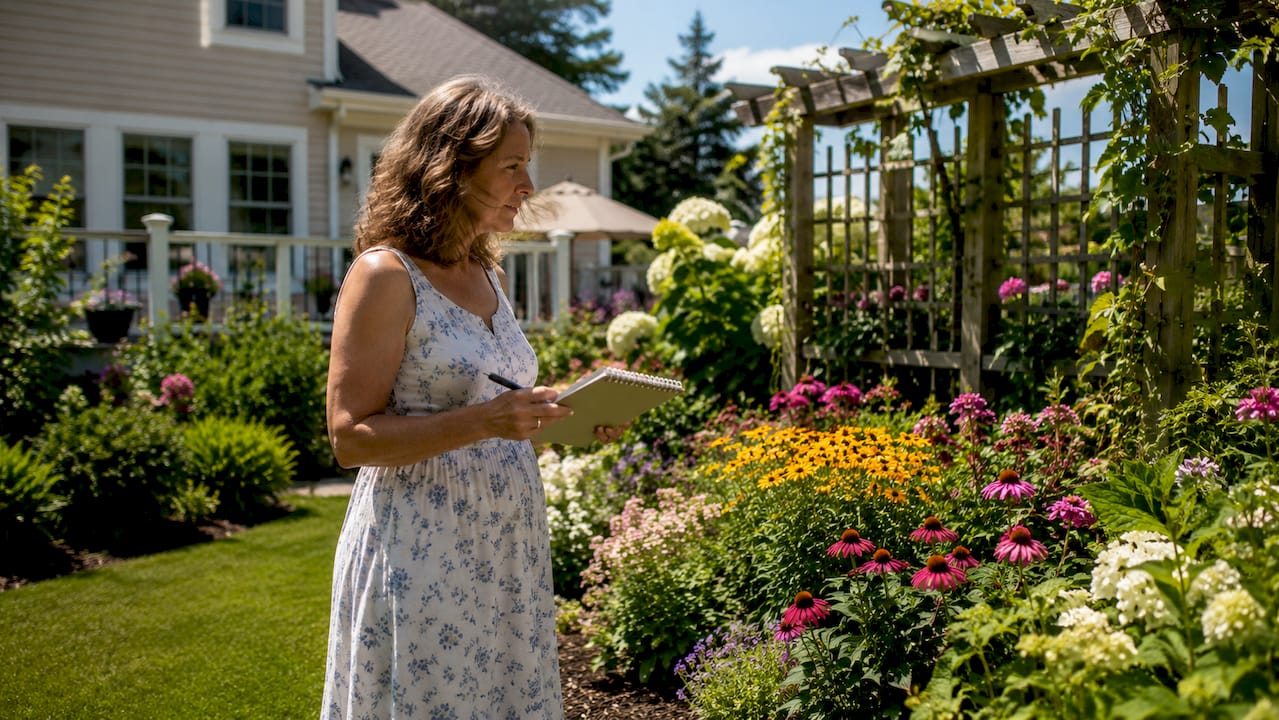
Property value landscaping is the practice of improving a property’s outdoor spaces, including lawns, plantings, trees, and hardscape, to increase both its market price and buyer appeal. Research from Virginia Tech shows that well-executed landscaping raises perceived home value by 5.5% to 11.4% compared to minimal outdoor treatment. For a $400,000 home in New Hampshire, that translates to a meaningful gain in resale price. The industry term for this practice is “curb appeal enhancement,” but property value landscaping captures the full scope: design, installation, and ongoing maintenance working together to protect and grow your investment.
What is property value landscaping and how does it work?
Property value landscaping works by improving the first impression buyers form before they ever step inside your home. Appraisers, real estate agents, and buyers all factor outdoor condition into their price assessments. A well-maintained lawn, mature trees, and defined planting beds signal that a property has been cared for. That signal translates directly into higher offers and faster sales.
The mechanism is partly psychological and partly financial. Buyers pay more for homes that feel move-in ready, and locally tailored landscaping that meets typical neighborhood standards resonates most with that expectation. When your outdoor space matches or exceeds what buyers see on comparable properties, you remove a negotiating chip from their hands. That alone can protect thousands of dollars in your final sale price.
Three core elements drive the financial impact: lawn care, plant selection, and hardscape. Lawn care covers mowing, edging, fertilizing, and weed control. Plant selection includes trees, shrubs, perennials, and foundation plantings. Hardscape covers patios, walkways, retaining walls, and defined bed borders. Each element contributes independently, but they deliver the strongest results when designed as a unified outdoor space.
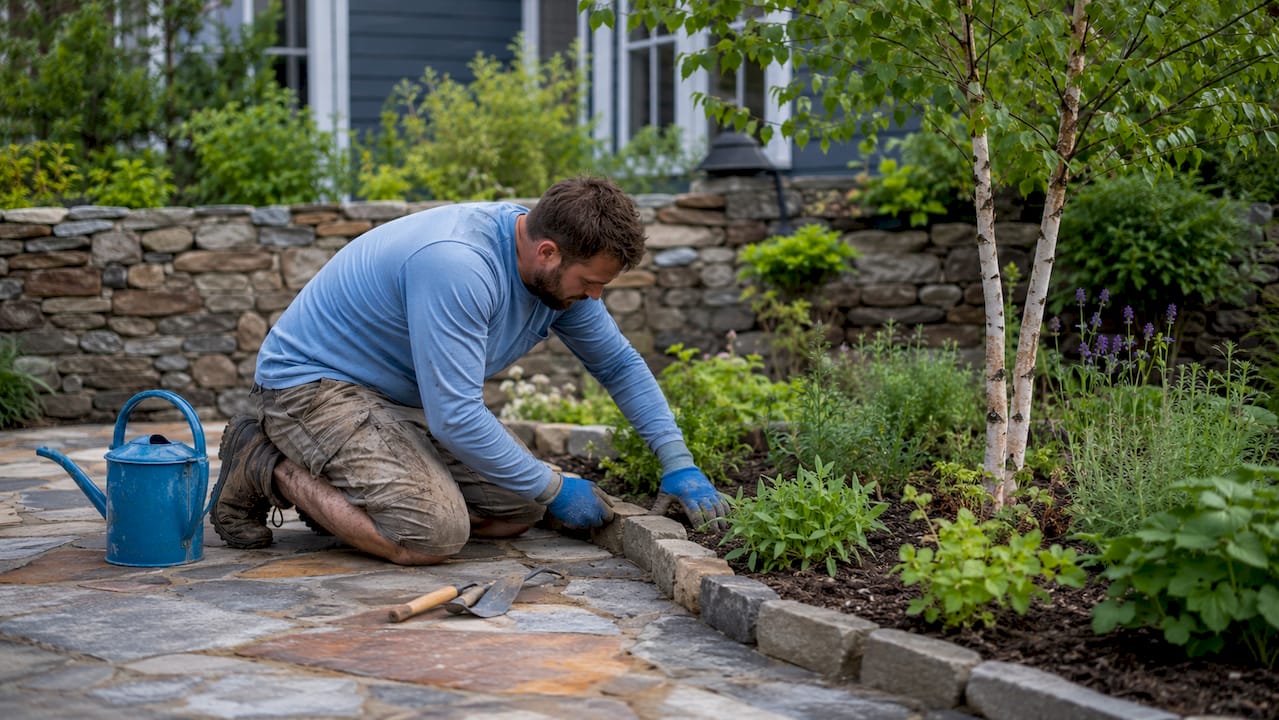
How does landscaping increase property value? Evidence and ROI
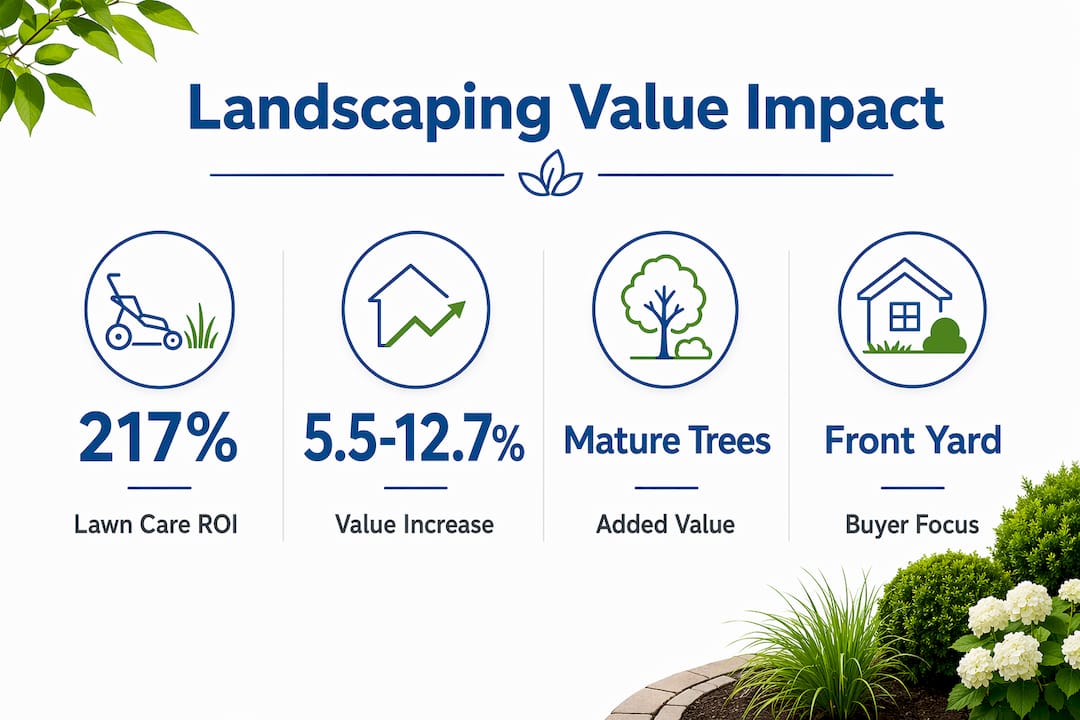
The numbers behind landscaping’s impact on property value are well documented. Virginia Tech research shows that upgrading from minimal to well-designed landscaping increases perceived home value by 5.5% to 12.7%. Foundation plantings alone add 4.4% to 5.5% to perceived value. These are not cosmetic estimates. They reflect how buyers and appraisers actually price properties in the market.
The return on investment for routine lawn care is particularly strong. The National Association of Realtors reports that standard lawn maintenance on a 5,000-square-foot lawn, covering six seasonal fertilizer and weed-control applications at a cost of roughly $415, adds an estimated $900 in resale value. That is an ROI of approximately 217%. Few home improvement projects come close to that return.
Mature trees add another layer of value. The U.S. Forest Service and Arbor Day Foundation research shows that mature trees add $1,000 to $10,000 or more in appraised value depending on species, size, and placement. A large, healthy sugar maple or white oak positioned to shade the south or west side of a home adds both aesthetic appeal and energy efficiency value. That combination is hard for buyers to ignore.
| Landscaping project | Typical cost | Estimated value added | Approximate ROI |
|---|---|---|---|
| Standard lawn care (seasonal) | $415 | $900 | 217% |
| Foundation plantings | $1,000–$3,000 | $4,400–$5,500 | 100%–200% |
| Mature shade tree (planted) | $500–$2,500 | $1,000–$10,000+ | Varies by species |
| Defined planting beds | $800–$2,500 | $2,000–$5,000 | 100%–300% |
| Walkway or patio (hardscape) | $3,000–$10,000 | $4,000–$12,000 | 50%–150% |
Pro Tip: Focus your landscaping budget on front-yard visibility first. Buyers form their price impression within seconds of pulling up to a property, and front-yard improvements consistently deliver higher ROI than equivalent backyard upgrades.
What landscaping features drive the biggest value gains?
Design sophistication matters more than the number of plants you add. Michigan State University and Virginia Tech studies both confirm that layered design and mature plantings increase value more than simply adding more plants. A yard with three well-placed, large shrubs in a layered bed outperforms a yard with a dozen small, uniform plants in a straight row. Scale, composition, and coherence are what buyers and appraisers respond to.
The features that consistently deliver the highest value gains include:
- Mature shade trees positioned to provide summer shade on south and west exposures
- Layered foundation plantings that frame the home’s entrance with varying heights and textures
- Defined bed borders using stone, brick, or steel edging to create clean, intentional lines
- Integrated walkways in natural stone, pavers, or brick that connect the driveway to the front door
- Healthy, dense turf with consistent color, no bare patches, and clean edges along beds and hardscape
- Outdoor lighting along pathways and near focal plantings to extend curb appeal into evening hours
- Retaining walls on sloped properties that solve drainage problems while adding visual structure
Maintenance quality ties all of these features together. A beautifully designed yard that shows overgrown shrubs, weedy beds, or patchy turf signals neglect to buyers. Consistent upkeep dramatically raises perceived home value and buyer interest, far exceeding the impact of one-time cosmetic fixes.
Pro Tip: When choosing plants for value, prioritize species that hold their structure through winter. In New Hampshire, evergreen foundation plantings like arborvitae, boxwood, and inkberry holly maintain visual appeal year-round, which matters when buyers tour homes in late fall or early spring.
How to maximize property value with landscaping in New Hampshire
New Hampshire’s climate shapes every landscaping decision you make. The state’s hardiness zones range from Zone 4b in the north to Zone 6a in the southern tier, including communities like Salem, Windham, and Nashua. That range means plant selection requires attention to cold hardiness, soil drainage, and seasonal timing. Choosing the wrong species costs you money twice: once when the plant fails, and again when you replace it.
Buyer expectations in the New Hampshire real estate market align closely with move-in-ready standards. Buyers in southern New Hampshire communities expect clean lawns, defined beds, and functional outdoor spaces. Properties that deliver on those expectations sell faster and closer to asking price. Properties that fall short give buyers a reason to negotiate down.
High-value plant and design choices for New Hampshire properties include:
- Sugar maple and white oak for large shade trees with strong regional appeal and long-term value
- Arborvitae and Eastern white pine for evergreen screening and year-round structure
- Native perennials like black-eyed Susan, coneflower, and bee balm for low-maintenance color
- Ornamental grasses such as Karl Foerster feather reed grass for texture and winter interest
- Granite or bluestone walkways that complement New Hampshire’s natural stone character
- Permeable paver patios that manage runoff on properties with clay-heavy soils
Hardscape integration is a major value driver in this market. A well-designed outdoor living space that includes a patio, defined planting areas, and proper drainage adds functional square footage to your property. New Hampshire buyers increasingly treat usable outdoor space as a priority, particularly after the shift toward remote work expanded how families use their homes.
How does consistent maintenance preserve and enhance home value?
Routine maintenance is not optional if you want to protect your landscaping investment. The National Association of Realtors classifies standard lawn care as a value-preservation strategy, not a discretionary expense. The 217% ROI figure assumes an ongoing regimen of six seasonal applications per year. Skip that regimen and the value gain shrinks significantly.
A practical seasonal maintenance schedule for New Hampshire properties looks like this:
- Early spring (april–may): Clean up winter debris, apply pre-emergent weed control, edge all beds, and assess turf for bare patches needing overseeding.
- Late spring (may–june): Apply fertilizer, mulch all planting beds to a 2–3 inch depth, prune spring-flowering shrubs after bloom.
- Summer (june–august): Maintain consistent mowing height of 3–4 inches, irrigate during dry spells, spot-treat weeds before they seed.
- Early fall (september–october): Aerate and overseed thin turf, apply fall fertilizer, divide and refresh perennial beds.
- Late fall (november): Cut back ornamental grasses and perennials, wrap vulnerable evergreens, apply winterizer fertilizer to turf.
Pro Tip: Mulching beds annually does more than suppress weeds. Fresh mulch signals to buyers that the property is actively maintained. It costs little and delivers an outsized visual impact on perceived value.
Avoid the common mistake of investing in new plantings without budgeting for their care. A newly installed planting bed that goes unmaintained for two seasons will look worse than a simple, well-kept lawn. Budget for maintenance from day one, and treat it as part of your total landscaping investment.
Key Takeaways
Property value landscaping delivers measurable financial returns when you combine design sophistication, the right plant selection, and consistent year-round maintenance.
| Point | Details |
|---|---|
| Value increase range | Well-executed landscaping raises perceived home value by 5.5% to 12.7% over minimal treatment. |
| Lawn care ROI | Standard seasonal lawn maintenance returns approximately 217% ROI on a typical residential lot. |
| Design over quantity | Layered beds and mature plants add more value than large numbers of small, uniform plantings. |
| Mature trees | A single well-sited shade tree can add $1,000 to $10,000 or more in appraised property value. |
| NH-specific strategy | Climate-appropriate plants and hardscape integration align with buyer expectations in New Hampshire’s market. |
What I’ve learned from New Hampshire landscaping projects
After working on residential and commercial properties across southern New Hampshire, one pattern stands out clearly: homeowners consistently underestimate the front yard and overinvest in the backyard. Backyard improvements feel more personal and enjoyable to live with. But buyers price the front yard first, and that first impression sets the anchor for every number that follows in a negotiation.
The projects I’ve seen deliver the strongest results share a few traits. They prioritize mature plant material over young, inexpensive stock. They use hardscape to define space rather than leaving open lawn as filler. And they treat maintenance as part of the design, not an afterthought. A landscape that looks great at installation but deteriorates within two seasons actually hurts your value more than doing nothing.
The New Hampshire market rewards authenticity. Buyers here respond to landscapes that feel appropriate to the region: granite, native plants, clean lines, and honest craftsmanship. Trying to replicate a tropical or formal European garden in Windham or Derry rarely lands well with local buyers. Work with the region’s character, and your investment will hold its value for years.
Think long-term with every plant decision. A sugar maple planted today will be a significant value asset in 15 years. That kind of thinking separates a landscaping investment from a landscaping expense.
— Damian
How Divinelandscapingllc can help you build lasting property value
Divinelandscapingllc works with homeowners and property investors across New Hampshire to design and install outdoor spaces that hold their value over time. Whether you need a full landscape design plan for a new property or targeted improvements to prepare your home for sale, the team brings local expertise and honest craftsmanship to every project.
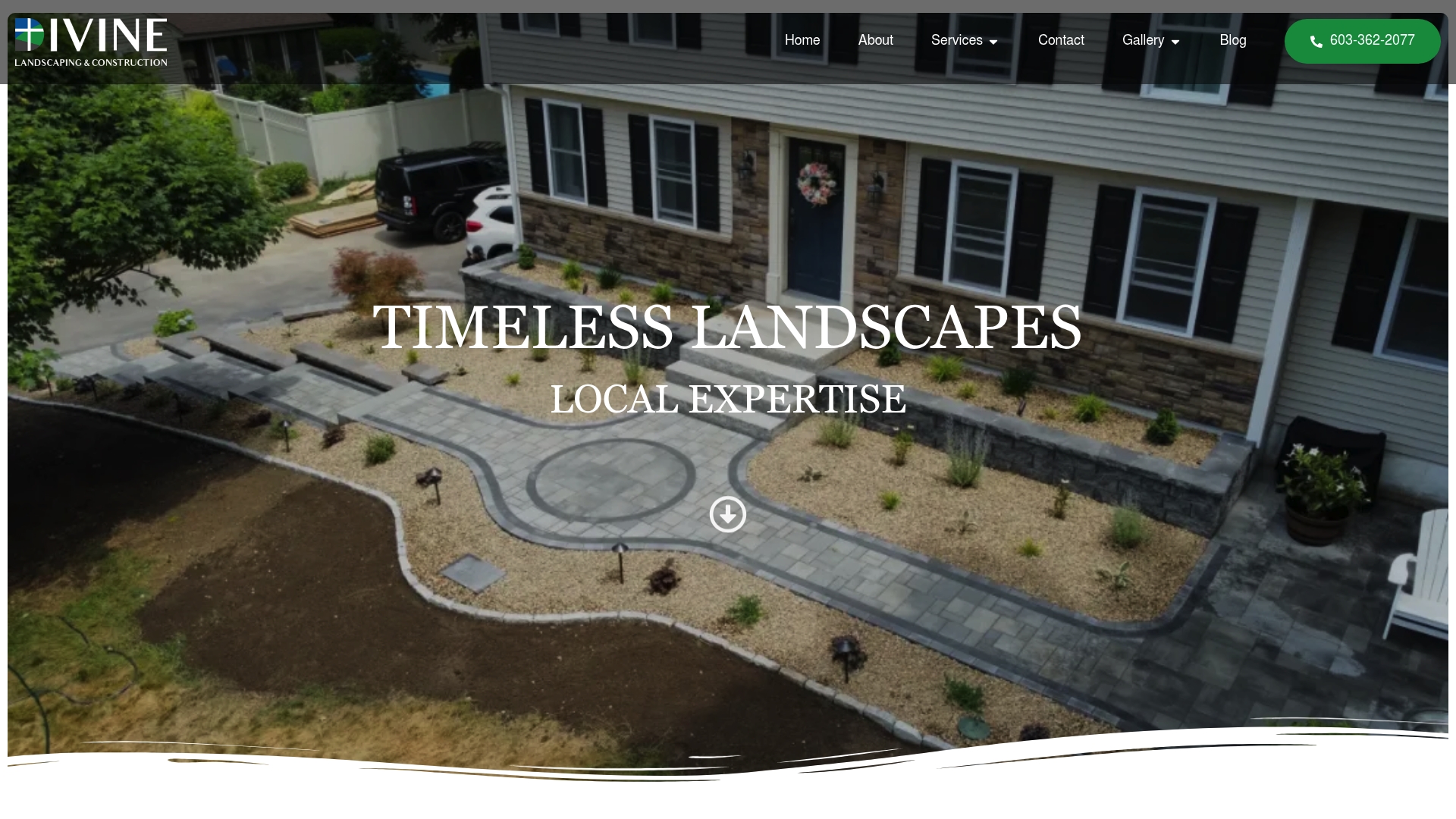
From foundation plantings and mature tree placement to hardscape services like patios, walkways, and retaining walls, Divinelandscapingllc handles the full scope of outdoor value improvements. Ongoing maintenance packages keep your investment performing year after year. If you are ready to see what your property’s outdoor space can do for its market value, request a quote and get a plan built around your goals and your New Hampshire property.
FAQ
How much does landscaping increase home value?
Well-executed landscaping increases perceived home value by 5.5% to 12.7% compared to minimal outdoor treatment, according to Virginia Tech research. On a $400,000 home, that range represents $22,000 to $50,800 in added value.
What landscaping has the best ROI?
Standard lawn care maintenance delivers an ROI of approximately 217%, making it the highest-returning landscaping investment per dollar spent. Mature shade trees and layered foundation plantings also rank among the top performers.
Does landscaping help a home sell faster in New Hampshire?
Yes. Routine maintenance and upgrades aligned with local buyer expectations yield faster sales and higher offers. New Hampshire buyers prioritize move-in-ready properties with clean, well-maintained outdoor spaces.
What plants add the most value to a New Hampshire property?
Mature shade trees like sugar maple and white oak add the most appraised value. Evergreen foundation plantings including arborvitae and inkberry holly maintain year-round curb appeal, which is especially important in New Hampshire’s long shoulder seasons.
Is hardscape part of property value landscaping?
Yes. Patios, walkways, retaining walls, and defined bed borders are all components of property value landscaping. Hardscape adds functional outdoor living space and visual structure, both of which buyers and appraisers factor into their valuations.