
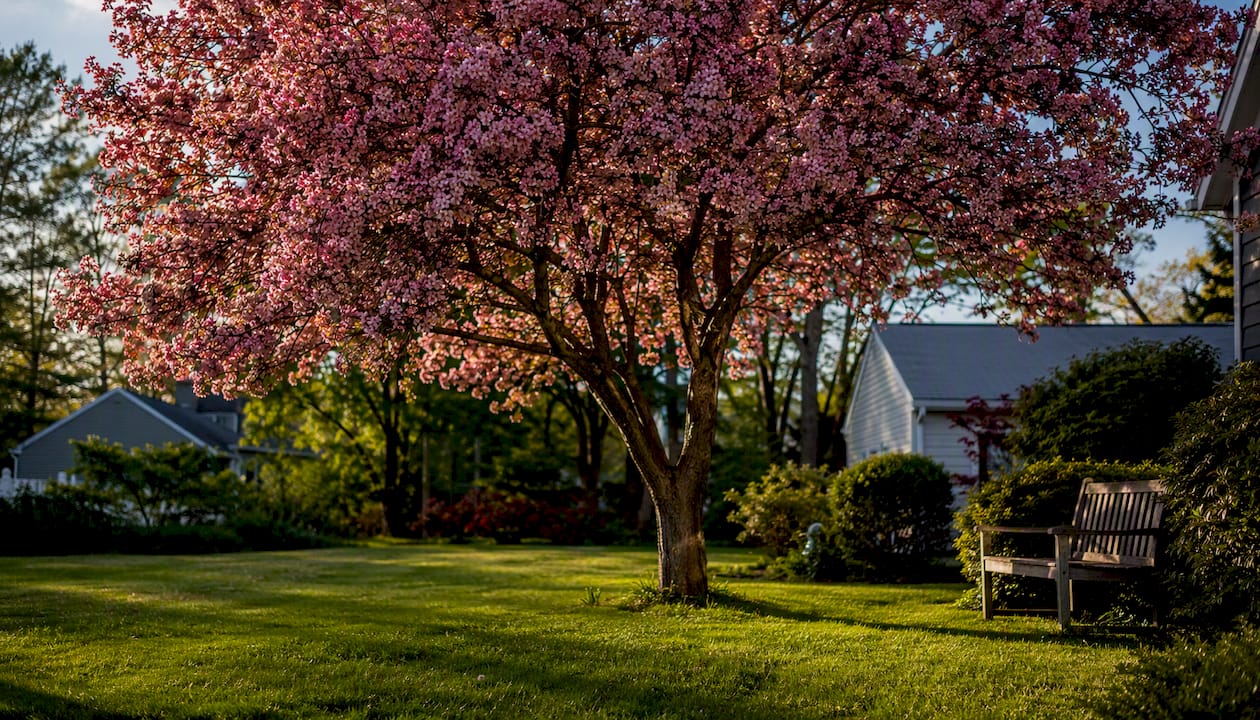
A specimen plant is a single plant grown and placed to serve as a focal point in the garden, chosen for its outstanding ornamental qualities rather than blended into a mass planting. Merriam-Webster defines a specimen plant as a plant grown for exhibition or to display its full development. Think of a flowering crabapple anchoring a front lawn, or a weeping blue spruce commanding a corner bed. That’s the gardener’s meaning, and it’s the one this guide covers. If you’re planning a focal planting in New Hampshire or nearby Massachusetts, Divinelandscapingllc can help you select and site the right plant from the start.
Key Takeaways
A specimen plant is a single plant grown for its ornamental qualities as a focal point, and choosing the right one for your site, scale, and season is the most important decision you’ll make in the planting process.
| Point | Details |
|---|---|
| Definition | A specimen plant is a single plant grown alone for ornamental effect, not massed with others. |
| Key selection factors | Match mature size to your space, confirm zone hardiness, and choose a plant with a predictable seasonal peak. |
| Establishment timeline | The first 12 months are critical; consistent watering and proper planting depth determine long-term success. |
| Placement rule | Site your specimen where it’s visible from the primary approach and contrasts clearly with its background. |
| Professional help | Divinelandscapingllc offers design, sourcing, installation, and irrigation services for specimen plantings in New Hampshire and Massachusetts. |
Table of Contents
- What is a specimen plant vs. a botanical plant specimen?
- What makes a plant a good specimen?
- How do you choose the right specimen plant for your yard?
- How do you plant and establish a specimen plant?
- What are the best specimen plants for U.S. gardens?
- Where should you place a specimen plant for maximum impact?
- When does a specimen plant make sense, and when doesn’t it?
- Why designers at Divinelandscapingllc reach for specimen plants first
- Divinelandscapingllc can help you pick, site, and install your specimen
- Sources
What is a specimen plant vs. a botanical plant specimen?
These two terms sound nearly identical but describe completely different things.
In horticulture, a specimen plant is a living plant displayed on its own for ornamental effect. Collins Dictionary puts it plainly: “a plant grown by itself for ornamental effect, rather than being massed with others in a bed or border.” That’s the definition you’ll use in your yard and in conversations with your landscaper.
In botany, a “plant specimen” means something else entirely: a preserved sample, usually dried and mounted on paper, used for scientific study and identification. Botanical specimens have been used for centuries to document plant diversity, with herbarium collections serving as physical vouchers for taxonomic research. The term appears in a completely different professional context.
When to use each term:
- Use specimen plant when you’re talking about a living focal plant in a designed garden or landscape.
- Use plant specimen (or herbarium specimen) when you’re discussing preserved plant material in a scientific or museum context.
- If someone at a nursery says “that would make a great specimen,” they mean it belongs in a prominent, solo position, not in a row or mass planting.
What makes a plant a good specimen?
Specimen plants are attention-getters. They earn their solo position by offering at least one trait that stops the eye and holds it, and the best ones deliver interest across multiple seasons.
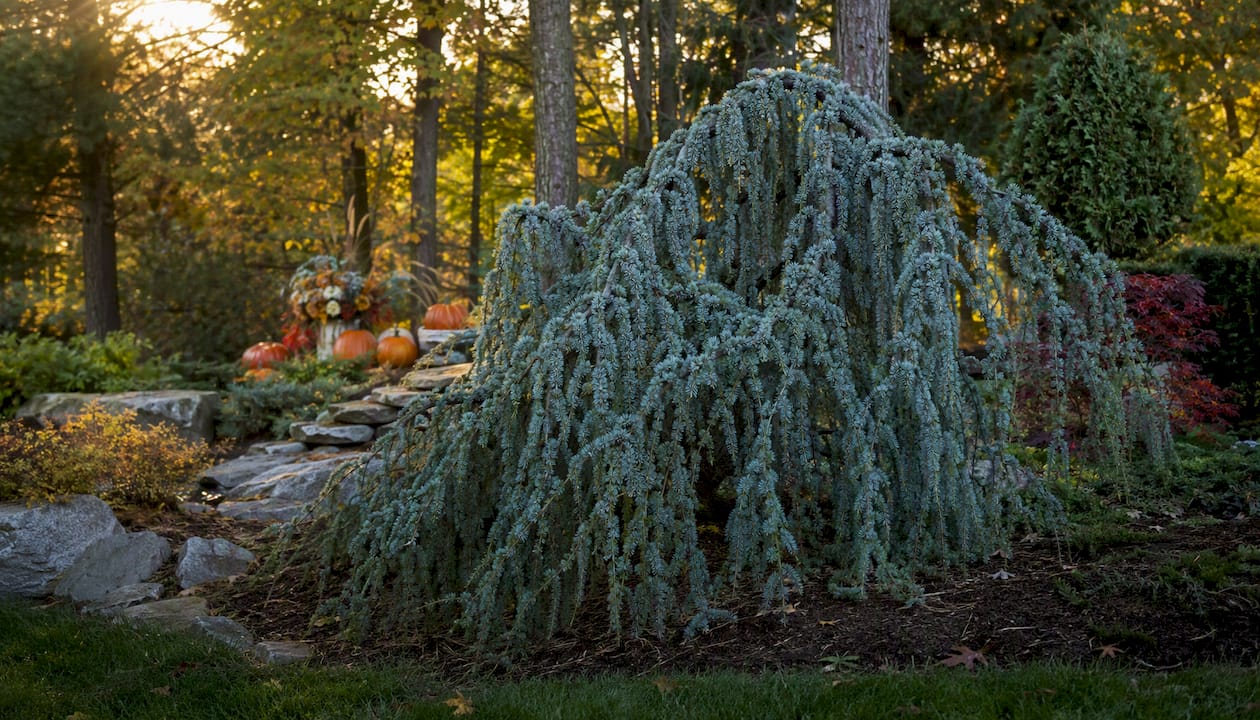
Extension and design professionals describe the most effective specimens as “extroverts”: plants with dramatic form, coarse texture, or unusual branching that contrast with quieter background plantings. The idea is deliberate balance. A bold, architectural plant reads clearly against a calm, fine-textured backdrop. A plant that blends in is not a specimen; it’s filler.
Traits that qualify a plant as a specimen:
- Scale and presence: Large enough to register from the primary viewing distance, whether that’s the street, the driveway, or a living-room window.
- Distinctive silhouette: Weeping, columnar, spreading, or sculptural branching that reads as a shape even in winter.
- Seasonal bloom or foliage interest: A reliable, showy peak, such as spring flowers, summer foliage color, or fall fruit.
- Unique bark or branching: Paperbark maple’s cinnamon-colored exfoliating bark or river birch’s peeling layers provide year-round texture.
- Contrast with the background: Color, texture, or form that separates the plant visually from what’s behind it.
- Fragrance: Not required, but a lilac or sweetbay magnolia near a path adds a sensory dimension that reinforces the focal effect.
- Predictable seasonal peak: You should know when it looks its best so you can plan the rest of the planting around that moment.
Pro Tip: Place your potential specimen against its actual background before you buy. A dark-foliaged plant disappears against a shadowed fence; that same plant pops against a white wall or a fine-textured lawn. Contrast is what makes a specimen read as a specimen.
How do you choose the right specimen plant for your yard?
Start with four quick questions before you look at a single plant tag: How large is the space? How much maintenance are you willing to do? What’s your budget for a plant that may take years to reach full impact? And what season matters most to you?
Decision checklist:
- Mature size: A 40-foot oak is a specimen for a large property, not a 50-foot-wide suburban lot. Confirm the plant’s mature height and spread, then double-check root spread relative to your foundation, driveway, and utilities. For foundation placement guidance, see how to landscape around your home foundation safely.
- Seasonal timing: Choose a plant that peaks when you’re most often outside or when curb appeal matters most to you.
- Maintenance commitment: Flowering trees like dogwood need little pruning; formal topiary specimens need consistent shaping. Match the plant to your schedule.
- Pest and disease history: Some plants are beautiful but regionally problematic. Ask your local extension office or nursery about known issues in your zip code.
- Budget and timeline: Larger, more mature specimens cost more upfront but deliver faster visual impact.
Scale guidance by plant size:
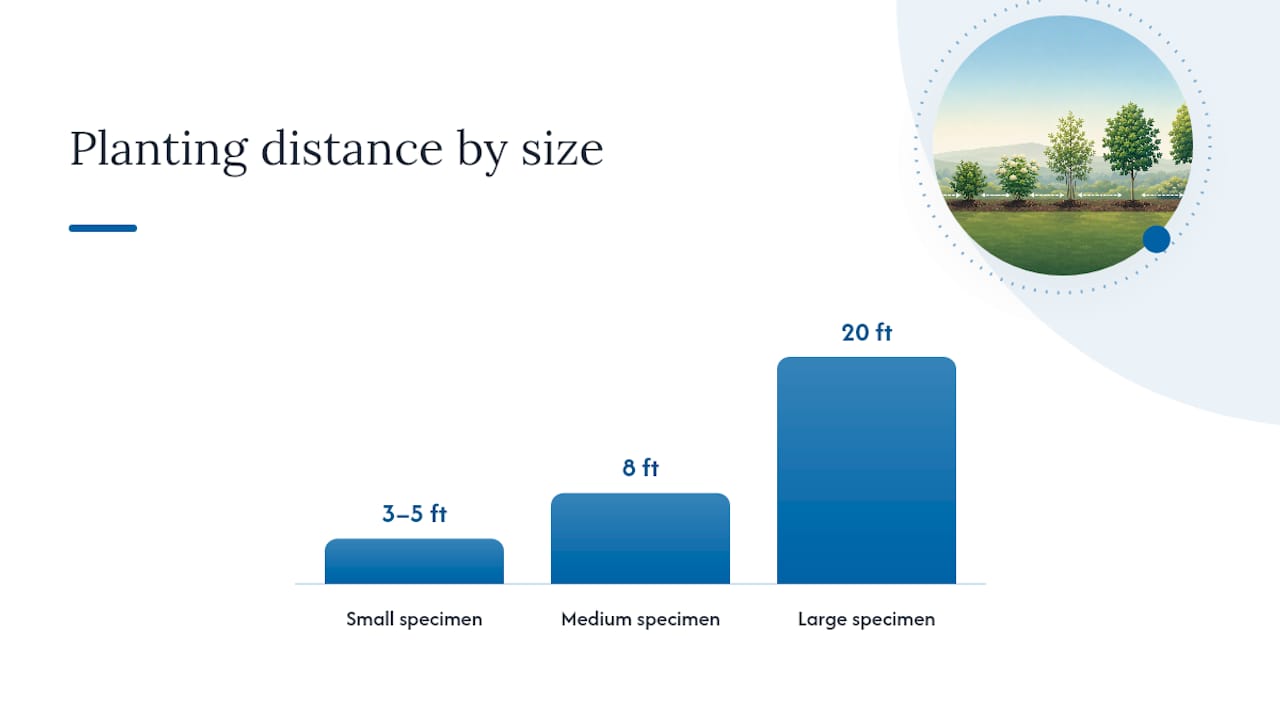
| Plant size category | Typical mature height | Recommended minimum planting distance from structures | Visual impact timeline |
|---|---|---|---|
| Small specimen (perennial or shrub) | Under 5 ft | 3–5 ft | 1–3 years |
| Medium specimen (large shrub or small tree) | 5–20 ft | 8 ft | 3–5 years |
| Large specimen (shade or ornamental tree) | 20–50 ft | 20 ft | 5–10 years |
Budget-wise, a container-grown small shrub specimen might run $50–$150 at a nursery. A semi-mature ornamental tree, balled and burlapped, commonly ranges from $300 to $1,500 or more depending on species and caliper. Professional installation adds to that cost but significantly improves establishment success.
How do you plant and establish a specimen plant?
The first growing season is the most critical period for any specimen. A plant that goes in the ground correctly and receives consistent early care will establish faster and reach its ornamental peak years sooner than one that’s planted carelessly and left to fend for itself.
Step-by-step planting and first-season care:
- Choose the right day. Plant in early spring or fall when temperatures are mild and soil moisture is naturally higher. Avoid planting during summer heat or frozen ground.
- Prepare the site. Loosen soil in a wide area, at least two to three times the root ball’s diameter. Amend with compost if drainage is poor, but don’t over-fertilize at planting.
- Dig the right hole. The hole should be as deep as the root ball and two to three times as wide. Planting too deep is one of the most common causes of specimen failure.
- Set the plant at the correct grade. The root flare (where the trunk widens at the base) should sit at or slightly above the surrounding soil level.
- Backfill and water in. Use the native soil you removed. Water thoroughly immediately after planting to settle the soil and eliminate air pockets.
- Mulch the root zone. Apply 2–4 inches of wood chip or shredded bark mulch in a ring around the plant, keeping it 3–4 inches away from the trunk or stems. Mulch conserves moisture, moderates soil temperature, and suppresses weeds.
- Stake only if necessary. Trees with a trunk caliper under 2 inches in a windy site may need staking for the first growing season. Use two stakes and flexible ties; remove them after 12 months so the trunk can develop natural strength.
- Water on a schedule. Deep, infrequent watering encourages roots to grow downward. A general guideline for newly planted trees and shrubs is 1 inch of water per week through the first growing season, adjusting for rainfall. A residential irrigation system can automate this during dry stretches.
- Hold off on heavy pruning. Let the plant put energy into root establishment during year one. Remove only dead or damaged branches.
- Monitor for pests and stress. Check leaves and stems monthly. Early intervention on aphids, scale, or fungal issues prevents minor problems from becoming major setbacks.
Pro Tip: Skip the fertilizer at planting. Nitrogen pushes top growth before roots are established, which stresses the plant. Wait until the second growing season, then apply a slow-release balanced fertilizer in early spring.
A well-planted specimen with consistent first-year watering typically establishes its root system within 12 months, after which drought tolerance and growth rate improve noticeably.
What are the best specimen plants for U.S. gardens?
Specimen trees are natural focal points because their mature size and form command attention. Specimen shrubs are often 5 feet or taller and showy at least once a year, and selecting plants that peak in different seasons keeps your yard interesting from March through December.
Pro tip for seasonal staging: Choose at least two specimens that peak at different times. A flowering crabapple for spring and an oakleaf hydrangea for summer means your yard has a changing focal point rather than one burst of interest followed by months of nothing.
Where should you place a specimen plant for maximum impact?
The core placement rule is straightforward: your specimen should be visible from the primary approach and contrast clearly with whatever is behind it. Everything else in the design supports that goal.
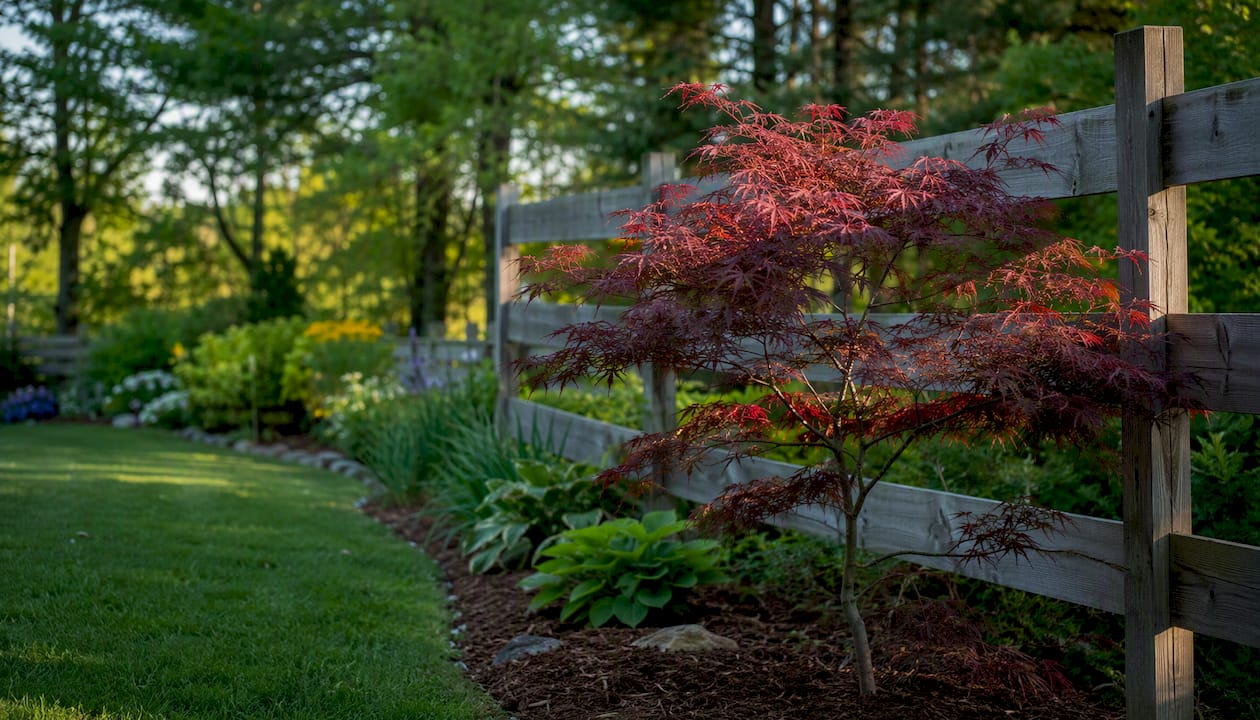
Think about sightlines first. Good specimen placement depends on approach views and window sightlines; a specimen should read clearly from the driveway, the front walk, or the main living-room windows. If you can’t see it from those vantage points, it’s not doing its job. Designers describe this as “visual punctuation,” a plant that stops the eye and emphasizes an architectural feature like an entry, a chimney stack, or a garden gate.
Background and layering matter just as much as the plant itself. A specimen planted against a busy, mixed-shrub border disappears. Place it against a calm backdrop: a lawn panel, a painted fence, a stone wall, or a mass of fine-textured evergreens. Hardscape can frame a specimen the way a mat frames a painting. A simple stone or brick surround, a low retaining wall, or a paved circle around the base all signal to the eye that this plant is intentional and worth looking at.
Pro Tip: For nighttime impact, light your specimen from below and slightly to the side rather than straight up. Uplighting from a 45-degree angle reveals texture and form without washing out the plant’s color. A warm 2700K–3000K LED fixture works well for most ornamental trees and shrubs.
For ideas on integrating specimen plants into a private backyard setting, backyard privacy landscaping offers practical layering strategies that pair well with a focal plant.
When does a specimen plant make sense, and when doesn’t it?
A specimen is the right call when you want a single, clear focal statement and you have the space, budget, and patience to support it, or consider an artificial living wall as an alternative or complement to living specimens. If you want to fill a large area quickly or create a lush, layered look from the start, massing plants is often more practical and cost-effective.
Reasons to choose a specimen:
- Creates immediate visual hierarchy in the garden
- Adds curb appeal and can increase perceived property value
- Delivers multi-season interest when the right plant is chosen
- Works in small yards where a single bold plant is more effective than a crowded border
Reasons to reconsider:
- A single plant failure from pests, disease, or storm damage removes your entire focal point
- High-impact specimens often take 5–10 years to reach their ornamental peak
- Some specimen choices require consistent pruning, pest management, or irrigation
- Upfront cost for a semi-mature specimen can be significant
Quick rule of thumb: If your yard is under 5,000 square feet, one well-chosen specimen tree or large shrub is usually enough. Larger properties can carry two or three, provided they peak at different seasons and are sited on different sightlines so they don’t compete with each other.
Why designers at Divinelandscapingllc reach for specimen plants first
A specimen plant is often the first decision made in a professional landscape design, not the last. When the Divinelandscapingllc team begins a residential design, the specimen anchors the composition. Every other planting decision, the layering shrubs, the groundcovers, the hardscape lines, radiates outward from that focal point. Without it, a yard can feel like a collection of plants rather than a designed space.
A well-sited specimen also ages gracefully. A Japanese maple or a weeping spruce installed today will be more impressive in ten years than it is now, which means the investment compounds over time. That’s a different calculus than annual color or seasonal containers, and it’s one reason professional designers consistently recommend at least one specimen in every residential project. For a deeper look at how design principles apply to New Hampshire properties, landscape design for New Hampshire homeowners walks through the full process.
Divinelandscapingllc can help you pick, site, and install your specimen
Choosing the wrong specimen plant for your site is an expensive mistake. The wrong species, the wrong scale, or the wrong placement can mean years of disappointment or a costly removal. Divinelandscapingllc takes that guesswork off your plate.

The team handles every step: site assessment, plant sourcing, proper installation, and first-year care planning, including irrigation and lighting that support establishment and nighttime impact. Whether you want a single statement tree for your front yard or a full landscape design that integrates multiple specimens across your property, Divinelandscapingllc brings the expertise to get it right the first time. Serving residential and commercial properties in New Hampshire and neighboring Massachusetts, the team is ready to help you plan your focal planting. Contact Divinelandscapingllc today to schedule a design consultation.
Sources
- Botanical specimen – Wikipedia
- SPECIMEN PLANT Definition & Meaning – Merriam-Webster
- IFAS extension publication (EP433)
- What Is A Specimen Tree – Gardening Know How
- Specimen plants – PlantAddicts