

Commercial outdoor living is defined as the professional design and construction of durable, functional exterior spaces built specifically for business and public use. These spaces include patios, terraces, courtyards, and pergola-covered dining areas that extend a venue’s operational footprint while meeting commercial-grade standards for durability, accessibility, and service flow. Unlike a residential backyard patio, a commercial outdoor space must handle heavy foot traffic, comply with ADA requirements, and directly support revenue generation. Divinelandscapingllc works with both homeowners and business owners across New Hampshire to plan, build, and finish these spaces to professional standards.
What is commercial outdoor living and how does it differ from residential?
Commercial outdoor living refers to purpose-built exterior areas like patios, terraces, and courtyards designed to extend business or public facilities with high durability and functional design. The core difference from residential outdoor spaces comes down to three factors: load capacity, compliance, and operational intent. A homeowner builds a patio for personal enjoyment. A restaurant or hotel builds one to seat guests, generate revenue, and meet local code requirements.
Residential furniture and surfaces simply are not built for the demands of a commercial setting. Buying residential-grade items leads to replacement after a single season due to insufficient durability. Commercial outdoor design accounts for drainage, surface grade, wind loads, and the constant movement of staff and guests throughout the day and evening.
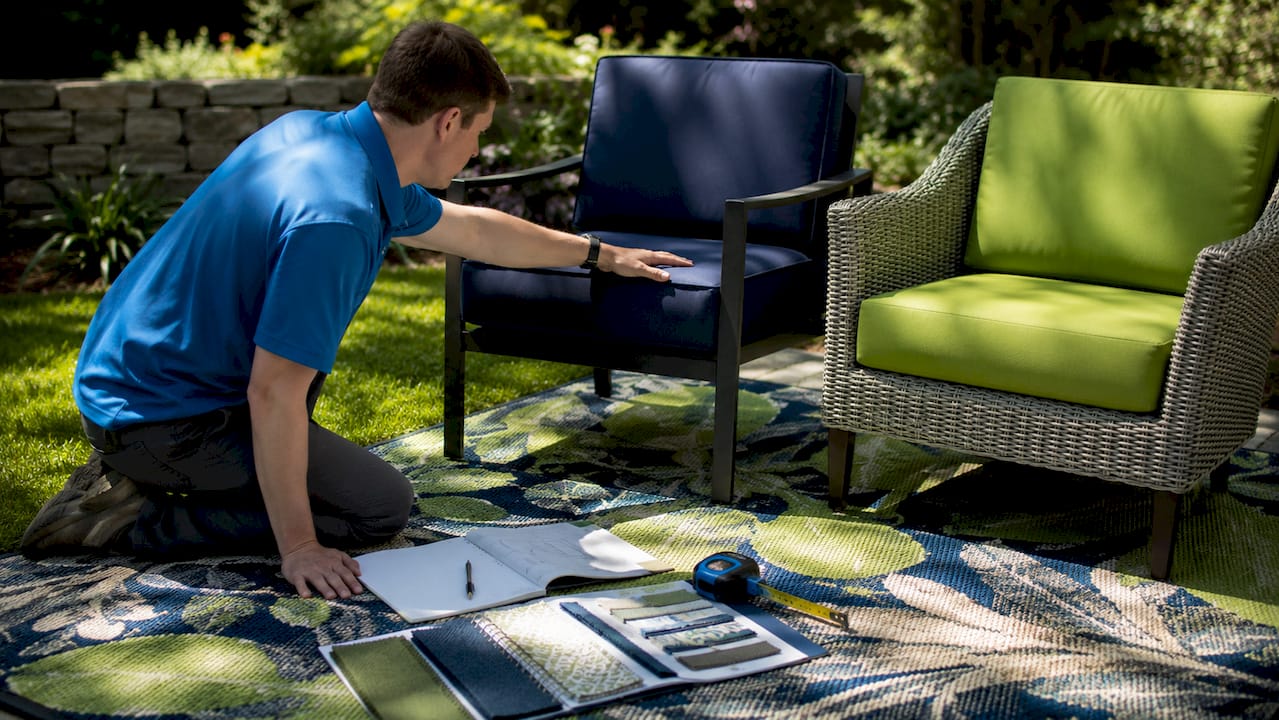
The industry term most professionals use is “commercial hardscape design,” which covers the full scope of paved surfaces, structural shade, seating areas, and service infrastructure. You will also hear the phrase “commercial outdoor living spaces” used broadly to describe any exterior area a business develops for guest use. Both terms apply here, and understanding the distinction helps you plan and budget correctly from the start.
What are the essential design and layout standards for commercial outdoor spaces?
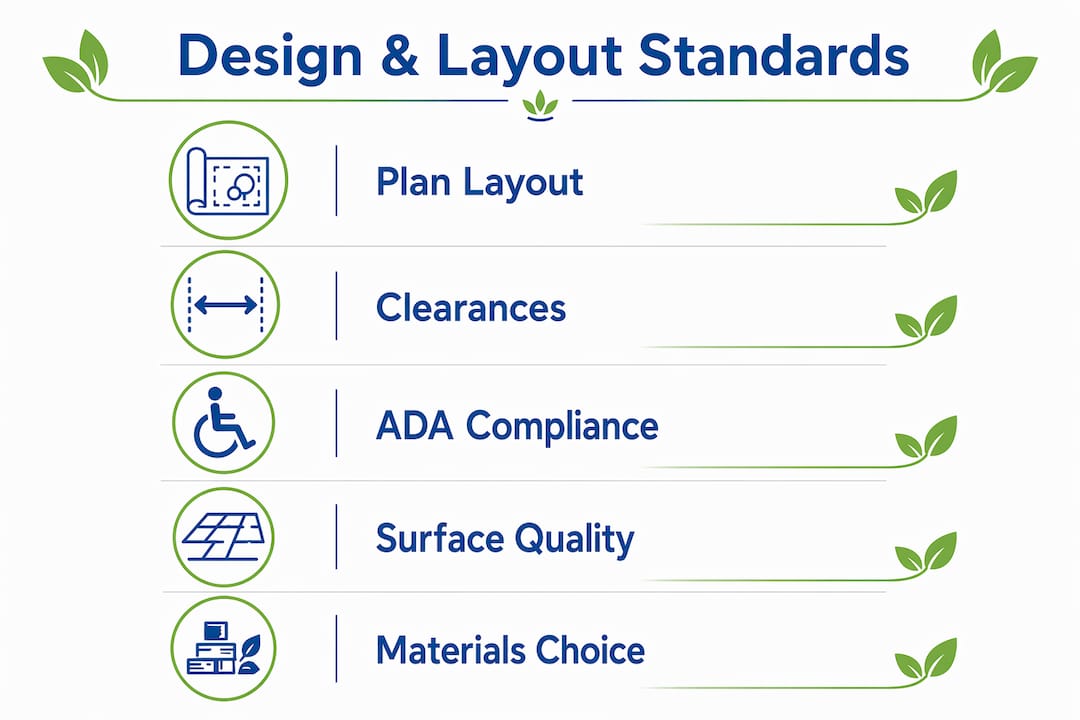
Layout is where most commercial outdoor projects succeed or fail. Professional standards recommend 30–36 inches of clearance between tables to allow staff movement and protect guest privacy. Tight residential-style spacing creates service bottlenecks and frustrates guests.
ADA compliance is not optional. Surfaces must be firm, stable, and slip resistant. Poured concrete and commercial pavers meet these requirements far better than gravel or elevated wood decks. Ramps, accessible paths, and level transitions must be planned into the layout from the beginning, not added as an afterthought.
Service flow design shapes the entire guest experience. At least 36-inch traffic lanes and clear sightlines to server stations prevent service lag and improve guest satisfaction. Placing an outdoor bar or service station in the space reduces staff trips indoors and keeps revenue capture high.
Key layout standards to build into your plan:
- Table clearance: 30–36 inches between tables for staff and guest comfort
- Traffic lanes: Minimum 36 inches wide for server paths
- ADA paths: Firm, level surfaces with ramp access where grade changes occur
- Sightlines: Server stations visible from all seating zones
- Emergency egress: Clear paths meeting local fire code requirements
Pro Tip: Plan your layout on paper at a 1:20 scale before any construction begins. Mark every server path, entry point, and accessible route. Catching a clearance problem on paper costs nothing. Fixing it in concrete costs thousands.
How do commercial outdoor spaces enhance guest experience and increase revenue?
Ambiance is not decoration. As hospitality design professionals note, ambiance is a revenue strategy. Every design choice, from lighting to shade coverage, directly affects how long guests stay and how much they spend.
Shade is the single most important comfort factor in any outdoor dining area. Pergolas and retractable awnings provide consistent coverage that umbrellas cannot match. Consistent shade correlates with longer guest stays and higher per-table revenue. A well-shaded patio stays usable from late April through October in New England, adding months of productive seating capacity.
Lighting completes the picture after dark. String lights, pendant fixtures, and perimeter lighting work together to dissolve patio edges at night, creating an intimate environment guests prefer for evening dining. Layered lighting extends your revenue window well past sunset.
The spending data backs this up. 43% of millennials spend more on alcohol when dining in well-designed outdoor spaces with ample shade and weather protection. That is a direct, measurable return on your design investment.
“Ambiance is not decoration; it is a revenue strategy.” — The Rail, 2026
Elements that drive guest spending and longer stays:
- Permanent or semi-permanent shade structures like louvered pergolas
- Layered lighting with string, pendant, and perimeter fixtures
- Wind screens or privacy panels that reduce noise and drafts
- Comfortable, weather-resistant seating with cushions rated for outdoor use
- Outdoor heaters or fire features that extend the usable season into cooler months
What materials and furniture work best for commercial outdoor areas?
Material selection determines how long your investment lasts and how much it costs to maintain. ADA-compliant hardscape surfaces like poured concrete and commercial pavers outperform elevated decks in durability, safety, and maintenance. Concrete and pavers handle freeze-thaw cycles in New Hampshire without warping, splintering, or requiring seasonal sealing.
Commercial-grade furniture differs from residential furniture in weight, construction, and finish. Commercial outdoor furniture must be heavier than residential types to withstand wind and frequent use, while also being easy to sanitize and rearrange. Aluminum frames with powder-coat finishes, high-density polyethylene (HDPE) lumber, and marine-grade fabrics are the standard choices for high-traffic settings.
Pro Tip: Choose furniture with a minimum weight of 25 pounds per chair. Lighter pieces blow over in wind, create liability issues, and signal low quality to guests.
| Feature | Commercial-grade | Residential-grade |
|---|---|---|
| Frame material | Welded aluminum or steel | Lightweight aluminum or plastic |
| Fabric rating | Solution-dyed, UV-resistant | Standard outdoor fabric |
| Weight | 25+ lbs per chair | 10–18 lbs per chair |
| Warranty | 3–5 years commercial use | 1 year limited |
| Sanitation | Smooth, non-porous surfaces | Varies widely |
Modular furniture systems allow flexible reconfiguration for different events and weather without costly construction changes. This flexibility is especially valuable for venues that host private events, farmers markets, or seasonal pop-ups alongside regular dining service. Investing in quality materials upfront avoids the cycle of annual replacement that drains operating budgets.
You can review patio material options suited to New Hampshire’s climate before committing to a surface type.
How do local regulations affect commercial outdoor living design?
Regulations shape every commercial outdoor project before a single paver is laid. Local requirements typically mandate at least 4–6 feet of clear walkway width, fire code compliance, and zoning approval for alcohol service in outdoor areas. Skipping the permit process does not save time. It creates fines, forced demolition, and reopening delays.
Here is the standard sequence for navigating compliance:
- Check zoning first. Confirm your property allows outdoor commercial seating and any planned structures like pergolas or shade sails.
- Pull building permits. Any permanent structure, including a poured concrete patio, requires a permit in most New Hampshire municipalities.
- Verify ADA requirements. Confirm surface grades, accessible path widths, and ramp specifications with your local building department.
- Address fire code. Maintain required egress widths and keep combustible materials away from heat sources like outdoor fireplaces.
- Plan for noise and wind. Sound-dampening panels and wind-weighted furniture are practical requirements, not optional upgrades, in many commercial settings.
- Budget for inspections. Factor inspection timelines into your project schedule. Delays at inspection stage are the most common cause of missed opening dates.
Operational details matter as much as code compliance. Service station placement, trash and recycling access, and staff pathways all need to be built into the design. A patio that looks great but forces servers to walk 60 feet to reach a drink station will underperform every shift.
Key takeaways
Commercial outdoor living spaces succeed when designed as permanent, revenue-generating infrastructure that balances ADA compliance, durable materials, service flow, and guest comfort from the first planning stage.
| Point | Details |
|---|---|
| Define the space correctly | Commercial outdoor living requires commercial-grade materials, ADA compliance, and service flow planning. |
| Prioritize layout clearances | Use 30–36 inches between tables and 36-inch traffic lanes to protect service efficiency. |
| Invest in shade and lighting | Pergolas and layered lighting extend usable hours and directly increase guest spending. |
| Choose commercial-grade materials | Poured concrete, commercial pavers, and welded aluminum furniture outlast residential alternatives. |
| Plan permits early | Pull zoning and building permits before design is finalized to avoid costly delays. |
Why I treat outdoor commercial spaces as year-round infrastructure
Most business owners I talk to think of their patio as a spring project. They start planning in March, rush installation in May, and wonder why something always goes wrong during the busiest weeks of summer. That pattern is the problem.
Planning commercial outdoor spaces as permanent infrastructure in the off-season prevents costly emergency fixes during peak times. The owners who get the best results start their design conversations in October or November. Permits are pulled in January or February. Installation happens in early spring before the season opens. By the time guests arrive, everything is settled, inspected, and ready.
The other mistake I see constantly is treating guest comfort as secondary to aesthetics. A beautiful patio that puts guests in direct afternoon sun, or places them next to a noisy HVAC unit, will underperform a plain one that gets airflow and shade right. Microclimates matter. Every table position should be evaluated for sun angle, wind exposure, and noise before the layout is locked.
Modular furniture and flexible hardscape design solve the adaptability problem without requiring reconstruction. A space that can shift from 10 tables to 4 large event configurations in under an hour gives you a genuine competitive advantage. Build that flexibility in from the start, and your outdoor space becomes a year-round asset rather than a seasonal afterthought.
— Damian
Divinelandscapingllc can build your commercial outdoor space right
Designing a commercial outdoor space that performs well season after season takes more than good taste. It takes knowledge of drainage, grade, materials, local codes, and service flow.
Divinelandscapingllc designs and builds commercial outdoor living spaces across New Hampshire and Massachusetts, from poured concrete patios and pergola installations to full hardscape and lighting packages. Every project is planned for durability, ADA compliance, and long-term value. If you are ready to build a space that works as hard as your business does, request a quote and get a professional assessment of your site.
FAQ
What is a commercial outdoor living space?
A commercial outdoor living space is a professionally designed exterior area, such as a patio, terrace, or courtyard, built for business or public use with commercial-grade materials and compliance standards. These spaces are purpose-built to handle high traffic, generate revenue, and meet ADA and local code requirements.
What is the difference between commercial and residential outdoor furniture?
Commercial outdoor furniture uses welded aluminum or steel frames, UV-resistant fabrics, and non-porous surfaces rated for heavy daily use and easy sanitation. Residential furniture lacks the weight, durability, and finish quality needed for a commercial setting and typically fails within one season of commercial use.
How much clearance do tables need in a commercial outdoor dining area?
Professional standards recommend 30–36 inches of clearance between tables to allow staff movement and protect guest privacy. Tight spacing below 24 inches creates service bottlenecks and reduces guest satisfaction.
Do I need a permit for a commercial outdoor patio?
Most New Hampshire municipalities require building permits for any permanent outdoor structure, including poured concrete patios and pergolas. Zoning approval for outdoor seating and alcohol service is also required before construction begins.
What materials are best for a commercial outdoor patio surface?
Poured concrete and commercial pavers are the top choices for commercial outdoor surfaces because they are ADA-compliant, durable through freeze-thaw cycles, and low maintenance. Elevated wood decks require more upkeep and present greater accessibility challenges in high-traffic commercial settings.