
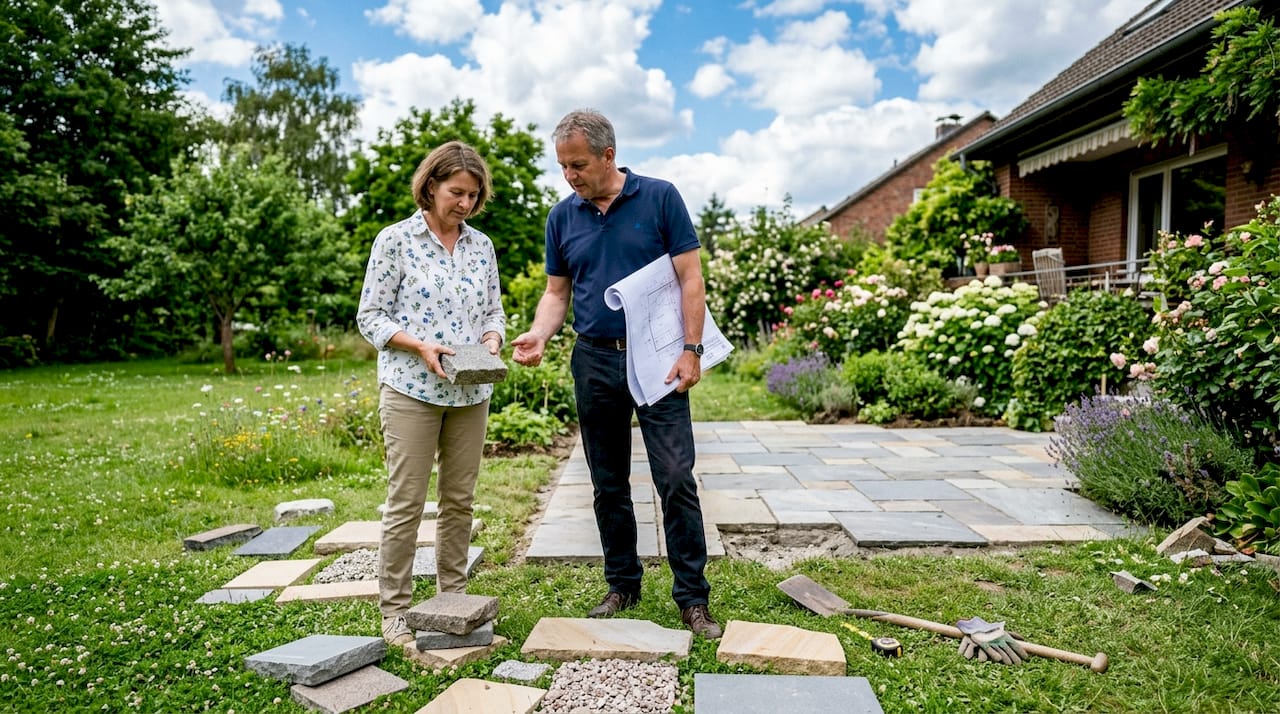
Hardscaping is defined as the permanent, non-living structural elements in outdoor design, including patios, walkways, retaining walls, driveways, decks, and pergolas built from stone, concrete, brick, wood, or metal. Understanding what is hardscaping gives you a clear foundation for planning any outdoor project, whether you own a single-family home in New Hampshire or manage a commercial property. Hardscaping provides the structural “bones” of a landscape, while softscaping adds the living layer of plants, grass, and trees. Together, they create outdoor spaces that are both functional and visually appealing. Divinelandscapingllc designs and installs both elements for residential and commercial clients across New Hampshire.
What is hardscaping and what materials does it use?
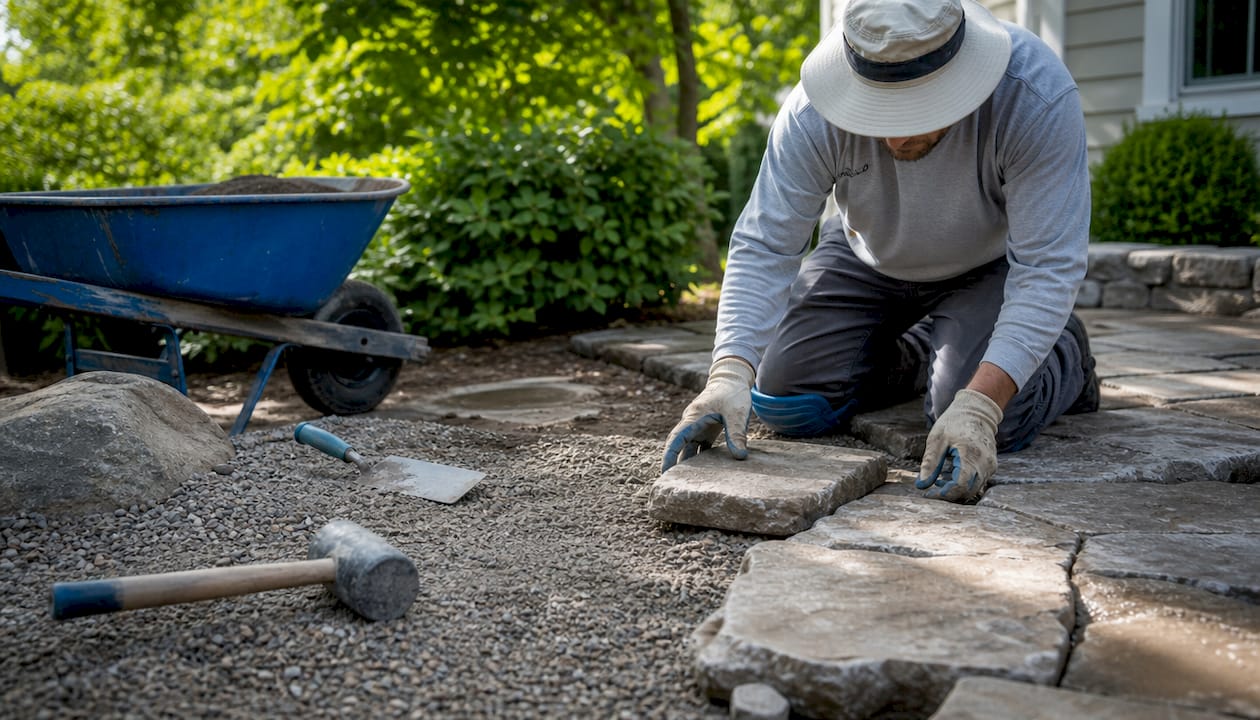
Hardscaping covers non-living structural elements like patios, walkways, retaining walls, driveways, and outdoor structures. The material you choose determines how your hardscape performs over decades, not just how it looks on day one.
The most common hardscape materials each carry distinct trade-offs:
- Natural stone (bluestone, granite, flagstone): Extremely durable and visually timeless. Higher upfront cost, but minimal replacement over time.
- Concrete pavers: Affordable, consistent in size, and easy to repair by replacing individual units. Susceptible to staining without sealing.
- Brick: Classic look with good durability. Can shift in freeze-thaw climates like New Hampshire without a proper base.
- Pressure-treated or composite wood: Common for decks and pergolas. Composite resists rot and insects better than natural wood but costs more initially.
- Metal (aluminum, steel, wrought iron): Used for edging, pergola frames, and railings. Requires rust-resistant coatings in wet climates.
Pro Tip: For New England climates, choose materials rated for freeze-thaw cycles. Concrete pavers and natural stone outperform poured concrete slabs because individual units flex and shift without cracking the entire surface.
The best patio materials for New Hampshire depend on your drainage grade, sun exposure, and how much foot traffic the surface will handle. A driveway needs a different base depth and material density than a garden walkway.
Common hardscape features you can add to a residential or commercial property include:
- Patios and outdoor living areas
- Front and rear walkways
- Retaining walls for grade changes
- Driveways and parking areas
- Decks and pergolas
- Outdoor kitchens and fire pit surrounds
How does hardscaping differ from softscaping?
Hardscaping is the structural framework of your yard. Softscaping is everything living: grass, garden beds, shrubs, trees, and perennials. Think of hardscaping as the floors, walls, and ceilings of a room, and softscaping as the furniture and decor placed inside it. One defines the space; the other fills it with life.
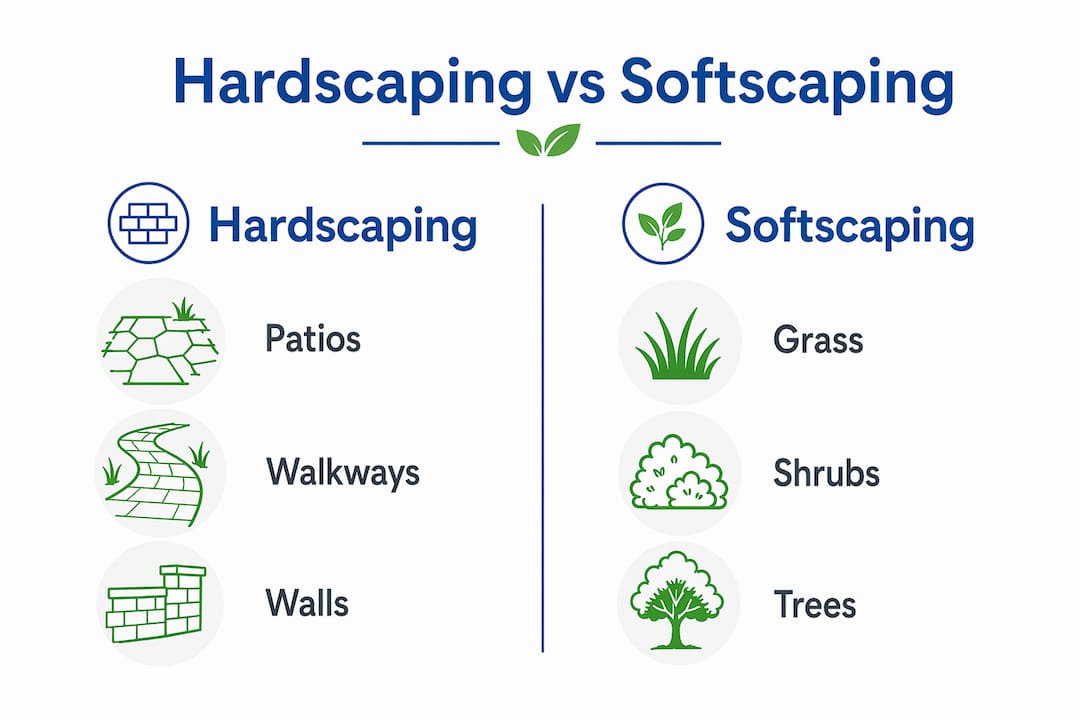
The distinction matters practically. Hardscape elements stay in place year-round and require no watering, fertilizing, or seasonal replanting. Softscape elements change with the seasons, need ongoing care, and can be damaged or removed without major structural consequences. In New Hampshire winters, softscaping largely disappears. Your hardscape remains visible and functional all year.
Choosing hardscaping vs. softscaping for your yard is not an either-or decision. The two work together. A well-designed patio surrounded by garden beds, for example, uses hardscape to define the entertaining zone and softscape to soften the edges and add color. The ratio depends on your goals:
- More hardscape: Lower ongoing maintenance, more usable outdoor space, better accessibility
- More softscape: Greater biodiversity, natural cooling, stronger visual seasonality
- Balanced mix: The most common approach for residential properties seeking both function and curb appeal
Hardscaping provides the permanent image of a property through every season. Softscaping adds beauty during growing months but cannot carry the visual weight of a property in january or february.
Why does professionally planned hardscaping benefit homeowners?
Professionally designed hardscaping increases usable outdoor living area, raises property value, and reduces long-term maintenance costs compared to high-maintenance softscape-heavy yards. These are not minor gains. A well-built patio or retaining wall adds functional square footage to your home without the cost of an interior addition.
Commercial hardscaping supports ADA compliance, maximizes usable space, and lowers maintenance costs compared to high-water softscapes. For property developers and commercial owners, those savings compound across large surface areas and multiple seasons.
For residential homeowners, the benefits are equally concrete:
- Curb appeal: A paved walkway and defined entry create an immediate visual impression that landscaping alone cannot match.
- Property value: Professional hardscape installation and property value are directly linked. Outdoor living spaces consistently rank among the top return-on-investment improvements for residential properties.
- Accessibility: Smooth, level surfaces make yards usable for all ages and mobility levels.
- Drainage control: Proper hardscaping design manages drainage to prevent water pooling against foundations, one of the leading causes of property water damage and soil movement.
Pro Tip: Before finalizing any hardscape layout, have a professional assess your yard’s natural drainage slope. Grading errors are far cheaper to fix during design than after installation.
Hardscape structures also provide year-round visual professionalism. When your lawn goes dormant and flower beds empty out in late fall, a well-built patio, wall, or walkway keeps your property looking polished and intentional.
How do you maintain and seal hardscape surfaces?
Hardscape maintenance is straightforward when done on schedule. The most critical task is sealing, which protects surfaces against moisture infiltration, UV fading, stains, and freeze-thaw damage.
Follow this maintenance sequence for long-lasting hardscape surfaces:
- Clean thoroughly before sealing. Remove all dirt, moss, algae, and stains. Sealing over contamination traps problems beneath the surface.
- Wait for the curing window. New hardscapes require 30–90 days to cure before sealing. Sealing too early traps moisture and causes sealer failure.
- Choose the right sealer type. Penetrating sealers stay invisible and protect from within. Film-forming sealers add a glossy or satin finish on the surface. Choose based on your aesthetic goals and the material’s porosity.
- Apply in the right conditions. Temperature and humidity affect adhesion. Most sealers require dry conditions and temperatures above 50°F for proper bonding.
- Reapply on schedule. Sealing is needed every 3–5 years under normal conditions. High-traffic areas or harsh climates may require more frequent reapplication.
- Inspect annually. Check for cracking, shifting, or efflorescence (white mineral deposits) each spring. Catching minor issues early prevents costly repairs.
Neglecting sealing or delaying reapplication leads to irreversible surface damage that requires professional restoration, not just a fresh coat. The cost of preventive sealing is a fraction of the cost of replacing damaged pavers or concrete.
Pro Tip: For commercial hardscaping surfaces that handle heavy foot traffic, use a penetrating sealer rated for commercial-grade wear. It protects without creating a slippery film-forming surface that becomes a liability in wet conditions.
Maintaining commercial hardscaping surfaces also includes regular joint sand replenishment for paver systems, pressure washing to remove biological growth, and checking for settlement or heaving caused by freeze-thaw cycles. These tasks keep surfaces safe, compliant, and visually professional year after year.
Key Takeaways
Hardscaping is the permanent structural foundation of any well-designed outdoor space, and proper planning, material selection, and maintenance determine how long it performs and how well it looks.
| Point | Details |
|---|---|
| Hardscaping defined | Non-living structural elements like patios, walkways, walls, and driveways form the functional framework of any landscape. |
| Material selection matters | Choose materials rated for your climate; freeze-thaw-resistant options like concrete pavers and natural stone outperform poured slabs in New England. |
| Hardscape before softscape | Install structural elements first to protect plants and set correct drainage grades before any planting begins. |
| Sealing extends lifespan | Seal hardscape surfaces every 3–5 years to prevent moisture damage, UV fading, and freeze-thaw deterioration. |
| Year-round value | Hardscape maintains curb appeal and property value through every season, including winter months when softscaping is dormant. |
Hardscaping first: what years of project work have taught me
The single mistake I see most often on residential projects is the sequence error. Homeowners plant first, then call for a patio or retaining wall. By the time the equipment arrives, half the garden is gone. Installing hardscaping before softscaping is not a preference. It is the only logical order. Structural elements dictate drainage, grade, and access. Plants come after.
The second thing I have learned is that drainage is never obvious from a visual inspection. A yard that looks flat can slope toward a foundation in ways that only show up after a heavy rain. Every hardscape project should include a drainage assessment. Skipping it saves nothing upfront and costs significantly more when water damage appears two winters later.
Material choice is where I see the most regret. Homeowners sometimes choose the least expensive option to save money now, then replace it within a decade. Natural stone and quality concrete pavers cost more upfront. They also last 30 or 40 years with basic maintenance. The math almost always favors the durable material when you account for replacement and labor costs.
My honest advice: treat your hardscape budget as a long-term property investment, not a short-term expense. The patios, walls, and walkways you install today will still be there when you sell the house. Buyers notice quality materials. They notice poor drainage. They notice cracked surfaces. Getting it right the first time is always the better financial decision.
— Damian
How Divinelandscapingllc can help with your hardscape project
Divinelandscapingllc designs and builds custom hardscape and landscape projects for residential and commercial properties across New Hampshire. From initial site assessment to final installation, the team handles every phase with attention to drainage, grade, and material selection suited to New England’s climate.
Whether you need a new patio, a retaining wall, or a complete hardscape design and installation plan, Divinelandscapingllc brings the expertise to get it done right the first time. The team also offers masonry and hardscape services for projects that require structural precision and durable craftsmanship. Request a consultation to get a clear plan and accurate quote for your property.
FAQ
What is hardscaping in simple terms?
Hardscaping refers to the permanent, non-living structural elements in a yard or outdoor space, including patios, walkways, retaining walls, driveways, and decks built from stone, concrete, brick, wood, or metal.
What is the difference between hardscaping and landscaping?
Landscaping is the broader term covering all outdoor design work. Hardscaping is the structural, non-living portion of that work, while softscaping covers the living elements like plants, grass, and trees.
What is hardscape sealing and why does it matter?
Hardscape sealing is the application of a protective coating to paved surfaces to prevent moisture infiltration, UV fading, staining, and freeze-thaw damage. Reapplication every 3–5 years keeps surfaces structurally sound and visually intact.
What is commercial hardscaping?
Commercial hardscaping includes the same structural elements as residential hardscaping, such as walkways, plazas, and retaining walls, but designed for heavy foot traffic, ADA compliance, and long-term durability with minimal maintenance.
Should hardscaping be installed before planting?
Professional designers recommend installing all hardscape elements before planting. Heavy equipment used during hardscape construction damages plants, and structural work sets the final drainage grades that determine where and how plants can grow.