
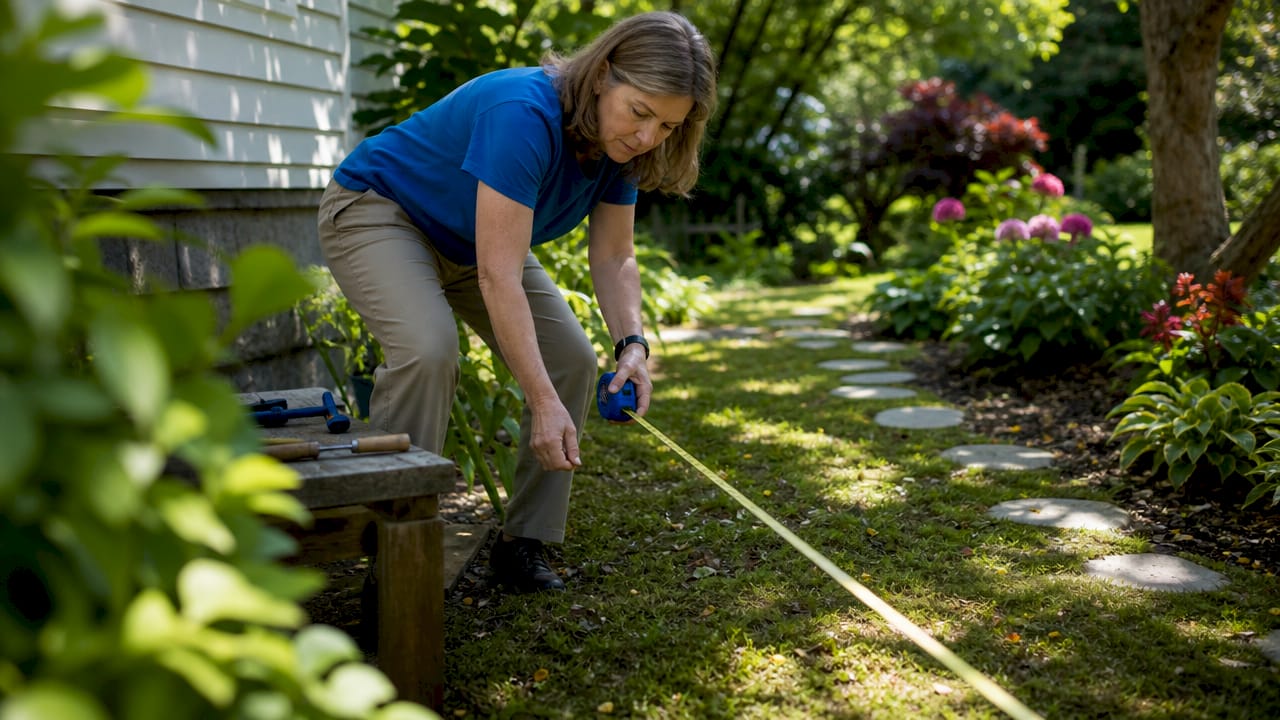
Landscape grading is defined as the deliberate reshaping of land surfaces to control water flow, prevent structural damage, and create stable outdoor spaces. The process, also called site grading or finish grading in professional practice, is the single most effective defense against basement leaks, foundation cracks, and soil erosion on residential and commercial properties. Industry-standard guidance calls for a minimum 2% slope away from any structure, which equals roughly a 2-foot drop per 100 feet of ground. Get this right before you plant a single shrub or pour a single patio slab, and you protect everything that comes after it.
What is landscape grading and how does slope work?
Slope is the engine that makes grading work. Without the right angle, water sits, saturates the soil, and finds the path of least resistance straight toward your foundation.
Industry standards set the minimum slope at 2% away from structures, and recommend 5% near foundations for extra protection. A 5% slope translates to a 6-inch drop over 10 feet. That difference matters most in the first 10 feet around your home, where standing water causes the most damage.
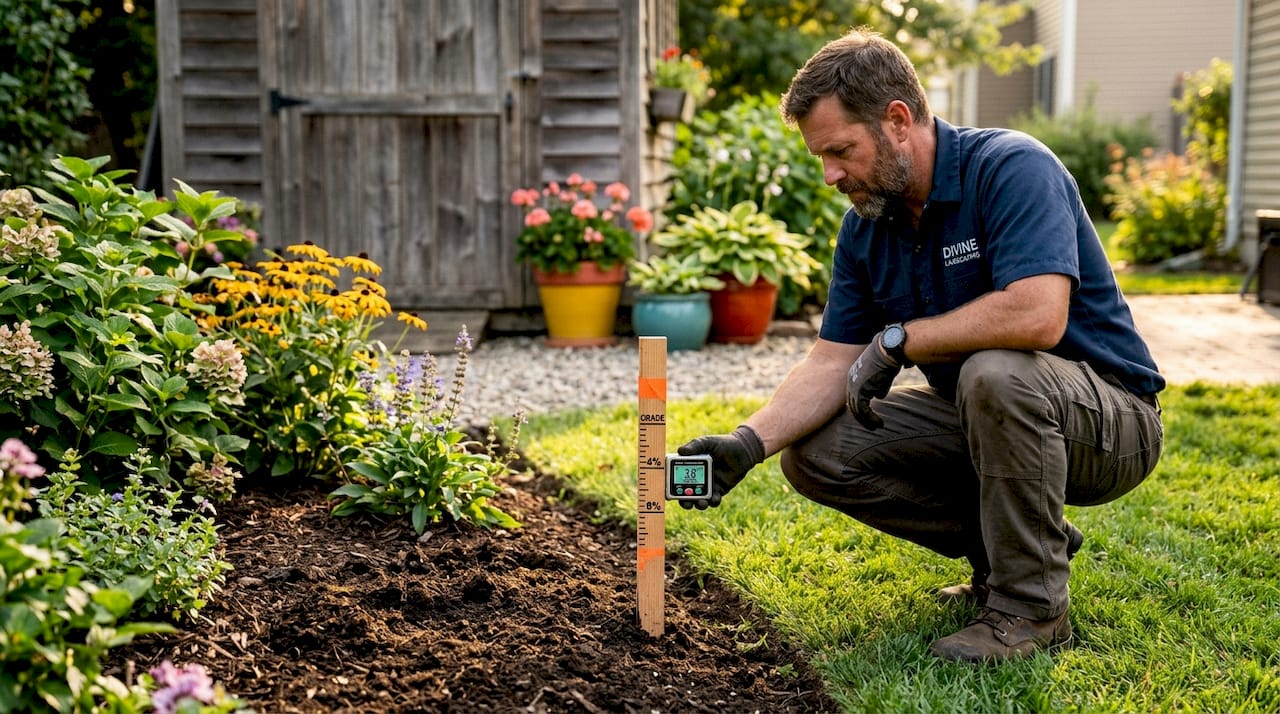
The upper limit is just as important. Slopes steeper than 33% (a 3:1 ratio) erode rapidly and become nearly impossible to mow, plant, or maintain. Staying within the 2%–33% range gives you effective drainage without creating a maintenance problem.
Measuring slope uses the rise-over-run concept. Rise is the vertical change in elevation. Run is the horizontal distance. Divide rise by run, then multiply by 100 to get your percentage. A 1-foot drop over 50 feet equals a 2% slope.
| Slope | Percentage | Best Use |
|---|---|---|
| 2-foot drop per 100 feet | 2% | Minimum standard away from structures |
| 6-inch drop per 10 feet | 5% | Recommended near foundations |
| 1-foot drop per 3 feet | 33% | Maximum before erosion risk increases |
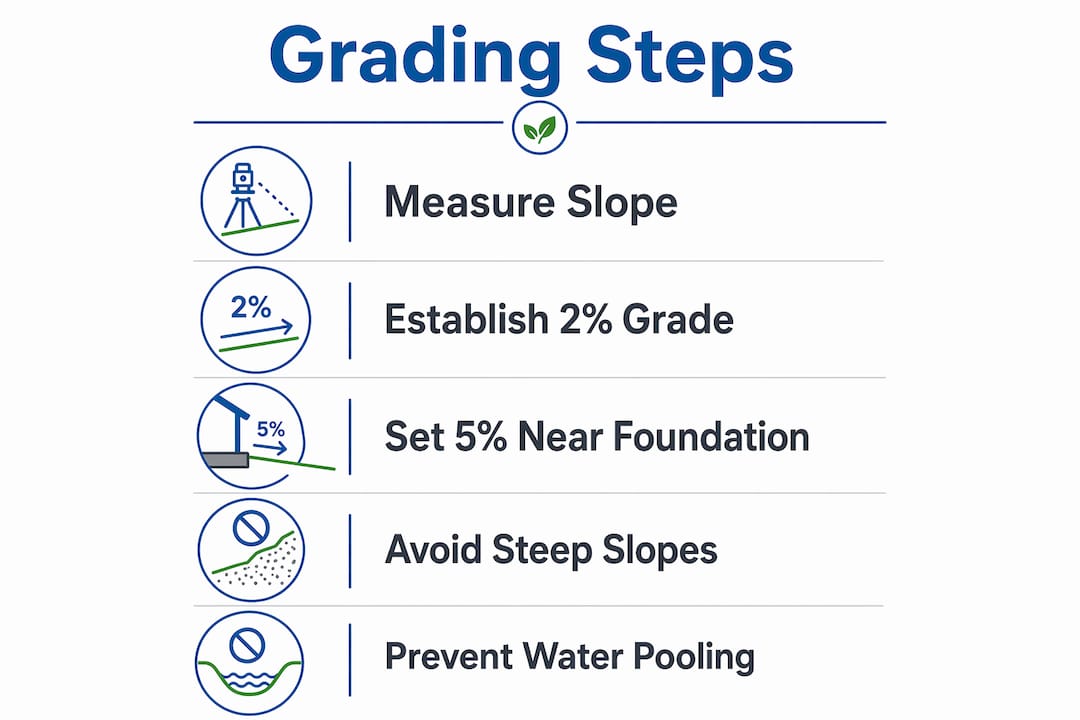
Pro Tip: Measure slope in multiple directions across your yard, not just away from the house. Water finds every low point, and a single overlooked depression can undo an otherwise well-graded property.
How do soil types influence grading techniques?
Soil type determines how fast water moves through the ground, which directly changes how steep your grade needs to be. Treating every yard the same way regardless of soil is one of the most common grading mistakes homeowners make.
Clay, sandy, and loamy soils each behave differently under rain and irrigation:
- Clay soils absorb water slowly. Water pools on the surface before it can penetrate, so clay yards need steeper slopes and often benefit from drainage amendments like gravel channels or French drains.
- Sandy soils drain quickly, which sounds ideal but creates an erosion risk. Water moves fast enough to carry topsoil with it, especially on steeper grades. Erosion control measures like ground cover plants or erosion fabric are often necessary.
- Loamy soils balance water retention and drainage naturally. They are the easiest soil type to grade effectively and require the least intervention.
The 2% minimum slope applies across all soil types, but clay soils may require up to 5% even in areas away from foundations to compensate for slow absorption. Knowing your soil type before you grade saves you from regrading the same area twice.
Pro Tip: Take a simple jar test before any grading project. Fill a jar with soil and water, shake it, and let it settle for 24 hours. The layers that form show you your sand, silt, and clay ratios, which tells you exactly what drainage challenges you are working with.
What are the practical steps involved in landscape grading?
Effective grading follows a clear sequence. Skipping steps, especially the measurement phase, is what separates a yard that drains well from one that floods every spring.
- Assess existing water flow. Walk your property during or immediately after rain. Mark every low spot, pooling area, and direction water naturally travels. This baseline tells you where the problems are before you move a single shovel of soil.
- Set your grade stakes. Drive stakes at regular intervals across the area you plan to grade. Use string lines stretched between stakes to establish your target slope visually before any soil moves.
- Use precision measurement tools. Laser levels and transit levels eliminate the “deception of perception,” a real problem where a slope that looks correct to the eye is actually flat or even reversed. Professionals rely on these tools because visual estimation fails consistently on gradual slopes.
- Move soil from high points to low points. Work in layers, compacting as you go. Loose, uncompacted fill settles unevenly over time and creates new low spots.
- Incorporate swales and berms where needed. Swales and berms redirect water around structures and toward safe discharge points like storm drains or vegetated areas. A swale is a shallow channel; a berm is a raised ridge of soil. Both are grading tools, not just decorative features.
Avoid creating bowl shapes or enclosed low areas anywhere in your yard. Water that collects with no exit point will saturate the soil, kill plant roots, and eventually find its way into your home.
Pro Tip: Document your slope measurements before and after grading with photos and written records. If drainage problems appear months later, that documentation tells you exactly what changed and where to look first.
Why is proper landscape grading indispensable for homeowners?
Poor grading is the primary cause of residential water problems, including basement leaks, foundation cracks, and chronic soil erosion. Fixing grading is almost always more cost-effective than installing mechanical drainage systems after the fact.
The benefits of correct grading extend well beyond water management. Proper grading supports plant health by preventing two opposite problems: root drowning from standing water and root dryness from water running off too fast. Plants in well-graded soil establish faster, grow stronger, and require less supplemental irrigation.
Correct landscape grading protects your foundation, keeps your lawn healthy, and reduces the long-term cost of property maintenance. It is the foundational step that every other outdoor improvement depends on. Skip it, and every patio, retaining wall, and planting bed you install is built on an unstable base.
Incorrect grading causes soil erosion that makes mowing and lawn care progressively harder. Uneven ground creates ruts, bare patches, and exposed roots that turn routine maintenance into a constant repair cycle. Addressing grading early eliminates that cycle before it starts.
For property developers, proper grading also affects the long-term usability of outdoor spaces. A flat, well-drained yard supports patios, walkways, and outdoor living areas without the settling and cracking that poor drainage causes. Understanding the scope of work in landscaping projects always starts with grading as a core task, not an afterthought.
Key Takeaways
Landscape grading is the foundational step in any outdoor project, controlling water flow, protecting structures, and supporting healthy plant growth across all soil types.
| Point | Details |
|---|---|
| Minimum slope standard | Maintain at least a 2% grade away from structures to direct water effectively. |
| Foundation protection | Use a 5% slope within 10 feet of your home’s foundation for maximum water defense. |
| Soil type matters | Clay soils need steeper grades and drainage amendments; sandy soils need erosion control. |
| Use precision tools | Laser levels and transit levels prevent visual estimation errors that cause drainage failures. |
| Grading beats mechanical drainage | Correcting grade is more cost-effective than installing French drains or sump systems after the fact. |
What I’ve learned after years of grading New Hampshire yards
The most common mistake I see homeowners make is trusting their eyes. A slope that looks right almost never is. The human eye cannot reliably detect a 2% grade, which means a yard that appears to drain away from the house may actually be directing water straight toward the foundation. That is why I never start a grading project without a laser level in hand.
The second thing I have learned is that grading is not a one-time fix. New Hampshire winters are hard on soil. Frost heave shifts grades, and settled fill creates new low spots every few years. I tell every homeowner to walk their property after the first hard rain of spring and look for pooling. Catching a grade problem early costs a fraction of what a foundation repair costs later.
I also push back on the idea that grading is only for problem yards. Every property benefits from a grading assessment before any major outdoor project. Installing a patio or a retaining wall on ungraded ground is like building on sand. The structure looks fine for a season, then starts to shift, crack, and settle. Getting the grade right first protects every dollar you invest after it.
If your property has complex slopes, multiple drainage directions, or clay-heavy soil, professional assessment is the right call. The cost of a professional grading plan is small compared to the cost of redoing hardscape or repairing a wet basement. For homeowners thinking about improving curb appeal, grading is always where I recommend starting.
— Damian
How Divinelandscapingllc approaches landscape grading for your property
Grading is the first conversation we have with every homeowner and property developer who contacts Divinelandscapingllc. Before we design a patio, plant a bed, or build a retaining wall, we assess how water moves across your property and where it needs to go.
Divinelandscapingllc serves residential and commercial properties across New Hampshire, offering expert grading assessments, custom drainage planning, and full landscape design services built around your property’s specific soil, slope, and drainage needs. Whether you are managing a single-family home or a multi-unit development, our team builds grading plans that protect your investment for the long term. Property managers can also explore our multi-tenant landscaping guidance for grading considerations specific to larger properties.
FAQ
What is landscape grading in simple terms?
Landscape grading is the process of reshaping the ground around your property so water flows away from structures and drains properly. The standard minimum slope is 2% away from any building.
What is landscape slope grading near a foundation?
Slope grading near a foundation uses a steeper 5% grade, equal to a 6-inch drop over 10 feet, to move water away from the structure before it can saturate the soil and cause leaks or cracks.
How do I know if my yard needs regrading?
Water pooling near your foundation, basement moisture after rain, and bare or eroded patches in your lawn are the clearest signs that your yard’s grade needs correction.
What tools do professionals use for landscape grading?
Professionals use laser levels and transit levels to measure slope accurately. Visual estimation is unreliable for detecting gradual slopes, which is why precision tools are the industry standard.
Can I grade my yard myself or do I need a professional?
Simple grading on flat, small areas with loamy soil is manageable as a DIY project. Complex sites with clay soil, steep terrain, or drainage near a foundation benefit significantly from professional assessment and equipment.