
What is softscaping, and why does it matter for your yard?
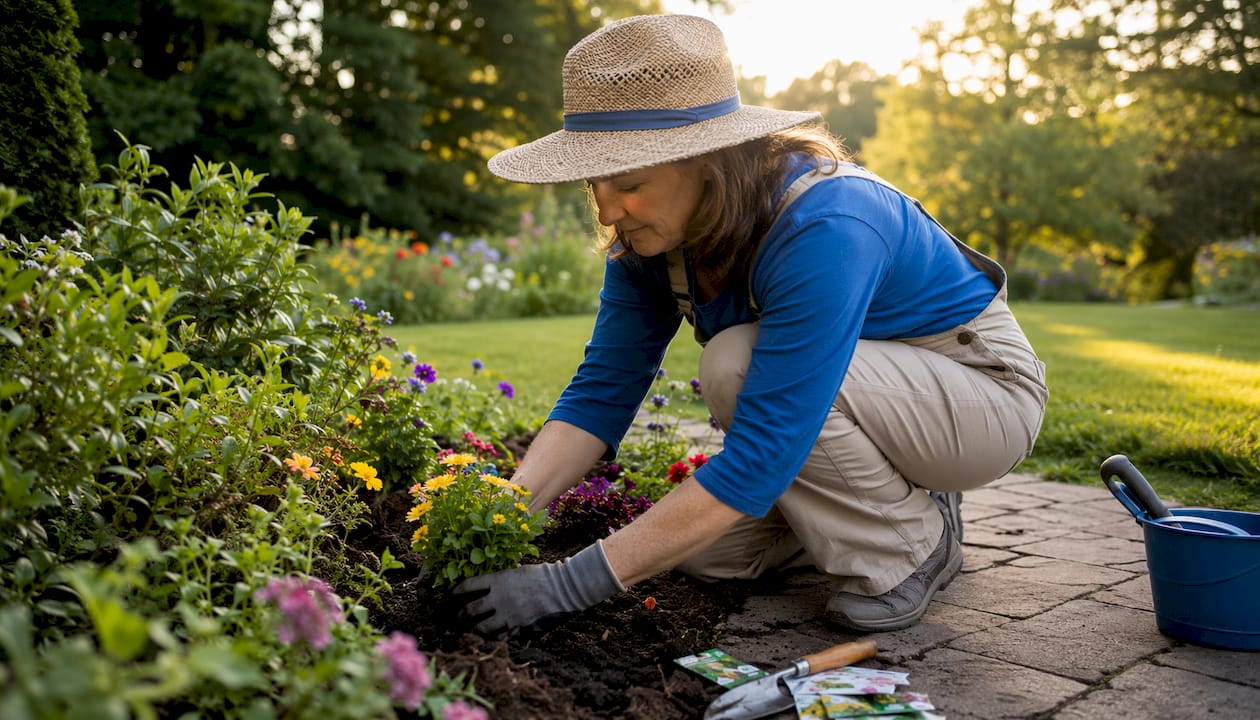
Softscaping refers to the living, horticultural elements in landscape design: plants, trees, shrubs, flowers, grass, soil, and mulch. These are the components that grow, change with the seasons, and give your yard its personality. Unlike a patio or retaining wall, a softscape never stays exactly the same from one year to the next, and that evolution is precisely what makes it so rewarding to plan well.
Think of softscaping as the skin and soul of your outdoor space. The structural bones of a landscape come from hardscape features, but the warmth, color, and life come entirely from softscape choices.
Core softscape components at a glance:
- Trees and large shrubs (shade, privacy, vertical structure)
- Flowering perennials and annuals (seasonal color and pollinator habitat)
- Ornamental grasses and groundcovers (texture and erosion control)
- Turfgrass lawns (usable surface and drainage)
- Soil amendments and mulch (moisture retention, root health, weed suppression)
Table of Contents
- What elements make up a complete softscape design?
- How does softscaping compare to hardscaping?
- Practical tips for incorporating softscaping in your yard
- What are the real benefits of softscaping your property?
- Divinelandscapingllc brings your softscape vision to life in New Hampshire
- Key Takeaways
What elements make up a complete softscape design?
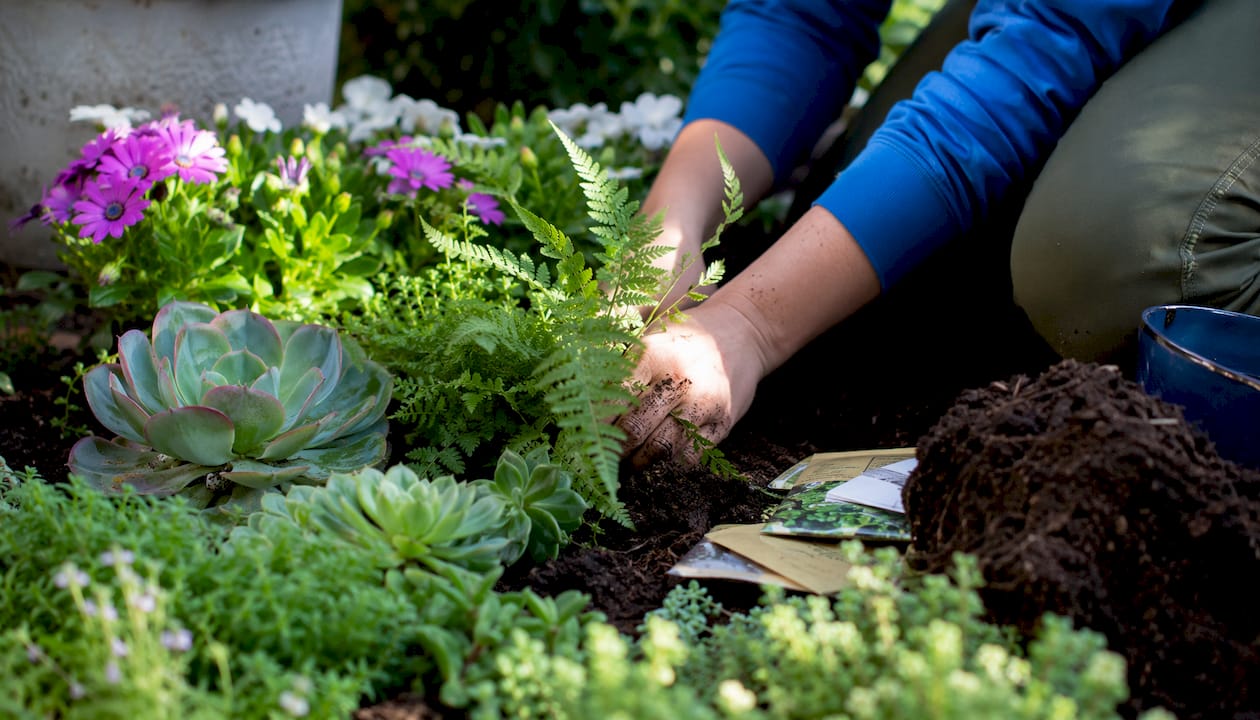
A well-planned softscape draws on several plant categories, each serving a distinct role. Knowing what each layer contributes helps you make smarter choices before you buy a single plant.
- Lawn grass forms the base layer, providing a usable surface and helping manage stormwater runoff
- Trees deliver shade, wind protection, and long-term structure; species like Red Maple and Eastern White Pine are common in New England yards
- Shrubs define borders, screen views, and add year-round form; Inkberry Holly and Viburnum hold up well in cold climates
- Flower beds introduce color and seasonal interest through perennials like Black-eyed Susan and Coneflower or annuals like Impatiens and Marigold
- Groundcovers such as Creeping Phlox or Pachysandra fill gaps, suppress weeds, and stabilize slopes
- Soil and mulch are often overlooked but are foundational softscape elements; quality topsoil and a 2–3 inch layer of shredded bark mulch directly affect plant health and water retention
Variety in plant texture matters as much as variety in color. Pairing fine-textured ornamental grasses with broad-leafed hostas, for example, creates visual depth that flat, uniform plantings simply cannot achieve.
How does softscaping compare to hardscaping?
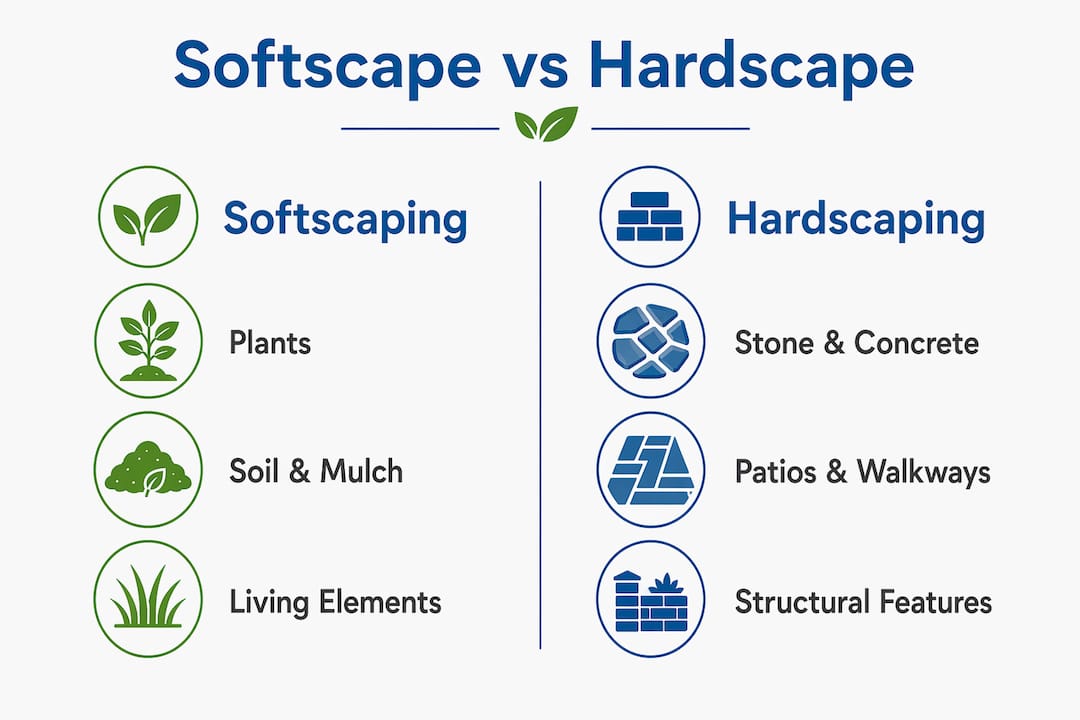
Hardscaping covers the non-living, structural side of your yard: patios, walkways, retaining walls, fences, and driveways. These elements are permanent and structural, while softscape elements are dynamic and evolving.
Understanding the contrast helps you plan a yard that is both functional and visually balanced.
| Characteristic | Softscaping | Hardscaping |
|---|---|---|
| Material type | Living plants, soil, mulch | Stone, concrete, wood, pavers |
| Permanence | Seasonal and evolving | Fixed and long-lasting |
| Maintenance | Ongoing (watering, pruning) | Minimal (cleaning, sealing) |
| Primary role | Aesthetics, ecology, softness | Structure, drainage, access |
| Flexibility | High (replant, rearrange) | Low (requires demolition to change) |
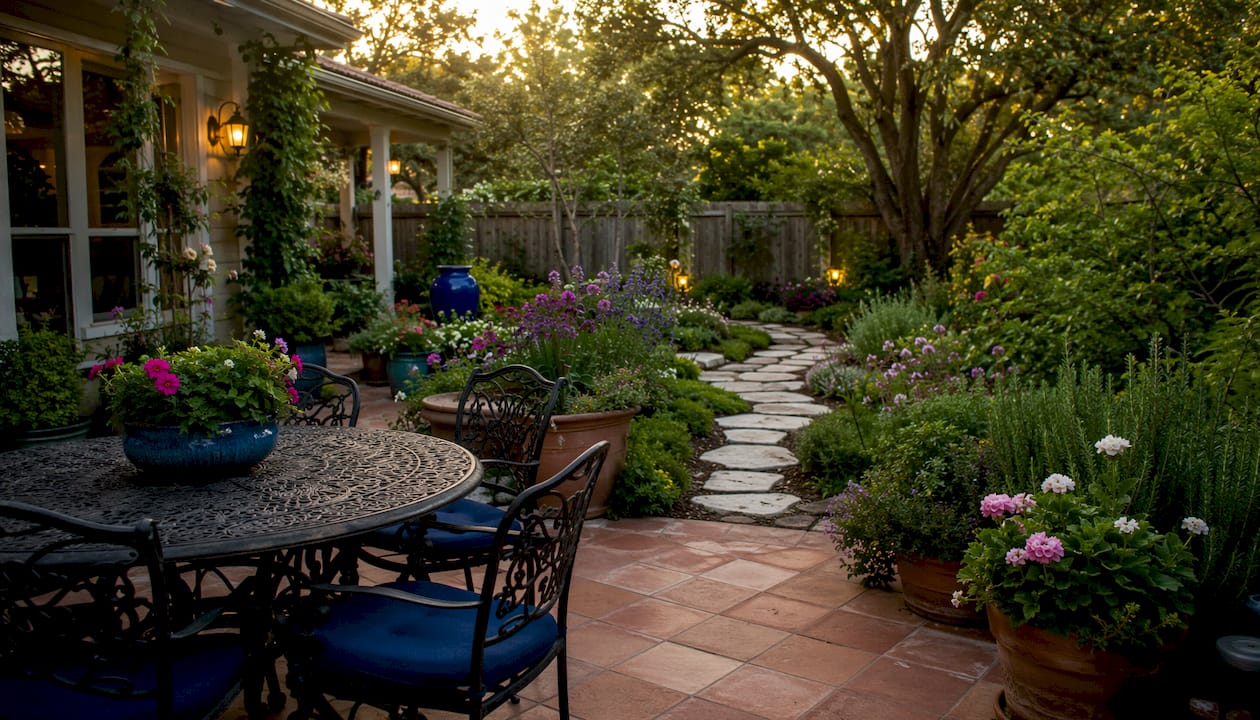
The two categories work best together. A stone patio without surrounding plantings feels cold and unfinished. Dense plantings without defined paths or edges can feel cluttered and hard to navigate. Thoughtful design blending both elements creates outdoor spaces that are comfortable, purposeful, and visually cohesive.
Practical tips for incorporating softscaping in your yard
You do not need to overhaul your entire yard to get meaningful results from softscaping. Start with a clear plan, and build from there.
- Match plants to your climate and soil. In New Hampshire and the broader Northeast, choose species rated for USDA Hardiness Zones 4–6. Native plants like Wild Bergamot and Switchgrass require less water and fertilizer once established.
- Layer for depth. Place taller trees and shrubs at the back or perimeter, mid-height flowering plants in the middle, and low groundcovers or edging plants at the front. This layering gives the space purpose and visual movement.
- Plan for all four seasons. Choose a mix of spring bloomers, summer perennials, fall foliage plants, and evergreens so your yard holds interest year-round. With intentional plant choices, seasonal changes become a feature rather than a gap.
- Use container gardening for tight spaces. Even a heavily paved courtyard or small deck can benefit from softscaping. Container plantings deliver color, privacy, and texture without any ground disturbance.
- Balance with your existing hardscape. If you have a large patio, soften its edges with ornamental grasses or low shrubs. Walkways benefit from bordering perennials that spill slightly onto the path without blocking it.
- Build a maintenance schedule. Watering, pruning, fertilizing, and soil health management are not optional extras; they are what keep a softscape looking its best as it matures.
Pro Tip: Plan your softscape in phases. Install trees and large shrubs first, since they take the longest to establish. Fill in with perennials and groundcovers in year two, and use annuals as flexible color fillers while the permanent plants mature.
What are the real benefits of softscaping your property?
The case for good softscape design goes well beyond curb appeal. Living plants deliver measurable environmental and practical advantages that hardscape simply cannot replicate.
- Stormwater management: Root systems and turfgrass absorb rainfall, reducing runoff and the risk of erosion on sloped lots
- Soil stability: Deep-rooted trees and shrubs anchor soil on grades, protecting your yard and neighboring properties
- Noise reduction: Dense plantings of shrubs and trees absorb and deflect sound, a real benefit near busy roads
- Biodiversity: Flowering plants attract pollinators like bees and butterflies, while berry-producing shrubs draw birds; both contribute to a healthier local ecosystem
- Property value: Softscape design directly affects outdoor comfort and property value, making it a practical investment alongside aesthetic improvements
- Emotional connection: A yard with seasonal blooms, shade trees, and textured plantings creates a sense of place that a bare lawn or all-paved surface cannot
Mature trees can reduce residential cooling costs by shading south- and west-facing walls and windows, according to the EPA’s WaterSense program, which also notes that water-efficient landscaping reduces outdoor water use significantly.
Softscaping also gives you flexibility that hardscape cannot. You can evolve your garden seasonally through replanting and pruning without the cost or disruption of breaking concrete.
Divinelandscapingllc brings your softscape vision to life in New Hampshire
Knowing what softscaping is and actually executing it well are two different things. Divinelandscapingllc designs and installs complete residential and commercial landscapes across New Hampshire, combining softscape planning with hardscape services so your yard works as a unified whole, not a collection of disconnected elements.
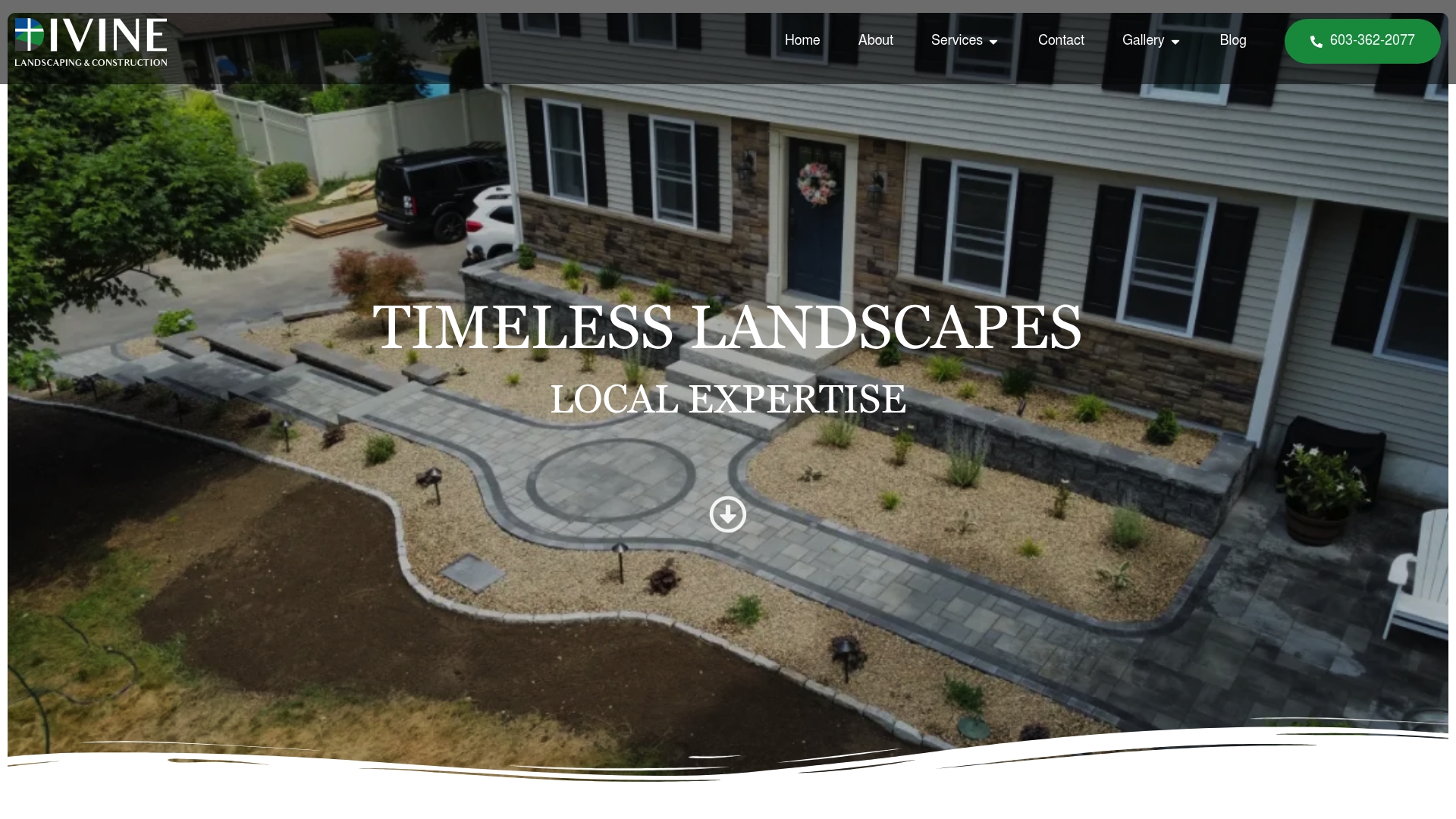
Whether you want a layered planting scheme that delivers four-season color, privacy screening along a property line, or a full landscape design that integrates patios, walkways, and living plantings, Divinelandscapingllc handles the planning, installation, and ongoing care. You get a yard that looks intentional from day one and improves with every passing season. Request a quote to get started.
Key Takeaways
Softscaping is the living foundation of any well-designed yard, and its value grows as plants mature, seasons change, and the landscape fills in.
| Point | Details |
|---|---|
| Softscaping defined | Living elements like plants, trees, shrubs, soil, and mulch that evolve with the seasons. |
| Softscape vs. hardscape | Hardscape provides fixed structure; softscape adds life, color, and ecological function. |
| Practical flexibility | Container gardening and phased planting let any yard benefit, regardless of size or existing hardscape. |
| Environmental benefits | Root systems reduce erosion, plantings absorb stormwater, and flowering plants support local pollinators. |
| Divinelandscapingllc | Designs and installs integrated softscape and hardscape projects for NH residential and commercial properties. |