
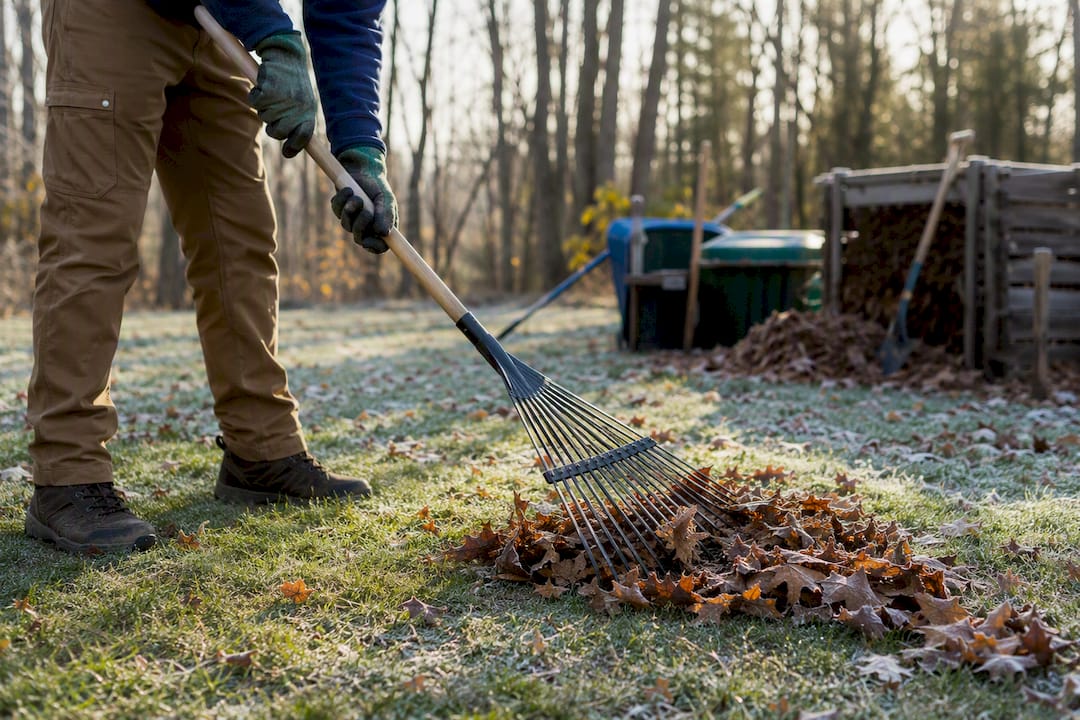
Winter lawn care is the combination of fall prep tasks that protect your grass roots and the light-touch protective steps you take once the ground freezes. It is not about active growth. It is about setting your lawn up to survive dormancy and green up fast once spring arrives.
Before the first hard freeze, run through this priority list:
- Set your mower deck to about 2 inches for the final cut of the season.
- Clear leaf layers thicker than 2 inches; a thin mulched layer is fine.
- Aerate and overseed cool-season lawns if you’re still in the early-fall window.
- Apply a fall/winter fertilizer before the ground freezes solid.
- Give the lawn one deep watering if the soil is dry heading into freeze.
Pro Tip: The USDA Plant Hardiness Zone map and your local university extension office are your two best references for exact timing. New Hampshire lawns behave differently than lawns in Georgia, and “winterizing your lawn” on the wrong calendar date can waste the whole effort. At Divinelandscapingllc, we treat these dates as ranges tied to soil temperature, not fixed deadlines.
Key Takeaways
Winter lawn care succeeds when fall prep, including mowing height, leaf removal, aeration, and fertilizer timing, is finished before the ground freezes, since dormant turf can’t absorb inputs applied later.
| Point | Details |
|---|---|
| Fall prep is the real work | Final mow at 2 inches, leaf cleanup, aeration, and fertilizer must happen before soil freezes. |
| Winter is protective, not active | Avoid fertilizer, herbicide, and aeration on dormant turf since it won’t absorb them. |
| Traffic and salt cause lasting damage | Stay off frozen or saturated turf and use calcium or magnesium chloride instead of sodium. |
| Diagnose early after snowmelt | Rake snow mold gently, watch for desiccation, and flush salt-damaged soil in spring. |
| Soil temperature beats the calendar | Time pre-emergent and other inputs to soil hitting about 50 to 55°F, not a fixed date. |
If your lawn’s winter problems keep pointing back to drainage, compaction, or a system that’s due for a bigger renovation, Divinelandscapingllc can assess the site and build a fall plan that actually fixes the cause instead of masking it every spring.
Table of Contents
- What Is Winter Lawn Care and Why Timing Matters
- Fall Prep Checklist: What to Finish Before the Ground Freezes
- Winter Turf Care: What to Do and What to Skip
- How Do You Spot Winter Lawn Damage Early?
- Winter Lawn Care by Grass Type
- Late-Winter to Early-Spring Checklist
- When Winter Lawn Problems Need a Professional
- Preparing Soil pH and Nutrient Balance Before Winter
- Common Winter Pests and Diseases Besides Snow Mold
- Protecting Different Grass Varieties Through Winter
- What the Fall Prep Checklist Actually Gets Wrong for Most Homeowners
- Frequently Asked Questions
- Sources
What Is Winter Lawn Care and Why Timing Matters
Winter lawn maintenance is really two separate jobs wearing one name. The first job happens in fall, while grass is still actively growing and can respond to inputs. The second job happens once temperatures drop and the lawn goes dormant, when your role shifts from “feeding and building” to “protecting and waiting.” Confusing the two is the most common mistake homeowners make, and it’s why so many winter lawn care tips online sound contradictory.
Here’s the distinction that actually matters: everything you do to prepare a lawn for winter needs to happen before the ground locks up. Once soil temperatures drop and turf goes dormant, most fertilizer, herbicide, and aeration work becomes ineffective or even harmful, because dormant grass isn’t absorbing anything. That single fact reframes how to care for lawn in winter: the heavy lifting is a fall project, and winter itself is mostly a waiting game with a short list of do’s and don’ts.
Divinelandscapingllc handles this seasonal handoff for clients across New Hampshire and Massachusetts every year, and the lawns that green up fastest in April are almost always the ones where fall prep was done on time, not the ones that got extra attention mid-winter.
Fall Prep Checklist: What to Finish Before the Ground Freezes
Everything below should be done before daytime temperatures settle consistently under roughly 50°F. Work through it in this order:
- Final mow. Lower your deck to about 2 inches for the last cut. Grass left too tall mats down under snow and invites disease; grass cut too short loses the blade area it needs to store energy.
- Clear the leaves. Leaf cover over about 2 inches traps moisture and blocks light, which raises fungal risk. A thin mulched layer, by contrast, breaks down and feeds the soil, so you don’t need to chase every last leaf.
- Aerate and overseed. Early fall is the ideal window for core aeration on cool-season turf, because the plant is still growing and can heal before frost. Aerate too late and you get tender new roots that winter kills outright.
- Feed the roots, not the top growth. Fall fertilization is the single most important feeding cool-season lawns get all year, because the nutrients go into root development and carbohydrate storage rather than leaf growth. A potassium-weighted winterizer applied in late fall, ahead of the freeze, strengthens roots for winter survival and supports earlier green-up.
- Water once, deeply, if needed. If the soil is dry heading into a hard freeze, one deep watering helps prevent roots from going into dormancy already stressed. Then winterize your irrigation system: drain the lines, blow out the sprinklers, and shut the backflow preventer valve so freezing water doesn’t crack the pipes.
Pro Tip: Don’t fertilize and aerate on the same afternoon just because you’re already outside. Aerating opens the soil, and fertilizer applied right after can wash into the holes unevenly. Space them a few days apart if your schedule allows it.
Winter Turf Care: What to Do and What to Skip
Once the lawn goes dormant, your job changes completely. You’re not managing growth anymore. You’re managing risk.
- Stay off frozen or saturated turf. Walking, driving, or parking on frozen grass crushes the crown, the part of the plant that regrows in spring, and it won’t recover until you overseed. Saturated turf is nearly as bad since compacted, waterlogged soil suffocates roots.
- Choose your ice melt carefully. Sodium chloride accumulates in soil and is toxic to grass; magnesium or calcium chloride products cause far less turf damage. Never pile salted snow onto lawn areas, even temporarily.
- Skip the winter fertilizer and herbicide urge. Dormant turf isn’t absorbing anything, so applying inputs now is wasted product at best and an environmental runoff problem at worst.
- Prep your equipment while it’s idle. Add fuel stabilizer to the mower, sharpen or replace blades, and confirm irrigation lines are fully drained. A snow removal service can also help protect beds and turf edges from plow damage if your property borders a shared driveway or street.
Pro Tip: If you must cross a snowy lawn regularly, lay down a temporary plywood path. It spreads your weight and saves the grass beneath it.
How Do You Spot Winter Lawn Damage Early?
Most winter lawn damage announces itself the moment snow melts, and catching it early determines whether you’re looking at a quick fix or a full reseed.
- Snow mold shows up as pink or gray circular mats, usually in spots where snow sat longest. First response is gentle raking once the area dries out to improve airflow; most lawns recover on their own, and fungicide is rarely needed unless the patches spread aggressively year after year.
- Winter desiccation happens in dry, open winters with little snow cover. Watch for straw colored patches on exposed or windy sites. A single deep watering during an unusually dry, above-freezing spell can prevent crowns from drying out completely.
- Salt and ice damage looks like browning along driveways, sidewalks, and curb edges. Flushing the affected soil with water in early spring helps dilute residual salt before new growth starts.
If damage covers isolated patches, overseed in spring or fall. If it’s widespread across the whole yard, or you spot the same failure pattern two years running, that’s usually a drainage or compaction issue worth a professional look rather than another bag of seed.
Winter Lawn Care by Grass Type
Cool-season and warm-season grasses need almost opposite handling once temperatures drop, and mixing up the advice for one on the other wastes both time and money.
- Cool-season grasses (tall fescue, Kentucky bluegrass, perennial rye) do the bulk of their growing in fall and early spring. This is where fall fertilization and aeration timing matter most, since these grasses are actively building roots right up until the ground freezes.
- Warm-season grasses (Bermuda, zoysia, St. Augustine) go fully dormant and turn brown once soil temperatures drop, which is normal, not a sign of a dying lawn. Skip late-season fertilizer on these entirely since it just feeds a plant that’s shutting down. If you want winter green, overseed with annual ryegrass before dormancy sets in.
- Check your zone. USDA Plant Hardiness Zone data and your local extension office refine these windows by a few weeks in either direction, which matters more than any generic calendar date.
Late-Winter to Early-Spring Checklist
The stretch between the coldest weeks and the first mow has an outsized effect on how your lawn performs all spring, and most of it comes down to being ready before the soil actually warms.
- Order pre-emergent now. Crabgrass prevention works on a soil-temperature trigger, roughly 50 to 55°F, not a calendar date. Having product on hand means you can apply the moment conditions hit that window instead of missing it while you shop.
- Service your equipment. Sharpen mower blades, check the spreader, and confirm you have seed and fertilizer on hand so you’re not scrambling once the ground thaws.
- Do a post-melt walkthrough. Rake matted areas gently, map any thin or bare patches for overseeding, and hold off on that first mow until the grass is actively growing again, not just green.
When Winter Lawn Problems Need a Professional
Most winter lawn maintenance is well within a homeowner’s reach: mowing height, leaf cleanup, timed fertilizer, and basic ice melt choices are all DIY-friendly. Some problems, though, keep coming back no matter how well you follow the checklist, and that’s usually a sign of something structural.
- Standing water or soggy patches that reappear every spring, regardless of rainfall.
- Large bare areas that need full-scale renovation rather than spot overseeding.
- Erosion along slopes or bed edges that gets worse with every freeze-thaw cycle.
- Irrigation systems that were not properly winterized and show cracked lines or dead zones.
Divinelandscapingllc evaluates winter damage by checking three things first: whether the problem is isolated or spread across the whole yard, whether it recurs in the same spot year after year, and whether drainage or grade is the underlying cause rather than the grass itself. That distinction usually tells us within one visit whether a homeowner needs a bag of seed or a broader landscape maintenance plan.
Preparing Soil pH and Nutrient Balance Before Winter
Grass roots can’t use fertilizer efficiently if the soil chemistry is off, and fall is the best time to correct it since amendments need weeks to work into the root zone before dormancy sets in. Most lawns do best in a soil pH between 6.0 and 7.0. Outside that range, roots struggle to pull in nitrogen, potassium, and phosphorus even if you’re applying plenty of it.
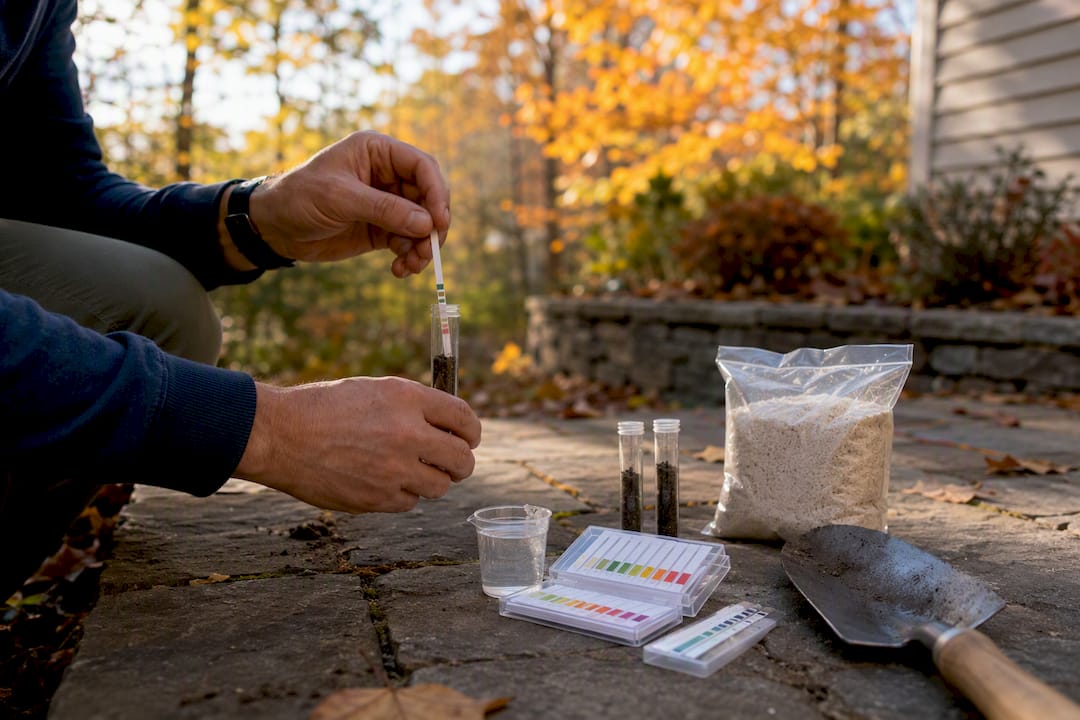
A basic soil test, either a home kit or one through your local extension office, tells you where you stand. If the soil comes back acidic, which is common in New England after a summer of heavy rain, fall is the right time to apply lime so it has all winter to adjust the pH before spring growth starts. If it’s alkaline, sulfur-based amendments work the same way in reverse.
Nutrient balance matters just as much as pH. A lawn that’s been mowed and bagged all summer has been exporting nitrogen and potassium every single cutting, and fall fertilization is partly about replacing what the season took out. Skipping a soil test and guessing at fertilizer ratios is one of the more common reasons a winterizer application underperforms. You end up feeding a nutrient the soil already has plenty of while the one it’s actually short on goes untouched.
Correcting pH and nutrient gaps before winter also makes spring fertilizer far more effective, since you’re not fighting soil chemistry on top of everything else.
Common Winter Pests and Diseases Besides Snow Mold
Snow mold gets most of the attention, but it’s not the only threat a dormant lawn faces. A few other issues show up regularly once temperatures swing through freeze-thaw cycles.
Voles and mice tunnel under snow cover, chewing on grass crowns and roots in shallow trails you’ll see mapped across the lawn once the snow melts. They’re drawn to tall grass and thick leaf litter left over winter, which is one more reason that final mow height and leaf cleanup matter.
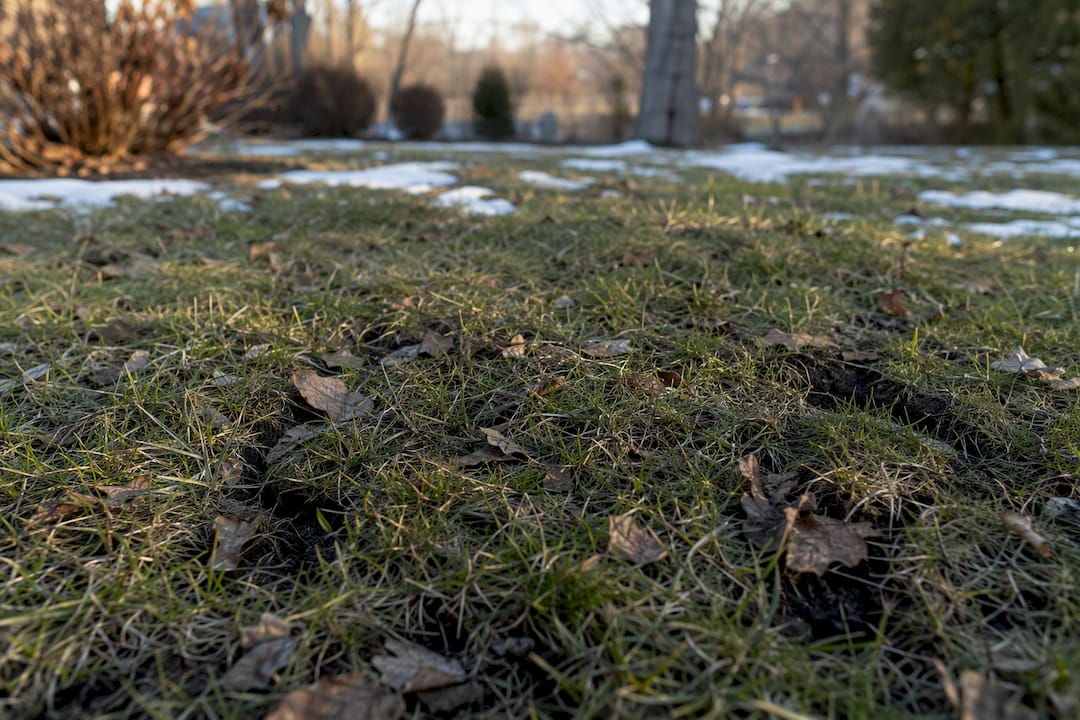
Fusarium patch, sometimes called Microdochium patch, looks similar to snow mold but tends to show up during wet, cool stretches even without snow cover. It appears as reddish-brown to pink circular patches and often clears up on its own once turf resumes active growth in spring.
Winter grubs, particularly overwintering white grub larvae, sit dormant in the soil through the cold months and resume feeding on roots as the ground warms. You typically won’t see damage until early spring, when patches lift up easily like loose carpet.
Compaction-related dieback isn’t a pest or disease, but freeze-thaw cycles make existing compaction worse, and weak, compacted turf is far more vulnerable to all of the above. This is part of why aeration timing in fall matters well beyond the immediate root benefit.
None of these require winter intervention. The right response is documenting where you see activity and addressing it with targeted spring treatment once the lawn is actively growing again.
Protecting Different Grass Varieties Through Winter
The winter protection a lawn needs depends heavily on which grass variety you’re working with, and treating every lawn identically is a common source of frustration.
Tall fescue handles cold reasonably well thanks to a deep root system, but it benefits the most from fall aeration since compacted soil limits that root advantage. Kentucky bluegrass spreads by rhizomes and recovers from minor winter damage faster than bunch-type grasses, but it’s also more sensitive to salt exposure along walkways. Perennial ryegrass greens up fastest in spring but has shallower roots, making it more vulnerable to winter desiccation on exposed, windy sites.
On the warm-season side, Bermuda grass goes fully dormant and turns brown, which is normal and not a sign of stress, but it’s also more prone to winter kill in unusually cold stretches without adequate mowing height going into dormancy. Zoysia handles cold better than Bermuda and holds color longer into fall. St. Augustine is the least cold-tolerant of the common warm-season varieties and benefits from extra mowing height retention heading into winter to insulate the crown.
Those often reveal which grass type is actually dominant in different parts of the yard.
What the Fall Prep Checklist Actually Gets Wrong for Most Homeowners
The conventional advice treats winter lawn care like a calendar event: mark a date, do the tasks, move on. That approach fails constantly because it ignores soil temperature, which is the variable that actually drives whether an input works. A fertilizer applied on the “right” date in a warm fall does something completely different than the same product applied on the same date during an early cold snap.
What gets underestimated is how much of spring’s lawn performance was decided months earlier by drainage and compaction, not by anything done in winter itself. Homeowners chase winter fixes for problems that were actually set up by a wet, compacted lawn back in September.
If you take one thing from this guide, prioritize the fall aeration and fertilizer window over anything you’re tempted to do once snow is on the ground. Winter itself asks very little of you beyond staying off frozen turf and picking the right ice melt. The real work, and the real payoff, happens before the freeze.
Frequently Asked Questions
What is winter lawn care, exactly?
Winter lawn care is the set of fall preparation tasks, final mowing, leaf removal, aeration, fertilizing, and pre-freeze watering, combined with protective steps taken once the lawn goes dormant, like avoiding traffic on frozen turf and choosing safer ice melt.
Do I need to fertilize my lawn in winter?
No. Fertilize in late fall before the ground freezes, since that’s when roots can still use the nutrients. Applying fertilizer once turf is fully dormant is largely wasted effort.
Is it normal for my lawn to turn brown in winter?
Yes, especially for warm-season grasses like Bermuda and zoysia, which go dormant and brown deliberately. Cool-season grasses can also fade but typically hold more color through moderate winters.
How do I know if my lawn has snow mold?
Look for circular pink or gray matted patches once snow melts, usually in low spots or shaded areas. Gentle raking to improve airflow is the first step; most lawns recover without fungicide.
When should I order pre-emergent herbicide?
Order it during winter so it’s ready to apply once soil temperature reaches roughly 50 to 55°F, the trigger point for crabgrass germination, rather than waiting until you notice weeds sprouting.
Sources
- Dealing with leaf litter (MSU Extension)
- Winter lawn prep (This Old House)
- Winter lawn care tips (Purdue)