
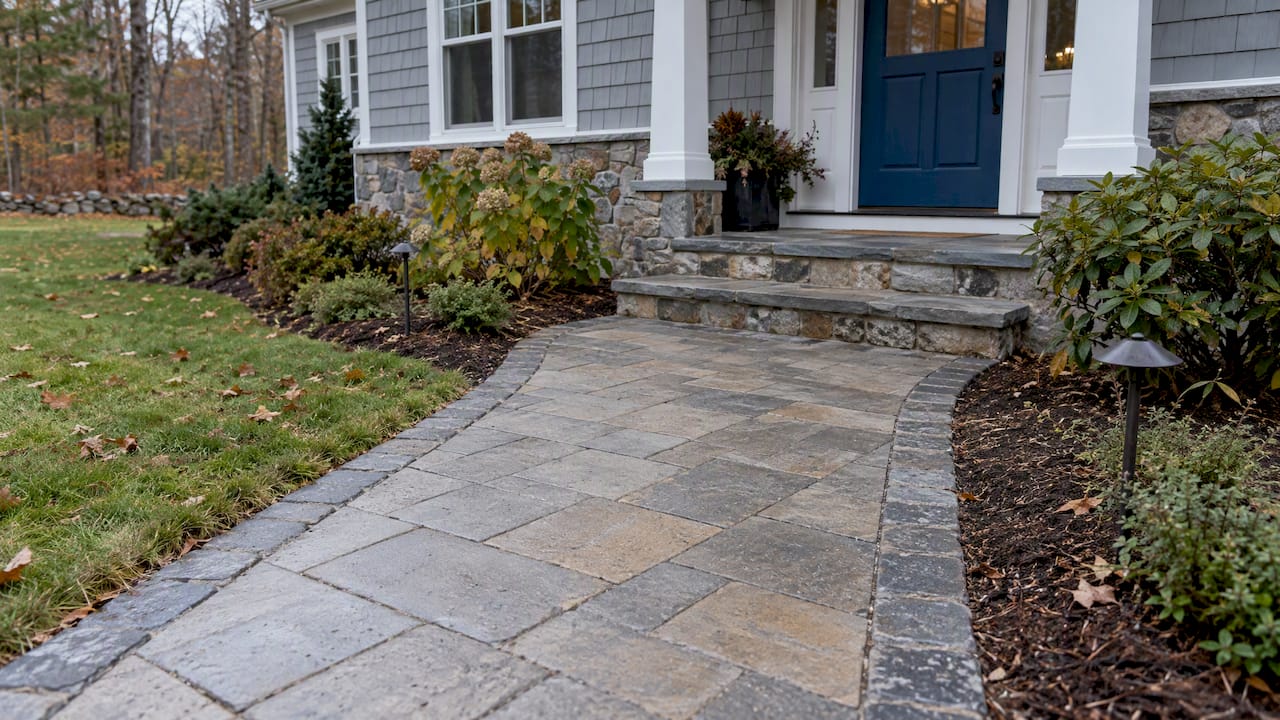
For a durable, accessible front walkway, choose a properly detailed concrete slab. For design flexibility and easy spot repair, choose interlocking pavers. For premium curb appeal, natural stone wins, while gravel, decomposed granite, or mulch suit low-traffic or budget-driven paths, and brick delivers a traditional look with solid longevity when installed correctly.
TL;DR:
- Drainage, freeze-thaw exposure, and base depth are critical factors that influence walkway longevity more than the surface material itself.
- Concrete offers the best accessibility and snow clearing, while natural stone provides premium curb appeal at a higher cost and maintenance.
- Pavers are highly repairable and adaptable, with proper installation including a compacted base, edge restraint, and joint material; keep leftover pavers for future repairs.
- Loose gravel, decomposed granite, and mulch are budget-friendly but require regular maintenance, with stability solutions needed for improved durability and accessibility.
- Proper site assessment, grading, and water management are essential for all materials to prevent cracking, heaving, or pooling over time.
Table of Contents
- 1. Concrete: pros, cons, costs, and when it makes sense
- 2. Concrete and clay brick pavers: flexibility and repairability
- 3. Natural stone: premium looks and real trade-offs
- 4. Gravel, crushed stone, and decomposed granite: affordable with limits
- 5. Mulch and stepping stones: low-cost accents, not main entries
- 6. Quick comparison by cost, durability, and accessibility
- 7. How to choose the right material for your front walkway
- 8. What contractors check on day one
- 9. Environmental impact and sustainability of materials
- 10. Climate suitability of materials
- 11. Compatibility with surrounding landscaping and home architecture
- Balancing curb appeal with practicality
- Let us help you choose and build the right walkway
- FAQ
- Sources
1. Concrete: pros, cons, costs, and when it makes sense
Poured concrete gives you a smooth, continuous surface, while stamped concrete adds texture and pattern that mimics stone or brick at a lower price point. Both depend on the same durability fundamentals.
- Control moisture and permeability to limit freeze-thaw cracking at joints
- Specify adequate air entrainment for cold-climate installations
- Keep joints sealed and spaced correctly to manage seasonal movement
- Grade the walkway to shed water away from the slab
Pro Tip: Ask your contractor about air-entrainment percentages before pouring if you live anywhere with freezing winters.
Freeze-thaw damage in concrete usually stems from trapped moisture rather than a weak mix, so drainage and reduced permeability matter more than the finish. A continuous slab also suits homeowners prioritizing accessibility and snow clearing, since there are no joints to catch a shovel or a cane.
2. Concrete and clay brick pavers: flexibility and repairability
Pavers earn their popularity because they are modular. Crack one, and you replace a single unit instead of patching an entire slab, which makes them a strong choice where soil movement or future repairs are a concern.
- Clay brick offers a traditional, kiln-fired look with long-standing durability
- Concrete pavers come in a wider range of shapes, colors, and price points
- Both need a compacted aggregate base, edge restraint, and proper joint material
- Sand-set installation tolerates minor ground movement better than a rigid slab
Pro Tip: Keep leftover pavers from your original installation. Matching weathered color years later is difficult, and This Old House notes this as a common pitfall.
Polymeric sand locks joints in place and resists washout better than plain sand, which cuts down on the weeding and re-sanding that loose joints otherwise demand.
3. Natural stone: premium looks and real trade-offs
Flagstone, bluestone, slate, limestone, and granite each bring distinct color and texture, and no two stones look identical, which is part of the appeal for homeowners chasing a one-of-a-kind entry.
- Flagstone offers irregular, organic shapes that suit cottage-style homes
- Bluestone and slate provide a cleaner, more formal appearance
- Granite withstands heavy wear but costs more to cut and install
- Textured or flamed finishes improve footing in wet or icy conditions
Natural stone generally costs more than concrete or gravel and can stain or settle unevenly without a properly prepared base. We find it earns its price on front entries where appearance carries real weight, and our field-tested non-slip material recommendations are worth reviewing before you settle on a finish.
4. Gravel, crushed stone, and decomposed granite: affordable with limits
Loose aggregates cost less than almost any hardscape material and fit naturally into rustic or cottage-style landscapes, which is why gravel and crushed stone rank among the most affordable walkway options.
- Edging is non-negotiable; without it, material migrates into lawns and beds
- Plan on topping up gravel periodically as it compacts and scatters
- Loose surfaces are difficult for wheelchairs, strollers, and snow shovels
- Stabilizer grids or resin-bound systems firm up the surface while keeping the look
Pro Tip: If accessibility matters at your front door, skip loose gravel there and save it for a side path or garden route instead.
5. Mulch and stepping stones: low-cost accents, not main entries
Mulch paths and stepping-stone routes work well for garden strolls or secondary access, but they fall short as a primary front walkway because of maintenance and footing concerns.
- Mulch breaks down, washes out in heavy rain, and needs annual replenishment
- Stepping stones can shift or sink without a gravel or sand setting bed
- Space stones for a natural walking stride, roughly 24 to 30 inches apart
- Neither surface performs well once snow or ice sets in
Our DIY walkway guide walks through stepping-stone spacing and base prep if you are tackling an accent path yourself.
6. Quick comparison by cost, durability, and accessibility
Matching a material to your top priority is easier once you see the trade-offs side by side.
- Concrete: moderate cost, long lifespan, low maintenance, excellent for snow clearing and accessibility
- Pavers (concrete or clay): moderate to higher cost, long lifespan, moderate maintenance, strong repairability
- Natural stone: highest cost, long lifespan, moderate maintenance, best curb appeal
- Gravel or decomposed granite: lowest cost, shorter effective lifespan without stabilization, frequent upkeep, poor wheeled access
- Brick: moderate cost, long lifespan when properly set, moderate maintenance, classic appearance
- Mulch or stepping stones: lowest cost, short lifespan, high upkeep, suited only to secondary paths
If winter performance and accessibility top your list, concrete or a well-jointed paver system will outperform anything loose underfoot. If curb appeal leads, stone or a stamped concrete pattern delivers the most visual payoff per square foot.
7. How to choose the right material for your front walkway
A short site assessment before you pick a material saves money and prevents the most common failures we see on existing walkways.
- Check grade and drainage, noting where roof runoff and downspouts discharge near the path
- Confirm soil type and freeze-thaw exposure, since heavier clay soils move more with frost
- Set width based on use: 3 feet minimum, 4 feet comfortable for two people side by side, and 5 feet where wheelchair turnaround space is needed
- Separate your budget into site work (excavation, base, drainage) and surface material, since base and site preparation often drive cost more than the surface itself
- Ask any contractor about base depth, edge restraint method, joint detailing, freeze-thaw experience, and warranty terms
Pro Tip: Request to see a completed project from at least one prior winter before signing a contract. A single season reveals whether the base and drainage actually hold up.
Proper grading also determines whether water pools near your foundation or sheds safely away from it, a detail general contractors flag as central to any hardscape’s long-term performance.
8. What contractors check on day one
Base and drainage typically decide how long a walkway lasts, far more than which surface material sits on top. We walk every site for grade, soil condition, and water flow before discussing finishes, because skipping that step is the most common reason walkways crack or heave within a few winters.
Our freeze-thaw damage checklist covers the specific field checks worth running on any paver or concrete estimate, and our non-slip material guide lists the finishes we have found hold up best underfoot through a New England winter.
9. Environmental impact and sustainability of materials
Material choice affects more than your budget and your view from the porch. Poured concrete carries a notable production footprint due to cement manufacturing, though a well-built slab lasts for decades, which spreads that impact over a long service life. Pavers offer an advantage here: individual units can be lifted, cleaned, and reused if you ever change the layout, reducing landfill waste compared to demolishing a slab.
Natural stone is quarried rather than manufactured, which shifts its environmental cost toward extraction and transportation, especially for stone sourced from farther away. Choosing a regionally quarried stone, where available, cuts down on shipping distance.
Gravel, crushed stone, and decomposed granite are permeable by nature, letting rainwater soak into the ground instead of running off into storm drains. That permeability can reduce erosion and ease pressure on local drainage systems, a genuine advantage over a solid concrete or mortared stone surface. Permeable paver systems, which use wider joints filled with gravel or sand, offer a similar benefit while keeping a firmer, more walkable surface than loose aggregate alone.
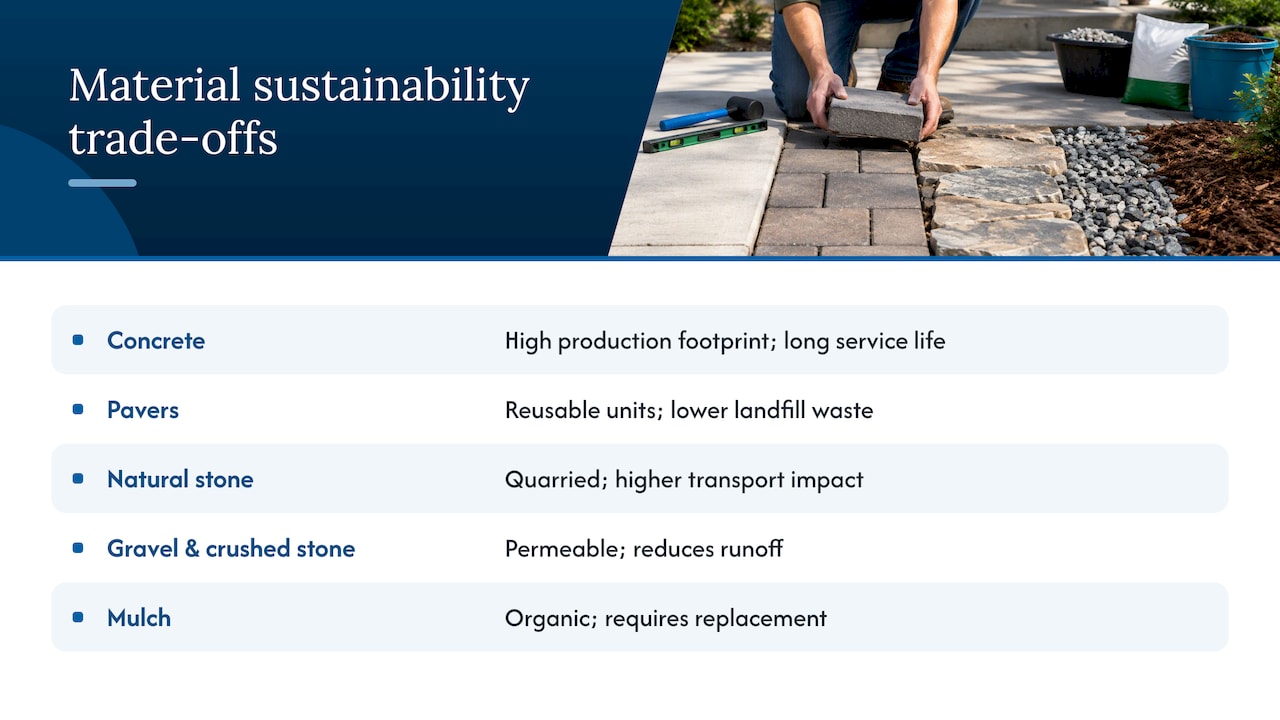
Mulch, as an organic material, breaks down and returns nutrients to the soil, which fits naturally into garden paths but means ongoing replacement. None of these materials is without trade-offs, so weigh durability and lifespan against upfront environmental cost rather than judging a material on production impact alone.
10. Climate suitability of materials
Freeze-thaw cycling is the single biggest climate factor for walkway materials in a region with real winters. Concrete needs entrained air and good drainage to resist that cycling, as outlined in ACI’s own durability guidance referenced earlier in this piece. Without it, repeated freezing and thawing pushes moisture into the slab and breaks it down from the inside.
Pavers handle freeze-thaw movement a bit more gracefully because individual units can shift slightly without cracking, though a poorly compacted base will still heave over time. Natural stone performs well structurally in cold climates, but smooth, polished finishes become genuinely hazardous once ice forms, so a textured or flamed surface is worth the extra consideration for any walkway that sees winter foot traffic.
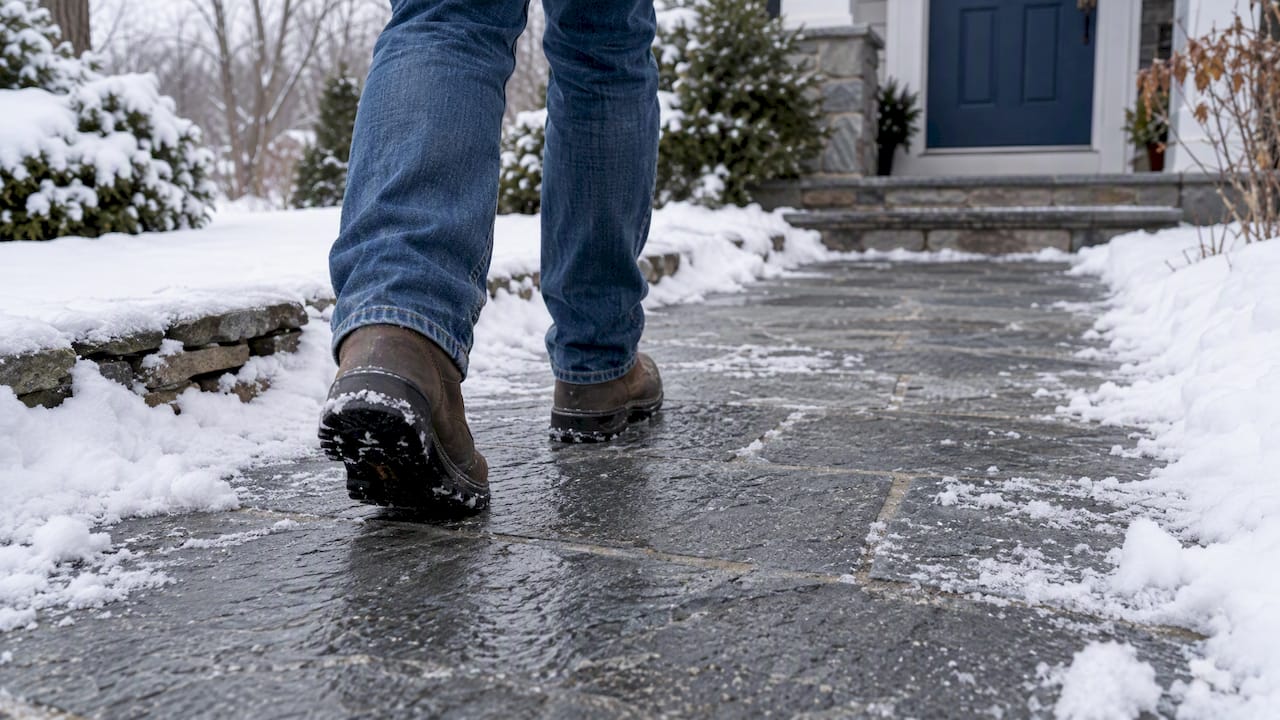
Loose aggregates like gravel and decomposed granite struggle most in snowy climates. Snow blowers and shovels scatter the material along with the snow, and ice tends to form unevenly across loose surfaces, making them harder to treat safely. In hot, dry climates, by contrast, gravel and decomposed granite perform well year-round with minimal expansion or contraction, and natural stone resists heat buildup better than dark-colored concrete or asphalt-adjacent materials. Matching material to your actual climate, not just your design preference, is one of the more overlooked steps in planning a walkway that lasts.
11. Compatibility with surrounding landscaping and home architecture
A front walkway works best when it reads as part of the property, not an object dropped onto the lawn. Formal brick or clean-cut bluestone pairs naturally with colonial, Georgian, or farmhouse-style homes, while irregular flagstone suits cottage, craftsman, or more naturalistic landscape designs. Stamped concrete offers a middle path, letting you mimic the look of brick or stone while keeping the budget and maintenance profile of a slab.
Plant beds along the walkway edge also influence material choice. Loose gravel paths blend easily into informal, cottage-style plantings with low boxwood or perennial borders, while poured concrete or cut pavers suit more structured, symmetrical landscaping. Walkway width and shape should echo the lines of your home’s entry, a straight, generous path for a formal front door, or a gently curved route for a more relaxed approach framed by shrubs or ornamental grasses.
Color matters as much as shape. Warm-toned brick or tan concrete complements traditional siding and brick exteriors, while gray pavers or bluestone read as more contemporary against modern facades with clean lines and minimal trim. Matching the walkway material to your home’s existing hardscape, a patio, a foundation planting bed, or a driveway, creates a cohesive look rather than a patchwork of unrelated surfaces across the property.
Balancing curb appeal with practicality
Pick accessibility first if anyone in your household uses a wheelchair, cane, or stroller daily. Otherwise, let appearance lead. Either way, lay full-size samples outside before you commit; color and texture look different in daylight than on a showroom board.
— Damian
Let us help you choose and build the right walkway
We handle everything from material selection to walkway installation and repair, including the drainage and grading work that determines how your walkway performs ten winters from now, not just on installation day.
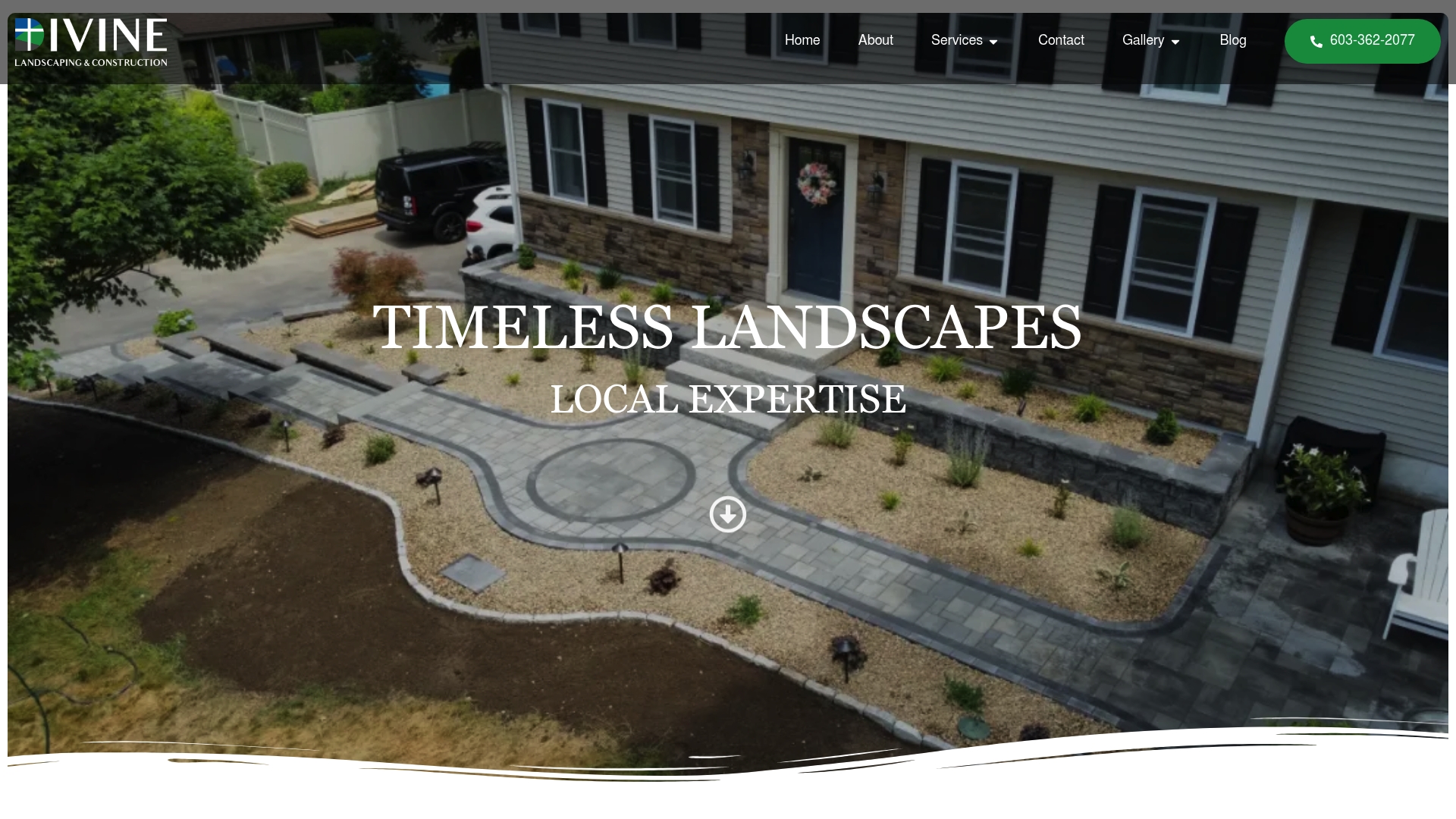
- Site assessment and material recommendations suited to your property and budget
- Full hardscape services, including drainage fixes and non-slip surface options
- Guidance on balancing upfront cost against long-term maintenance
If you are ready to talk through options for your property, schedule a consultation or browse our project gallery for ideas before we meet.
FAQ
What is the best material for a front walkway?
There is no single best material for every home: poured concrete offers the strongest combination of durability and accessibility for a primary entrance, while pavers and natural stone each bring their own strengths in repairability or appearance. Your choice should match your priority, whether that is low maintenance, design flexibility, or curb appeal.
What is the cheapest material for a walkway?
Gravel and crushed stone are generally the most affordable walkway materials, with decomposed granite and mulch also ranking among the lower-cost options. Keep in mind that edging and periodic topping up add to the long-term cost of loose materials.
How do I DIY a front walkway?
A basic DIY front walkway starts with marking the layout, excavating to the proper depth, compacting a gravel base, and setting your chosen surface material with edge restraint to hold it in place. Our step-by-step DIY walkway guide covers the full process for homeowners tackling a simpler path themselves.
What materials are commonly used for walkways?
Common walkway materials include poured and stamped concrete, concrete and clay brick pavers, natural stone such as flagstone, bluestone, slate, limestone, and granite, along with gravel, crushed stone, decomposed granite, and mulch. Each option differs in cost, durability, and maintenance needs, which is why matching material to site conditions and priorities matters.
How wide should a front walkway be?
A front walkway should be at least 3 feet wide, with 4 feet comfortable for two people walking side by side, and 5 feet recommended where wheelchair turnaround space is needed. Width should reflect how the path will actually be used, not just the minimum code requirement.
Sources
- All About Brick Pavers: Pros & Cons, Types, Installation – This Old House
- Patio block buying guide – Lowe’s
- Joint deterioration mechanism and prevention – ACI
- Walkway/Residential Driveway with Plastic Edge Restraint – ICPI
- Front walkway ideas – The Spruce