
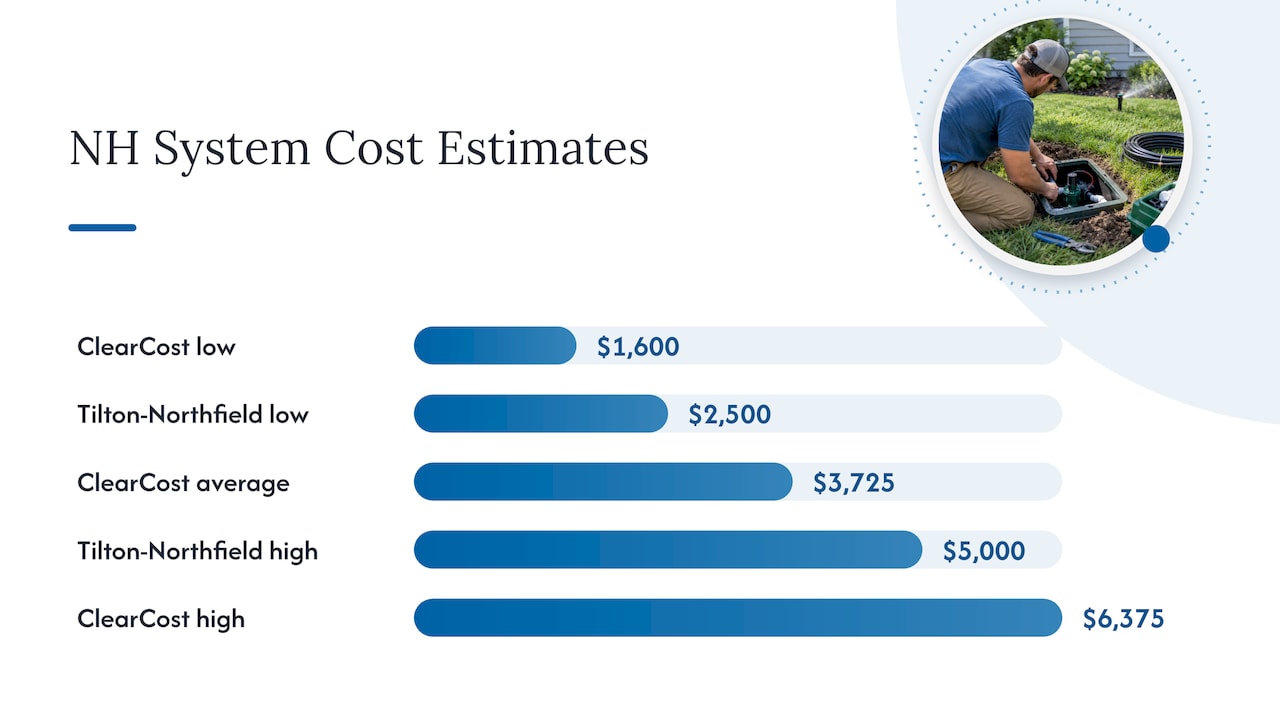
Most New Hampshire homeowners pay somewhere between $1,600 and $6,375 for an in-ground sprinkler system. The statewide average is about $3,725, according to ClearCost’s April 2026 estimate. That average sits roughly 6% above the national figure of $3,500, because labor and materials cost more here. Your own number depends on lot size, zone count, soil, water source and the controller you choose. This guide explains each of those factors so you can read a bid with confidence.
TL;DR
- Expect roughly $1,600 to $6,375 for a residential system in New Hampshire, with an average near $3,725 (ClearCost, April 2026).
- Zone count, lot size, rock and ledge, water source and controller type move the price more than anything else.
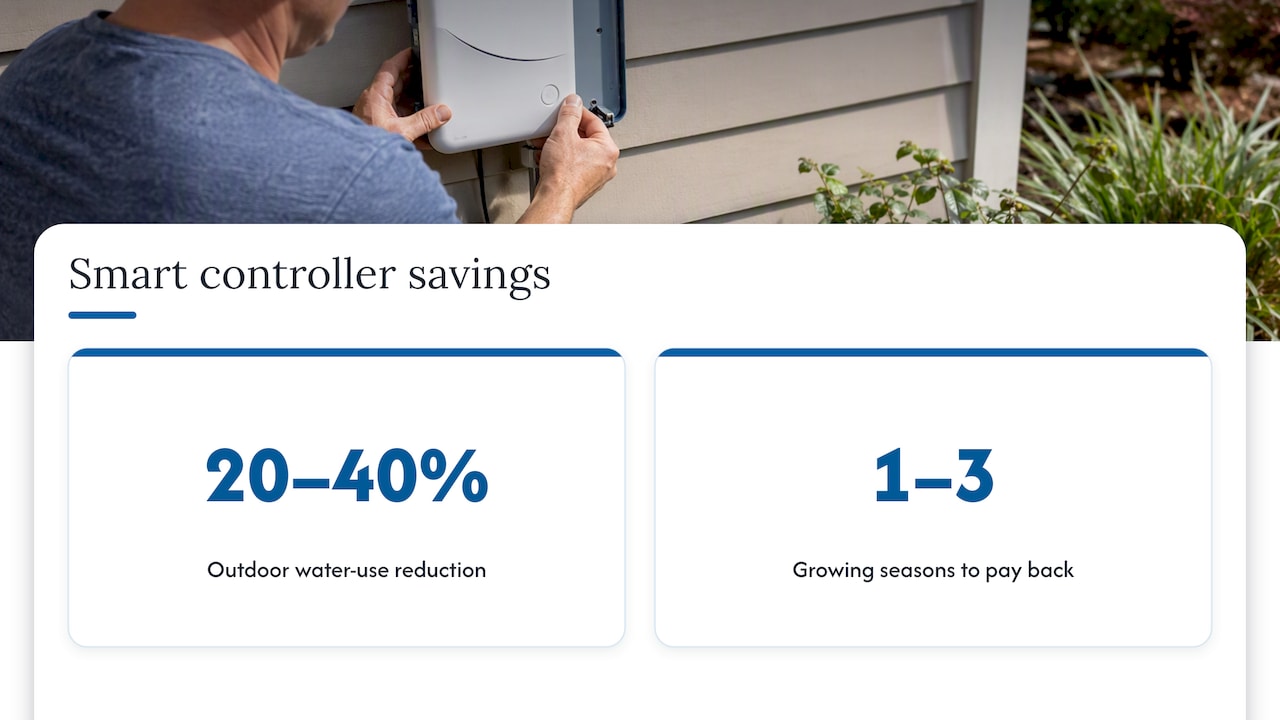
- A WaterSense-labeled smart controller can cut outdoor water use by 20 to 40% and often pays for itself in 1 to 3 growing seasons.
- Compare bids line by line: zones, backflow device, controller, pipe type, winterization and warranty.
- We build and repair irrigation across New Hampshire and provide a written, itemized estimate for your property.
Table of Contents
- What irrigation systems typically cost in New Hampshire
- What drives the price up or down
- Smart controllers: the upgrade that pays back
- How to read an irrigation bid
- Worked example: how one project could add up
- Perspective: what we see in New Hampshire yards
- Ways to keep the cost in check
- Work with Divine Landscaping on your irrigation
- FAQ
- Sources
What irrigation systems typically cost in New Hampshire
Published New Hampshire figures vary by source, which is normal. They use different lot sizes and assumptions. Here is how the numbers we found line up:
| Source | Scope | Typical range |
|---|---|---|
| ClearCost, April 2026 | Residential sprinkler system, New Hampshire | $1,600 to $6,375 (average $3,725) |
| USA Lawn Care Cost, 2026 | Standard residential lot, Tilton-Northfield | $2,500 to $5,000 |
These are estimates, not quotes. A small, flat, open front lawn lands at the low end. A large lot with several lawn areas, plant beds and a few ledge outcrops lands at the high end or above it. Treat any single number you read online as a starting point for a conversation with a contractor who has walked your property.
We do not publish fixed prices for irrigation, because two lots a mile apart can need very different work. We give a written estimate after we see the site.
What drives the price up or down
Number of zones
A zone is a group of sprinkler heads on one valve, running at the same time. Your water supply can only push so much volume at once, so a bigger lawn needs more zones, not just more heads. Each zone adds a valve, wiring, trenching and heads. Zones are also split by what they water: spray heads for turf, rotors for large open areas, drip for beds. Sun and shade areas get separate zones too, since they need different amounts of water. Our guide to irrigation zones for homeowners shows how those maps are laid out.
Lot size and layout
More square footage means more pipe, more heads and more labor hours. Layout matters as much as size. A long, narrow yard with a driveway crossing the run needs boring or trenching under hardscape. Separate front and back lawns usually mean a longer main line.
Rock, ledge and soil
This is the New Hampshire factor out-of-state calculators miss. Glacial till, buried boulders and shallow ledge slow trenching, and they sometimes force a re-route. We cover the same pattern for other projects in why rocky lots raise your bid. If your lot is rocky, expect the contractor to ask about it, and be wary of a bid that never mentions it.
Water source and pressure
Town water and a private well behave differently. A well may need a pressure tank check, and iron or minerals in well water can clog heads and drip emitters. UNH Extension advises testing well or surface water for precipitates and contaminants such as iron, which can clog emitters and cause long-term maintenance headaches. Low pressure can mean fewer heads per zone and therefore more zones.
Backflow prevention
An irrigation system connected to drinking water needs a backflow preventer so lawn water cannot flow back into the house supply. According to a summary of New Hampshire backflow requirements, installation is done by a licensed New Hampshire plumber, and testing by a tester certified under a program recognized by NHDES or the local water utility. Local utilities may add their own rules. Before you sign, ask who is handling the backflow device and any required test, and confirm the answer with your town or water utility.
Controller type
A basic timer costs less up front. A smart controller costs more but changes your water bill. More on that below.
Pipe, heads and components
Poly pipe, PVC, brass or plastic fittings, and the grade of valves and heads all affect both the price and the lifespan. A cheap system that fails after a few winters is not cheap. Ask what brand and grade of valves and heads are going in.
Existing landscaping and finish work
Installing under established lawn and beds means more restoration: sod patching, regrading, reseeding. New construction, or a lawn you are about to renovate, is the easiest and often the least expensive time to install.
Smart controllers: the upgrade that pays back
If you add one thing to your quote, make it a smart controller. The EPA reports that WaterSense-labeled weather-based and soil-moisture controllers can reduce outdoor water use by 20 to 40% by adjusting schedules to local weather or actual soil moisture, instead of a fixed timer. The same material notes they can often pay for themselves in one to three growing seasons through water savings. That payback assumes a system that waters a good deal. A small lawn on a low-use schedule will take longer.
We compare options in our guide to smart irrigation controllers for homeowners. If you are budgeting several exterior upgrades at once, it helps to see how other contractors itemize their pricing. This remodel and roofing pricing page shows one way a contractor lays out line items, even though it covers Southern California work rather than New England landscaping.
How to read an irrigation bid
Two quotes with the same bottom line can contain very different systems. Line them up against this checklist:
- Zone count and type. How many zones, and how many are spray, rotor or drip?
- Head count and coverage. Is there head-to-head coverage in the lawn, or gaps?
- Controller. Brand, model, and whether it is WaterSense labeled.
- Backflow device. Included or not, and who installs and tests it?
- Rain or soil sensor. Often a small add-on with a real payoff.
- Pipe and valve materials. Named, not just “standard.”
- Restoration. Is lawn repair after trenching in the price?
- Winterization. New Hampshire freezes. Does the contract include blowing out the lines in fall, or is it separate?
- Warranty. What is covered, for how long, and who comes back if a head fails?
A bid that lists only a lump sum for “sprinkler system” is hard to compare and harder to hold anyone to. Our walkthrough on planning a residential irrigation system step by step covers the design decisions behind these line items.
Worked example: how one project could add up
The figures below are illustrative to show how a quote is built, not prices from our business. Say you have a typical suburban lot with a front lawn, a back lawn and one foundation bed.
- A front lawn of spray heads on two zones
- A back lawn split into two zones, one sunny, one shaded
- One drip zone for the foundation bed
- A backflow device and a smart controller
- Restoration of trenched lawn
That is five zones. Compare that to the statewide range above. A simple lot with fewer zones will fall toward the lower figures, while rock, a well or a larger yard moves you toward the top. Now picture the same lot with ledge along the side yard and a private well. The zone count stays the same, but trenching takes longer and the water needs testing. The bid rises even though the “system” looks identical on paper. That is why a site visit matters more than a calculator.
Perspective: what we see in New Hampshire yards
We have more than 20 years of combined hands-on experience, and the pattern is consistent. Most disappointing irrigation systems are not expensive ones. They are systems designed around a price instead of a property.
Three things we tell homeowners:
- Design first, price second. A system sized to your actual lawn, sun exposure and water pressure costs less to run for decades than one squeezed into a low number.
- Test your coverage. Set out equal-sized cans in a row and run the system. Penn State Extension describes this audit: run it for a set time, measure each can, and you will see dry and wet spots you would otherwise miss until the lawn struggles.
- Protect the water. If you have a water softener, the irrigation line should tap in before it. UNH Extension warns that sodium-based softener salts can damage or kill plants when applied through irrigation.
We also like to plan irrigation alongside the rest of the project. If a patio, walkway or retaining wall is coming, the sleeves and lines go in before the stone, not through it afterward. That sequencing saves money and protects finished work.
— Damian
Ways to keep the cost in check
- Install before other work, not after. Pair irrigation with new landscaping, a lawn renovation or hardscape so trenching happens once.
- Water only what needs it. Drip for beds and spray or rotors for turf avoids over-building the system.
- Choose the controller on purpose. Spend on the smart controller and sensor, and save on things that do not affect performance.
- Skip the extra zones you will not use. Open woods, naturalized areas and low-use corners often do not need coverage.
- Plan for maintenance. Budget for spring start-up and fall winterization so you do not pay for freeze damage. Mistakes to avoid are listed in our piece on common irrigation system mistakes.
For a broader view of budgeting, see our sprinkler system cost guide.
Work with Divine Landscaping on your irrigation
We design and install lawn irrigation, plant bed irrigation and lighting for residential and commercial properties in New Hampshire, and we also repair and replace existing systems. We manage the project from consultation through installation, so you know what is happening and when. Details on what we do are on our irrigation and lighting page. If you are in the Salem area, see our Salem, NH irrigation services. Ask us for an itemized estimate and we will walk the property with you before putting numbers on paper.
FAQ
How much does a sprinkler system cost in New Hampshire?
Estimates for 2026 put typical residential systems between $1,600 and $6,375, with an average of $3,725, according to ClearCost. Large lots, rocky ground and extra zones can push a real quote beyond that range. A site visit is the only way to get a reliable number.
What is the most cost-effective irrigation system?
For lawns, a properly zoned in-ground system with a smart controller usually gives the best long-term value, since it avoids wasting water. For beds, drip irrigation uses less water and less hardware than spray heads. The most cost-effective choice is the one designed for your sun, soil and plant mix.
Do I need a backflow preventer?
An irrigation system tied to your drinking water supply needs backflow protection. Summaries of New Hampshire requirements say a licensed plumber installs the device and a certified tester checks it, and your town or water utility may add its own rules. Ask your contractor and your utility who handles each step.
Can I run irrigation from a private well?
Yes, in many cases, but test the water first. Iron and other minerals can clog heads and emitters, as UNH Extension notes. Your installer should also check that your well pump and pressure tank can supply the zones you plan.
Sources
- Sprinkler System Cost in New Hampshire (2026), ClearCost
- Irrigation System Installation Cost in Tilton Northfield, NH, USA Lawn Care Cost
- WaterSense Labeled Irrigation Controllers, EPA
- Irrigation Systems for the Garden, UNH Extension
- Principles of Turfgrass Irrigation, Penn State Extension
- Backflow Prevention Requirements in New Hampshire