
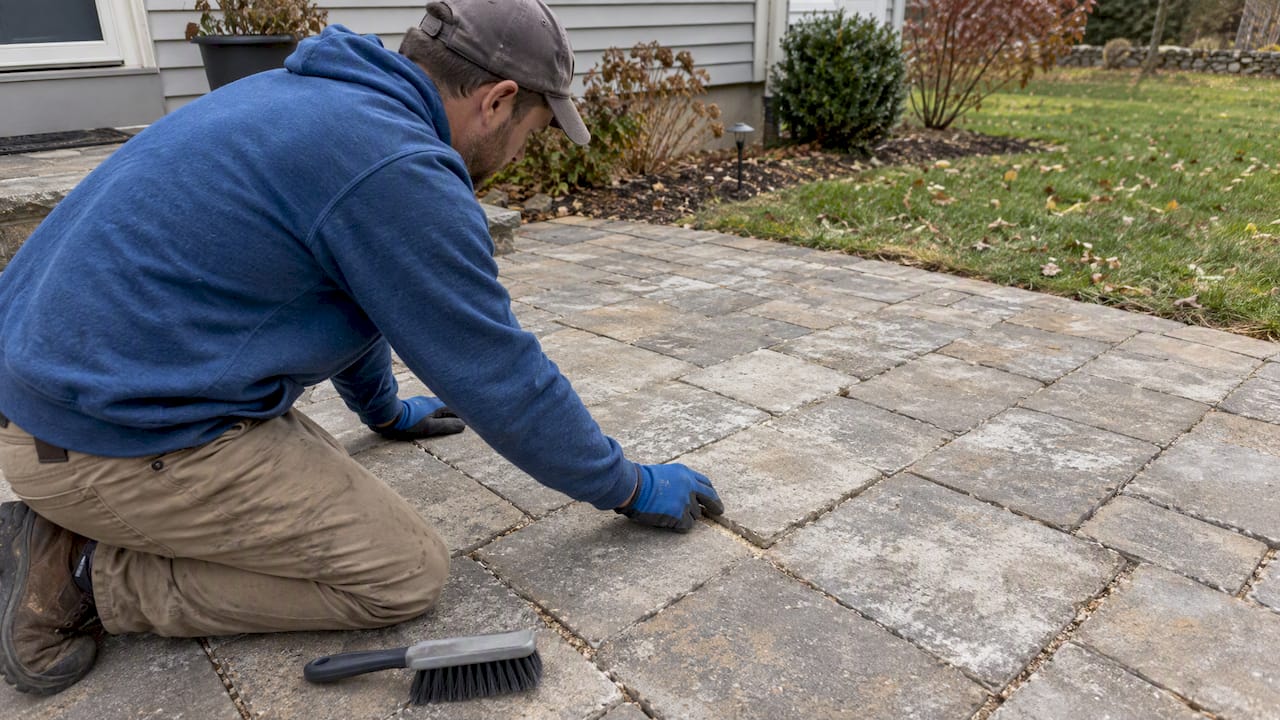
Sealing is usually worth it for concrete and brick pavers when you want stain resistance, richer color, or protection against water and deicing salt in freeze-thaw climates. It is often optional or unnecessary for true permeable paver systems and for most porcelain pavers, which resist staining on their own. The real trade-off is protection and appearance against the cost and discipline of resealing every few years.
TL;DR:
- Sealers typically need reapplication every 3 to 5 years, with shorter intervals needed for high-traffic areas like driveways.
- Applying sealers improperly can cause cloudy hazing, streaks, or unsafe slick surfaces, especially if high-gloss products are used without grit.
- Penetrating sealers are recommended for driveways and walkways for breathability and traction, while film-formers suit patios but wear faster and can be slippery.
- Sealing is usually unnecessary for permeable paver systems and most porcelain pavers, which resist staining naturally.
- Proper surface preparation, including cleaning and complete drying, is essential to ensure sealant durability and prevent moisture entrapment.
Table of Contents
- Benefits of sealing pavers
- Drawbacks and risks of sealing pavers
- Types of sealers and how to pick between them
- When to seal and how often to reseal
- Surface prep and application essentials (DIY vs pro)
- Maintenance, troubleshooting, and what sealing won’t fix
- Decision checklist and questions to ask before sealing
- Contractor notes from Divine Landscaping (real-world tips)
- Balancing curb appeal and durability
- Divine Landscaping services: sealing, maintenance, and patio installation
- FAQ
- Sources
Benefits of sealing pavers
A good sealer changes how pavers age. Oil, wine, and leaf stains wipe off instead of soaking in, which makes routine cleaning faster and less frustrating. Many film-forming products also deepen color and add a “wet look” sheen, while penetrating sealers keep a more natural, matte finish if that’s your preference.
In colder regions, sealing matters for another reason: it slows water and salt penetration into the paver surface, which helps protect against freeze-thaw damage over the winter months. Penetrating sealers work by moving into the paver’s capillaries rather than sitting on top, so they block moisture and salt while still letting vapor escape.
- Stains and spills wipe away more easily once pavers are sealed.
- Color and contrast look richer, especially with film-forming products.
- Water and salt absorption slow down, which matters most where winters bring ice-melt products.
Sealing pavers can extend the time between costly repairs by limiting the freeze-thaw cycles and salt exposure that erode paver surfaces over the years, according to Concrete Network’s guide to penetrating sealers.
Drawbacks and risks of sealing pavers
Sealing is not a one-time project. Reapplication is typically needed every 3 to 5 years, and that schedule shortens with heavy foot or vehicle traffic. Applied poorly, sealers can leave a cloudy haze, an uneven sheen, or visible lap marks that are hard to correct without stripping the surface and starting over.
Glossy film-forming sealers also raise safety questions, particularly around pool decks and entryways, since a wet film can become slick underfoot. Overspray or runoff can stress nearby plants and grass if you don’t protect garden beds during application.
- Expect to reseal every few years, not as a one-time fix.
- Poor technique can cause cloudiness, darkening, or streaking.
- Glossy sealers add slip risk near pools and walkways unless a grit additive is mixed in.
- Sealer can harm adjacent plants if it drifts or pools during application.
Types of sealers and how to pick between them
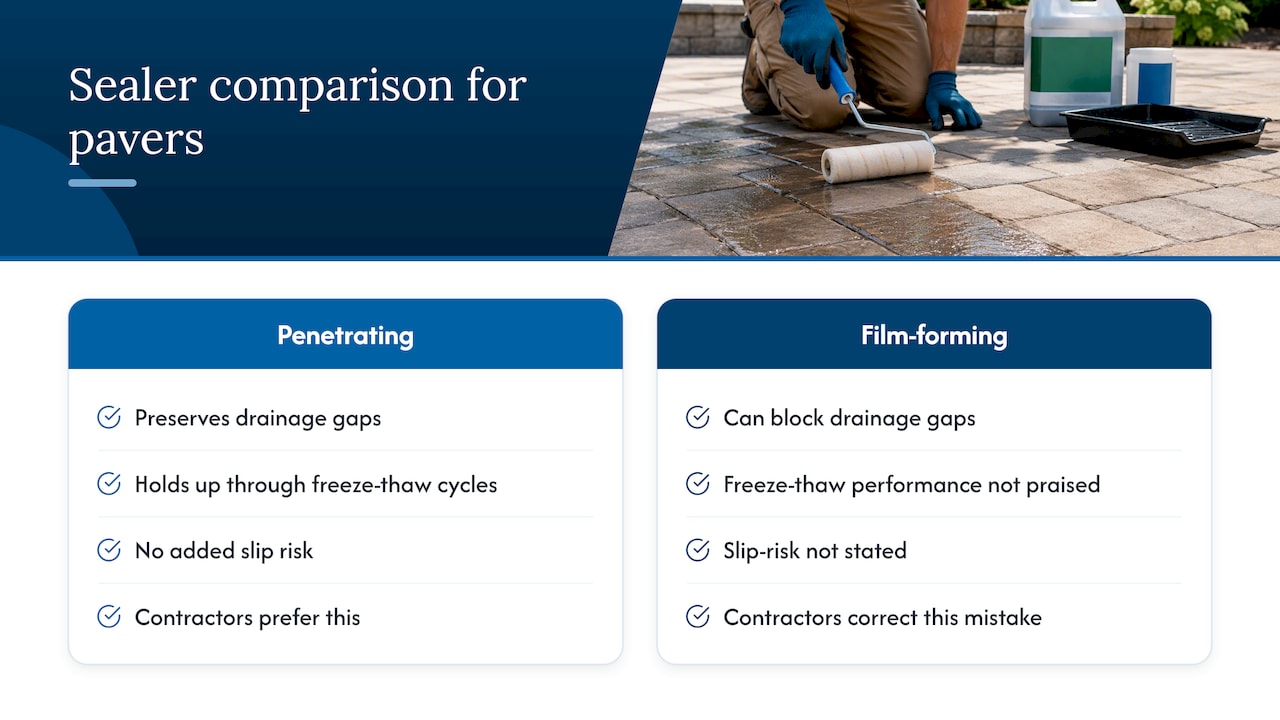
Sealers split into two broad families, and picking the wrong one is the most common regret homeowners mention. Penetrating sealers, including silanes, siloxanes, silicates, and siliconates, soak into the paver rather than coating it. They stay invisible, let moisture vapor escape, and resist adding slipperiness, which makes them a common choice for driveways and walkways.
Film-forming sealers, such as acrylics, polyurethanes, and epoxies, sit on top of the paver and create a visible layer. They’re the ones responsible for the glossy “wet look” and noticeably richer color, but that film wears faster under foot and tire traffic and can become slippery without a non-slip additive mixed in.
- Driveways and walkways: penetrating sealers for traction and breathability.
- Patios and pool decks: either family works, but add grit to any glossy product.
- Permeable paver systems: standard sealers of either type are generally the wrong choice, since they can block the gaps designed to let water drain through; our permeable paver installation guide explains why.
- Porcelain pavers: often skip sealing altogether, since the material resists staining on its own, as covered in our porcelain paver guide.
When to seal and how often to reseal
Timing depends on the paver’s age and the sealer type. New installations usually need a curing period before sealing, since many topical products call for a roughly 28-day cure before application, while some reactive penetrating sealers can go on sooner. Existing pavers that were sealed years ago give you visual cues: fading color, dulling sheen, or water soaking in instead of beading.
- Check the water-bead test: pour a small amount of water on the surface; if it soaks in rather than beading, resealing is likely due.
- Expect a typical reseal interval of 2 to 5 years, shorter for driveways and high-traffic patios.
- Watch for color fading, loss of sheen, or increased staining as practical signs it’s time again.
Surface prep and application essentials (DIY vs pro)
Sealing is only as good as the prep underneath it. Skipping cleaning or rushing dry time is the fastest way to trap moisture and ruin a fresh coat.
- Pressure-wash the pavers to remove dirt, algae, and any failing old sealer.
- Let the surface dry fully, which can take a day or more depending on humidity and temperature.
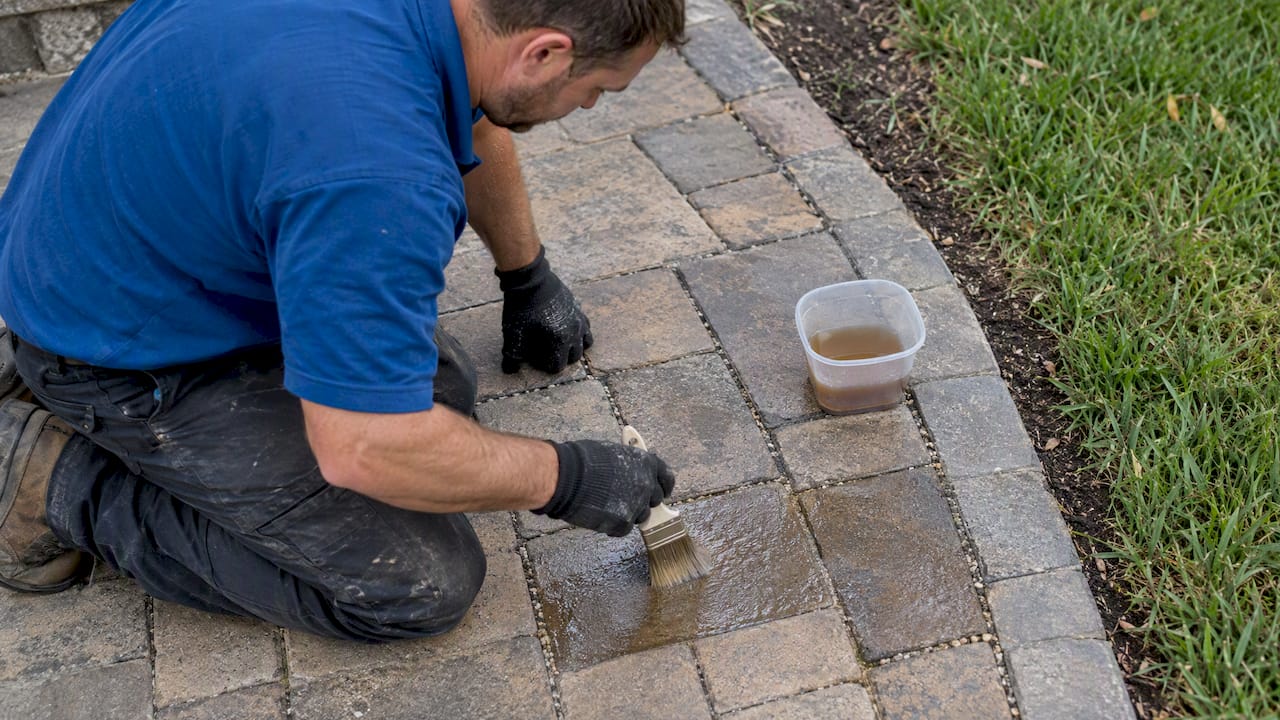
- Apply a thin, even coat with a pump sprayer and back-roll it to avoid puddling, adding a grit additive if slip resistance matters.
- Allow the recommended cure time before foot or vehicle traffic resumes.
Basic acrylic and many penetrating products are manageable for a careful DIYer with the right tools, but 100% solid epoxies and high-performance polyurethanes generally call for professional equipment and experience.
Pro Tip: Test any sealer on a small, hidden section first and let it cure fully before judging the color or sheen on the whole patio.
Maintenance, troubleshooting, and what sealing won’t fix
Sealed pavers still need regular sweeping and occasional mild cleaning to keep stains from building up on the surface film or the pores beneath it. Sealing is cosmetic and protective, not structural, so it won’t fix cracked pavers, settled sections, or joints that have lost their sand.
- Clouding or peeling usually points to moisture trapped under the sealer or a coat applied too thick.
- Oil stains that set in before sealing often need a degreaser treatment first, not just a new coat.
- Polymeric sand needs to cure fully before sealing over it, since sealing wet polymeric sand can cause discoloration or trap moisture underneath.
- Structural issues like shifting or cracked pavers call for repair or replacement, not another coat of sealer.
Decision checklist and questions to ask before sealing
Before committing, walk through your paver material, the look you want, how much traction you need, and your local climate. Heavy freeze-thaw winters push the case toward sealing; a shaded pool deck pushes it toward a matte, penetrating product with grit added.
- Confirm your paver material: concrete and brick benefit most; porcelain and true permeable systems often don’t need it.
- Decide on appearance: matte and natural, or glossy and color-enhanced.
- Weigh traffic and traction needs, especially near pools, steps, or entryways.
- Factor in your climate’s freeze-thaw and deicing-salt exposure.
| Question to ask | Why it matters |
|---|---|
| What sealer chemistry are you using? | Penetrating versus film-forming changes appearance, traction, and reseal timing. |
| Is surface prep included? | Skipped cleaning or drying time shortens how long the sealer lasts. |
| What’s the recoat interval? | Sets your maintenance budget and schedule going forward. |
| Is there a workmanship warranty? | Clarifies who corrects cloudiness or peeling if it happens. |
| How will you protect nearby plants? | Prevents overspray damage to garden beds and lawn edges. |
Contractor notes from Divine Landscaping (real-world tips)
In our own project experience, we lean toward penetrating sealers for driveways and walkways because they hold up through New England’s freeze-thaw cycles without adding slip risk. The mistake we correct most often is homeowners sealing permeable paver systems with a standard film-forming product, which can block the drainage gaps the system was built around. Skipped prep work, especially inadequate cleaning before application, is the other recurring issue we see on patios sealed without professional help.
Balancing curb appeal and durability
Our honest take: seal concrete or brick pavers when you want stain protection and richer color, and skip it on permeable systems or most porcelain. For borderline cases like a shaded pool deck, choose a matte penetrating product with grit over a glossy film-former, and recheck traction each spring before the first barefoot season begins.
— Damian
Divine Landscaping services: sealing, maintenance, and patio installation
If sealing or resealing your patio sounds like more trouble than you want to take on, our crew handles the full process: inspection, cleaning and prep, professional-grade sealer application, and cleanup when we’re done. We generally recommend bringing in a pro once you’re dealing with film-forming or epoxy products, large square footage, or a paver surface that’s showing real wear.

Our patio installation services cover new builds and paver maintenance alike, and our masonry and hardscape team can walk you through sealing options during a free estimate.
FAQ
Is it worth it to seal pavers?
For most concrete and brick paver installations, sealing is worth it because it eases cleaning and adds protection against water and salt damage in freeze-thaw climates. It’s less necessary for porcelain pavers or true permeable systems, where sealing can interfere with drainage.
What are the downsides of sealing pavers?
The main downsides are recurring cost, since most sealers need reapplication every 3 to 5 years, along with the risk of cloudiness or uneven sheen from poor application. Glossy film-forming sealers can also make surfaces slippery near pools or entryways unless a grit additive is used.
What is the downside to polymeric sand?
Polymeric sand can discolor or trap moisture if it’s sealed before fully curing, which is a common installation mistake. It also requires careful water activation during installation, and getting that step wrong weakens how well it holds the joints.
What do professionals use to seal pavers?
Professionals typically choose between penetrating sealers like silanes and siloxanes for driveways and walkways, or film-forming acrylics and polyurethanes for patios where a glossier, color-enhanced look is the goal. The choice usually depends on the traffic the surface sees and how much traction the space needs.
Sources
- Penetrating Concrete Sealers: Where and How to Use Them – Concrete Network
- Sealing Pavers Pros And Cons: Everything You Need To Know | Angi